
Small Gardens Can Be Stunning — Here’s How to Start
Easy small garden ideas are simpler than you think, even if you’re working with a tiny patio, balcony, or narrow backyard.
Quick answers to get you started:
- Go vertical — wall planters, trellises, and repurposed ladders grow more in less floor space
- Use containers — pots and window boxes let you rearrange anytime, no commitment needed
- Skip the grass — gravel, stone, or wood decking cuts maintenance dramatically
- Add string lights — instant ambiance for almost no cost or effort
- Plant herbs and edibles — basil, mint, cherry tomatoes, and dwarf fruit trees thrive in small spaces
- Create one focal point — a mirror, fountain, or bold plant draws the eye and makes the space feel intentional
- Define zones — even a tiny bistro table creates a “room” outside
The truth is, small spaces have a real advantage. Every single element matters, which means a few smart choices go a long way. You don’t need acres of land to create something beautiful and productive.
Whether you want fresh herbs for weeknight cooking, a cozy spot to sit with coffee, or a lush green escape from a busy day — a small garden can deliver all of it.
Here are the best ideas to make it happen.
Smart Space-Saving Techniques and Edible Oases for Easy Small Garden Ideas
When we are dealing with limited square footage, we have to stop thinking horizontally and start thinking vertically. In a small garden, the walls, fences, and even the air above our heads are prime real estate for greenery. One of our favorite easy small garden ideas is the “living wall.” This doesn’t have to be a high-tech irrigation system; it can be as simple as attaching cedar boxes to a sturdy fence or using a Vertical Herb Gardening Indoors setup that transitions perfectly to a balcony.
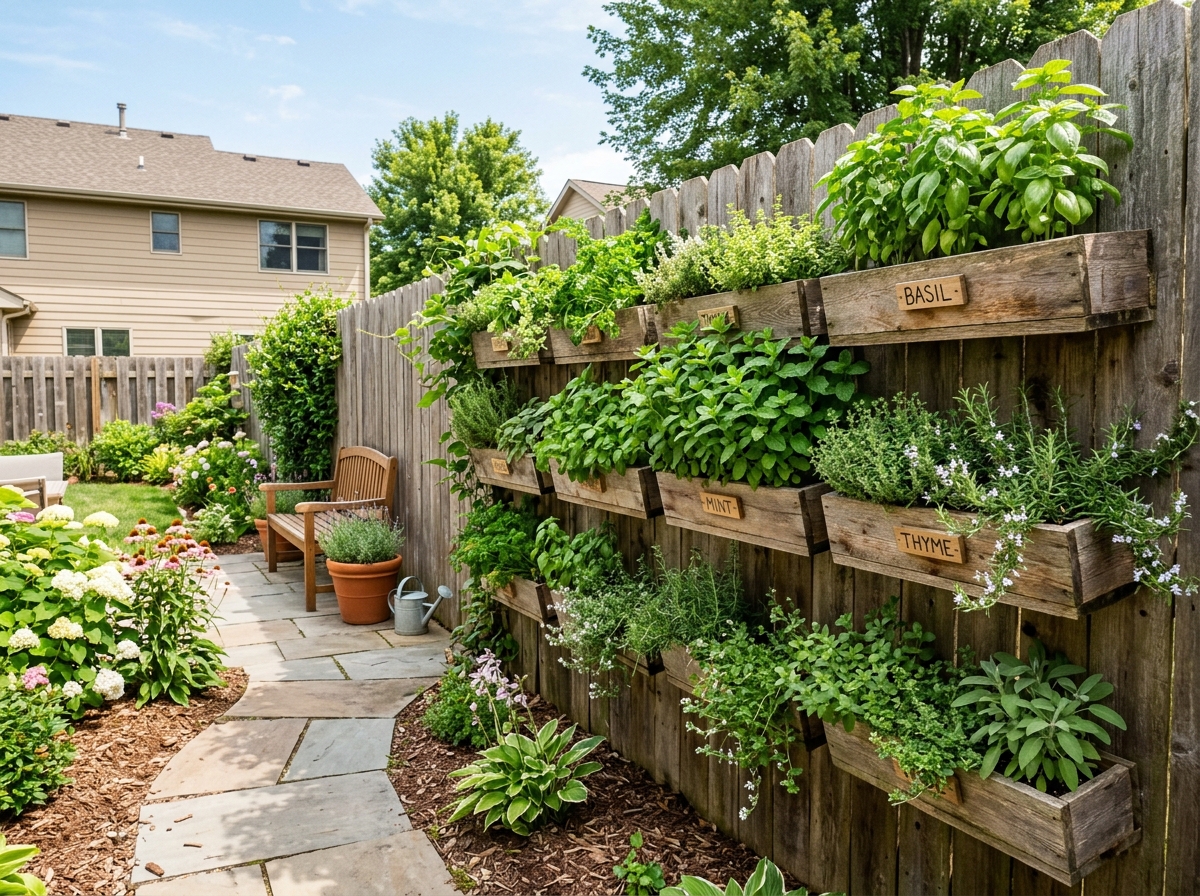
Vertical gardening allows us to pack a punch without sacrificing foot traffic. We often recommend using Wall to Wall Flavor Top Vertical Herb Garden Wall Systems for those who want a structured, professional look. However, if you prefer a more rustic vibe, repurposing an old wooden ladder is a brilliant hack. Simply lean the ladder against a wall and place potted plants on each rung. It creates a tiered “mountain” of foliage that takes up less than two square feet of floor space.
Container planting is the ultimate “safety net” for new gardeners. If a plant isn’t getting enough sun in one corner, we can just pick it up and move it. This flexibility is vital in small urban plots where shadows from buildings change throughout the day. For those looking for inspiration on how to house these plants, exploring DIY Indoor Herb Planter Ideas can give you a head start on creative vessel choices, from galvanized buckets to wooden crates.
Growing food in compact footprints
Who says you need a farm to eat local? We believe that even the smallest patio can be a productive “kitchen garden.” The key is selecting “combat varieties”—plants bred specifically to stay compact while producing high yields.
- Dwarf Fruit Trees: You can actually grow apples, lemons, and peaches in large pots. Look for “columnar” varieties that grow straight up like a pillar rather than branching out wide.
- Microgreens: These are the ultimate space-savers. You can grow them in shallow trays on a windowsill or a small bistro table. They are ready to harvest in just a few weeks and are packed with nutrients.
- Window Boxes: These aren’t just for petunias. We love filling window boxes with “cut and come again” salad greens or a variety of herbs. For more tips on this, check out our guide on Container Planting for Herbs.
Maximizing verticality with climbers
If you have a bare wall or a plain fence, you have a canvas. Climbing plants provide a “green curtain” that offers privacy and beauty without taking up much ground space.
- Trellises and Obelisks: Using a slim wooden trellis or a metal obelisk allows plants like clematis or star jasmine to reach for the sky. Star jasmine is a particular favorite of ours because it stays green all year and produces incredibly fragrant white flowers in the spring.
- Espalier Trees: This is an ancient technique where fruit trees are trained to grow flat against a wall or fence. It looks like a living piece of art and allows you to grow full-sized fruit in a space only a few inches deep.
- Climbing Edibles: Don’t forget that peas, beans, and certain types of cucumbers love to climb. You can find more advice on integrating these into tight quarters in our article on Planting Herbs in Small Spaces.
Visual Tricks and Ambiance to Expand Your Space
Designing a small garden is a bit like stage magic—it’s all about where you direct the eye. We can use optical illusions to make a tiny backyard feel like a sprawling estate. One of the most effective tricks is the use of curving paths. A straight path tells the eye exactly where the garden ends. However, an S-curve path that disappears behind a large shrub or a cluster of pots creates a sense of mystery, making the brain think there is more to explore around the corner.
Another professional secret is the garden mirror. Placing a weather-proof mirror on a back wall or nestled behind some ivy can double the perceived depth of the space. It reflects light into dark corners and creates a “window” into a reflected world. Similarly, painting your fences a dark color—like deep charcoal or navy—can actually make the boundaries of the garden recede, making the space feel more expansive than a bright white fence would.
To keep the space from feeling cluttered, we suggest establishing a clear focal point. This could be a bold architectural plant (like a large agave or a manicured boxwood), a small sculpture, or a colorful bench. Having one main item to look at prevents the “jumble” effect that often happens in small areas.
Lighting and water features for depth
Ambiance is what turns a “patch of dirt” into an “outdoor oasis.” In a small garden, we have to be careful not to overwhelm the senses, but a few well-placed elements can make the space feel luxurious.
Lighting Types for Small Gardens:
- String Lights (Café Lights): These provide a soft, overhead glow that makes the space feel like a cozy outdoor room.
- Solar Lanterns: Perfect for tucking into foliage to create “pockets” of light at night.
- Up-lighting: Placing a small spotlight at the base of a tree or a textured wall adds dramatic height and shadows.
- Path Lights: Even 2-3 small lights along a walkway can define the shape of the garden after dark.
Water features are also surprisingly doable in small spaces. You don’t need a pond; a wall-mounted fountain or a simple “disappearing” stone bubbler provides the soothing sound of running water, which helps mask neighborhood noise and creates a peaceful atmosphere.
Low-Maintenance Plants and Hardscape Solutions
One of the biggest mistakes we see is trying to maintain a tiny patch of grass. In a small yard, a lawn often looks like a “green rug” that requires a mower you have no place to store. We almost always recommend swapping grass for hardscaping. It’s lower maintenance, more functional for furniture, and looks cleaner.
| Feature | Grass Lawn | Gravel/Stone Terrace |
|---|---|---|
| Maintenance | High (Mowing, edging, fertilizing) | Low (Occasional weeding/sweeping) |
| Durability | Sensitive to foot traffic/pets | Extremely durable |
| Water Usage | High | Low (Xeriscaping friendly) |
| Style | Traditional | Modern, Mediterranean, or Rustic |
| Furniture | Can be unstable/sink into mud | Solid, level base for seating |
For plants, we lean toward perennials and native plants. Perennials come back year after year, saving you the effort of replanting every spring. Native plants are adapted to your local climate, meaning they generally need less water and are more resistant to local pests.
Succulents are another fantastic choice for easy small garden ideas. They are essentially “living tapestries” that require very little water and can be tucked into the smallest crevices. If you are worried about the upkeep of a traditional garden, you might find our tips on Low Maintenance Indoor Herb Planting helpful, as many of those principles apply to outdoor container gardening as well.
Sustainable practices for tiny plots
Even a small garden can be an eco-friendly powerhouse. We love incorporating sustainable practices that actually make gardening easier.
- Mulching: Adding a thick layer of wood chips or pea gravel over your soil keeps moisture in and weeds out. It’s the single best thing you can do to reduce your workload.
- Pollinator-Friendly Blooms: By planting flowers like lavender, zinnias, or coneflowers, we can turn a tiny patio into a sanctuary for bees and butterflies.
- Composting: You don’t need a giant bin. Small, enclosed “tumblers” or worm bins can sit in a corner and turn your kitchen scraps into “black gold” for your plants.
- Rain Barrels: A slim-line rain barrel can be tucked against the house to collect water from the roof, providing free, chlorine-free water for your pots.
For those just starting out, we have a great resource on Beginner Friendly Herb Garden Ideas that focuses on sustainable, easy-to-grow varieties.
Functional Zones and Privacy in Limited Spaces
The secret to making a small garden feel “big” is to treat it like a house by creating “rooms” or zones. Even in a 10×10 space, we can delineate a spot for sitting, a spot for plants, and a spot for “work” (like a small potting bench).
Zoning can be achieved through outdoor rugs, which act like “anchors” for furniture, or by using different ground materials. For example, a small wooden deck for the dining area and a gravel path for the garden area clearly separates the functions of the space. We also love multi-use furniture. A storage ottoman can hold garden tools but also serve as a coffee table or extra seating when guests arrive.
Easy small garden ideas for seating areas
When space is tight, every piece of furniture must earn its keep. We recommend:
- Bistro Sets: These classic two-chair-and-a-table sets are designed for small European balconies and are perfect for a morning coffee nook.
- Folding Teak Furniture: Teak is weather-resistant, and the ability to fold the chairs and table flat means you can clear the space if you need room for a DIY project or a yoga session.
- Built-in Seating: If you are building a raised bed, why not make the edge wide enough to sit on? This “cap” on a retaining wall provides tons of seating without taking up any extra floor space.
- Floor Cushions and Rugs: For a more relaxed, “boho” vibe, an outdoor rug and a few weather-proof cushions can turn a corner into a cozy reading spot. This is a popular approach for an Indoor Herb Garden for Apartments that has a small balcony attached.
Privacy solutions for easy small garden ideas
Privacy is often the biggest challenge in urban gardening. We want to enjoy our outdoor space without feeling like the neighbors are watching our every move.
- Evergreen Hedges: Arborvitae or Boxwood stay green all year and provide a solid “living wall.”
- Pergolas: A small pergola over a seating area provides a sense of enclosure. You can hang curtains or grow vines over the top for extra shade and seclusion.
- Lattice Panels: These are budget-friendly and can be attached to existing fences to add height without the “closed-in” feeling of a solid wall.
- Bamboo Screens: These are fast-growing (if planted in containers!) or can be bought as rolled fencing to quickly cover an ugly chain-link fence.
If you’re looking for plants that can help create a lush, private feel while also being useful, check out Easy Herbs for Beginners to Grow Indoors—many of these, like tall rosemary or bushy basil, can be part of your “privacy screen” on a patio table.
Frequently Asked Questions about Small Gardens
How do I make a small garden look bigger on a budget?
The most budget-friendly way is to use paint and light. Paint your fence a dark, receding color and hang inexpensive string lights. Also, keep the color palette of your plants simple—using just 2 or 3 colors plus green creates a cohesive, “designed” look that feels more spacious than a chaotic rainbow of colors.
What are the best low-maintenance plants for a small patio?
We recommend succulents (like Echeveria), ornamental grasses (which provide movement and texture with zero effort), and dwarf evergreens. If you want flowers, look for “self-cleaning” varieties like certain petunias or geraniums that don’t require you to pinch off dead blooms to keep flowering.
Can I grow vegetables in a garden with limited sunlight?
Yes! While tomatoes and peppers need 6-8 hours of sun, many other crops thrive in partial shade. Focus on leafy greens (lettuce, spinach, kale) and root vegetables (beets, radishes, carrots). Most herbs like mint, chives, and parsley are also very forgiving of lower light levels.
Conclusion
At FinCapitaly, we believe that a small garden isn’t a limitation—it’s an opportunity to get creative. By focusing on vertical space, using smart visual tricks, and choosing the right low-maintenance plants, you can transform even the tiniest plot into a space with a big personality.
When planning your layout, remember to consider the sunlight requirements of your chosen plants and think about your future needs. A garden is a living thing that evolves over time. Maybe this year it’s a few pots of herbs, and next year it’s a full vertical oasis.
Don’t let a lack of acreage stop you from getting your hands in the dirt. Whether you are looking for more easy small garden ideas or specific DIY guides, the most important step is simply to start. Happy gardening!
