
Why Growing Basil Indoors in Winter Is Easier Than You Think
Growing basil indoors in winter is absolutely possible — and you don’t need a greenhouse or a green thumb to pull it off.
Here’s a quick overview of what it takes to succeed:
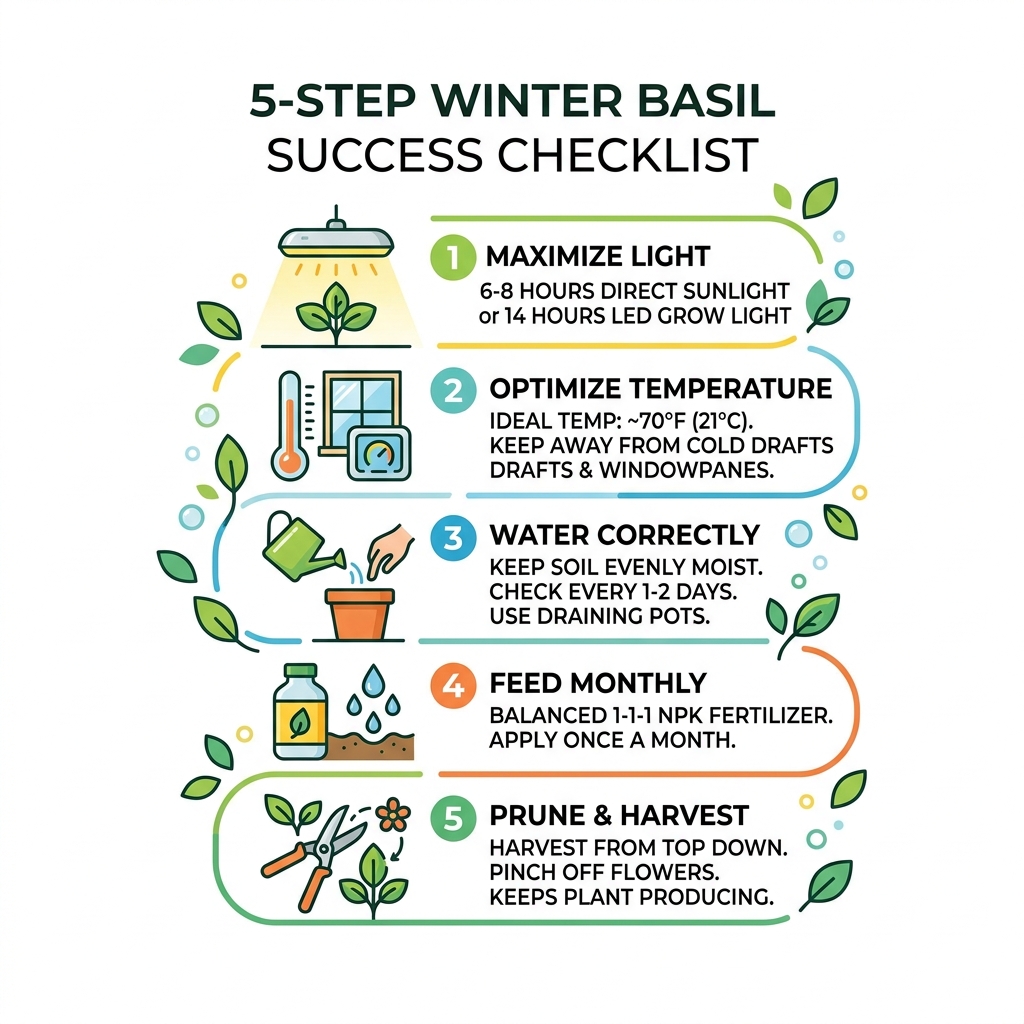
- Warmth — Keep your basil at around 70°F and away from cold drafts or chilly windowpanes
- Light — Provide 6-8 hours of direct sunlight daily, or use LED grow lights set to run for 14 hours
- Water — Keep the soil evenly moist, checking every 1-2 days, and always use pots with drainage holes
- Feeding — Fertilize once a month with a balanced 1-1-1 NPK fertilizer
- Pruning — Pinch off flowers and harvest from the top down to keep the plant producing
That’s the short version. But if you want your plant to thrive — not just survive — the details matter.
Fresh basil doesn’t have to disappear from your kitchen when the temperature drops outside. With the right setup, a single plant can keep you supplied with fragrant leaves for 6 months or more. Some gardeners keep their plants going even longer by propagating cuttings before the original plant fades.
Whether you’re rescuing a supermarket basil pot, overwintering a garden plant, or starting fresh from seed, this guide walks you through every step.
Setting the Ideal Conditions for Growing Basil Indoors in Winter
To successfully master growing basil indoors in winter, we have to remember that basil is essentially a tropical plant. It loves heat, hates a chill, and craves the sun. In the middle of January, your living room needs to mimic a Mediterranean summer as closely as possible.
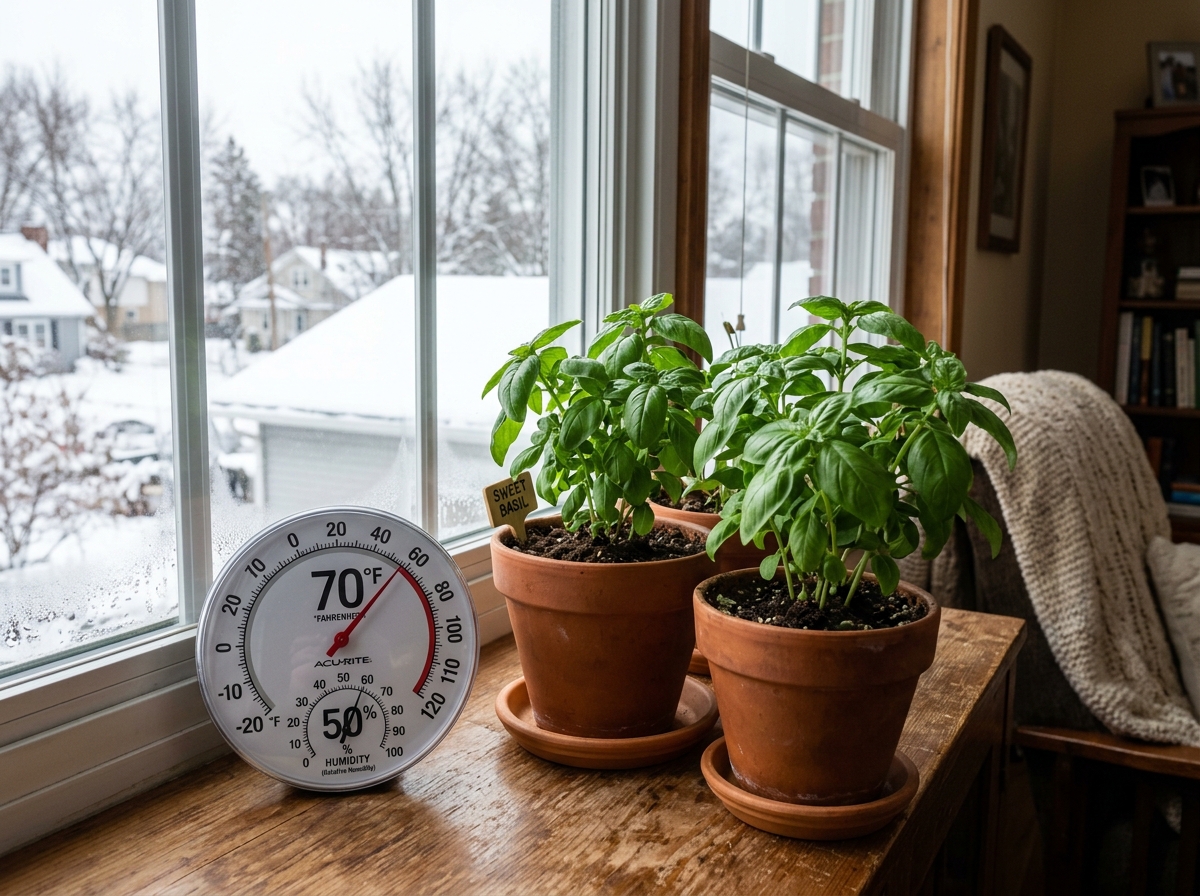
The magic number for indoor basil is 70°F. While it can tolerate slightly higher temperatures during the day (up to 85°F), it becomes very unhappy when things get chilly. Humidity is the other silent partner in plant health. Winter air in most homes is notoriously dry due to central heating, which can zap the moisture right out of basil leaves. We recommend aiming for a humidity level between 40-60%. You can achieve this by grouping plants together, using a small humidifier, or placing your pots on a pebble tray filled with water. For more detailed advice, check out our humidity tips for indoor herbs.
Placement is everything. A south-facing window is the “gold coast” of real estate for your herbs because it receives the most consistent light. However, be careful with “drafty” windows. Even if the room is 70°F, the air right next to the glass might be 45°F, which is enough to kill your plant. For a deep dive into managing these seasonal shifts, read our guide on seasonal care for indoor herbs. For a general reference on the plant itself, see basil for background on its growth habits and origins.
Light Requirements and Supplemental Grow Lights
Light is usually the biggest hurdle when growing basil indoors in winter. In many regions, winter sun is weak and the days are short. While basil needs 6-8 hours of direct sunlight to stay healthy, natural light often isn’t enough to prevent the plant from becoming “leggy” (tall, thin, and weak).
If your windows aren’t cutting it, supplemental lighting is a game-changer. LED grow lights are energy-efficient and highly effective. We suggest setting your grow lights on a timer for 14 to 16 hours a day. Keep the lights close-about 2 to 4 inches above the top of the plant-and raise them as the basil grows. If you see white spots on the leaves, the light might be too close; if the plant is stretching toward the light, move it closer. You can learn more about choosing the right setup in our article on grow lights for indoor herbs.
Temperature Thresholds and Cold Protection
Basil is a “tender annual,” meaning it has zero frost tolerance. In fact, it doesn’t even like the “cool” side of the pillow.
- 50°F: At this temperature, basil leaves may begin to turn black and wilt.
- 45°F: This is the danger zone. Prolonged exposure to 45°F or lower will likely kill the plant.
If you live in a particularly cold climate, move your plants away from the window glass at night. Insulating your windows or using a heavy curtain (that doesn’t trap the plant against the cold glass) can save your harvest. Keeping the root system warm is just as important as protecting the leaves from the glass.
Choosing Your Method: Seeds, Cuttings, or Supermarket Plants
There are three main ways to get started with growing basil indoors in winter, and the “best” one depends on how much patience you have.
For indoor success, variety matters. While Genovese is the classic choice for pesto, compact varieties like ‘Spicy Globe’ or ‘Greek Basil’ often perform better in small pots. ‘Everleaf’ is another fantastic indoor choice because it is bred to be bolt-resistant, meaning it won’t try to flower as quickly. Check out our list of the best herbs to grow indoors to see how basil compares to other kitchen favorites. If you’re a total novice, you might even consider one of the many indoor gardening kits for beginners available today.
Starting from Scratch: Growing Basil Indoors in Winter from Seed
Starting from seed is the most cost-effective method and gives you the most variety. Use a high-quality organic potting mix rather than garden soil, which is too heavy and may contain pests.
- Sow seeds about 1/4 inch deep.
- Keep the soil moist and warm (around 75°F). You can use a heat mat to speed up germination, which usually takes 5 to 10 days.
- Once the seedlings have two sets of “true” leaves, thin them so there is only one strong plant per 4-6 inch pot.
For a complete walkthrough, see our how to start an indoor herb garden guide.
The Shortcut: Propagating Cuttings for Growing Basil Indoors in Winter
If you have a friend with a healthy plant, or if you have a few stems left over from a bunch of fresh basil, you can propagate new plants for free. This is often faster than starting from seed.
- Cut a 4-inch stem just below a leaf node (the spot where leaves grow out of the stem) at a 45-degree angle.
- Remove the lower leaves, leaving only the top two pairs.
- Place the stem in a glass of non-chlorinated water on a sunny windowsill.
- Change the water every 2 days. You should see roots sprout in about a week.
Once the roots are an inch long, you can transplant them into soil. This is one of the most rewarding ways to expand your indoor garden without spending a dime.
Salvaging Supermarket Basil and Overwintering Garden Plants
We’ve all seen those “living basil” pots at the grocery store. These are often multiple seedlings crammed into one tiny pot. To make them last, you must repot them. Separate the individual plants gently and move them into an 8-12 inch wide pot.
If you’re bringing in a plant from your summer garden, do it before the outdoor temperature hits 50°F. Dig a wide circle (about 6 inches) around the plant to preserve the root ball. Basil roots can grow 12 to 18 inches deep, so use a pot at least 15 inches deep for large established plants. For more on maintaining these transplants, check our tips on how to care for basil indoors.
Essential Maintenance for Healthy Indoor Basil
Once your basil is settled, the goal is consistent care. Basil is a “heavy feeder” and a thirsty plant. Use a well-draining potting mix and a container with plenty of drainage holes. To avoid the most common pitfalls, read about indoor herb watering mistakes to avoid.
Fertilize your basil once a month with a balanced 1-1-1 NPK fertilizer. Indoor plants don’t need as much food as outdoor ones, so don’t overdo it—too much fertilizer can actually dilute the flavor of the leaves. For more on nutrient management, visit our guide on soil and fertilizer for indoor herbs.
Pruning and Harvesting for Bushier Growth
The secret to a “bushy” basil plant rather than a tall, spindly one is regular pruning.
- The 1/3 Rule: Never harvest more than one-third of the plant at a time.
- Where to Cut: Always cut just above a pair of leaves. This encourages the plant to grow two new stems from that point, doubling your future harvest.
- Pinch the Flowers: If you see flower buds forming, pinch them off immediately. Once a basil plant flowers (bolts), the leaves become bitter and the plant stops producing new foliage.
Mastering this technique is essential for pruning herbs for healthy growth.
Hydroponic vs. Soil-Based Winter Growing
While soil is traditional, growing basil indoors in winter can also be done hydroponically (in water).
| Feature | Soil-Based Growing | Hydroponic (Water) Growing |
|---|---|---|
| Longevity | Can last 6 months or more | Usually shorter (2-4 months) without nutrients |
| Maintenance | Requires watering every 1-2 days | Requires water changes every 1-2 weeks |
| Pest Risk | Higher risk of fungus gnats | Very low pest risk |
| Growth Rate | Steady | Can be faster with liquid nutrients |
For a simple hydroponic setup, use a Mason jar with non-chlorinated water and add a drop of liquid silica to strengthen the plant’s cell walls. This “no-dirt” method is perfect for those who want to avoid the mess of potting soil in the kitchen.
Troubleshooting Common Winter Basil Problems
Indoor plants face unique challenges, primarily due to lack of airflow and the presence of indoor pests like aphids or fungus gnats. If you see tiny flies buzzing around the soil, you likely have fungus gnats caused by overwatering. Letting the top inch of soil dry out between waterings usually solves this. For more persistent pests, a gentle spray of neem oil or wiping the leaves with a damp cloth can help. See our indoor herb pest control tips for more solutions.
Preventing Mold and Root Rot
Fungal issues are common in winter when humidity is high but air circulation is low. To prevent mold, we recommend:
- Using a small fan to keep air moving around your plants.
- Avoiding misting the leaves directly late in the day; if you mist, do it in the morning so the water evaporates.
- Ensuring your pots never sit in standing water. Always empty the saucer after watering.
Learn more about preventing mold in indoor herb gardens to keep your kitchen garden pristine.
Frequently Asked Questions about Winter Basil
How long can basil plants realistically last indoors?
With proper care, a basil plant can last 6 to 9 months. Eventually, the stems will become “woody,” and the leaf production will slow down. To have a truly endless supply, we recommend taking a cutting from your healthy plant every 4-5 months and starting a new one. This cycle allows you to keep a “fresh” plant in rotation indefinitely.
Can I successfully bring my outdoor basil inside for the winter?
Yes, but you have to be careful. The biggest mistake is waiting until it’s too cold. If the night temperatures are dropping toward 50°F, it’s time to move. Check the plant thoroughly for hitchhiking pests like spiders or aphids before bringing it inside. It may go through a period of “shock” where it drops a few leaves, but with enough light, it should recover in a week or two.
How do I store fresh basil if I harvest more than I can use?
Fresh basil is best used immediately, but if you have a bumper crop, don’t let it go to waste!
- The Jar Method: Treat it like a bouquet of flowers. Put the stems in a jar of water on the counter (not the fridge—the fridge turns basil black!).
- The Oil Method: Blend the leaves with a little olive oil and freeze the mixture in ice cube trays. These “basil cubes” are perfect for dropping into soups or sauces later.
For culinary inspiration, try our indoor basil pesto recipe or check out our beginner’s guide to cooking with indoor basil.
Conclusion
At FinCapitaly, we believe that a sustainable, flavorful kitchen should be a year-round reality. Growing basil indoors in winter is more than just a gardening project; it’s a way to bring a bit of summer warmth and incredible nutrition into your home during the darkest months of the year.
By managing your light, keeping the air warm, and mastering the art of the “top-down” harvest, you can enjoy fresh pesto and fragrant garnishes no matter what the thermometer says outside. For more tips on keeping your indoor garden thriving, explore our Care section or find new ways to use your harvest in our Recipes collection.
Ready to start your winter herb journey? Visit us at https://www.fincapitaly.com/ for more expert guides and gardening resources. Happy growing!
