
Why Most Indoor Basil Plants Die (And How to Keep Yours Thriving)
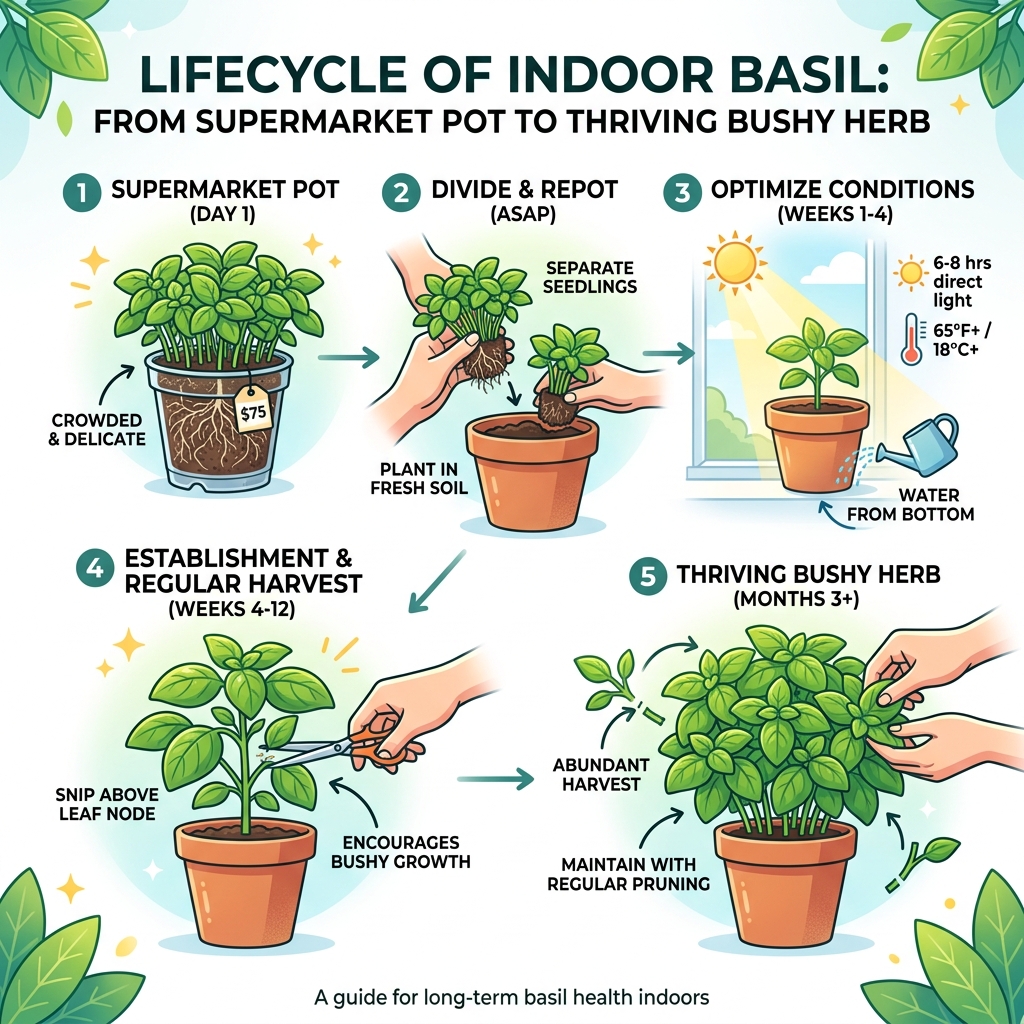
Keeping basil alive indoors comes down to five key factors:
- Light – At least 6-8 hours of direct sun daily from a south or west-facing window
- Warmth – Keep temperatures above 65°F (18°C); never let it sit in a cold draft
- Watering – Water from the bottom to prevent root rot and stem damage
- Harvesting – Snip stems above a leaf node regularly to encourage bushy growth
- Repotting – Move supermarket basil into a larger pot with proper drainage right away
You buy a fresh basil plant. It looks great. Two weeks later, it’s a droopy, yellowing mess.
Sound familiar? You’re not alone. Supermarket basil plants are designed for short-term use — they’re grown fast, packed tight, and sold before they’re truly ready for home life. Without the right setup, most won’t survive longer than a week or two.
The good news? With a few simple adjustments, basil can thrive indoors for 6 to 9 months — and even longer if you propagate new plants from cuttings.
This guide covers everything you need to keep your plant alive, bushy, and producing fresh leaves all year round.
Choosing Your Plant: Supermarket vs. Garden Center
When we decide to start an indoor herb garden, the most convenient option is often the grocery store. However, where you buy your plant significantly impacts how easy it will be to keep basil alive indoors.
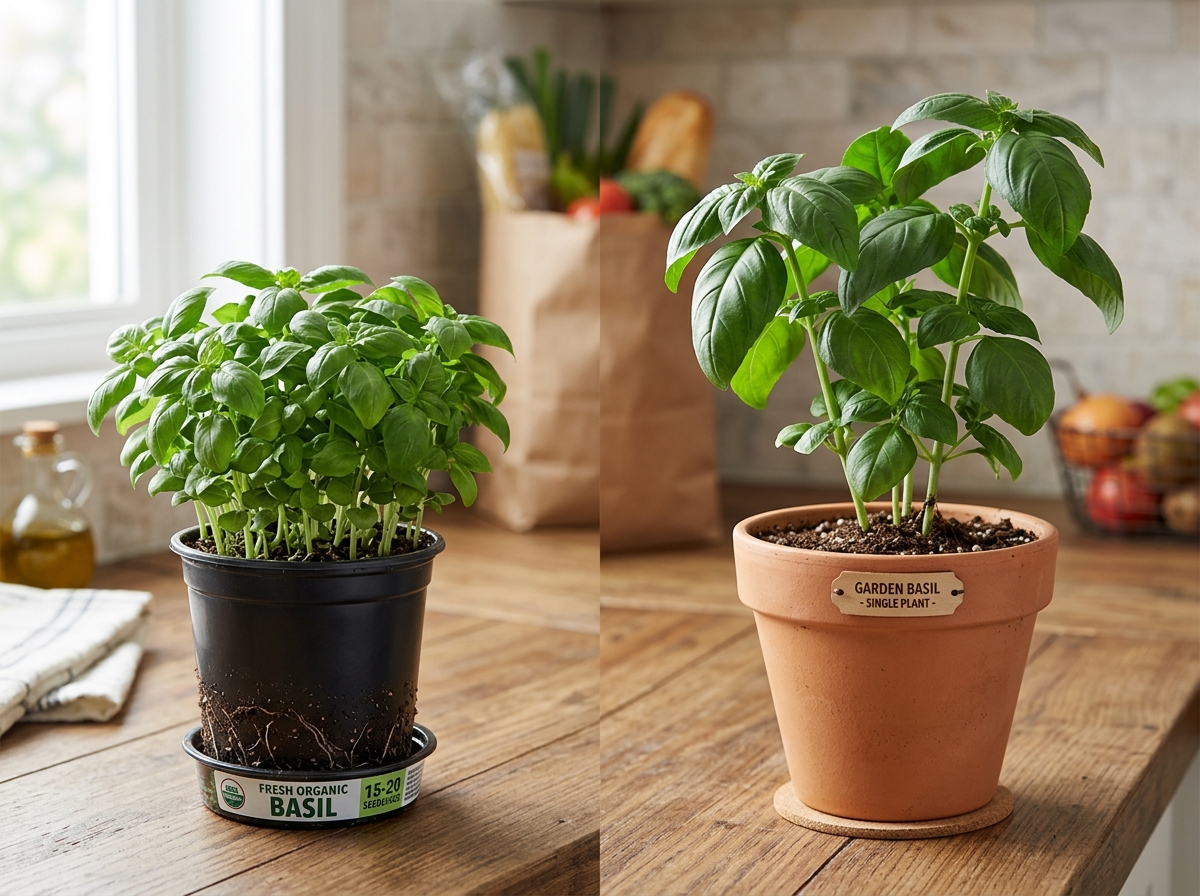
Supermarket basil is typically sold in “living” sleeves. While they look lush, they are often a ticking time bomb. These plants are grown in highly controlled greenhouse environments under intense artificial light and high humidity. Once they hit your kitchen counter, the sudden drop in light and humidity causes “transplant shock.” Furthermore, these pots are incredibly overcrowded—often containing 10 to 20 individual seedlings crammed into a tiny space to make the pot look full.
In contrast, basil from a specialized garden center is usually younger and better acclimated to varied conditions. These plants are intended for long-term cultivation rather than immediate consumption. They typically have stronger root systems and have been grown in higher-quality soil rather than the cheap peat plugs often found in grocery store versions.
| Feature | Supermarket Basil | Garden Center Basil |
|---|---|---|
| Primary Goal | Immediate culinary use | Long-term growth |
| Plant Density | Overcrowded (10+ seedlings) | Appropriate (1-3 seedlings) |
| Lifespan | 1-2 weeks (without repotting) | 6-9 months |
| Root Health | Often root-bound or hydroponic | Well-established in soil |
| Price | Cheaper ($3-$5) | Moderate ($5-$10) |
Why Supermarket Basil Often Fails
The main reason supermarket basil fails is the “hydroponic hurdle.” Many of these plants are grown hydroponically (in water) or in inert peat plugs. When you bring them home, the roots are suddenly expected to survive in a dry, low-light kitchen. Because they are so crowded, the plants compete for nutrients and airflow, leading to rapid wilting and rot. To save these plants, you must act quickly. Following a proper care guide is essential for transitioning these “temporary” plants into permanent kitchen residents.
Setting Up for Success: Repotting and Soil Methods
If you’ve bought a supermarket pot, the first thing we recommend is a “rescue mission.” You need to give those roots room to breathe.
Start by gently removing the plant from its plastic sleeve. You’ll likely see a dense mat of white roots. Instead of keeping it as one giant clump, carefully tease the plants apart. You can often split one supermarket pot into three separate containers. This reduces competition and increases airflow, which is vital for keeping basil alive indoors.
For those who prefer a soil-free approach, you can use Mason jar hydroponics. This is particularly useful in winter when soil can sometimes develop mold in low-light conditions. Simply place your basil cuttings or cleaned roots into a jar with an inch of non-chlorinated water. Adding a drop of liquid silica can help mimic soil nutrients and strengthen the plant’s cell structure.
The Best Soil and Containers for Indoor Growth
When it comes to containers, we are big fans of terracotta. Terracotta is breathable and helps regulate moisture, which prevents the “wet feet” that kill so many herbs. Ensure your pot has at least one large drainage hole.
For the soil, avoid cheap “garden soil” which is too heavy for indoor pots. Instead, use a high-quality potting mix enriched with compost and perlite. Basil prefers a slightly acidic to neutral pH between 6.0 and 7.5. A rich, organic mix provides the nitrogen needed for those lush, green leaves. According to Martha Stewart’s basil guide, a mix containing peat moss or rice hulls can significantly improve drainage and root health.
Environmental Essentials to Keep Basil Alive Indoors
Basil is a tropical plant at heart. To keep it happy, we need to replicate a Mediterranean summer inside our homes.
Ideal Light and Temperature to Keep Basil Alive Indoors
Light is the most common sticking point. To keep basil alive indoors, it needs 6 to 8 hours of bright, direct sunlight daily. A south-facing window is your best bet. If your windows face north or are shaded by buildings, your basil will become “leggy”—stretching out with long stems and tiny leaves as it searches for light.
If natural light is lacking, don’t worry. Full-spectrum grow lights are a game-changer. Position the lights about 2 to 4 inches above the tops of the plants and keep them on for 12 to 14 hours a day. This consistent “sun” will keep your plant productive even in the depths of winter.
Temperature is equally critical. Basil will literally start to die if temperatures drop below 54°F (12°C). We recommend keeping your home at a steady 70°F (21°C) or higher. Be careful with windowsills at night; the glass can become very cold, so move your pots a few inches away from the pane during winter nights to prevent temperature shock. You can find more tips on maintaining the perfect environment in our guide to indoor basil for pesto.
Managing Humidity and Airflow
While basil loves warmth, it hates stagnant, dry air. Most homes have a humidity level around 30%, but basil thrives in the 40% to 60% range. You can boost humidity by:
- Placing the pot on a tray filled with pebbles and water (the “pebble tray” method).
- Clustering your basil with other indoor plants to create a microclimate.
- Using a small humidifier nearby.
However, be careful with misting. While it provides a temporary humidity boost, leaving water sitting on the leaves in a room with poor airflow can lead to basil downy mildew, a fuzzy gray fungus that can ruin your harvest. Proper spacing between plants is the best way to ensure healthy airflow. Check out Chowhound’s humidity tips for more on balancing moisture and air.
Mastering the “Basil Trick” for Watering and Feeding
Watering is where most indoor gardeners go wrong. They either let the plant dry out until it wilts or, more commonly, they “love it to death” by overwatering, leading to root rot.
Best Watering Methods to Keep Basil Alive Indoors
The “Basil Trick” that has recently gone viral involves bottom-watering. Instead of pouring water onto the soil from the top, you place your pot (which must have drainage holes) into a large saucer or bowl filled with water. The soil acts like a wick, drawing up exactly as much water as it needs.
This method is superior for several reasons:
- Prevents Stem Rot: Keeping the base of the stems dry prevents fungal infections.
- Protects Leaves: Water droplets on leaves can act like magnifying glasses in the sun, causing brown or black burn spots.
- Encourages Deep Roots: Roots will grow downward toward the moisture source.
We suggest filling the saucer and letting the plant sit for 30 minutes, then discarding any excess water. Aim to keep the soil consistently moist—like a wrung-out sponge—but never soggy. If the leaves start to look yellow and droopy, it’s often a sign of “jaundice” from overwatering. If the plant is wilting but the soil is dry, it simply needs a deep drink to revive. For more advanced watering schedules, refer to our maintenance guide.
Regarding feeding, indoor basil needs a boost. Use a balanced, liquid organic fertilizer (NPK 1-1-1 or 5-5-5) once a month. If your plant is growing rapidly and you harvest often, you can increase this to every two weeks during the spring and summer.
Pruning and Harvesting to Keep Basil Alive Indoors and Bushy
If you never prune your basil, it will grow into a tall, spindly “tree” with a few leaves at the top. To keep basil alive indoors and looking like a lush bush, you must be brave with your scissors.
How to Harvest Without Killing the Plant
The golden rule of harvesting is: Never just pluck individual leaves. Plucking leaves leaves behind a bare stem that eventually withers. Instead, you should always snip the stem.
Look for a “node”—the spot where two small leaves are starting to grow out from the main stem. Use sharp scissors to snip the stem about a quarter-inch above that node. The plant will respond by sending out two new branches from that spot. By doing this, you’re essentially doubling your harvest every time you prune.
The 1/3 Rule: Never harvest more than one-third of the plant’s total foliage at one time. The plant needs those leaves to photosynthesize and create energy to grow back.
Removing Flowers: As soon as you see a small, pointy cluster of buds forming at the top, pinch it off immediately! This is called “bolting.” Once basil flowers, the plant thinks its life mission is over. It will stop producing flavorful oils, the leaves will turn bitter, and the plant will eventually die. By removing flowers, you trick the plant into staying in its “vegetative state,” extending its life by months.
If your plant is getting too old, you can take a 4-inch cutting, strip the bottom leaves, and place it in a glass of water. In about a week, roots will appear. This is the best way to ensure a continuous supply of fresh basil without ever buying a new plant!
Troubleshooting Common Pests and Diseases
Even indoors, basil can attract unwanted guests. Because we plan to eat these herbs, we must avoid harsh chemical pesticides.
- Whiteflies and Aphids: These tiny pests love the underside of basil leaves. You can usually wash them off with a gentle spray of water in the sink or use a diluted insecticidal soap.
- Fungus Gnats: These appear if the soil is kept too wet. Bottom-watering and letting the top inch of soil dry out usually solves the problem. Yellow sticky traps are also very effective.
- Yellowing Leaves: This is the most common cry for help.
- Yellow at the bottom? Usually a nitrogen deficiency. Time to fertilize!
- Yellow all over with drooping? Overwatering/Root rot.
- Yellow with purple spots underneath? This is Downy Mildew. Unfortunately, if you see this, it’s best to dispose of the plant and start over to prevent it from spreading to other herbs.
Frequently Asked Questions about Indoor Basil
How long does basil realistically last indoors?
With the right care—meaning proper light, the “basil trick” for watering, and regular pruning—an indoor basil plant can thrive for 6 to 9 months. Eventually, the stems will become woody and the leaf production will slow down. This is the natural lifecycle of the plant.
Can I grow basil in water indefinitely?
Technically, yes, but it won’t be as “bushy” as soil-grown basil. Hydroponic basil requires liquid nutrients (like silica or hydroponic tea) to survive long-term. Without these, the plant will eventually turn yellow and stop growing due to a lack of minerals.
Why are my basil leaves turning yellow?
As we’ve noted, yellowing is usually a sign of stress. Check the soil moisture first. If it’s soggy, it’s root rot. If it’s dry, it’s underwatering. If the moisture is perfect, it’s likely time for a balanced fertilizer.
Conclusion
At FinCapitaly, we believe that sustainable herb gardening is one of the most rewarding ways to achieve kitchen self-sufficiency. There is nothing quite like the smell of fresh pesto made from a plant you’ve nurtured yourself. By moving away from the “buy and die” cycle of supermarket herbs and mastering these maintenance basics, you can enjoy a year-round harvest.
Ready to expand your indoor garden? Check out more info about indoor herb care to keep your kitchen green and your recipes flavorful!
