
Why Light Is the Secret to Flavorful Indoor Basil
How much light does basil need indoors is one of the most important questions you can ask before growing this herb at home. Here’s the quick answer:
| Light Source | Daily Duration |
|---|---|
| Direct sunlight (south-facing window) | 6-8 hours |
| Artificial grow lights | 12-16 hours |
| Minimum natural light to survive | 6 hours |
Basil is a sun-loving herb. It needs bright light not just to grow, but to produce the aromatic oils that make it taste and smell so good. Less light means less flavor — it really is that simple.
Think of it this way: without enough light, basil can’t photosynthesize properly. That means weaker stems, paler leaves, and herbs that taste nothing like what you’d expect from a fresh bunch at the market.
The good news? Whether you have a sunny south-facing window or a dark apartment kitchen, there’s a reliable solution for every situation.
This guide covers everything — from natural window light to grow lights, positioning, timing, and how to spot problems early.
How Much Light Does Basil Need Indoors?
When we bring basil inside, we are essentially trying to replicate a Mediterranean summer. In the wild, basil basks in intense, direct sun for the better part of the day. Indoors, the challenge is that glass windows filter out a significant portion of the light spectrum, and the intensity of indoor light is much lower than what you’d find in an open field.
To keep your basil happy, we recommend aiming for 6-8 hours of direct sunlight if you are relying on windows. If you are using supplemental lighting, that number jumps to 12-16 hours of artificial light. This longer duration for grow lights is necessary because even the best LEDs usually can’t match the sheer “horsepower” of the sun.
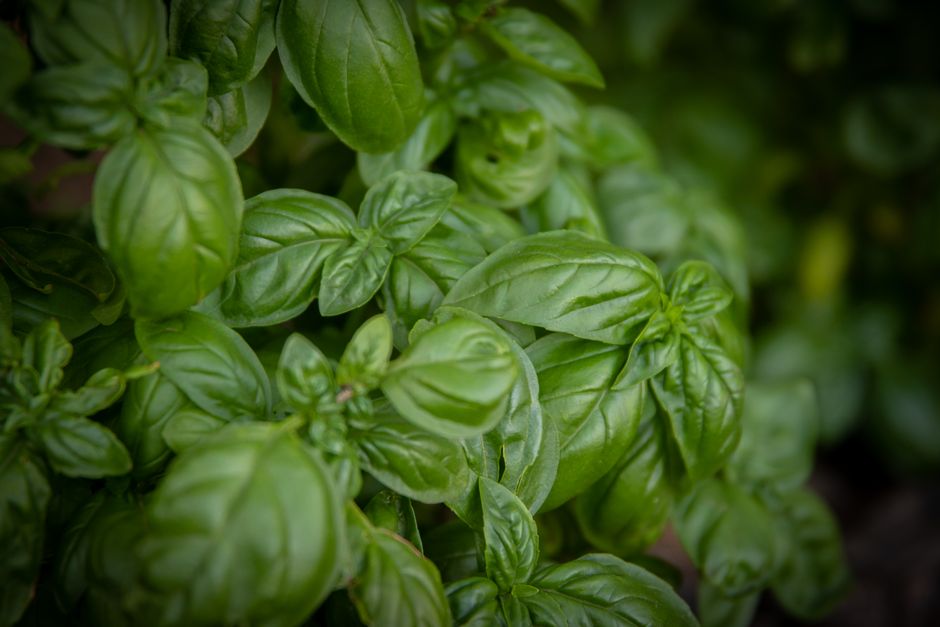
Light intensity is measured in several ways, but for the home gardener, it’s all about the “foot-candles” or “PPFD” (Photosynthetic Photon Flux Density). Mature basil thrives when it receives between 1,500 and 2,500 foot-candles. If you’re curious about the deeper mechanics of keeping your herbs thriving beyond just the lighting, check out our guide on how-to-care-for-basil-indoors.
How much light does basil need indoors from natural windows?
The orientation of your windows is the single most important factor for natural light. In the Northern Hemisphere, a south-facing window is the “Gold Standard.” It provides the most consistent and intense light throughout the day.
Here is how different window orientations stack up for your basil:
| Window Direction | Light Quality | Suitability for Basil |
|---|---|---|
| South | High intensity, long duration | Best: Provides 6-8 hours of direct sun |
| East | Moderate intensity, morning sun | Good: Better for cooler-loving herbs, may need supplement |
| West | High intensity, hot afternoon sun | Good: Watch for leaf scorch in mid-summer |
| North | Low intensity, indirect light | Poor: Basil will likely become leggy and weak |
To maximize the light your window provides, we have a few “pro tips.” First, keep your windows clean! Dust and grime can block up to 20% of available light. Second, consider using reflective surfaces. Placing a mirror or a piece of white foam board behind the plant can bounce light back onto the side of the basil facing away from the window, promoting more even growth.
How much light does basil need indoors using artificial sources?
If your windows aren’t cutting it — especially during those short, gloomy winter days — artificial light is your best friend. For indoor basil, we want to aim for a 12-16 hour duration.
Using a timer is non-negotiable here. Basil likes consistency. Interestingly, research from the University of Minnesota suggests that basil is a “facultative long-day plant.” This means while it doesn’t strictly need long days to flower, short nights (long days of light) actually encourage it to bloom. Since we want leaves, not flowers, maintaining a steady 12-hour cycle is often the “sweet spot” to keep the plant in its vegetative state.
In terms of intensity, aim for a PPFD of 150-300 μmo/m²/s for mature plants. If you’re looking for a deep dive into the specific equipment needed to achieve this, see our article on grow-lights-for-indoor-herbs.
Choosing the Best Grow Lights for Indoor Basil
Not all light bulbs are created equal. If you try to grow basil under a standard incandescent bulb, you’ll likely end up with a very sad plant and a very high electricity bill.
We generally recommend Full-spectrum LED grow lights. Why?
- Energy Efficiency: They use a fraction of the power of older bulbs.
- Low Heat Output: They won’t cook your leaves, allowing you to place them closer to the plant.
- Spectrum Control: They provide the specific blue and red wavelengths that basil needs for photosynthesis and essential oil production.
Fluorescent tubes (like T5 bulbs) are another solid option, though they are slightly less efficient than LEDs. They provide a nice, even spread of light that works well for a long row of herb pots. For more on selecting the right spectrum and bulb type, explore grow-lights-for-indoor-herbs-2.
Positioning and distance for optimal growth
The distance between your light and your plant is the difference between a thriving herb and a burnt twig.
- LED Grow Lights: Generally should be positioned 6-12 inches above the tops of the plants.
- Fluorescent Lights: These are less intense and should be much closer—about 2-4 inches from the foliage.
As your basil grows, you must adjust the height of the lights. If the leaves start to touch the bulbs, they will scorch and turn black. Conversely, if the light is too far away, the plant will stretch upward, becoming “leggy” and weak. We cover more on setting up your space in grow-lights-for-indoor-herbs-3.
Signs Your Basil is Struggling with Light
Basil is a very communicative plant; it will tell you exactly how it’s feeling if you know what to look for.
1. Etiolation (Leggy Stems): This is the most common sign of insufficient light. The plant stretches out, creating large gaps between the leaves. It’s essentially “reaching” for a light source it can’t find. 2. Pale Green or Yellow Leaves: Healthy basil should be a vibrant, deep green. If the leaves look washed out or yellow, it’s often a sign that the plant isn’t producing enough chlorophyll due to low light. 3. Reduced Aroma and Flavor: If your pesto tastes like grass instead of basil, your plant likely isn’t getting enough sun to produce its essential oils. 4. Leaf Scorch: This happens when the light is too intense or too close. You’ll see brown, crispy tips or bleached spots on the upper leaves.
If you are seeing these signs, it might be time to rethink your layout. Our indoor-herb-garden-setup-tips can help you troubleshoot your configuration.
Maximizing Growth and Flavor Indoors
Light is the engine, but there are a few other “gears” you need to turn to get the best harvest.
- Pruning: This is the “secret sauce.” Once your basil is about 6 inches tall, start pinching off the top center stem just above a pair of leaves. This forces the plant to grow two new stems, making it bushier and preventing it from becoming a single, tall, lanky stalk.
- Temperature: Basil hates the cold. Keep your indoor environment between 70°F and 85°F. Anything below 50°F can cause the leaves to turn black and the plant to wilt.
- Humidity: Indoor air, especially in winter, can be very dry. Aim for 40-60% humidity. You can achieve this by misting your plants or using a pebble tray with water.
- Variety Selection: Some basils are better suited for life indoors. ‘Spicy Globe’ is a compact, mounding variety that stays small and manageable. ‘Everleaf’ is bred to be bolt-resistant, meaning it won’t try to flower as quickly as traditional Genovese basil.
For those of you growing basil specifically for the kitchen, you’ll find that indoor-basil-the-star-ingredient-for-homemade-pesto offers great tips on harvesting for maximum flavor.
Frequently Asked Questions about Indoor Basil Lighting
Can basil grow indoors with only artificial light and no windows?
Absolutely! Many of the best indoor herb gardens are in basements or windowless kitchens. The key is using Full-spectrum LED grow lights that provide the full range of PAR (Photosynthetically Active Radiation). If you run these for 12-16 hours a day, your basil won’t even miss the sun. In fact, artificial light is often better because it’s consistent and doesn’t change with the seasons or cloudy weather.
How do I tell if my basil is getting too much light?
While basil loves the sun, it can have too much of a good thing. Signs of “light stress” include leaf curling, brown or “burnt” tips, and midday wilting even when the soil is moist. If you notice the leaves at the very top of the plant looking bleached or crispy while the bottom leaves look fine, your grow light is likely too close.
Do different basil varieties have varying light requirements?
Most culinary basils—like Genovese, Thai, and Lemon basil—have very similar high-light requirements. However, purple-leafed varieties often need even more intense light to maintain their deep color; in low light, they can fade to a muddy green. Compact varieties like ‘Spicy Globe’ are slightly more forgiving of smaller light setups simply because their canopy is smaller and easier to cover evenly with a single bulb.
Conclusion
At FinCapitaly, we believe that everyone should have access to fresh, vibrant herbs, regardless of the size of their backyard or the direction of their windows. Understanding how much light does basil need indoors is the first step toward a sustainable, year-round harvest.
By providing 6-8 hours of sunlight or 12-16 hours of quality grow light, and keeping an eye out for signs of stress, you can enjoy the “bright side” of indoor gardening every single day. Ready to turn your windowsill into a mini-farm? Start your indoor herb garden journey today and taste the difference that proper lighting makes!
