
Why Watering Is the #1 Skill for Growing Basil Indoors
Water basil plant indoors correctly, and you’ll have a lush, fragrant herb ready for your next meal. Get it wrong, and you’ll watch it wilt, yellow, or rot within days.
Here’s a quick answer to get you started:
How to water indoor basil – at a glance:
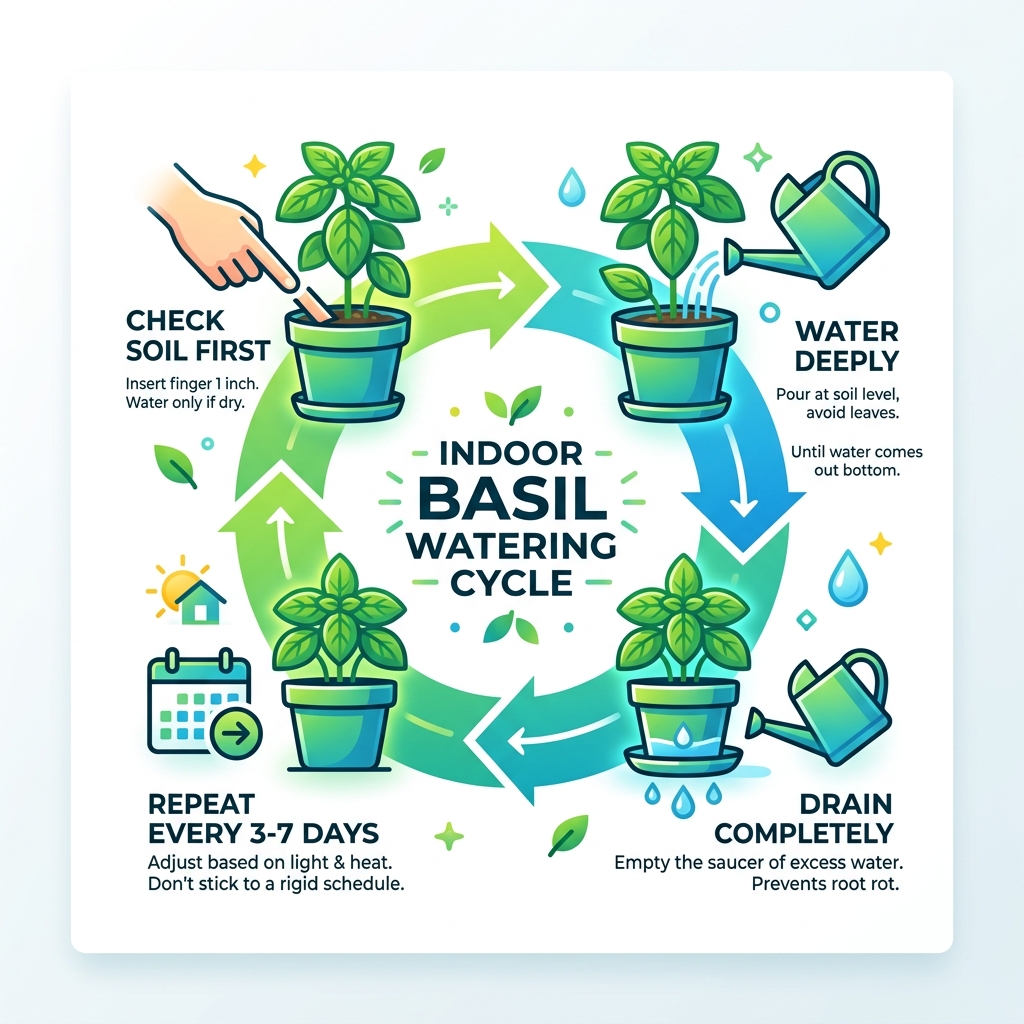
- Check the soil first – stick your finger 1 inch into the soil; only water if it feels dry
- Water deeply – pour slowly around the base until water drains from the bottom
- Water every 3-7 days – adjust based on how warm and sunny your space is
- Avoid the leaves – always water at soil level to prevent fungal disease
- Never let it sit in standing water – soggy roots are the #1 killer of indoor basil
Most people either water too much or too little. In fact, overwatering is the single most common reason indoor basil dies. As one gardening expert puts it, “more water is not always better, especially for basil – it’s better to underwater than overwater.”
Basil is a tropical herb that loves warmth and moisture – but on its own terms. Indoors, without wind, intense sun, or natural rainfall to balance things out, you become the regulator. That means paying attention to your plant and its environment, not just following a fixed schedule.
The good news? Once you understand a few simple rules, keeping basil alive and thriving indoors is genuinely easy.
Understanding the Basics: How Often to Water Basil Plant Indoors
When we bring a basil plant into our homes, we are taking it out of its natural, breezy habitat and placing it in a controlled environment. This changes the rules of engagement. While outdoor basil might deal with scorching sun and rapid evaporation, indoor basil faces different challenges, like dry furnace air or stagnant humidity.
In general, indoor potted basil plants need watering about once a week. However, this is just a baseline. Depending on the microclimate of your kitchen or living room, that frequency might need to increase to every two to four days. If you have your basil sitting in a particularly warm, sunny south-facing window, the water will evaporate much faster than if it were on a shaded countertop.
We always recommend keeping a close eye on the soil rather than sticking to a rigid calendar. Environmental factors like indoor humidity (which typically ranges between 30 and 60 percent) and the type of heating or cooling you use will dictate the thirst of your plant. For more comprehensive tips, check out our guide on how to care for basil indoors.
Determining the Best Schedule to Water Basil Plant Indoors
The “secret” to a perfect schedule isn’t a timer; it’s the finger test. Before you reach for the watering can, stick your finger about 1 to 2 inches into the soil. If the soil feels dry at that depth, it is time to water. If it still feels cool and damp, wait another day or two.
Timing also matters. We have found that the best time to water basil plant indoors is in the early morning. This allows the plant to hydrate before the day’s peak light hits, and it gives any accidental splashes on the leaves time to dry out, reducing the risk of fungal issues.
When you do water, aim for a “deep soak.” This means pouring water slowly around the base of the plant until you see droplets beginning to pool or escape from the drainage holes at the bottom. This encourages the roots to grow downward in search of moisture, creating a stronger, more resilient root system. Short, frequent sips of water only dampen the surface, leading to shallow roots that dry out quickly.
How to Water Basil Plant Indoors During Different Growth Stages
A basil plant’s thirst changes as it matures. You wouldn’t feed a baby the same way you feed a marathon runner, and the same logic applies to your herbs.
- Seeds and Seedlings: During the first few weeks of life, basil is delicate. Indoor basil seedlings are typically watered once a day or every two days. Instead of a heavy stream from a watering can, we suggest using a gentle spray bottle or mister to keep the soil surface consistently moist but not soggy. This prevents the tiny seeds from being washed away or the fragile stems from snapping.
- Mature Plants: Once the plant has several sets of true leaves, it can handle—and actually prefers—a “dry and soak” cycle. Mature plants should be watered at least every 3 days, or every 4-5 days if the soil remains moist. This cycle helps prevent the roots from being constantly submerged, which can lead to rot.
- Harvesting Stage: If you are regularly pinching off leaves for pesto or pasta, your plant is working hard to regrow. Ensure it has consistent moisture during high-growth periods to maintain its “turgor pressure”—the internal water pressure that keeps the leaves crisp and upright.
For a deeper dive into managing these stages, see our detailed growth stage guide.
Identifying Watering Issues: Overwatering vs. Underwatering
Basil is what we like to call an “expressive” plant. It doesn’t suffer in silence; it tells you exactly how it’s feeling through its leaves. The challenge for us as indoor gardeners is that both overwatering and underwatering can cause the plant to wilt.
Understanding the nuance of leaf texture and soil moisture is key to saving a struggling plant. If you find yourself making frequent mistakes, you aren’t alone—it’s one of the most common indoor herb watering mistakes to avoid.
Signs of Overwatering and Root Rot
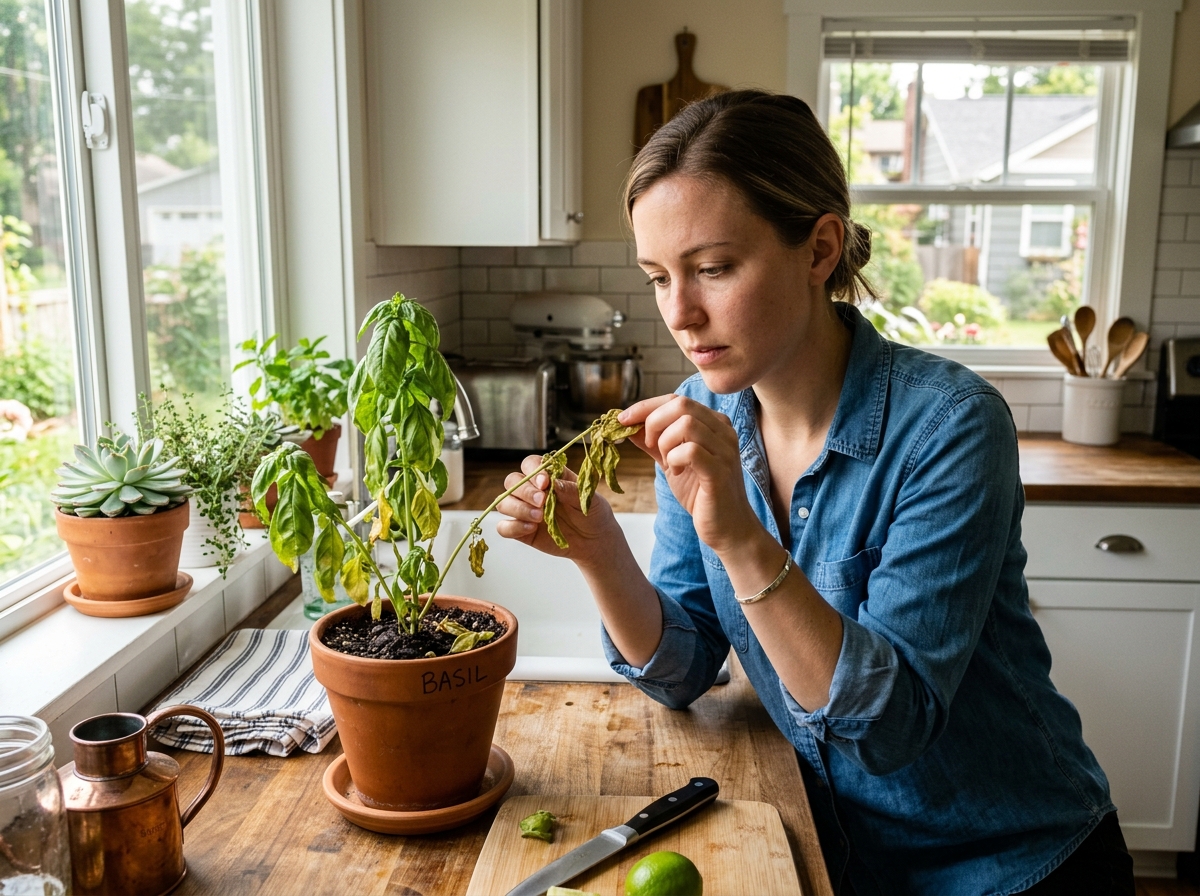
Overwatering is the #1 killer of indoor basil. Because we love our plants, we often give them “just a little more” water, but basil hates having “wet feet.” When the soil is constantly saturated, oxygen cannot reach the roots, effectively suffocating them.
Signs your basil is drowning:
- Yellowing Leaves: Usually starting at the base of the plant and moving upward.
- Brown or Black Spots: These can appear on the leaves as a sign of fungal distress or root rot.
- Mushy Stems: If the base of the stem feels soft or looks translucent, the plant is in trouble.
- Foul Odor: If you sniff the soil and it smells like rotting swamp water, root rot has set in.
- Soggy Soil: If the soil is still soaking wet five days after your last watering, your drainage is likely blocked.
If you suspect overwatering, stop watering immediately. Let the soil dry out completely. In severe cases, you may need to repot the plant in fresh, dry soil and trim away any mushy, brown roots.
Signs of Underwatering and Dehydration
Underwatering is usually easier to fix, provided you catch it before the plant reaches its “permanent wilting point.” Basil relies on water to stay upright; without it, the cells lose their turgidity, and the plant collapses.
Signs your basil is thirsty:
- Drooping and Wilting: The leaves will look sad and hang limply against the stem.
- Crispy Edges: If the leaves feel dry or “papery” to the touch, the dehydration is advanced.
- Shriveled Foliage: Leaves may curl inward to reduce surface area and conserve moisture.
- Pulling Away: You might notice the soil shrinking away from the edges of the pot.
The good news? Basil is incredibly resilient. An underwatered plant can often recover in as little as two hours after a thorough watering. If the soil is extremely dry, we recommend the “bottom watering” method: place the pot in a tray of water for 20 minutes and let the soil wick up the moisture from below.
Environmental Factors Affecting Indoor Basil Hydration
Your watering routine shouldn’t exist in a vacuum. To water basil plant indoors effectively, you must account for the environment surrounding the pot.
| Pot Material | Moisture Retention | Watering Frequency |
|---|---|---|
| Terracotta | Low (Porous) | High (Dries out fast) |
| Plastic/Resin | High | Low to Medium |
| Glazed Ceramic | Medium/High | Medium |
| Fabric Grow Bags | Very Low | Very High |
Sunlight Exposure: Basil needs 6-8 hours of sunlight daily. More light equals more photosynthesis, which means the plant “drinks” more water. If you are using grow lights, be aware that they can generate heat that dries out the soil faster than you might expect. You can learn more about grow lights for indoor herbs to see how they impact your hydration strategy.
Temperature and Humidity: The ideal temperature for basil is between 80 and 90 degrees Fahrenheit. If your home is cooler (around 60-70°F), the plant will grow slower and need less water. Conversely, if your indoor air is very dry, consider using a pebble tray or a humidifier to keep the air around the leaves between 40-60% humidity. For more on this, see our humidity tips for indoor herbs.
Choosing the Right Pot and Soil Mix
The container and the “dirt” inside it are the foundation of your watering success.
- The Pot: Always choose a pot with drainage holes. Without them, water collects at the bottom, creating a “death zone” for roots. While terracotta is beautiful, it is porous and sucks moisture out of the soil. If you use terracotta, you’ll need to water more frequently. A 12-inch wide planter is often the “sweet spot” for a mature basil plant, providing enough room for roots without being so large that the soil stays wet too long.
- The Soil: Never use standard garden soil for indoor pots; it’s too heavy and will compact, crushing the roots. Instead, use a high-quality potting mix. Ingredients like peat moss or coco coir are excellent because they hold onto moisture while still allowing air to circulate. Adding a bit of perlite or compost can further balance drainage and nutrient retention.
For the best results, look into our guide on soil and fertilizer for indoor herbs to ensure your mix is optimized for hydration.
Advanced Techniques for Thriving Indoor Basil
Once you’ve mastered the basics, you might want to try some “pro” moves to make your life easier and your basil bushier.
Bottom Watering (The Saucer Method): One of the most effective ways to water basil plant indoors is to let the plant decide how much it needs. Fill a deep saucer or tray with about an inch of water and set your pot (with drainage holes) inside it. The soil will act like a sponge, drawing moisture up to the roots. After 15–30 minutes, dump out any excess water. This keeps the leaves dry and ensures the roots at the bottom of the pot are thoroughly hydrated.
Self-Watering Pots: These are a game-changer for busy herb parents. These pots have a reservoir at the base and a wicking system that pulls water into the soil as it dries out. This provides a consistent level of moisture that basil loves, preventing the “stress cycle” of wilting and soaking.
Growing Basil in Water (Hydroponics)
Did you know you don’t even need soil to grow basil? Growing basil in water—often called “hydroponic” growing—is a fantastic way to keep fresh herbs in the kitchen all winter without the mess of dirt.
- How to do it: Take a cutting or a “living basil” plant from the store, wash the soil off the roots, and place it in a Mason jar filled with clean water.
- The Secret Ingredient: Add a drop of liquid silica. This helps strengthen the plant’s cell walls, making the stems sturdier since they don’t have soil to lean on.
- Maintenance: To keep things healthy, replace the water every week or two. This prevents algae growth and ensures the plant has fresh oxygen.
- Benefits:
- No soil-borne pests (like fungus gnats).
- No risk of “underwatering” the roots.
- Beautiful kitchen decor.
- Easy to monitor root health visually.
Frequently Asked Questions about Watering Basil
Can I use tap water for my indoor basil?
Yes, but with a caveat. If your city water is heavily chlorinated, it can sometimes sensitive the roots. A simple trick is to fill your watering can the night before and let it sit out. This allows the chlorine to dissipate and ensures the water is at room temperature—basil hates a cold “shock” to its roots!
How much water does a potted basil plant need per session?
A good rule of thumb is the “quarter rule.” Start by pouring an amount of water equal to about one-fourth of the volume of the soil in the pot. For example, if you have 4 cups of soil, start with 1 cup of water. Adjust based on whether water starts draining out the bottom.
Should I mist my basil leaves indoors?
While basil likes humidity, misting the leaves can be a double-edged sword. If the air circulation is poor, wet leaves can lead to Downy Mildew, a fungal disease that can ruin your harvest. Instead of misting the leaves directly, we recommend using a pebble tray or a humidifier to increase the moisture in the air.
Conclusion
At FinCapitaly, we believe that anyone can have a thriving indoor herb garden. The “secret” to mastering how to water basil plant indoors isn’t about finding a magic formula—it’s about building a relationship with your plant. By observing the leaves, feeling the soil, and adjusting for your home’s unique environment, you can ensure your basil remains a lush, productive centerpiece of your kitchen.
Consistent monitoring and a little bit of patience are the keys to sustainable growth. Whether you are using a classic terracotta pot or experimenting with hydroponics in a Mason jar, the rewards of fresh, home-grown basil are well worth the effort.
Start your indoor herb journey today and transform your windowsill into a fragrant paradise!
