
The Easiest Party Appetizer You’re Not Making Yet
A bocconcini and tomato appetizer is one of the simplest, freshest crowd-pleasers you can bring to any gathering. It takes under 15 minutes, needs no cooking, and looks stunning on any platter.
Here’s the quick version:
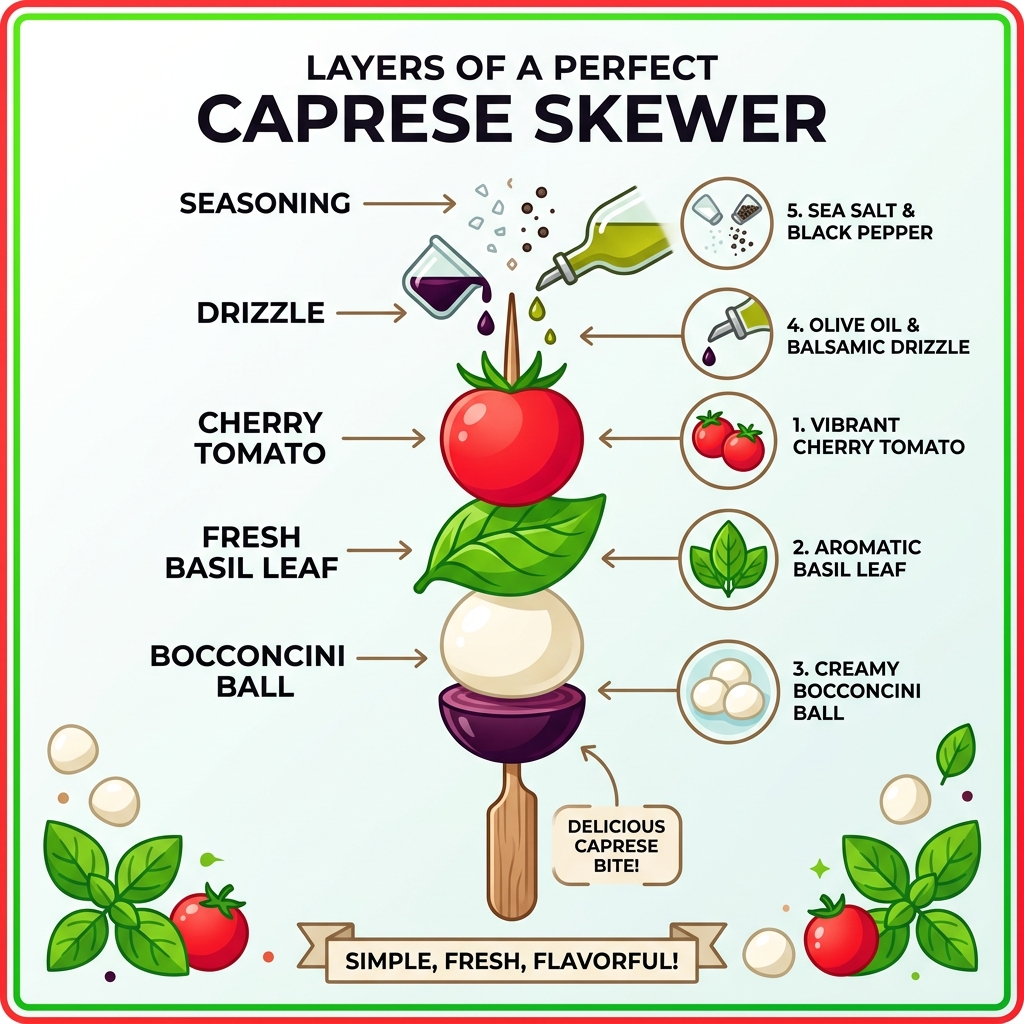
- Thread a cherry tomato, a fresh basil leaf, and a bocconcini ball onto a toothpick or small skewer
- Repeat until all ingredients are used
- Drizzle with extra virgin olive oil and balsamic glaze
- Sprinkle with sea salt and black pepper
- Serve immediately
That’s it. Five steps, four ingredients, zero oven time.
These bite-sized skewers are basically a portable Caprese salad. Traditional Caprese is hard to serve at large parties – it’s saucy, it needs a fork, and it doesn’t travel well. Skewers solve all of that.
They’re also naturally gluten-free, vegetarian, and low-carb – so almost every guest at the table can enjoy them.
Bocconcini’s mild, creamy flavor pairs perfectly with ripe tomatoes and fragrant basil. Whether you’re hosting a backyard BBQ, a holiday party, or a quick wine night, this appetizer fits the moment.
Below, we cover everything: ingredients, assembly, variations, storage, and pro tips for making these skewers look and taste like they came from a restaurant.
What is Bocconcini and Why is it Perfect for a Bocconcini and Tomato Appetizer?
If you have ever wandered through the specialty cheese section of your local grocery store, you have likely seen small, white, water-packed balls of cheese labeled “Bocconcini.” In Italian, the word literally translates to “little mouthfuls,” which is exactly what they are.
Bocconcini are small nuggets of fresh mozzarella cheese. Traditionally, mozzarella was made from the milk of water buffalo in Italy’s Campania region, but today, most bocconcini you find in North America are made from high-quality cow’s milk. These unripened cheese balls are mild, creamy, and have a slightly spongy texture that absorbs flavors beautifully.
Because they come pre-shaped into bite-sized spheres, they are the ultimate shortcut for a bocconcini and tomato appetizer. There is no messy slicing or cubing required. Their uniform shape also provides a high-end, professional look to your platters.
Comparing Mozzarella Sizes
While “bocconcini” is often used as a catch-all term, fresh mozzarella comes in several sizes. Choosing the right one depends on the size of your tomatoes and your skewers.
| Name | Translation | Size Comparison | Best Use |
|---|---|---|---|
| Bocconcini | Little mouthfuls | Size of an egg or large plum | Halved for salads or large skewers |
| Ciliegine | Cherry-sized | Size of a cherry tomato | Perfect 1:1 match for skewers |
| Perline | Pearl-sized | Size of a large marble | Great for “mini” toothpicks or salads |
Beyond their convenience, bocconcini are a nutritional powerhouse for those following a Mediterranean diet. They are high in protein (about 11g per serving) and calcium, while remaining relatively low in carbohydrates (around 3g per serving). This makes them a satisfying snack that won’t leave your guests feeling weighed down.
Essential Ingredients for the Ultimate Caprese Skewer
When a recipe only has a few ingredients, the quality of each one becomes paramount. To make a bocconcini and tomato appetizer that truly shines, we recommend sourcing the freshest components possible.
- Bocconcini or Ciliegine: Look for cheese packed in water or whey to ensure maximum creaminess. You can also find “marinated” versions that are pre-soaked in herbs and oil for an extra flavor kick.
- Fresh Basil: This is non-negotiable. Dried basil will not work here. Look for vibrant green leaves without dark spots. If you want to take your herb game to the next level, check out our guide on delicious-appetizers-made-easy-with-indoor-basil.
- Extra Virgin Olive Oil (EVOO): Use the “good stuff” here—the cold-pressed, flavorful oil you save for drizzling rather than cooking.
- Balsamic Glaze: This is a reduction of balsamic vinegar and often a sweetener like honey or sugar. It is thicker and sweeter than regular vinegar, allowing it to cling to the skewers rather than puddling at the bottom of the plate.
- Seasoning: High-quality flaky sea salt (like Maldon) and freshly cracked black pepper are essential to bridge the flavors of the cheese and fruit.
Selecting the Best Tomatoes for Your Bocconcini and Tomato Appetizer
The tomato is the star of the show, providing the necessary acidity to balance the fatty cheese. While standard cherry tomatoes are great, don’t be afraid to explore.
- Grape Tomatoes: These are often sturdier and easier to skewer without bursting.
- Heirloom “Toy Box” Tomatoes: These come in a variety of colors—yellow, purple, orange, and striped red. Using a mix of colors creates a stunning visual “confetti” effect on your serving tray.
- Seasonal Ripeness: In the peak of summer, garden-fresh tomatoes are unbeatable. If you are making these in the winter, look for “hydroponic” or “on-the-vine” cherry tomatoes, which tend to have better flavor than standard grocery store varieties in the off-season.
For more tips on choosing the right produce for Italian-inspired dishes, see our article on how-to-make-a-sliced-tomato-mozzarella-basil-appetizer-that-actually-tastes-like-italy.
Step-by-Step: How to Assemble Bocconcini Tomato Skewers
Assembly is where the magic happens. While it seems straightforward, a few professional techniques can make your skewers easier to eat and more beautiful to look at.
- Prep Your Ingredients: Wash and thoroughly dry your tomatoes and basil. If the ingredients are wet, the oil and glaze will slide right off. Drain the bocconcini from their liquid and pat them dry with a paper towel.
- Choose Your Skewer: For a cocktail party, standard 4-inch wooden toothpicks work best. For a sit-down starter, 6-inch bamboo skewers allow you to fit more items on each stick.
- The Weaving Technique: Instead of just poking a hole through a flat basil leaf, fold the leaf in half or thirds. Thread the skewer through the folded leaf so it “hugs” the cheese or the tomato. This ensures every bite has a burst of basil flavor.
- The Order: A classic order is: Tomato -> Folded Basil -> Bocconcini -> Folded Basil -> Tomato. This creates a symmetrical look and keeps the cheese protected in the middle.
- Season Individually: Don’t just salt the platter; salt the skewers. Lay them out and give them a light sprinkle of sea salt and pepper before the liquid toppings.
- The Drizzle: Just before serving, use a squeeze bottle to apply the balsamic glaze in a zigzag pattern across the entire platter. Finish with a light drizzle of olive oil.
Creative Variations for Your Bocconcini and Tomato Appetizer
Once you have mastered the classic, you can start experimenting with these fun twists:
- The Roasted Version: If your tomatoes aren’t quite ripe, toss them in olive oil and roast them at 350°F for about 20 minutes until they are wrinkled but not burst. This intensifies their sweetness and makes for a “warm” Caprese experience that is perfect for winter.
- The Meaty Twist: Wrap a thin slice of prosciutto around the bocconcini ball before skewering it. The saltiness of the cured meat is a fantastic contrast to the mild cheese.
- Pesto Drizzle: Instead of balsamic glaze, use a thinned-down basil pesto. This doubles down on the herbal notes.
- Fruit Swaps: In the summer, try replacing one of the tomatoes with a cube of fresh watermelon, a slice of peach, or a whole strawberry.
- Heart-Shaped Tomatoes: For Valentine’s Day or anniversaries, cut two grape tomatoes at a 45-degree angle. Join the two larger halves together to form a heart shape, then secure them with the toothpick and cheese.
- The “Rocket” Wrap: Use arugula (also known as rocket) instead of basil. The peppery bite of the greens adds a sophisticated layer to the appetizer.
Serving, Storage, and Party Planning Tips
Planning for a crowd requires a bit of math. As a general rule of thumb, we suggest planning for 2 to 3 skewers per person if you are serving other appetizers, or 4 to 5 per person if this is the primary snack.
Yield and Serving Sizes
A standard container of bocconcini usually contains about 16 to 20 balls. Pairing these with a pint of cherry tomatoes will typically yield roughly 18 to 20 skewers.
Make-Ahead Prep
One of the best things about a bocconcini and tomato appetizer is that it can be assembled in advance. You can thread the tomatoes, cheese, and basil onto the skewers up to 4 hours before your event. Store them in an airtight container in the refrigerator.
Pro Tip: Do not add the salt, oil, or balsamic glaze until the very last second. Salt draws moisture out of tomatoes and cheese, which can lead to a soggy mess if left too long. Balsamic glaze can also “bleed” into the white cheese, turning it a muddy brown color.
Presentation Styles
- The Wreath: For the holidays, arrange the skewers in a large circle on a round white platter. Place a small bowl of extra balsamic glaze or olives in the center to create a festive “edible wreath.”
- The Vineyard Platter: Use a rustic wooden board and intersperse the skewers with clusters of red grapes and walnuts for a sophisticated wine-pairing look.
- The Vertical Display: If you have a foam base or a specialized skewer holder, stand the skewers upright for a dramatic, architectural presentation.
Drink Pairings
These skewers are naturally high in acidity and creaminess, making them a dream for beverage pairings.
- Wine: A crisp Sauvignon Blanc, a dry Rosé, or a light Pinot Grigio.
- Cocktails: A classic Gin and Tonic or a refreshing Aperol Spritz.
- Non-Alcoholic: Sparkling water with a squeeze of lemon or a cucumber-infused mocktail.
Frequently Asked Questions about Bocconcini Appetizers
Can I make bocconcini skewers ahead of time?
Yes, but with caveats. You can assemble the dry components (tomato, cheese, basil) up to 4 hours in advance. Keep them chilled in the fridge. Always wait until you are ready to walk the platter out to the guests before adding the oil, balsamic glaze, and salt. This keeps the basil from wilting and the cheese from discoloring.
What is the difference between bocconcini and ciliegine?
The main difference is size. Bocconcini are typically about the size of an egg or a large plum, meaning they often need to be halved for bite-sized appetizers. Ciliegine are “cherry-sized” (about 1 inch in diameter), making them the perfect 1:1 match for cherry tomatoes on a skewer. Both are made from the same fresh mozzarella curd and have the same flavor profile.
Is balsamic glaze gluten-free?
In most cases, yes. Traditional balsamic glaze is simply a reduction of balsamic vinegar and a sweetener. However, some commercial brands may use thickeners like modified food starch or malt. Always check the label for “wheat” or “gluten” if you are serving guests with Celiac disease. If you want to be 100% sure, you can make your own by simmering balsamic vinegar in a small saucepan until it reduces by half and coats the back of a spoon.
Conclusion
At FinCapitaly, we believe that entertaining should be as much fun for the host as it is for the guests. A bocconcini and tomato appetizer embodies this philosophy—it is elegant, healthy, and incredibly easy to execute. By focusing on high-quality seasonal ingredients and a few simple assembly techniques, you can turn a few humble items from the grocery store into a gourmet experience.
Whether you are looking for a quick low-carb snack or the centerpiece for your next big party, these skewers are a guaranteed win. Ready to explore more ways to elevate your home cooking? Explore more gourmet recipes and join our community of food lovers today!
