
You Can Grow Fresh Herbs Indoors Without Any Sunlight — Here’s How
Growing herbs indoors without sunlight is completely possible — and easier than most people think. The secret is replacing natural light with the right artificial grow lights.
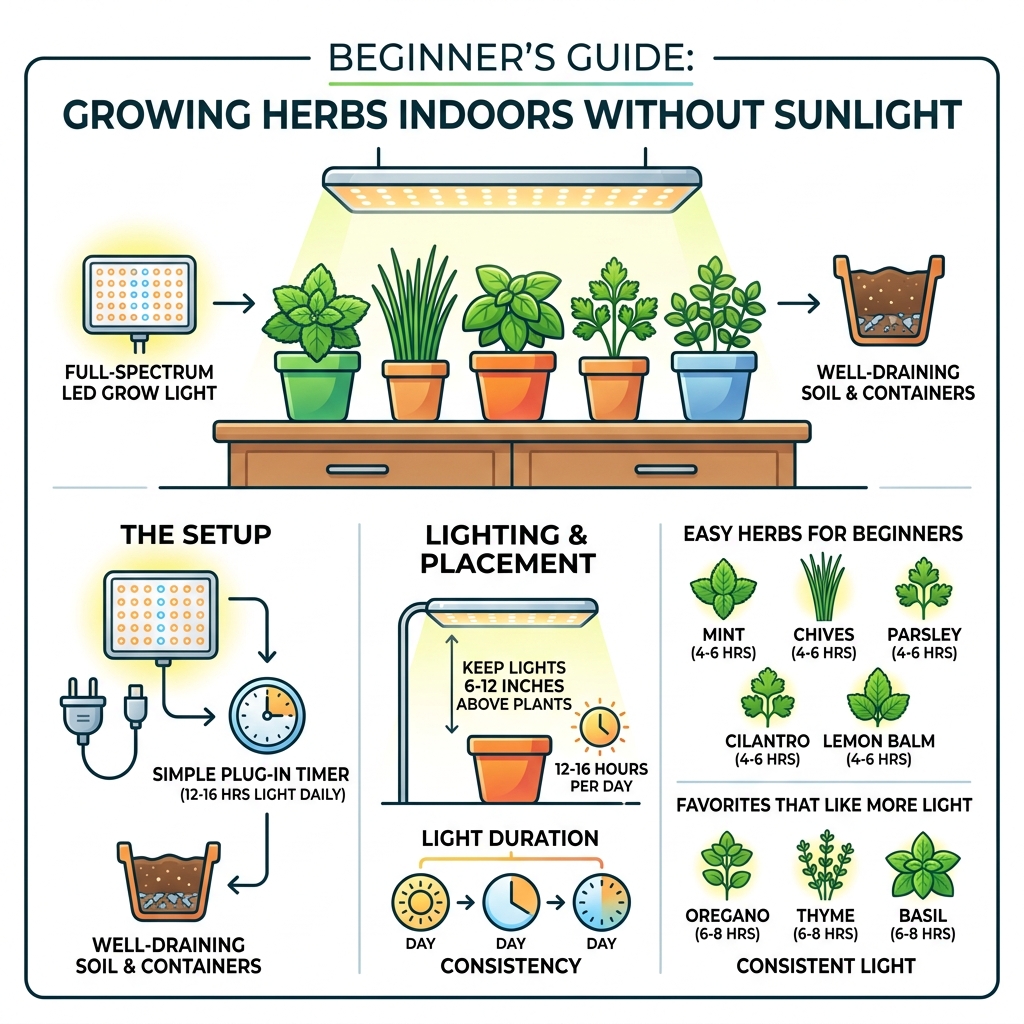
The best herbs to grow indoors without sunlight are:
| Herb | Light Needed Daily | Difficulty |
|---|---|---|
| Mint | 4-6 hours | Very easy |
| Chives | 4-6 hours | Very easy |
| Parsley | 4-6 hours | Easy |
| Cilantro | 4-6 hours | Easy |
| Lemon balm | 4-6 hours | Easy |
| Oregano | 6-8 hours | Easy |
| Thyme | 6-8 hours | Easy |
| Basil | 6-8 hours | Moderate |
Most herbs need just 12 to 16 hours of light from a full-spectrum LED grow light placed 6 to 12 inches above the plants — and a simple plug-in timer does the rest.
No window. No problem.
Whether you’re in a basement flat, a windowless kitchen, or a city apartment that never sees direct sun, you can still have fresh basil for pasta and mint for tea growing right on your countertop.
This guide walks you through exactly which herbs to pick, what lights to buy, and how to keep them alive and productive all year long.
The Best Varieties for Growing Herbs Indoors Without Sunlight
When we think of herbs, we often picture sun-drenched Mediterranean hillsides. However, many of our favorite culinary plants are surprisingly adaptable. In a windowless environment, we aren’t just looking for “sun-loving” plants; we are looking for those that can thrive under the consistent, controlled output of artificial light.
Some herbs are naturally more “shade-tolerant” than others. While a tomato plant might struggle in a windowless basement, leafy greens and herbs often find the stable temperatures of an indoor room quite pleasant. By selecting the Best Herbs to Grow Indoors, you set yourself up for success from day one.
Low-Light Champions: Mint and Chives
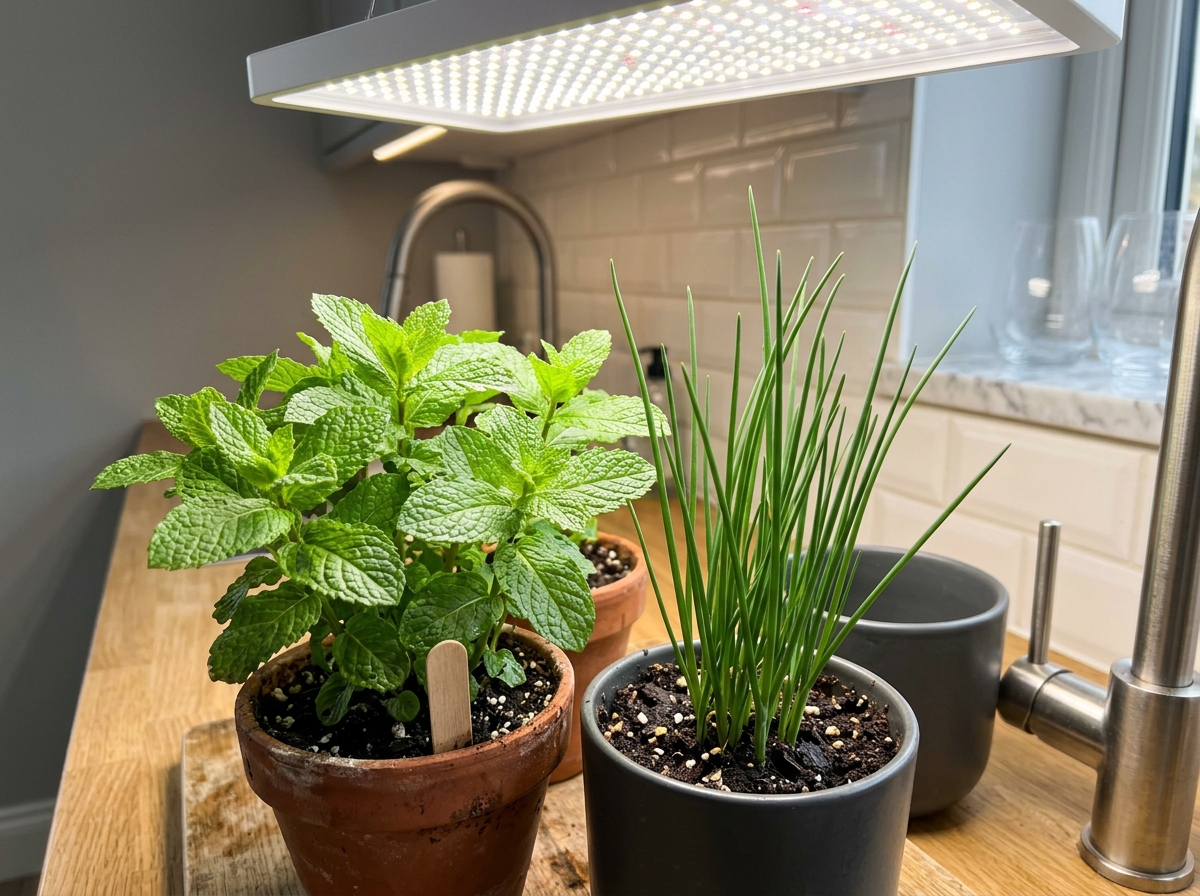
If you are a beginner, look no further than mint and chives. These are the “roommates who actually do the washing up”—reliable, low-maintenance, and very forgiving.
- Mint: Known for its invasive growth outdoors, mint’s aggressive nature is actually a benefit indoors. It doesn’t mind lower light levels and will happily fill a pot with fragrant leaves in 25-30 days. It is a cool-season herb that handles the lack of intense heat very well.
- Chives: A relative of onions and garlic, chives have mild antiseptic properties and are incredibly hardy. They can grow in clumps and are perfect for snipping over a baked potato all winter long. Because they grow from bulbs/clumps, they are very difficult to kill, even if you forget to turn the lights on for a day.
Culinary Staples: Parsley and Cilantro
These two are the backbone of many recipes, but they require a slightly different approach when growing herbs indoors without sunlight.
- Parsley: This herb is famous for its slow germination—it can take weeks to sprout from seed. However, once established, it is very adaptable to part-shade or artificial light. It loves moisture and consistent temperatures around 70°F.
- Cilantro (Coriander): Cilantro has a deep taproot, so it prefers a deeper pot (at least 6-8 inches). It can be a bit finicky about heat; if it gets too warm, it “bolts” (goes to seed). Indoor environments without direct, scorching sun are actually ideal for keeping cilantro in its leafy, edible stage for longer.
Other great candidates for your windowless garden include Lemon Balm, which is naturally shade-tolerant, and Thyme or Oregano, which can grow up to 2 feet tall indoors if given enough “artificial sun.”
Choosing the Right Grow Lights for Your Windowless Garden
Since we don’t have windows, the grow light is the “heart” of our garden. Without it, photosynthesis stops, and our plants die. But don’t worry—you don’t need a professional greenhouse setup to get results.
| Light Type | Energy Efficiency | Heat Output | Best For |
|---|---|---|---|
| Full-Spectrum LED | High | Low | All herbs; long-term growth |
| Fluorescent (T5/T8) | Medium | Low-Medium | Seedlings; leafy herbs |
| HID (Metal Halide) | Low | High | Large-scale indoor farming |
We highly recommend Full-Spectrum LED grow lights. They are the gold standard for growing herbs indoors without sunlight because they mimic the entire solar spectrum, including the red wavelengths (for stem and root strength) and blue wavelengths (for leafy growth). Plus, they are incredibly cheap to run, often reducing energy consumption by up to 80% compared to traditional bulbs.
When shopping, look for a color temperature between 5000K and 6500K. This “daylight” range is exactly what herbs need to stay lush and green. For a small herb garden, a 50-watt light is the minimum, but we suggest 100 watts if you plan on keeping your garden going for more than two months. You can find quality Grow Lights for Indoor Herbs starting at around $20 to $35.
Optimal Light Duration for Growing Herbs Indoors Without Sunlight
One of the biggest mistakes beginners make is thinking that because the light is artificial, it should stay on 24/7. Plants need to “sleep” too! During the dark hours, herbs process the energy they gathered during the day.
- Leafy Herbs (Mint, Basil): Aim for 12-14 hours of light.
- Slow-Growing/Woody Herbs (Rosemary, Thyme): These often prefer 14-16 hours.
- The Rest Period: Always provide at least 8 hours of darkness.
The easiest way to manage this is with a simple $6 automatic plug-in timer. Set it to turn on at 7 AM and off at 11 PM, and your herbs will think they are living in a perfect, eternal summer.
Proper Light Placement and Distance
Distance matters. If the light is too far away, your herbs will stretch toward it, becoming “leggy” and weak. If it’s too close, the intense light (or heat) can scorch the delicate leaves.
- LED Lights: Keep them 6 to 12 inches above the tops of the plants.
- Fluorescent Lights: These are less intense, so they can be kept closer, about 3 to 6 inches away.
As your plants grow taller, you must adjust the height of your lights. If you see the leaf tips turning brown or curling, move the light up. If the stems look like thin, pale noodles, move the light down. Check out our Indoor Herb Garden Setup Tips for more on positioning.
Essential Care for Growing Herbs Indoors Without Sunlight
In a windowless room, you are the weather god. You control the rain, the soil quality, and the temperature.
Soil and Pots
Don’t use dirt from your backyard! It’s too heavy and likely contains bugs that will thrive in your warm house. Instead, use a high-quality indoor potting mix. A great “recipe” for indoor herbs is:
- 40% compost or vermicompost (for nutrients)
- 40% coco peat (to hold moisture)
- 20% perlite or coarse sand (for drainage)
For containers, terracotta pots are excellent for herbs like thyme, oregano, and rosemary because the clay is “breathable,” allowing excess moisture to evaporate. For moisture-loving herbs like mint or basil, plastic or glazed ceramic pots work well. Just make sure every pot has drainage holes!
Temperature and Humidity
Most herbs are happiest between 65-75°F (18-24°C). Basil is the exception; it’s a tropical soul and prefers it closer to 75°F.
Humidity is the silent killer in indoor gardens, especially in winter when heaters dry out the air. Aim for 40-60% humidity. You can achieve this by:
- Grouping plants together (they create their own microclimate).
- Placing pots on a tray filled with pebbles and a little water.
- Using a small humidifier nearby.
For more details on feeding your plants, see our Soil and Fertilizer for Indoor Herbs guide.
Hydroponics: Growing Herbs Indoors Without Sunlight and Soil
If you want to feel like a scientist, try Planting Herbs Without Soil. Hydroponic systems use nutrient-enriched water instead of dirt.
Why try it?
- Speed: Herbs often grow 30-50% faster in hydroponic setups.
- Cleanliness: No messy soil on your kitchen counters.
- Automation: Many kits come with built-in lights and water pumps.
You simply add liquid nutrients to the water once a week and change the water entirely every few days to keep it fresh. Mint and basil are the superstars of the hydroponic world.
Pruning and Harvesting for Continuous Growth
Don’t be afraid to “eat your garden.” Pruning actually tells the plant to grow more.
- The One-Third Rule: Never harvest more than one-third (33%) of the plant at one time. If you take too much, the plant might go into shock.
- The Height Rule: Wait until the plant is at least 6 to 8 inches tall before your first big harvest.
- Pinching: For herbs like basil, “pinch” off the top center stem just above a pair of leaves. This encourages the plant to grow outward into a bushy shape rather than just growing one tall, skinny stem.
Learn the art of the snip with our guide on Pruning Herbs for Healthy Growth.
Troubleshooting Common Indoor Herb Problems
Even with the best intentions, things can go wrong. The good news is that plants usually tell you exactly what’s bothering them if you know what to look for.
- Leggy Stems: This is the most common issue when growing herbs indoors without sunlight. It means your light is too weak or too far away. Move the light closer!
- Yellow Leaves: Usually a sign of overwatering or a lack of nitrogen. Check the soil—if it’s soggy, stop watering. If it’s dry, try a diluted organic fertilizer.
- White Fuzz on Soil: This is mold, often caused by poor air circulation. You can scrape it off, but the long-term fix is adding a small fan to keep the air moving.
- Tip Burn: If the very tips of the leaves are brown and crispy, your grow light is likely too close or the humidity is too low.
For a deeper dive into fixing these issues, visit Indoor Herb Growth Troubleshooting.
Managing Pests in Enclosed Spaces
Bugs happen. Aphids and spider mites are the usual suspects. Since these herbs are for eating, avoid harsh chemicals.
- Sudsy Water: Mix a few drops of mild dish soap in a spray bottle with water. Spray the leaves (top and bottom) and then gently wipe them.
- Neem Oil: A natural, organic oil that disrupts the life cycle of pests.
- The “Haircut”: If one plant is heavily infested, it might be best to harvest what you can, discard the rest, and start fresh to save your other plants.
Check out our Indoor Herb Pest Control Tips for more organic solutions.
Avoiding Overwatering and Root Rot
Overwatering is the “cardinal sin” of indoor gardening. Because there is no sun to evaporate the water, the soil stays wet longer.
- The Finger Test: Stick your finger 2 inches into the soil. If it feels moist, wait. If it’s dry, it’s time to water.
- Drainage: Always empty the saucer under your pot. Never let your herbs “sit in wet feet,” as this leads to root rot, which is almost impossible to fix.
Avoid common pitfalls with our list of Indoor Herb Watering Mistakes to Avoid.
Frequently Asked Questions about Indoor Herb Gardening
Why are my indoor herbs growing tall and thin?
This is called “etiolation.” Your plants are desperately searching for light. In a windowless room, this means your grow light isn’t intense enough or is positioned too high. Lower your light to about 6 inches above the plants and ensure you are using a “full-spectrum” bulb.
How often should I fertilize herbs grown under artificial lights?
Because indoor herbs grow more consistently than outdoor ones, they need regular snacks. Use a diluted, nitrogen-rich organic fertilizer (like fish emulsion or compost tea) once every 4-6 weeks. During the peak growth of spring and summer, you can increase this to once every 15 days. Check our Indoor Herb Fertilizer Guide for specific product recommendations.
What is the best temperature for an indoor herb garden?
Keep your room between 65°F and 75°F. Avoid placing your herbs near air conditioning vents or heaters, as the sudden “drafts” of hot or cold air can stress the plants. If you are comfortable in a t-shirt, your herbs are likely comfortable too!
Conclusion
At FinCapitaly, we believe that everyone should have access to fresh, healthy food, regardless of where they live. Growing herbs indoors without sunlight is more than just a hobby; it’s a step toward sustainable urban living and a more flavorful kitchen.
By choosing the right “low-light” varieties like mint and chives, investing in a quality full-spectrum LED light, and following a simple watering routine, you can harvest fresh flavors 365 days a year. You don’t need a backyard or a massive bay window—just a little bit of electricity and a lot of heart.
Start your indoor herb garden today and enjoy the magic of growing your own food, even in the darkest corners of your home!
