
The Timeless Italian Appetizer You Need to Know
A classic bruschetta recipe is one of the simplest, most satisfying things you can make — ripe tomatoes, fresh basil, garlic, and olive oil on perfectly toasted bread. That’s really it.
Here’s how to make classic bruschetta in 6 steps:
- Dice ripe tomatoes and drain excess juice
- Mix with fresh basil, minced garlic, olive oil, salt, and pepper
- Let the mixture marinate for at least 15–30 minutes
- Slice rustic bread about ½ to ¾ inch thick and toast until golden
- Rub each warm slice with a cut garlic clove and drizzle with olive oil
- Spoon tomato mixture over toasts with a slotted spoon and serve immediately
The word bruschetta comes from the Roman dialect word bruscare, meaning “to roast over coals.” Technically, it refers to the toasted bread itself — not the tomato topping. The tomatoes came much later.
Pronounced “broo-SKEH-ta” (not “broo-SHEH-ta”), this dish has roots in cucina povera — Italian peasant cooking — where day-old bread was revived with olive oil and whatever was fresh from the garden.
The beauty of bruschetta? The fewer the ingredients, the more each one matters. Peak-season tomatoes and high-quality extra-virgin olive oil aren’t optional extras here — they’re the whole point.
If you grow your own basil at home, this is exactly the kind of recipe it was made for.
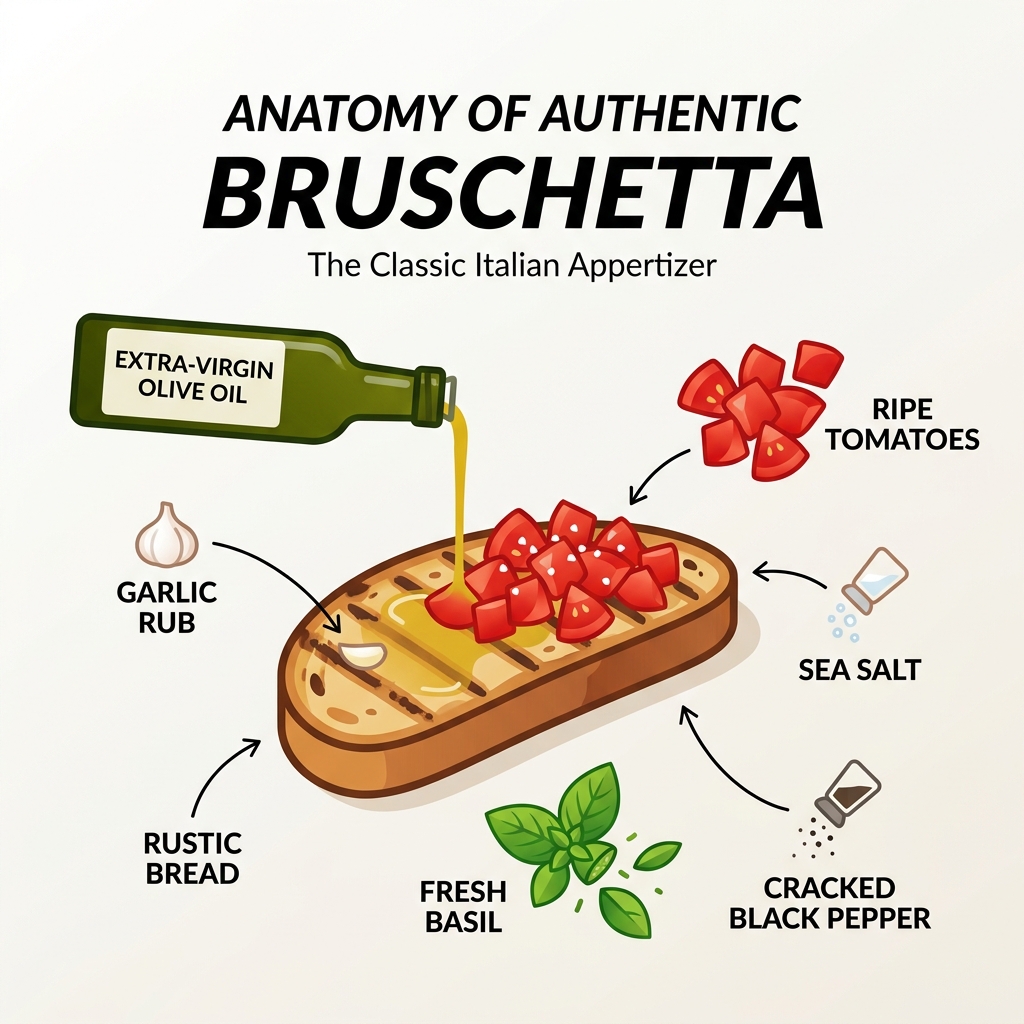
The Foundation of a Classic Bruschetta Recipe
When we talk about an authentic classic bruschetta recipe, we have to start with the bread. In Italy, bruschetta was born from the need to use up day-old, slightly stale bread. By roasting it over an open fire, rubbing it with garlic, and dousing it in freshly pressed olive oil, peasants transformed a humble staple into a delicacy.

The Best Bread for the Job
To achieve that iconic crunch that stands up to juicy tomatoes, you need a sturdy loaf. We recommend:
- Pane di Casa: A traditional Italian “house bread” with a thick crust and airy center.
- Sourdough: The slight tang complements the acidity of the tomatoes beautifully.
- Ciabatta or Baguette: These are popular choices in the U.S. and work well if sliced thickly (about 3/4 inch).
Grilling vs. Toasting
While many modern recipes suggest the oven, the most authentic flavor comes from a grill. The slight char from the grates adds a smoky depth that a toaster simply can’t replicate. If you don’t have a grill, a cast-iron skillet on high heat or a “brustolina” (an Italian stovetop toaster) are excellent alternatives.
The Magic Garlic Rub
This is the step most people skip, but it’s the secret to professional-grade bruschetta. Once your bread is toasted and still warm, take a halved, unpeeled garlic clove and rub the cut side directly onto the rough surface of the toast. The bread acts like a grater, melting a thin, aromatic layer of raw garlic into the crust without the overpowering bite of minced garlic in the topping.
Essential Ingredients for Your Classic Bruschetta Recipe
Because this dish relies on so few components, quality is everything. Here is what you’ll need for the ultimate classic bruschetta recipe:
- Vine-Ripened Tomatoes: They should feel heavy for their size and smell like a garden.
- Fresh Basil: Use whole leaves or thin ribbons. If you’re looking for inspiration on how to use your homegrown herbs, check out these delicious appetizers made easy with indoor basil.
- High-Quality Extra-Virgin Olive Oil (EVOO): Look for “cold-pressed” and “fruity” profiles. Since the oil isn’t being cooked, you will taste every note.
- Garlic Cloves: Fresh, plump cloves are a must.
- Flaky Sea Salt & Black Pepper: A finishing touch of Maldon or sea salt provides a “delicate crunch” that elevates the flavors.
Selecting and Preparing the Perfect Tomato Topping
The biggest enemy of a classic bruschetta recipe is sogginess. If your bread turns into a wet sponge within two minutes of serving, something went wrong in the tomato prep.
Choosing Your Variety
Not all tomatoes are created equal. Here’s a quick guide to help you choose:
| Tomato Type | Flavor Profile | Best For… |
|---|---|---|
| Roma (Plum) | Meaty, low moisture | Consistent, firm dicing |
| Cherry/Grape | Very sweet, concentrated | Year-round sweetness; quick halving |
| Heirloom | Complex, acidic, colorful | Summer showstoppers; maximum flavor |
| Vine-Ripened | Classic “tomato” taste | Balanced juice and flesh |
The Seeding and Draining Method
To prevent a watery mess, we suggest a two-step “moisture control” process:
- Seeding: After halving your tomatoes, use your thumb or a small spoon to scoop out the watery seeds and pulp.
- Draining: Place your diced tomatoes in a colander over a bowl. Sprinkle them with a pinch of salt and let them sit for 15 to 30 minutes. The salt draws out the excess “tomato water,” leaving you with concentrated flavor and a firm texture.
If you’re growing your own ingredients, knowing how to care for basil indoors ensures you always have the freshest greens to pair with these perfectly prepped tomatoes.
Step-by-Step Guide to Making Authentic Bruschetta
Now that the ingredients are ready, it’s time to assemble. Precision in dicing and timing is the difference between a “good” appetizer and one that tastes like a summer afternoon in Tuscany.
The Dicing Technique
Aim for uniform 1/2-inch pieces. This ensures every bite has a balanced ratio of tomato to bread. For the basil, use the “chiffonade” method: stack the leaves, roll them tightly like a cigar, and slice across to create thin, elegant ribbons. This prevents bruising the delicate leaves.
The Marinating Process
In a medium bowl, combine your drained tomatoes, basil, a generous drizzle of EVOO, and a pinch of pepper. Some experts suggest adding a teaspoon of grated garlic here as well, though the traditional method relies solely on the garlic rubbed onto the bread. Let this mixture sit at room temperature for at least 30 minutes. This allows the oil to carry the basil and garlic flavors into the heart of the tomatoes.
Toasting and Assembly
- Slice: Cut your bread on a diagonal to create more surface area for the toppings.
- Heat: Broil or grill for 2–3 minutes per side until golden brown.
- Flavor: While the bread is hot, perform the garlic rub and brush lightly with olive oil.
- Top: Use a slotted spoon to scoop the tomato mixture. This is a pro tip: it ensures any juice that accumulated during marination stays in the bowl, not on your bread.
- Finish: Sprinkle with flaky sea salt just before the plate hits the table.
Pro Tips to Avoid Common Mistakes and Sogginess
Even the best cooks can stumble on this “simple” dish. Here’s how to keep your classic bruschetta recipe authentic and crisp.
The Balsamic Debate
In the United States, it is common to see bruschetta drizzled with balsamic glaze. However, many Italian purists argue that authentic bruschetta does not include vinegar. If you choose to use it, use a high-quality balsamic vinegar or a thick glaze, and only add it at the very last second. Adding it too early will break down the tomatoes and make them mushy.
Say No to Cheese (Mostly)
Classic tomato bruschetta is traditionally vegan. While adding parmesan or fresh mozzarella is delicious, it moves the dish into “crostini” territory. If you want to keep it “classy” and authentic, let the tomatoes be the star.
Timing is Everything
Never assemble bruschetta in advance. You can prepare the tomato mixture up to two hours ahead (some even suggest overnight for deeper flavor), and you can toast the bread an hour early. But the moment the tomato touches the toast, the clock starts ticking. For parties, we recommend serving the toasts and the topping in separate bowls, allowing guests to build their own.
Traditional Italian Variations and Expert Pairings
While the tomato version is the world’s favorite, the “original” bruschetta is even simpler.
Fett’unta: The “Oily Slice”
In Tuscany, the most traditional form is fett’unta. It is literally just grilled bread, rubbed with garlic, and soaked in the highest quality, pungent, green olive oil available. It’s often served in November to celebrate the new olive harvest.
Other Authentic Toppings
- Cannellini Beans: Creamy white beans mashed with rosemary and garlic.
- Mushroom & Truffle: Sautéed wild mushrooms with a hint of truffle oil.
- Roasted Peppers: Sweet bell peppers charred and marinated in oil and oregano.
Expert Pairings
To complete the experience, pair your classic bruschetta recipe with drinks that cut through the richness of the olive oil:
- Wine: A crisp, dry white like Pinot Grigio or a light, acidic red like Chianti.
- Cocktails: An Aperol Spritz or a Campari Spritz provides the perfect bitter balance to the sweet summer tomatoes.
- Antipasto: Serve alongside salty prosciutto, sharp provolone, and marinated olives.
Frequently Asked Questions about Bruschetta
How do I keep the bread from getting soggy?
The secret is threefold: seed your tomatoes, drain them in a colander with salt before mixing, and always use a slotted spoon to serve. Most importantly, never top the bread until the exact moment you are ready to eat.
Should I add balsamic glaze or parmesan cheese?
For an authentic Italian experience, the answer is usually no. Traditional bruschetta relies on the harmony of garlic, oil, and tomato. However, if you enjoy the “umami” kick, a light sprinkle of aged parmesan or a tiny drizzle of balsamic glaze can be a tasty modern twist.
Can I make the tomato mixture a day in advance?
You can! Marinating the tomatoes overnight in the fridge can actually deepen the flavors. Just be sure to bring the mixture back to room temperature before serving, as cold tomatoes lose their aromatic sweetness.
Conclusion
At FinCapitaly, we believe that the best things in life are often the simplest. Mastering a classic bruschetta recipe isn’t about complex techniques; it’s about respecting the ingredients. By choosing the right bread, mastering the garlic rub, and treating your tomatoes with care, you can bring a piece of the Italian countryside to your kitchen.
Whether you’re hosting a summer barbecue or looking for a light, elegant snack, this authentic approach ensures your bruschetta will always be the star of the show. Ready to dive deeper into fresh, homemade flavors? Explore more authentic Italian recipes and start your culinary journey today.
