
Why Looking After Basil Plants Is Easier Than You Think
Looking after basil plants comes down to five core habits: plenty of sunlight, consistent watering, regular pruning, preventing flowering, and using well-drained soil.
Quick-start care checklist:
- Sun: 6 to 8 hours of direct light daily
- Water: When the top inch of soil feels dry; about 1 inch per week in the ground, more often in pots
- Soil: Well-draining, fertile mix with a pH of 6.0 to 7.0
- Pruning: Pinch back the top leaves once the plant reaches 4 to 6 inches tall
- Flowering: Remove flower buds as soon as they appear to keep leaves flavorful
- Temperature: Keep above 50°F (10°C) at all times
Basil is one of the most rewarding herbs you can grow at home. It’s fast. It’s fragrant. And a single healthy plant can produce hundreds of leaves across a season when cared for properly.
The catch? Basil is fussier than it looks. Too much water, too little light, or one missed flower bud and your plant can turn bitter, bolt, or simply collapse.
The good news is that once you understand what basil actually needs, the whole process becomes second nature — whether you’re growing it on a kitchen windowsill or out in the garden.
This guide walks you through everything: sunlight, watering, pruning, harvesting, pests, propagation, and more.
Essential Requirements for Looking After Basil Plants
If we want our basil to thrive rather than just survive, we have to respect its Mediterranean and tropical origins. This is a plant that loves the high life: lots of sun, warm toes, and a balanced diet.
Sunlight and Temperature
Basil is a sun-worshipper. To get those lush, aromatic leaves we all crave, the plant needs between 6 to 8 hours of direct sunlight every day. If it’s stuck in the shade, it will become “leggy”—stretching its stems out thin and weak in a desperate search for light.
Temperature is the other half of the equation. Basil is incredibly frost-sensitive. In fact, it starts to get grumpy (wilting or turning black) if temperatures drop below 50°F (10°C). For germination, the soil needs to be even warmer, ideally between 70°F and 85°F. According to the RHS Guide on how to grow Basil, it is best to wait until the nights are consistently warm before moving your plants outdoors.
Soil and pH
Basil isn’t overly demanding about soil, but it does insist on good drainage. It prefers a fertile, loamy soil enriched with organic matter like compost. The ideal pH range is 6.0 to 7.0. If you are planting in the ground, we recommend spacing your plants 12 to 18 inches apart to ensure they have enough elbow room for air to circulate, which prevents fungal issues.
Best Practices for Looking After Basil Plants in Containers
Many of us prefer growing basil in pots so we can keep it within arm’s reach of the stove. When looking after basil plants in containers, the pot choice matters.
- Drainage is Non-Negotiable: Ensure your pot has plenty of drainage holes. Basil hates “wet feet,” which quickly leads to root rot.
- Size Matters: Use a pot that is at least 8 inches deep. This allows the root system to establish itself firmly.
- The Right Mix: Avoid using standard garden soil in pots; it’s too heavy and will compact. Instead, use a high-quality, peat-free multi-purpose compost or a premium potting mix designed to retain moisture without becoming waterlogged.
- Airflow: Even in a pot, don’t crowd your plants. If you bought a supermarket pot with a dozen tiny seedlings squeezed together, they are likely to struggle. We suggest dividing them into individual pots to give them the space they need to breathe.
For more detailed tips on managing your indoor herb garden, check out our guide on how to care for basil indoors.
Looking After Basil Plants Indoors During Winter
Can you keep the basil party going when the snow starts to fall? Yes, but it takes a bit of effort. Since the winter sun is weaker and the days are shorter, a standard windowsill might not cut it.
We recommend placing your plants in a south-facing window to maximize light. If your home is particularly dark, investing in a small LED grow light can make a world of difference. Keep your indoor temperature around 70°F and be mindful of humidity. Indoor heating can dry out the air, so a light misting or placing the pot on a tray of pebbles and water can help mimic the humid environments basil loves. Learn more about maintaining that indoor vibe with our article on how to care for basil indoors-2.
Mastering Watering and Soil Nutrition
Watering is where most basil journeys go off the rails. It’s a delicate balance: the soil should stay moist, but never soggy.
The Watering Schedule
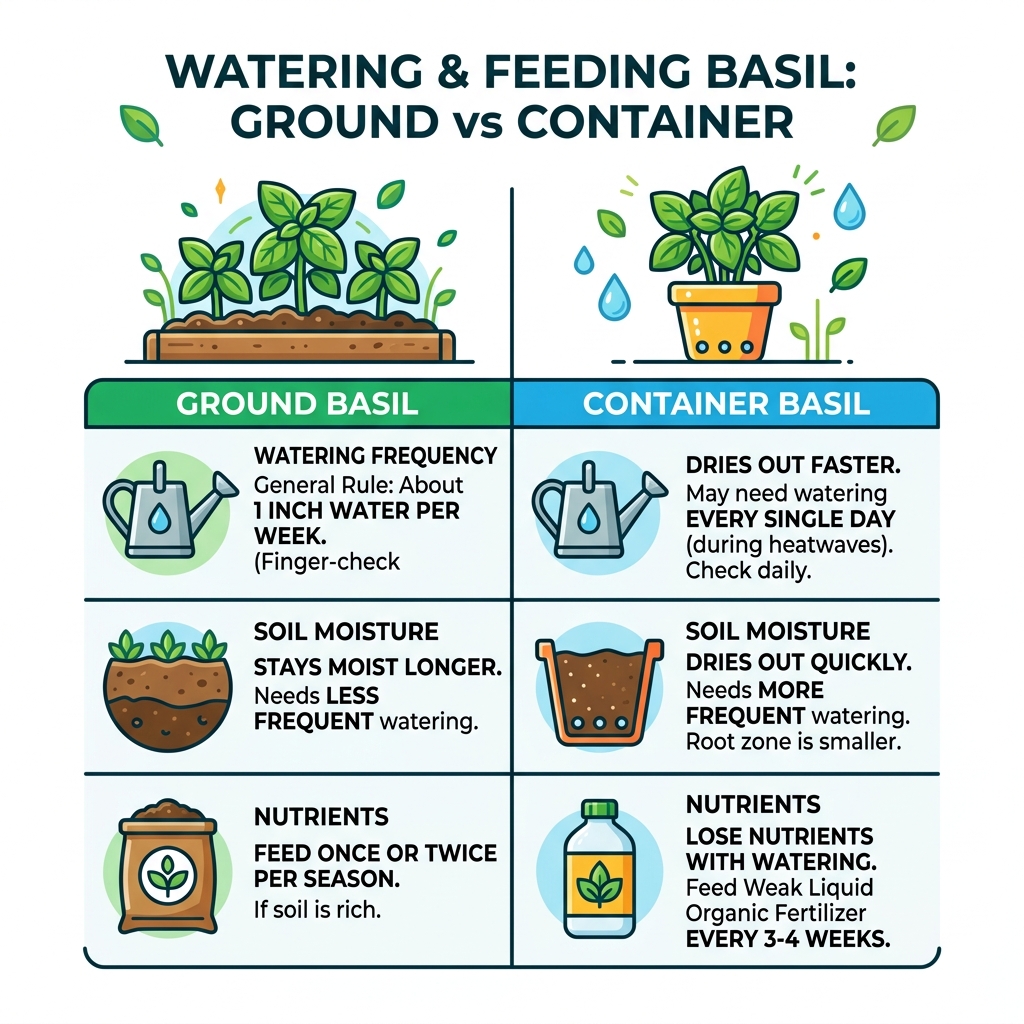
As a general rule, basil needs about 1 inch of water per week when planted in the ground. However, container plants dry out much faster—sometimes requiring water every single day during a heatwave.
The best way to tell if your plant is thirsty? Stick your finger into the soil up to the second knuckle. If it feels dry, it’s time to water. We always recommend watering in the early morning. This allows the plant to hydrate before the midday sun hits and gives any water that splashed onto the leaves time to evaporate, reducing the risk of disease. Always aim for the base of the plant rather than pouring water over the foliage.
Feeding Your Basil
Because we are constantly harvesting leaves from our basil, the plant needs a steady supply of nutrients to regrow.
- In the Garden: A light application of organic fertilizer once or twice a season is usually enough if your soil is rich in compost.
- In Containers: Potted plants lose nutrients every time you water them. We suggest a weak liquid organic fertilizer (like seaweed or kelp meal) every 3 to 4 weeks.
Be careful not to over-fertilize, though! Too much nitrogen can actually diminish the concentration of essential oils, making your basil taste less potent. For a deeper dive into the nutritional needs of your herbs, see how-to-care-for-basil-indoors-3.
Pruning and Harvesting for Maximum Yield
If you let a basil plant do its own thing, it will grow into a tall, lanky stalk that eventually produces flowers and dies. To get a bushy, productive plant, you have to be a bit “cruel” to be kind.
The Magic of Pinching
When your basil plant is about 4 to 6 inches tall and has at least two or three sets of true leaves, it’s time for its first “haircut.”
Using your fingers or a sharp pair of snips, pinch off the central stem just above a pair of leaves. This signals the plant to stop growing upward and start growing outward. From that one cut, two new branches will emerge. If you repeat this process every week or two, your plant will transform into a dense, leafy bush rather than a single stick.
How to Harvest
When it comes to harvesting for your kitchen, always work from the top down.
- Never pick just the large bottom leaves; the plant needs those for energy.
- Snip off the tips of the branches, making sure to cut just above a leaf node (the spot where leaves meet the stem).
- Try to never harvest more than a third of the plant at once to avoid shocking it.
Regular harvesting is actually part of looking after basil plants because it prevents the plant from flowering. Once a basil plant flowers, the energy shifts from leaf production to seed production, and the leaves can become bitter and woody. If you see flower buds forming, pinch them off immediately!
For inspiration on what to do with your massive harvest, check out our piece on indoor-basil-the-star-ingredient-for-homemade-pesto. You can also find professional tips in this guide to basil care from Martha Stewart.
Troubleshooting Pests, Diseases, and Deficiencies
Even with the best care, sometimes things go wrong. Being able to spot the signs early can save your plant.
Common Pests
- Aphids and Whiteflies: These tiny sap-suckers usually hang out on the undersides of leaves. A sharp stream of water can often knock them off, or you can use a mild insecticidal soap.
- Slugs and Snails: These guys love basil as much as we do. They leave large, ragged holes in the leaves. Use organic slug bait or hand-pick them off in the evening.
- Japanese Beetles: These can skeletonize a plant in days. Hand-picking is the most effective organic control.
Diseases to Watch For
- Downy Mildew: This looks like a gray, fuzzy growth on the undersides of leaves, with yellowing on the top. It thrives in humid, crowded conditions. Improve airflow and avoid getting water on the leaves.
- Fusarium Wilt: A soil-borne fungus that causes sudden wilting and brown streaks on the stems. Unfortunately, there is no cure; you must remove and discard the infected plant (do not compost it).
- Damping Off: This affects seedlings, causing them to collapse at the soil line. It’s usually caused by overwatering or poor drainage.
Reading the Leaves
Your basil plant will talk to you if you know how to listen:
- Yellow Leaves: Usually a sign of overwatering or poor drainage. It can also indicate a nitrogen deficiency.
- Wilting: Could be underwatering, but if the soil is wet and the plant is wilting, it’s likely root rot or heat stress.
- Brown Spots: Often a sign of a fungal or bacterial infection, frequently caused by overhead watering.
For a comprehensive breakdown of disease diagnostics, the Clemson University Home & Garden Information Center is an excellent resource.
Propagation and Variety Selection
One of the coolest things about basil is how easy it is to make more basil for free.
Propagating from Cuttings
You don’t always need seeds to start a new plant. If you have a healthy basil stem, you can propagate it in water:
- Cut a 4-inch section of stem (ensure it hasn’t flowered).
- Remove the lower leaves.
- Place the stem in a glass of clean water on a sunny windowsill.
- Change the water every couple of days.
- In about a week, you’ll see roots. Once the roots are an inch long, you can transplant it into a pot.
Choosing Your Variety
While Sweet Basil and Genovese are the kings of the kitchen, there are over 60 species to explore:
- Thai Basil: Has a spicy, licorice-like flavor and beautiful purple stems.
- Lemon or Lime Basil: Perfect for fish dishes or herbal teas.
- Purple Ruffles: Stunning in the garden and makes a beautiful pink-tinted vinegar.
- Spicy Globe: Grows in a perfect little ball, making it ideal for ornamental containers.
Using different varieties can lead to incredible infused oils with indoor basil, adding a gourmet touch to your cooking.
Companion Planting
Basil is a “team player” in the garden. It is famously paired with tomatoes. Not only do they taste great together on a plate, but many gardeners believe planting them together improves the flavor of both. Basil’s strong scent can also help deter pests like thrips and flies from neighboring plants.
Frequently Asked Questions about Basil Care
Why are my basil leaves turning yellow?
The most common culprit is overwatering. Basil likes moisture, but its roots need oxygen too. If the soil is constantly saturated, the roots “drown,” and the leaves turn yellow. Check your drainage and let the top inch of soil dry out before watering again.
How do I stop my basil from flowering?
The key is regular pruning. As soon as you see the “cone-shaped” buds forming at the top of a stem, pinch them off. If you stay on top of harvesting the tips of the branches, the plant will stay in its vegetative state much longer.
Can I grow basil from supermarket cuttings?
Absolutely! Those “living basil” pots from the grocery store are often just a bunch of seedlings crammed together. You can separate them and plant them in individual pots, or take cuttings from a bunch of fresh basil and root them in water as described in the propagation section.
Conclusion
At FinCapitaly, we believe that bringing a bit of the garden into your home is one of the simplest ways to improve your daily life. Looking after basil plants doesn’t require a degree in botany—just a little attention to the light, a careful hand with the watering can, and the courage to keep those stems pinched back.
Whether you’re whizzing up a fresh batch of pesto or simply enjoying the fragrance as you walk past your windowsill, your thriving basil plant is a testament to your herb-gardening success. For more tips on making the most of your indoor space, Visit FinCapitaly for more indoor gardening tips. Happy growing!
