
The Simple Art of Hanging Herbs in Your Kitchen
Hanging herbs in kitchen spaces is one of the easiest ways to preserve fresh flavor, free up counter space, and add natural beauty to your cooking area — all at once.
Here are the core methods at a glance:
| Method | Best For | Drying Time |
|---|---|---|
| Bundle and hang upside down | Drying rosemary, thyme, sage, oregano | 1-2 weeks |
| Ceiling hook with terracotta planter | Live herbs like basil, mint | Ongoing (live care) |
| Wall-mounted vertical planter | Small kitchens, renters | Ongoing (live care) |
| Wooden dowel or drying rack | Multiple herb bundles at once | 1-2 weeks |
| Command hooks or ledges | No-drill, renter-friendly setups | Ongoing (live care) |
There is something deeply satisfying about a kitchen where bundles of lavender, rosemary, and thyme hang from a wooden rack overhead. It feels timeless — like something your grandmother might have done before frost threatened her garden.
But this isn’t just about looks.
Hanging herbs is a practical, low-cost method that has been used for centuries to preserve garden harvests. Air-drying bundles slowly at room temperature locks in flavor better than many modern alternatives. And growing live herbs in hanging planters keeps fresh ingredients within arm’s reach while you cook — no trip to the store, no wilted store-bought bunches going to waste in the fridge.
Whether you have a sprawling farmhouse kitchen or a tiny rented apartment, there is a hanging herb method that works for your space.
Why Hanging Herbs in Kitchen Spaces is the Ultimate Decor Hack
If you have spent any time on Pinterest lately, you have likely seen the rise of cottagecore and “dark academia” aesthetics. These styles celebrate the cozy, the handmade, and the natural. Hanging herbs in kitchen designs perfectly captures this vibe. Whether you are aiming for a rustic farmhouse look, a free-spirited boho feel, or a classic country kitchen, herbs bring an organic texture that plastic decor simply cannot replicate.
Beyond the visuals, hanging your herbs is a brilliant way to maximize your square footage. We often talk about Vertical Herb Gardening Indoors because it solves the “tiny kitchen” dilemma. When your counters are already occupied by air fryers and coffee makers, the walls and ceiling become your best friends. By moving your greenery upward, you create a lush, living atmosphere without sacrificing a single inch of workspace.
Furthermore, the fragrance is unbeatable. A gentle breeze through a bundle of drying mint or rosemary releases natural essential oils into the air, acting as a chemical-free room freshener. If you are just starting out, we recommend checking out our guide on How to Start an Indoor Herb Garden to get your plants established before you begin the hanging process.
Benefits of Hanging Herbs in Kitchen for Functionality
While the “wow factor” is great for guests, we love hanging herbs in kitchen areas for the sheer convenience. Imagine you are simmering a pot of bolognese and realize it needs a hit of oregano. Instead of rummaging through a dark spice cabinet for a dusty jar of store-bought flakes, you simply snip a sprig from the bundle hanging right above your prep station.
Air circulation is another massive functional benefit. When herbs are bundled and hung, air flows freely around every leaf. This slow drying process preserves the essential oils and flavor compounds much better than high-heat methods like using an oven or an electric dehydrator. This natural preservation ensures that your Vertical Herb Gardening Indoors efforts result in the most potent flavors possible for your cooking.
Choosing the Best Herbs for Hanging in Kitchen Displays
Not all herbs are created equal when it comes to hanging. Some thrive as live plants in hanging pots, while others are better suited for the “bundle and dry” method.
For drying and display, we recommend herbs with sturdy stems and low moisture content. These hold their shape beautifully and won’t turn into a soggy mess while they dry:
- Rosemary: Its woody stems make it the king of hanging herbs. It looks like a miniature evergreen and smells divine.
- Thyme: The tiny leaves stay attached to the stem even when bone-dry, making it perfect for wreaths or swags.
- Sage: Known for its soft, silvery leaves, sage adds a sophisticated “dusty” green to your decor.
- Oregano: This herb is a staple in Mediterranean cooking and dries very quickly.
- Lavender: If you want a floral touch and a calming scent, lavender is a must-have for any kitchen display.
- Bay Leaves: These can be strung together like a garland and used one by one in soups and stews.
For a deeper dive into which plants will survive your indoor environment, see our list of the Best Indoor Herbs for Cooking.
Step-by-Step Guide to Bundling and Drying
The process of hanging herbs in kitchen rafters is as much a ritual as it is a chore. To get the best results, you need to start with high-quality material. If you are pulling from your own garden, timing is everything. For more specific advice on where to place your growing plants before harvest, look at our tips on Indoor Herb Garden Setup Tips.
Proper Harvesting Techniques
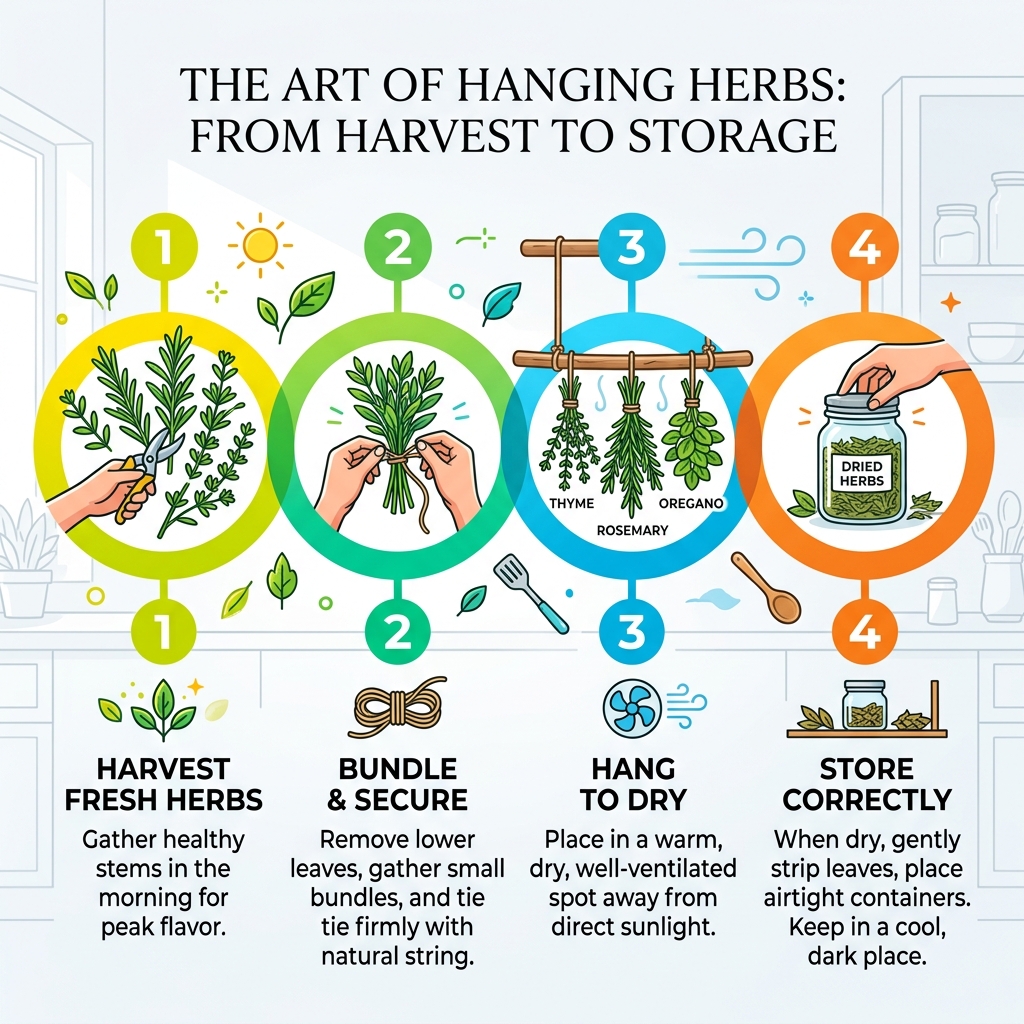
We always suggest harvesting your herbs in the morning, just after the dew has evaporated but before the sun gets too hot. This is when the plant’s essential oils are at their peak concentration.
Use sharp, clean scissors or garden snips. A clean cut is vital for the health of the remaining plant. Follow the “1/3 rule”: never harvest more than one-third of the plant at a time. This prevents the herb from going into shock and ensures it keeps growing for future harvests. Aim to cut just above a leaf node (the spot where new leaves emerge); this encourages the plant to branch out and become bushier. You can learn more about this in our guide on Pruning Herbs for Healthy Growth.
The Bundling and Hanging Process
Once you have your fresh cuttings, follow these steps for a perfect dry:
- Clean and Prep: Gently shake the herbs to remove any hitchhiking insects or dust. If you must wash them, pat them completely dry with a lint-free towel. Any leftover moisture can lead to mold.
- Remove Lower Leaves: Strip the leaves from the bottom inch or two of the stems to give yourself a clean area to tie.
- Group the Stems: Create small bundles of about 8 to 10 stems. If the bundles are too large, the center won’t get enough airflow and might rot.
- Tie with Twine: We prefer using food-safe jute or cotton twine. While some people use rubber bands, we find that as the herbs dry and shrink, rubber bands can sometimes snap or lose their grip. Tie a tight double knot around the stems.
- Hang Upside Down: Find a spot in your kitchen that is out of direct sunlight. Sunlight can bleach the color out of your herbs and dissipate the flavorful oils. Hang the bundles upside down to allow the oils to flow from the stems into the leaves.
For those just starting their journey, we have a list of Easy Herbs for Beginners to Grow Indoors that are perfect for this process.
Creative DIY Hanging Herb Garden Ideas
You don’t need a professional contractor to get your herbs off the counter. There are plenty of ways to incorporate hanging herbs in kitchen designs using items you might already have.
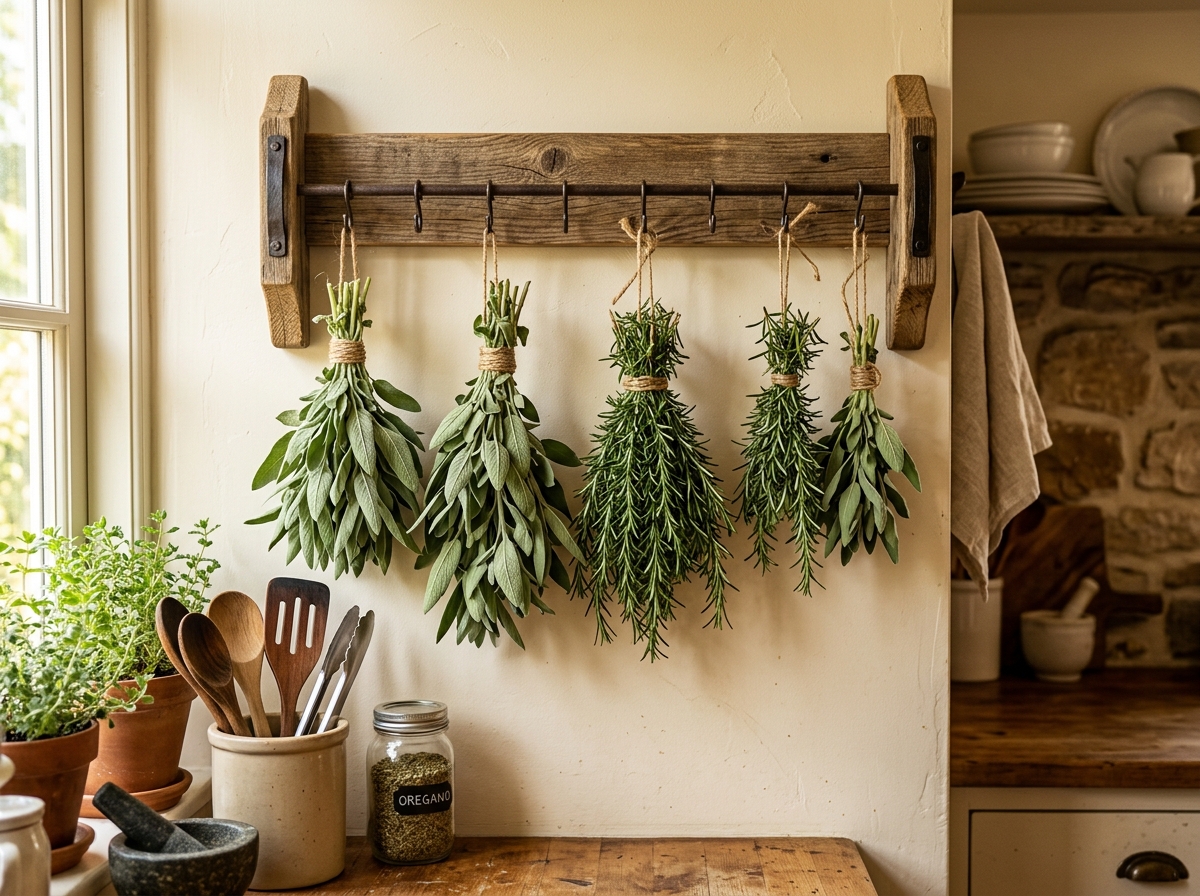
If you are handy with a drill, a simple wooden rack with J-hooks is a classic choice. You can also use wall-mounted mason jars with wire loops for a more industrial or rustic look. If you are looking for more inspiration, check out our DIY Indoor Herb Planter Ideas.
Renter-Friendly Wall Solutions
Living in a rental doesn’t mean you have to miss out on the fun. We are big fans of using heavy-duty Command hooks or adhesive display ledges. These allow you to hang lightweight pots or herb bundles without drilling permanent holes into the walls.
For live herbs, look for “flat-backed” pots. These sit flush against the wall, making them much more stable when hung from a hook. If your pots don’t have drainage holes (to prevent dripping on your floors), line the bottom with an inch of activated charcoal or small rocks to help manage moisture.
Repurposed Kitchen Items
Get creative! We have seen beautiful herb displays made from:
- Old Wooden Ladders: Suspend a small ladder from the ceiling horizontally and hang bundles from the rungs.
- Witch Brooms or Branches: A sturdy, cleaned branch can be mounted to the wall as a natural “curtain rod” for your herbs.
- Copper Pipes: For a modern or “industrial farmhouse” look, a copper pipe mounted under a cabinet makes an excellent drying rack.
You can find more suggestions for the right gear in our Indoor Tools section.
Essential Care and Long-Term Storage
The goal of hanging herbs in kitchen spaces is usually to eventually use them in your favorite Recipes. However, you can’t just leave them hanging forever. Dust and grease from cooking can eventually settle on the leaves, so knowing when to move them to jars is key.
Determining Dryness
How do you know when they are ready? It usually takes between 1 and 2 weeks, depending on the humidity in your home.
- The Crunch Test: Pick a leaf and rub it between your fingers. It should crumble easily into a fine powder.
- The Stem Snap: Try to bend a stem. If it’s still pliable or “bendy,” there is still moisture inside. If it snaps cleanly like a dry twig, it’s ready.
If you are growing live herbs, their needs are different. Avoid Indoor Herb Watering Mistakes to Avoid to keep them healthy enough for a future harvest.
Optimal Storage Conditions
Once dry, strip the leaves from the stems (you can compost the stems or use them as skewers for grilling!). Store the leaves in airtight glass jars. Keep these jars in a cool, dark place—like a pantry or a cupboard away from the stove. Properly dried and stored herbs can maintain their flavor potency for up to 2 years!
Safety Precautions and Common Mistakes to Avoid
While hanging herbs in kitchen areas is generally safe, there are a few “rookie mistakes” we want to help you avoid.
Avoiding Mold and Dust
The biggest enemy of drying herbs is humidity. If you hang your herbs directly over a steaming sink or a boiling pot, they will never dry properly and will likely grow mold. Ensure there is plenty of ventilation. If your kitchen is particularly humid, you might consider using Grow Lights for Indoor Herbs in a drier room until they are fully preserved.
Also, be mindful of dust. If you plan to keep the herbs hanging for decoration for more than a month, they will collect dust. At that point, they are better for “looking” than “eating.”
Installation Safety
Safety first! When installing hooks or racks:
- Check Weight Limits: A pot filled with wet soil is much heavier than you think. Always check the weight rating on your hooks.
- Find the Stud: If you are mounting a heavy wooden rack, use a stud finder to ensure you are anchoring into the wall’s frame, not just the drywall.
- Keep Away from Flames: Never hang dry, flammable herb bundles directly over a gas stove or near an open flame.
For more DIY safety tips, revisit our DIY Indoor Herb Planter Ideas.
Frequently Asked Questions about Hanging Herbs
How long does it take for herbs to dry when hung?
Typically, it takes 7 to 14 days. This depends on the herb’s thickness and the humidity in your kitchen. Woody herbs like rosemary take longer than delicate ones like mint.
Can I hang live potted herbs and drying bundles together?
Absolutely! This creates a beautiful “living wall” effect. Just be careful when watering the live plants so you don’t accidentally splash the drying bundles.
Where is the best spot in the kitchen to hang herbs?
Look for a spot with good airflow, away from direct sunlight, and away from high-heat areas like the oven. A wall near a Kitchen Window is often ideal, provided the herbs aren’t in the direct path of the sun’s rays.
Conclusion
At FinCapitaly, we believe that sustainable living starts in the heart of the home. Hanging herbs in kitchen spaces isn’t just a design trend; it’s a way to connect with the seasons, reduce food waste, and bring a touch of the outdoors inside. Whether you are bundling up the last of your summer sage or starting a vertical garden from scratch, the art of hanging herbs is a rewarding journey for any home cook.
Ready to get started? Explore our Indoor Tools for your Herb Garden and transform your kitchen into a fragrant, functional sanctuary today.
