
Why Growing Thyme in Pots Is Easier Than You Think
Growing thyme in pots is one of the simplest ways to keep fresh, fragrant herbs within arm’s reach — even if you have no garden at all.
Here’s a quick overview of what it takes:
| Step | What to Do |
|---|---|
| Pot | Use terracotta, at least 6-8 inches deep and 12 inches wide, with drainage holes |
| Soil | Well-draining mix: potting soil + perlite + coarse sand; pH 6.0-8.0 |
| Sunlight | 6-8 hours of direct sun daily (or supplement with grow lights indoors) |
| Watering | Let soil dry completely between waterings — roughly every 10-14 days |
| Temperature | Keep between 60-80°F (15-27°C) |
| Harvest | Snip stems regularly; best flavor just before the plant flowers |
Thyme (Thymus vulgaris) is a woody perennial native to the Mediterranean. It evolved in hot, dry, rocky conditions — which means it actually thrives on a little neglect. That makes it ideal for busy home cooks who want fresh herbs without a lot of fuss.
It’s evergreen in most climates, so you can harvest it nearly year-round. The tiny leaves pack bold, earthy flavor into soups, stews, roasted meats, and more.
Whether you’re working with a sunny windowsill or a small balcony, this guide covers everything you need to grow healthy, flavorful thyme in containers — from choosing the right pot to harvesting at peak flavor.
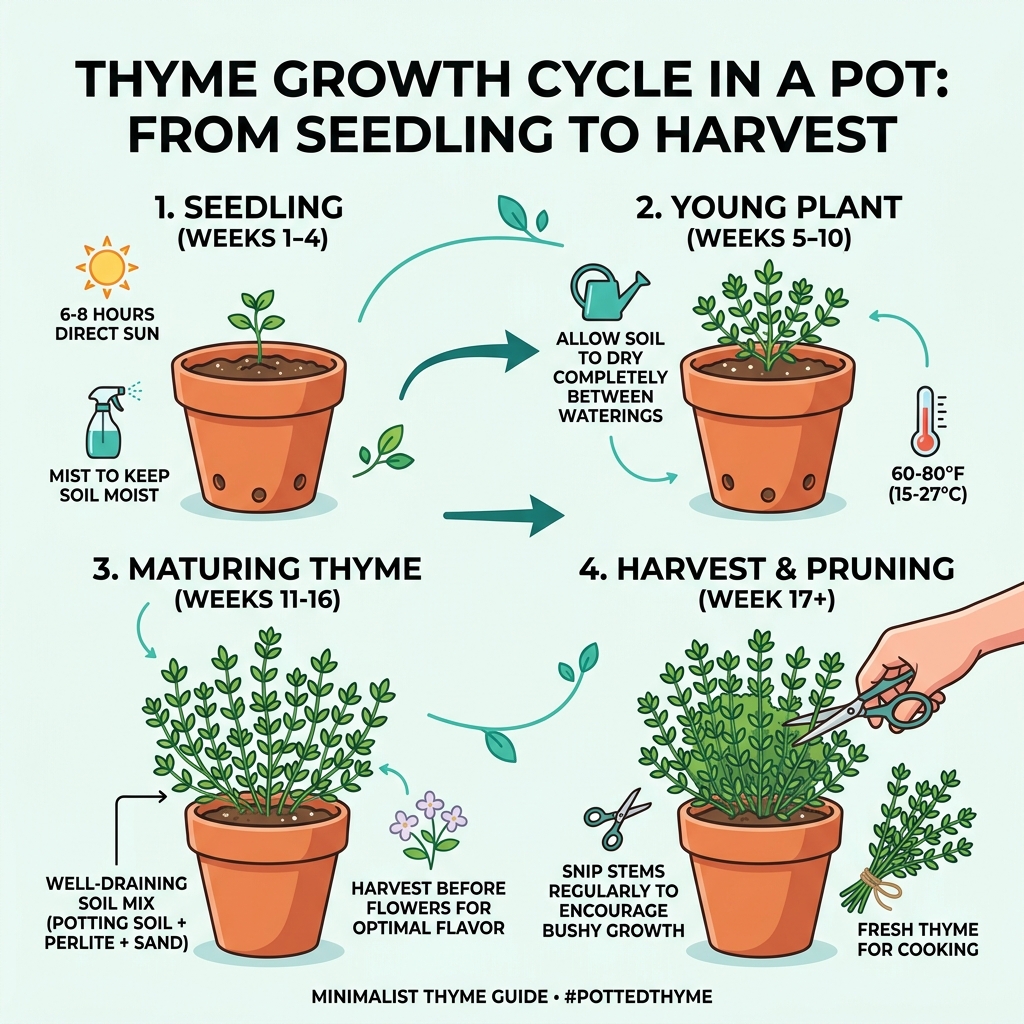
Choosing the Right Container and Soil to Grow Thyme in Pots
When we decide to grow thyme in pots, the container isn’t just a holder—it’s the plant’s entire world. Because thyme is native to the Mediterranean, it hates “wet feet.” If its roots sit in soggy soil for too long, they will rot faster than you can say “bouquet garni.”
The Perfect Pot
The best material for thyme is terracotta or clay. These porous materials allow moisture to wick away from the soil and improve air circulation to the roots. While plastic or glazed ceramic pots can work, they trap moisture, which means you’ll have to be much more careful with your watering can.
Size matters, too. For a young plant, look for a pot that is at least 6-8 inches deep and 12 inches wide. Thyme has a relatively shallow but spreading root system. As the plant matures, you may want to move it into a container that is 8-12 inches deep to accommodate its woody base. Always ensure your pot has ample drainage holes at the bottom. We often suggest adding a layer of gravel or grit at the base of the pot to further ensure that water can exit freely. You can learn more about picking the right vessel in our guide on container planting for herbs.
The Ideal Soil Mix
Don’t just grab a bag of heavy garden soil. Thyme prefers a “gritty” environment. A high-quality potting mix amended with perlite and coarse sand is the way to go. A good DIY recipe we recommend is:
- 2 parts high-quality potting mix
- 1 part perlite
- 1/2 part coarse horticultural sand
Thyme thrives in soil with a pH between 6.0 and 8.0, with 7.0 being the sweet spot. If your soil is too rich in organic matter, the plant might grow quickly, but its essential oils (where the flavor lives) will be diluted. As the RHS Guide on how to grow Thyme points out, adding up to 25% horticultural grit by volume to peat-free compost creates the free-draining conditions this herb loves.
Essential Care: Sunlight, Water, and Temperature
Once you’ve tucked your thyme into its new home, its survival depends on three main pillars: light, hydration, and warmth.
Sunlight: The Flavor Engine
Thyme is a sun-worshiper. To produce those aromatic oils, it needs 6 to 8 hours of direct sunlight daily. If you are growing it indoors, a south-facing window is usually your best bet. If your kitchen doesn’t get enough natural light, don’t worry—you can easily supplement with grow lights for indoor herbs. We recommend running full-spectrum LED lights for 12-14 hours a day, keeping them about 6-12 inches above the plant to prevent it from getting “leggy” as it reaches for the light.
Watering: Less is More
Overwatering is the number one killer of potted thyme. We suggest watering every 10-14 days once the plant is established. The golden rule? Let the soil dry out completely between waterings. Stick your finger two inches into the soil; if it feels bone-dry, it’s time for a drink. When you do water, do it thoroughly until water runs out of the drainage holes, then empty the saucer immediately. For more tips on keeping your herbs hydrated without overdoing it, check out indoor herb watering mistakes to avoid.
Temperature and Humidity
Thyme is quite comfortable in standard home temperatures, preferring a range between 60-80°F (15-27°C). It can tolerate temperatures down to 50°F, but it will struggle in extreme heat over 85°F. Unlike many tropical houseplants, thyme prefers lower humidity. High humidity can lead to fungal issues and rot. Keep your pots away from steamy areas like the immediate vicinity of a dishwasher or a bathroom. You can find more advice on managing the air around your plants in our humidity tips for indoor herbs.
| Requirement | Indoor Potted Thyme | Outdoor Potted Thyme |
|---|---|---|
| Sunlight | 6-8 hours (or 12h grow lights) | 6-8 hours direct sun |
| Watering | Every 10-14 days | More frequent in hot/windy weather |
| Airflow | Needs good circulation; avoid vents | Naturally ventilated; avoid crowding |
| Temperature | Stable (60-80°F) | Protect if below 25°F |
Planting and Propagating Your Thyme
Starting Your Journey: Seeds vs. Cuttings to Grow Thyme in Pots
If you’re a beginner, we’ll be honest: starting thyme from seed is a test of patience. Thyme seeds are tiny and can take 2 to 3 weeks to germinate at temperatures of 15-20°C (59-68°F). It can take up to a full year for a seed-grown plant to become established enough for heavy harvesting.
For faster results, we recommend starting from cuttings or layering.
- Cuttings: Take a 3-inch softwood cutting from the tip of a healthy stem in late spring. Remove the lower leaves, dip the end in rooting hormone, and plant it in a mix of sterile sand or vermiculite. Roots usually form in about 4 to 6 weeks.
- Layering: This is a clever trick where you take a long, flexible stem and pin it down to the soil (either in the same pot or a small one placed next to it). Once the pinned section develops roots—usually in about a month—you simply snip the “umbilical cord” from the parent plant.
If you prefer an instant herb garden, buying healthy nursery seedlings is a great choice. When picking a plant, look for vibrant green leaves and avoid any with roots poking out of the drainage holes, as this means the plant is root-bound. When you transplant, ensure you bury the root ball just at the soil line; burying the crown too deep can cause rot. For a deep dive into the best nutrition for these young plants, see our guide on soil and fertilizer for indoor herbs.
Best Varieties to Grow Thyme in Pots
Not all thyme is created equal. Depending on your kitchen needs, you might choose:
- English Thyme (Common Thyme): The classic culinary choice. It’s a shrubby variety that grows 6-12 inches tall and is perfect for soups and stews.
- French Thyme: Similar to English but with a slightly narrower leaf and a sweeter, more subtle flavor.
- Lemon Thyme: This variety has a distinct citrus scent and variegated leaves. It’s fantastic with seafood and poultry. It tends to be more upright and vigorous.
- Creeping Thyme: While often used as a ground cover, it can look beautiful spilling over the edges of a pot (the “spiller” in container design).
- Caraway Thyme: A low-growing variety with a hint of caraway scent, great for flavoring meats.
According to How To Grow & Care For Thyme in Pots – A Simple Guide, choosing the right variety for your pot size is key. Shrubby types are generally easier to harvest for cooking, while creeping types offer decorative appeal.
Maintenance, Pruning, and Harvesting for Flavor
Thyme is a “use it or lose it” kind of plant. Regular interaction with your herb will actually make it healthier.
Pruning for Growth
To keep your thyme from becoming a tangled, woody mess, you need to prune it. We recommend pinching back the growing tips regularly. This encourages the plant to send out side shoots, resulting in a bushier, more productive herb. In the spring, you can cut the plant back by about one-third to refresh it, but never cut into the old, woody stems that have no leaves—they often won’t grow back. For a masterclass in this technique, read about pruning herbs for healthy growth.
Harvesting for Maximum Flavor
You can harvest thyme year-round, but the flavor is most concentrated just before the plant flowers in mid-summer.
- How to harvest: Snip the top 5-6 inches of green growth.
- The 1/3 Rule: Never take more than one-third of the plant at a time. This ensures the herb has enough energy to recover.
- Morning Ritual: Harvest in the morning after the dew has dried but before the sun gets too hot. This is when the essential oils are at their peak.
Companion Planting in Pots
Thyme plays well with others who share its love for dry, sunny conditions. We often suggest planting it in a large container with Mediterranean friends like rosemary, sage, or summer savory. Avoid planting it with “thirsty” herbs like mint, parsley, or basil, as their watering needs will clash and likely lead to the thyme’s demise. Using low-maintenance indoor herb planting strategies can help you create a beautiful, functional herb display.
Troubleshooting and Overwintering Potted Thyme
Even the hardiest plants run into trouble. If you notice your thyme looking a bit peaky, here’s how to handle it.
Common Problems
- Yellow Leaves: This is often a sign of root rot from overwatering or a nitrogen excess. If the soil is soggy, stop watering immediately and consider repotting into fresh, dry soil.
- Brown/Wilting Leaves: Ironically, this can also be a sign of root rot. If the roots are damaged by water, they can’t take up moisture, making the plant look thirsty.
- Pests: Keep an eye out for aphids, spider mites, and whiteflies. A gentle spray of neem oil or a mild soap-and-water solution usually does the trick.
- Leggy Growth: This is almost always due to a lack of light. Move the pot to a sunnier spot or bring in the grow lights.
Overwintering Your Thyme
Thyme is hardy in USDA zones 5-9, but plants in pots are more vulnerable to freezing than those in the ground because their roots aren’t insulated by the earth.
- Outdoor Care: If you live in a cold climate, move your pots to a sheltered spot, such as against a south-facing wall or in a cold frame. You can also wrap the pots in burlap or bubble wrap to protect the roots from “freeze-thaw” cycles.
- Indoor Transition: If you bring your thyme inside for the winter, do it before the first frost. Place it in your sunniest window and be extra careful not to overwater, as the plant’s growth will slow down during the darker months. Our indoor herb garden setup tips can help you make this transition seamless.
Frequently Asked Questions about Potted Thyme
How long does thyme live in a pot?
With proper care, a thyme plant can live for 5 to 6 years. However, you’ll notice that after 3 or 4 years, the center of the plant becomes very woody and produces fewer leaves. At this point, it’s usually best to propagate new plants from cuttings or divide the plant to rejuvenate it.
Can I grow thyme indoors year-round?
Absolutely! As long as you can provide enough light (at least 6-8 hours of sun or 12+ hours of grow lights), thyme will happily grow on your windowsill through all four seasons. Just keep it away from cold drafts and heating vents, which can dry out the foliage too quickly.
Why is my potted thyme turning woody?
Woodiness is a natural part of the thyme aging process. As the plant grows, the older stems toughen up to support the weight of the new growth. While you can’t stop it entirely, regular pruning and harvesting will slow down the process and keep the plant producing tender, flavorful leaves for longer.
Conclusion
At FinCapitaly, we believe that anyone can master the art of the indoor garden. When you grow thyme in pots, you aren’t just growing an ingredient; you’re cultivating a bit of Mediterranean sunshine right in your kitchen. It’s a rewarding, low-maintenance journey that pays off every time you snip a few sprigs for a home-cooked meal.
If you’re ready to expand your collection beyond thyme, check out our guides on the best herbs to grow indoors and easy herbs for beginners to grow indoors. There’s no better time to start your container garden than today!
