
Why a Caprese Salad Appetizer Is the Ultimate Party Starter
A caprese salad appetizer transforms the classic Italian combination of tomatoes, fresh mozzarella, and basil into a bite-sized, handheld snack that disappears fast at any gathering.
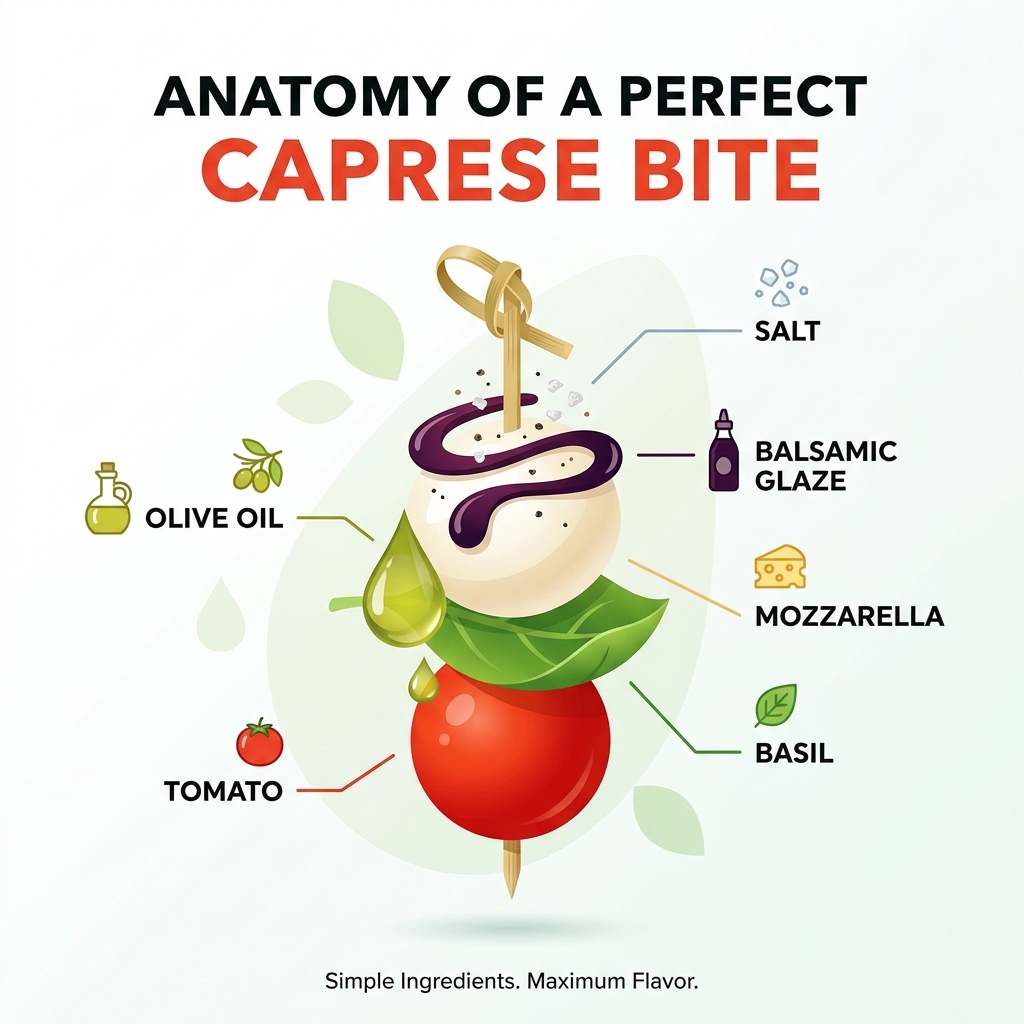
Quick answer — here’s what makes a great Caprese appetizer:
- Tomatoes — cherry, grape, or halved heirloom tomatoes
- Mozzarella — ciliegine (cherry-sized) balls or cubed fresh mozzarella
- Basil — fresh leaves, whole or folded
- Olive oil — high-quality extra-virgin
- Balsamic glaze — drizzled just before serving
- Salt and pepper — flaky sea salt and freshly ground black pepper
- Skewers or toothpicks — for easy, handheld serving
Prep time is just 15 minutes, and no cooking is required.
The magic is in the simplicity. Three core ingredients — ripe tomatoes, creamy mozzarella, and fragrant basil — do all the heavy lifting. Thread them onto a stick, add a drizzle of good olive oil, and you have something that looks impressive but takes almost no effort.
The traditional insalata caprese originates from the Italian island of Capri. The skewer version keeps all those fresh summer flavors intact while making it far easier to serve at parties without plates or forks.
If you grow your own basil at home, this is one of the best recipes to put it to use.
Essential Ingredients for a Caprese Salad Appetizer
When a recipe has only three or four main components, there is nowhere for mediocre ingredients to hide. To make a truly memorable caprese salad appetizer, we need to focus on quality and seasonality.
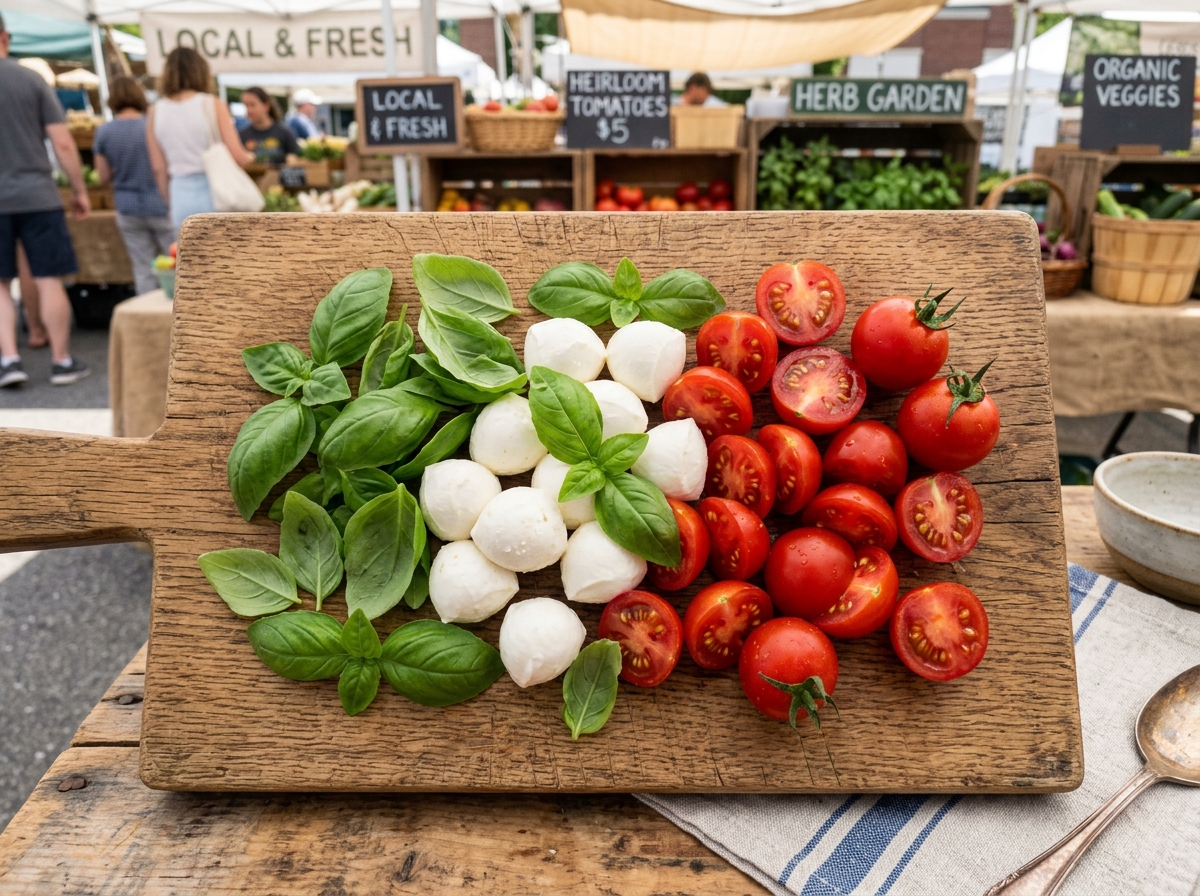
The classic Caprese Salad principles dictate that the dish is only as good as the ripest tomato and the freshest cheese. While a traditional salad involves large slices of beefsteak tomatoes and rounds of mozzarella, the appetizer version relies on bite-sized proportions.
Beyond the “big three” (tomato, cheese, basil), your pantry staples play a supporting role. We recommend a high-quality extra virgin olive oil—one that smells fruity and perhaps has a slightly peppery finish. For seasoning, skip the standard table salt. Use a flaky sea salt (like Maldon) to add a satisfying crunch and freshly ground black pepper for a “sweet heat” that pre-ground pepper simply can’t provide.
Choosing the Best Tomatoes and Mozzarella for Your Caprese Salad Appetizer
For skewers, cherry tomatoes or grape tomatoes are the gold standard. They are naturally bite-sized and hold their shape well when pierced. If you can find heirloom cherry tomatoes in varying colors—yellow, purple, or striped orange—grab them! The visual appeal of a multi-colored platter is unmatched.
When it comes to the cheese, look for “ciliegine” (cherry-sized) or “bocconcini” (slightly larger) mozzarella balls. If those aren’t available, “mozzarella pearls” are even smaller and perfect for tiny toothpicks.
- Ciliegine: Roughly the size of a cherry tomato, providing a 1:1 ratio.
- Buffalo Mozzarella: Made from water buffalo milk, this is creamier and more flavorful but can be very soft and messy on a stick.
- Cubed Fresh Mozzarella: If you can’t find balls, buying a log of fresh mozzarella and cubing it works perfectly well.
One of our top secrets? Serve your mozzarella at room temperature. Cold cheese from the fridge loses its creamy texture and subtle milky flavor. Take it out about 30 minutes before assembling.
The Role of Fresh Basil in a Caprese Salad Appetizer
Basil isn’t just a garnish; it’s the aromatic heart of the dish. For a caprese salad appetizer, you want vibrant, tender leaves. If the leaves are large, we suggest folding them in half or thirds before skewering so they don’t drape over the other ingredients like a wet blanket.
Using homegrown basil makes a world of difference. Not only is it fresher, but the leaves haven’t been bruised by plastic grocery store packaging. For those interested in keeping a steady supply, Delicious Appetizers Made Easy with Indoor Basil is a great resource for starting your own kitchen herb garden.
When you use Indoor Basil, you ensure that the sweetness of the herb isn’t lost to long shipping times. Whether you use the whole leaf or a delicate chiffonade (thin ribbons), that burst of green provides the essential color contrast against the red tomatoes and white cheese.
Step-by-Step: How to Assemble Caprese Skewers
Assembling these is a fun, low-stress activity—perfect for getting kids involved in the kitchen. The key is a consistent “stacking” order so the platter looks uniform.
The Standard Technique:
- The Base: Start with a cherry tomato. If you want the skewers to stand upright on a platter, slice a tiny sliver off the bottom of the tomato to create a flat base.
- The Herb: Thread a basil leaf next. Fold it into a little “nest” so it stays secure.
- The Cheese: Add the mozzarella ball or cube.
- The Top: Finish with a second tomato or a second folded basil leaf for extra color.
Pro Tip for Stability: If you find your ingredients are sliding around, ensure you are piercing through the center of the tomato and the thickest part of the mozzarella.
Toothpicks vs. Bamboo Skewers: Which Should You Use?
| Feature | Toothpicks (Small) | Bamboo Skewers (Medium) |
|---|---|---|
| Portion Size | One bite (1 tomato, 1 cheese) | Two bites (2 tomatoes, 2 cheese) |
| Stability | Easier to tip over | Sturdier for standing upright |
| Aesthetics | Classic party look | Elegant, “catered” appearance |
| Ease of Use | Better for “grab and go” | Better for dipping into glaze |
Whether you choose a simple toothpick or a fancy knotted bamboo skewer, the result is a portable, mess-free caprese salad appetizer.
Creative Variations and Flavor Boosts
While the classic version is hard to beat, we love a good twist. If you’ve already mastered the basic skewer, try these “upgrades”:
- The Balsamic Drizzle: Many purists argue against balsamic, but for a party, a thick balsamic glaze (a reduction of vinegar and sugar) adds a tangy sweetness that guests love. You can make your own by simmering balsamic vinegar until it coats the back of a spoon.
- Pesto Power: Instead of a plain olive oil drizzle, use a dollop of Indoor Basil Pesto. It intensifies the basil flavor and adds a nutty complexity.
- Prosciutto Wraps: For the meat lovers, wrap a thin ribbon of prosciutto around the mozzarella ball before skewering. This adds a salty, savory “umami” punch.
- Fruit Infusions: In the peak of summer, try replacing the tomato with a cube of fresh peach or a strawberry. The combination of fruit, basil, and balsamic is surprisingly refreshing.
- The “Bite” Version: Place the Caprese components on a small slice of toasted baguette (crostini) brushed with garlic oil. This turns the skewer into a more substantial “Caprese Bite.”
Pro Tips for Serving and Storage
Presentation is everything. Arrange your skewers in a circular pattern on a large platter or stand them upright in rows for a modern look.
Timing and Storage:
- Make-Ahead Limits: You can assemble the skewers up to 4 hours in advance. Store them in a single layer on a tray lined with damp paper towels to keep the basil from drying out. Cover tightly with plastic wrap and refrigerate.
- The 24-Hour Rule: While you can technically keep them for 24 hours, the basil will likely begin to darken and the cheese may absorb tomato juices. For the best experience, assemble them the day of the event.
- Seasoning: Never add the salt, pepper, or oil until the very last second. Salt draws moisture out of tomatoes, which will make your skewers “weepy” and soggy if they sit too long.
- Temperature: Take the platter out of the fridge 20-30 minutes before serving. Cold tomatoes and cold cheese are muted in flavor.
If you are growing your own herbs, knowing How to Care for Basil Indoors ensures you have enough leaves to garnish several platters throughout the party season.
Frequently Asked Questions about Caprese Appetizers
Can I make Caprese skewers the night before?
We don’t recommend it. While the mozzarella and tomatoes will be fine, the fresh basil is incredibly delicate. In the refrigerator, basil tends to turn black or wilt overnight due to the cold and moisture. If you must prep ahead, skewer the tomato and cheese, then tuck the fresh basil in just before your guests arrive.
Should I use balsamic vinegar or balsamic glaze?
For a caprese salad appetizer, balsamic glaze is superior to vinegar. Standard balsamic vinegar is thin and watery; it will run off the skewer and pool at the bottom of the plate, making the tomatoes slippery. A glaze is thick, syrupy, and stays exactly where you drizzle it, ensuring every bite gets that sweet-tart flavor.
How do I keep the basil from wilting?
Basil wilts when it loses hydration or gets too cold. To keep it perky, don’t pluck the leaves from the stem until you are ready to assemble. If you are using Indoor Basil, you have the advantage of “harvesting” right in your kitchen. Keeping the assembled skewers covered with a slightly damp (not soaking) paper towel also helps maintain the necessary humidity.
Conclusion
At FinCapitaly, we believe that the best food doesn’t have to be complicated. The caprese salad appetizer is a testament to that philosophy. By combining a few high-quality ingredients with a little bit of “salad on a stick” creativity, you can serve an elegant, healthy, and delicious snack that fits any occasion—from a summer backyard BBQ to a formal holiday party.
Whether you’re sticking to the classic trio or experimenting with prosciutto and peaches, the key is freshness. Start with the best tomatoes you can find, use creamy room-temperature mozzarella, and don’t forget the power of homegrown basil.
Ready to expand your party menu? Explore more delicious appetizer ideas and discover how simple ingredients can make a big impact on your next gathering!
