
Stop Throwing Away Wilted Herbs: The Best Kitchen Herb Gardens Ranked
The best kitchen herb garden puts fresh basil, mint, and thyme within arm’s reach — no grocery run needed. Here’s a quick look at the top picks:
| Pick | Best For | Capacity | Price Range |
|---|---|---|---|
| AeroGarden Harvest Elite | Beginners | 6 pods | ~$180 |
| LetPot LPH-SE Senior | Best value | 12 pods | $120-$200 |
| Click & Grow Smart Garden 9 | Low maintenance | 9 pods | ~$250 |
| Gardyn Home 4.0 | Maximum variety | 30 pods | ~$899 |
| Rise Garden 3-Level | Serious growers | Up to 108 pods | $899-$1,499 |
You grab a bundle of fresh basil at the grocery store. You use two sprigs. The rest turns black in your fridge by Thursday.
Sound familiar?
It’s one of the most frustrating (and wasteful) habits in the kitchen. Fresh herbs cost more per ounce than most proteins — yet most of the bunch ends up in the trash.
Indoor kitchen herb gardens solve this. Whether you have a sunny south-facing window or zero natural light, today’s systems use built-in LED grow lights and smart automation to keep herbs alive and thriving year-round.
The category has exploded in recent years. You can now choose from simple countertop hydroponic pods to large vertical farms that grow over 30 plants at once. But not every system suits every kitchen — or every cook.
This guide breaks down the best options for 2026, tested and compared by capacity, cost, ease of use, and real harvest results.
Why Investing in the Best Kitchen Herb Garden Changes Your Cooking
If you have ever compared a pinch of dried oregano to a handful of fresh leaves plucked straight from the stem, you know there is no contest. The best kitchen herb garden doesn’t just look pretty on your counter; it fundamentally upgrades the chemical profile of your food.
When herbs are harvested, their essential oils—the compounds responsible for aroma and flavor—begin to evaporate immediately. By growing your own, you capture these oils at their peak intensity. Research into plant physiology shows that herbs like basil and mint reach their maximum oil content in the morning. Having a garden in your kitchen means you can harvest seconds before the herb hits the pan, ensuring a flavor density that store-bought plastic clamshells simply cannot match.
Beyond flavor, there is the matter of nutrient density. Many vitamins, particularly Vitamin C and various antioxidants found in herbs, begin to degrade shortly after cutting. A home system allows you to consume best indoor herbs for cooking at their nutritional zenith.
Convenience is the final “chef’s kiss” benefit. No more mid-recipe realizations that you’re out of cilantro. Whether you are following a guide on best-herbs-to-grow-indoors/ or experimenting with your own infusions, the accessibility of a kitchen garden encourages culinary creativity. It turns a chore—grocery shopping—into a hobby—gardening—that yields delicious dividends. Plus, the aesthetic appeal of lush greenery in a kitchen creates a warm, inviting atmosphere that makes the heart of the home feel alive.
Top Indoor Garden Technologies: Hydroponics vs. Soil-Based Systems
When searching for the best kitchen herb garden, you will generally choose between two “philosophies” of growing: hydroponics and soil-based systems.
Hydroponics: The Speed Demon
Most modern “smart” gardens, like the AeroGarden or LetPot, use hydroponics. This means the plants grow in water enriched with liquid nutrients rather than dirt.
- Pros: Plants often grow 30-50% faster because their roots don’t have to “work” to find nutrients. There’s no soil mess, and the systems are usually highly automated.
- Cons: These systems rely on electricity and pumps. If the pump fails or the power goes out for an extended period, the plants can wilt quickly.
Soil-Based: The Traditionalist
Systems like the Click & Grow or EarthBox use a soil or “smart soil” medium.
- Pros: Many chefs argue that soil-grown herbs have a more complex flavor profile due to the microbial activity in the dirt. These systems are often quieter as they don’t always require noisy water pumps.
- Cons: Growth is slower than hydroponics. You also have to be more mindful of indoor-herb-garden-setup-tips/ regarding drainage and potential soil-borne pests like fungus gnats.
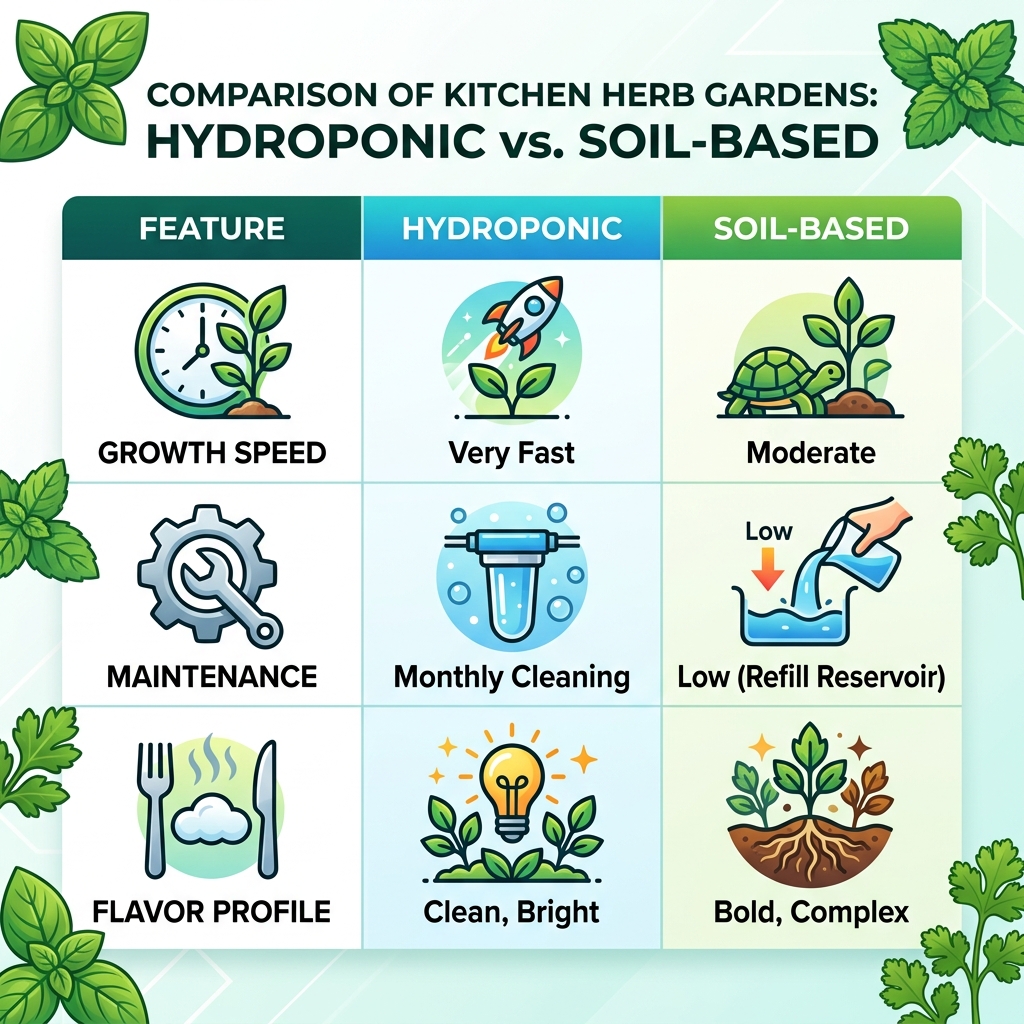
| Feature | Hydroponic | Soil-Based |
|---|---|---|
| Growth Speed | Very Fast | Moderate |
| Maintenance | Monthly Cleaning | Low (Refill Reservoir) |
| Flavor Profile | Clean, Bright | Bold, Complex |
| Mess Factor | Zero | Minimal |
Choosing the Best Kitchen Herb Garden for Your Space and Budget
Finding the best kitchen herb garden requires balancing your available counter real estate with your appetite for fresh pesto.
For those living in smaller quarters, an indoor-herb-garden-for-apartments/ usually means a countertop unit with a small footprint. When shopping, consider these three pillars:
- Upfront vs. Ongoing Costs: A system might be cheap today, but check the price of proprietary pods. For example, Click & Grow pods cost between $3 and $5 each. Over a year, that adds up.
- Power Consumption: Most systems use LED lights for 14 to 17 hours a day. While a small Auk Mini uses only about 9W, a massive 3-level Rise Garden can pull up to 195W.
- Smart Features: Do you want an app to tell you when to add water? “Vacation modes” are also life-savers, slowing down the light cycle and water usage so your plants don’t bolt while you’re at the beach.
The Best Kitchen Herb Garden for Beginners and Busy Chefs
If you want the “Keurig experience” of gardening, look for automated countertop systems. These are designed for beginner-friendly-herb-garden-ideas/ where the machine does the heavy lifting.
The AeroGarden Harvest Elite remains a gold standard here. It features a digital display that tracks days since planting and reminds you exactly when to add the included liquid nutrients. It’s essentially foolproof—you just drop in the pre-seeded pods and add water. For those who want something even more “set it and forget it,” indoor-gardening-kits-for-beginners/ like the Click & Grow Smart Garden 3 use a passive wicking system that requires zero pumps and zero noise.
The Best Kitchen Herb Garden for Maximum Yield and Variety
For the serious home chef who uses herbs by the cupful, a small countertop unit won’t cut it. You need a vertical garden.
The Gardyn Home 4.0 is a powerhouse, offering 30 spots for plants in a sleek vertical tower. It uses “Kelby,” an AI assistant, to monitor your plants via cameras and adjust light and water schedules automatically. If you have even more space, the Rise Garden 3-level model can support up to 108 plants, including large fruiting vegetables like peppers and tomatoes alongside your herbs.
Learning how-to-start-an-indoor-herb-garden/ on this scale requires a bit more commitment to vertical-herb-gardening-indoors/, but the payoff is a literal “living pantry” in your dining room or kitchen. Just keep in mind that these large systems often involve subscriptions—Gardyn’s Kelby membership, for instance, adds about $408 a year to the maintenance cost. For layout inspiration, check out indoor-herb-garden-layout-tips/.
Essential Maintenance: From Setup to Successful Harvesting
Once you’ve picked the best kitchen herb garden for your home, the real fun begins. But don’t just let them grow wild; a little strategy goes a long way.
Light and Location
Most indoor herbs need 14-17 hours of light per day. If you aren’t using a system with built-in LEDs, planting-herbs-in-kitchen-windows/ is your best bet—specifically a south-facing window. However, even the sunniest window can lead to “leggy” growth in winter, so supplemental grow lights are almost always recommended.
The Art of the Harvest
The most common mistake beginners make is being too “nice” to their plants. Herbs actually want to be eaten. Regular harvesting encourages fuller, bushier growth.
- Basil: Always cut above a leaf node (where two small leaves are branching out). This tells the plant to grow two new stems from that point. Learn more at how-to-care-for-basil-indoors/.
- Rosemary: This woody herb is slower-growing. Never take more than one-third of the plant at once. For more tips, see rosemary-care-indoors-for-beginners/.
- General Rule: Wait until the plant is 6-8 inches tall before the first major harvest.
Troubleshooting Common Issues
- Mold/Algae: This usually happens if light hits the water or the growing medium directly. Use the provided covers for empty pod slots to keep the reservoir dark.
- Pests: Even indoors, aphids or whiteflies can appear (sometimes hitching a ride on grocery store produce). A simple spray of water and a drop of organic soap can usually clear them up.
- Leggy Growth: This is a cry for more light. Lower your adjustable LED arm closer to the plants (about 2-4 inches above the canopy) to keep them compact and flavorful.
Frequently Asked Questions about Kitchen Herb Gardens
Do indoor herb gardens actually save money?
The short answer is: eventually, but not immediately. If you buy a $900 Gardyn system, you have to eat a lot of cilantro to break even. However, smaller systems like the LetPot LPH-SE ($120) pay for themselves within a year if you frequently buy $4 herb bundles at the store. When you factor in the zero-waste aspect (only harvesting what you need), the value proposition improves significantly.
Can I grow my own seeds in these systems?
Yes! While brands like Click & Grow and AeroGarden want you to buy their proprietary pods, most systems offer “grow anything” kits. These include seedless sponges and baskets that allow you to use your own seeds. This is a great way to try unique varieties like Thai Basil or Lemon Thyme. For a more hands-on approach, you can even look into diy-indoor-herb-planter-ideas/.
How do I prevent my herbs from getting leggy?
“Legginess” happens when a plant stretches toward a light source that is too far away. To keep your easy-herbs-for-beginners-to-grow-indoors/ looking lush and “bushy,” ensure your grow lights are at the correct intensity and height. Most smart gardens have adjustable arms; keep the light close to the seedlings and raise it as they grow.
Conclusion
The best kitchen herb garden is the one that fits your lifestyle. If you are a busy professional who just wants fresh garnish, a compact, automated countertop unit is a dream. If you are a culinary enthusiast who cooks for a crowd, investing in a high-capacity vertical system will revolutionize your pantry.
At FinCapitaly, we believe that sustainable cooking starts with the ingredients you have on hand. By growing your own herbs, you reduce plastic waste, eliminate grocery store trips, and ensure your meals are packed with the freshest flavors possible. Ready to upgrade your culinary workspace? Explore the best indoor tools for your kitchen and start your indoor garden journey today.
