
Why Taking Care of Basil Plant Indoors Is Easier Than You Think
Taking care of basil plant indoors is one of the most rewarding things a home cook can do — fresh leaves ready whenever you need them, no garden required.
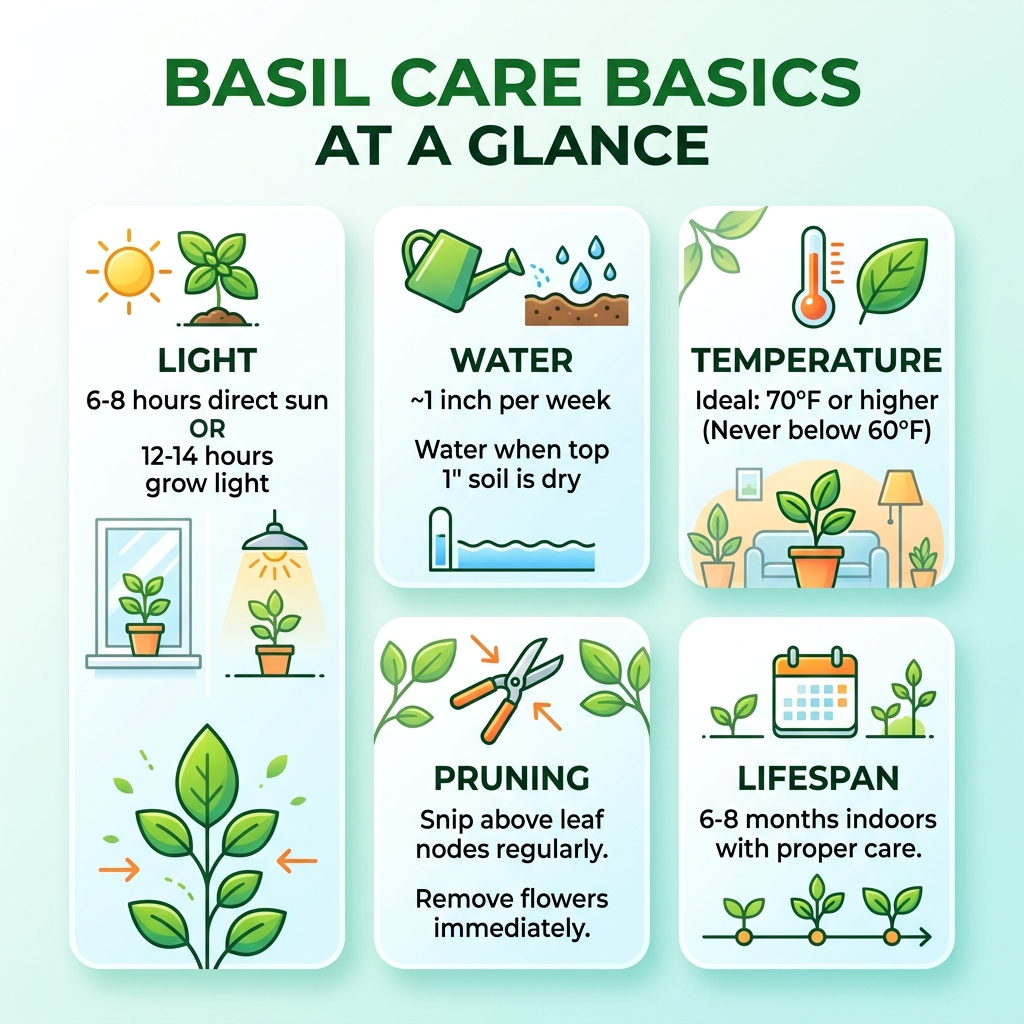
Here’s a quick summary of what indoor basil needs to thrive:
| Care Factor | What Basil Needs |
|---|---|
| Light | 6-8 hours of direct sun, or 12-14 hours under a grow light |
| Temperature | 70°F or higher (never below 60°F) |
| Humidity | 40-60%; mist lightly or use a pebble tray |
| Watering | About 1 inch per week; water when the top inch of soil is dry |
| Soil | Well-draining potting mix, pH 6.0-7.0 |
| Fertilizer | Balanced liquid fertilizer once a month |
| Pruning | Snip above leaf nodes regularly; remove flowers immediately |
| Lifespan | 6-8 months indoors with proper care |
Basil is a tropical herb (Ocimum basilicum) that loves warmth, light, and consistent moisture. It’s an annual, which means it has a natural lifespan — but with the right routine, you can keep it producing fresh, fragrant leaves for months.
The biggest challenge most people face isn’t a lack of green thumb. It’s not knowing the few simple rules that keep basil happy indoors — things like light exposure, how you water, and when to prune.
Get those right, and you’ll have fresh basil for pesto, pasta, and more, all year long.
Essential Conditions for Taking Care of Basil Plant Indoors
To successfully master taking care of basil plant indoors, we must first understand that basil is essentially a sun-worshipper from the tropics. It doesn’t just “like” the sun; it requires it to produce the essential oils that give it that signature aroma. Indoors, we are acting as the plant’s weather system, so we need to recreate those balmy, bright conditions as closely as possible.
While many varieties exist, some are better suited for the windowsill than others. Genovese is the gold standard for pesto, but if space is tight, we recommend Spicy Globe, which grows in a compact, mounded shape. Everleaf is another fantastic choice because it is bred to be bolt-resistant, meaning it takes much longer to flower and turn bitter.
Lighting Requirements for Taking Care of Basil Plant Indoors
Light is the fuel for your basil’s growth. Without enough of it, your plant will become “leggy”-stretching its stems out wide and thin in a desperate search for a photon.
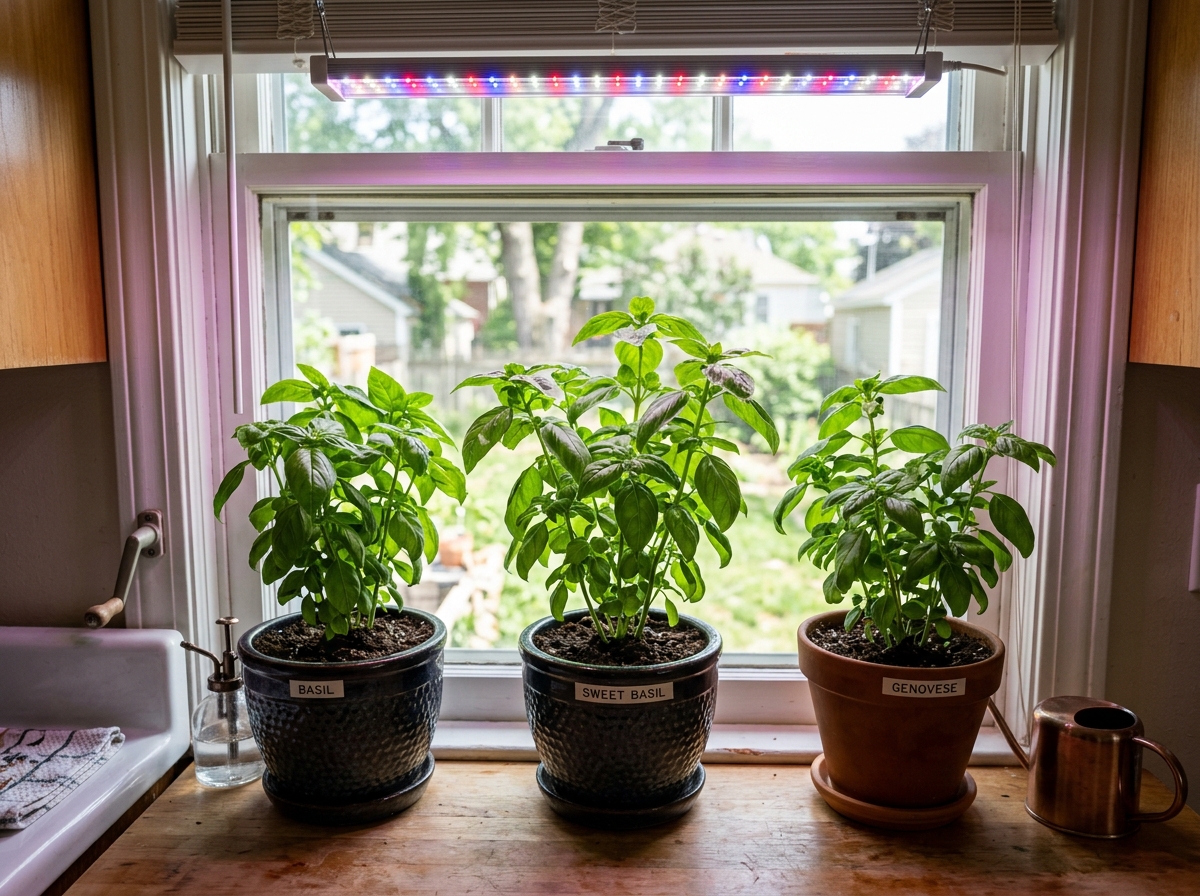
For the best results, place your basil in a south-facing window. This provides the strongest, most direct light available in a home. Your plant needs at least 6 to 8 hours of bright light every single day. If you notice your plant leaning heavily toward the glass, make sure to rotate the pot weekly so all sides get their fair share of light.
However, many of us don’t have a perfect south-facing window. In these cases, artificial lighting is a game-changer. Using a full-spectrum LED or fluorescent grow light for 12 to 14 hours a day can actually produce a bushier, healthier plant than sunlight alone. Keep the lights close-ideally 2 to 4 inches away from the top of the leaves. If the leaves start to develop white spots, the light might be too close and scorching them, so back it off an inch. For more detailed insights on positioning, check out our guide on how to care for basil indoors.
Temperature and Humidity for Taking Care of Basil Plant Indoors
Basil is not a fan of the cold. If you feel a draft, your basil feels it too-and it will likely pout by drooping or turning its leaves a dark, sickly color. We want to maintain an average temperature of 70°F or higher. While it can survive down to 60°F, growth will slow significantly, and anything below 50°F is a danger zone that can kill the plant.
Humidity is the other half of the tropical equation. Most homes, especially in winter when the heater is running, have very dry air. Basil prefers a humidity level between 40% and 60%. You can help your plant breathe by:
- Misting: Lightly spray the leaves with water during the day, never at night, as sitting water can encourage fungus.
- Pebble Trays: Fill a tray with pebbles and water, then set the pot on top. As the water evaporates, it creates a humid microclimate around the leaves.
- Clustering: Grouping your herbs together allows them to share the moisture they naturally release.
Maintaining these levels is key to preventing the leaves from becoming crispy. You can find more humidity tips for indoor herbs here to keep your indoor garden lush.
Mastering Watering, Soil, and Fertilization
Watering basil is often described as a delicate dance. You want the soil to be moist, like a wrung-out sponge, but never soggy. Overwatering is the number one killer of indoor basil because it leads to root rot-a silent killer that turns the roots to mush before you even see the symptoms on the leaves.
When choosing a home for your basil, we always recommend terracotta pots. Terracotta is porous, meaning it allows the soil to breathe and helps excess moisture evaporate. Whatever material you choose, ensure it has large drainage holes and is at least 6 inches deep to allow the roots to spread. For a deeper dive into hydration, see our article on indoor herb watering mistakes to avoid.
The Bottom-Watering Trick
If you find yourself constantly struggling with either bone-dry soil or a swampy mess, the bottom-watering trick might be your new best friend. Instead of pouring water onto the soil from above, you fill a large, water-impermeable saucer or bowl that the pot sits in.
The soil acts like a wick, drawing up exactly as much water as it needs through the drainage holes. This keeps the root zone hydrated while keeping the top of the soil relatively dry, which helps prevent gnats and mold. Some gardeners even keep the saucer full at all times during the peak growing season, allowing the plant to self-regulate. Just be sure to empty the saucer if the plant stops drinking to avoid stagnant water.
Soil and Nutrient Needs
Don’t just grab a bag of dirt from the backyard! Indoor basil needs a high-quality, lightweight potting mix. Garden soil is too heavy and will compact in a pot, suffocating the roots. A good mix usually contains peat moss or coconut coir for moisture, and perlite or vermiculite for drainage. Aim for a neutral pH between 6.0 and 7.0.
Because basil grows so fast and we harvest its leaves so frequently, it’s a heavy feeder. It needs nitrogen to produce those lush, green leaves. We recommend using a balanced liquid organic fertilizer, such as a 10-10-10 formula, diluted to half-strength. Feed your plant once a month during the growing season. If the leaves start looking pale or yellowish, it might be a sign of nutrient stress. You can learn more about choosing the right soil and fertilizer for indoor herbs to ensure your basil has the fuel it needs.
Pruning, Harvesting, and Troubleshooting Issues
Pruning is perhaps the most important part of taking care of basil plant indoors. Many beginners are afraid to cut their plants, fearing they will hurt them. In reality, the more you harvest basil, the more it grows! Pruning sends a signal to the plant to stop growing tall and start growing wide and bushy.
The golden rule of pruning is to always cut just above a leaf node (the spot where new leaves are branching out). This encourages the plant to split into two new stems at that point. If you just pluck individual leaves off the bottom, you’ll end up with a tall, leggy, palm tree-looking plant that eventually collapses. For a masterclass in this technique, read about pruning herbs for healthy growth.
Harvesting for Longevity
When you’re ready for pesto, harvest from the top down. Never take more than 1/3 of the plant at one time. Taking too much can shock the plant and slow its recovery.
One of the most critical tasks is pinching off flowers. As soon as you see a little green tower starting to form at the tip of a stem, snip it off. This is called bolting. Once a basil plant flowers, it thinks its life mission is over. It will stop producing flavorful oils, and the leaves will turn bitter and tough. By removing the flowers, you trick the plant into staying in its youthful leaf-producing stage for much longer.
Common Problems and Pests
Even indoors, basil can run into trouble. If you see yellowing leaves, it’s usually a sign of overwatering or poor drainage. If the leaves are drooping but the soil is wet, you likely have root rot.
Pests can also hitch a ride inside. Keep an eye out for:
- Aphids: Tiny green or black bugs on the undersides of leaves.
- Whiteflies: Small white gnats that fly up when you shake the plant.
- Downy Mildew: A fuzzy gray growth on the leaves. This is serious-if you see it, it’s often best to dispose of the plant to prevent it from spreading.
For leggy growth, the fix is almost always more light and more pruning. If you’re struggling with stunted growth, check out our indoor herb growth troubleshooting guide for specific fixes.
Starting and Propagating New Basil Plants
The beauty of basil is that you don’t always have to buy a new plant. You can start from seeds, which typically germinate in about 5 days if kept at a warm 80°F. Using a heat mat under your seed tray can drastically improve your success rate.
Propagating from Cuttings
Propagating is like getting a free plant for zero extra work. If you have a healthy stem, cut a 4-inch piece just below a leaf node. Strip the leaves off the bottom two inches and place the stem in a glass of clean water.
Change the water every few days to keep it fresh. In about 2 to 3 weeks, you’ll see little white roots emerging. Once those roots are about 1 inch long, you can transplant the cutting into a pot with soil. This is a great way to reset a plant that has become too woody or old.
Supermarket Plant Success and Outdoor Transition
We’ve all seen those lush pots of basil at the supermarket. They look great for a week and then suddenly die. Why? Because those pots usually contain 10 to 15 individual seedlings all crammed together. They are fighting for nutrients and space.
To make a supermarket plant last up to 6 months, split them up. Gently take the plant out of the pot and tease the roots apart into 3 or 4 smaller groups. Repot these into their own containers with fresh soil. They will suddenly have the room they need to breathe and grow.
If you decide to move your indoor basil outside for the summer, you must harden it off. Don’t just put it in direct sun immediately, or the leaves will scorch. Move it to a shady spot outside for an hour a day, gradually increasing its exposure over two weeks. Only leave it out overnight once temperatures are consistently above 50°F. For more on managing the seasons, see our seasonal care for indoor herbs guide.
Frequently Asked Questions about Basil Care
How long can a basil plant typically last indoors?
With excellent care, an indoor basil plant typically lasts 6 to 8 months. Because it is an annual, it will eventually become woody and produce smaller, less flavorful leaves. At this point, it’s best to start a new plant from a cutting of the old one to keep the cycle going.
What should you do if basil starts flowering or bolting indoors?
Pinch the flower buds off immediately! Use scissors or your fingernails to snip the entire flowering stem down to the next set of leaves. This redirects the plant’s energy back into leaf production. If you let it flower, the leaves will quickly become bitter.
Can you grow basil indoors without a sunny window?
Yes! In fact, basil often grows better under grow lights than in a window because the light is consistent and doesn’t change with the weather. Aim for 12 to 14 hours of light daily using a full-spectrum LED light kept just a few inches above the plant.
Conclusion
At FinCapitaly, we believe that everyone should have access to the joy of home-grown flavors. Mastering taking care of basil plant indoors is a journey of observation—watching the light, feeling the soil, and knowing when to give the plant a little “haircut” to keep it productive.
By following these steps, you can transform a simple windowsill into a year-round herb garden that provides the base for the freshest pesto you’ve ever tasted. Whether you’re starting from a supermarket plant or a tiny seed, the reward is always worth the effort. For more tips on building your indoor sanctuary, visit FinCapitaly for expert gardening resources.
