
Fresh Herbs Year-Round: Why an Indoor Herb and Spice Garden Is Worth It
An indoor herb and spice garden lets you grow fresh basil, mint, rosemary, and even ginger right in your kitchen — no outdoor space or green thumb required.
Quick answer: How to set up an indoor herb and spice garden:
- Choose a system — hydroponic pod kit or a soil-based starter kit
- Pick your herbs — basil, mint, chives, and parsley are easiest for beginners
- Set up light — a south-facing window or LED grow light (6+ hours daily)
- Add water and nutrients — follow your kit’s schedule
- Harvest regularly — snip no more than one-third of the plant at a time
Whether you’re a busy home cook who wants fresh basil for tonight’s pasta or a gardening enthusiast tired of wilted store-bought herbs, growing indoors solves a real problem. You get flavor on demand, year-round, in whatever space you have.
The options range from simple soil-based windowsill kits (some under $30) to high-tech hydroponic systems with LED lights, app alerts, and germination guarantees. Both work — they just suit different needs and budgets.
The best part? Most modern kits are genuinely beginner-friendly. As one common experience among new indoor gardeners goes: seeds sprout within a week, and you’re harvesting in as little as three weeks.
Choosing the Right Indoor Herb and Spice Garden System
When we decide to bring the garden inside, the first big question is: soil or water? Both methods have their die-hard fans, and the right choice depends on how much “hands-on” time you want to spend with your plants.
Hydroponic Systems: The “Set It and Forget It” Choice
Hydroponic systems are essentially the “Keurig” of the gardening world. You pop in a pre-seeded pod, add water and a splash of liquid nutrients, and plug it in. These systems use nutrient-rich water instead of dirt, which means no messy spills on your granite countertops.
High-quality hydroponic models are famous for their speed. In our experience, growth in these systems is significantly faster than in soil because the roots have direct access to oxygen and minerals. For instance, basil grown hydroponically can often be ready for its first harvest in just 3 to 5 weeks. Many of these high-tech units also feature space-saving designs, making them perfect for apartment dwellers. If you want to dive deeper into the mechanics, check out our guide on how-to-start-an-indoor-herb-garden.
Soil-Based Kits: The Traditional Touch
If you find the hum of a water pump distracting and prefer the earthy smell of real dirt, a soil-based kit is your best bet. These kits typically use peat soil or compressed soil discs that expand 6-8 times their size when hydrated.
Soil-based gardening is often more affordable upfront. A complete kit with organic seeds and burlap pots can cost under $30. However, they require more attention to detail regarding sunlight and watering. You’ll need a pot with drainage holes to prevent the dreaded root rot, and you’ll likely need to place it on a south-facing windowsill to catch at least six hours of sun. For a comprehensive look at modern indoor methods, see this Grow Herbs Indoors: 2026 Ultimate Guide For Fresh Flavor.
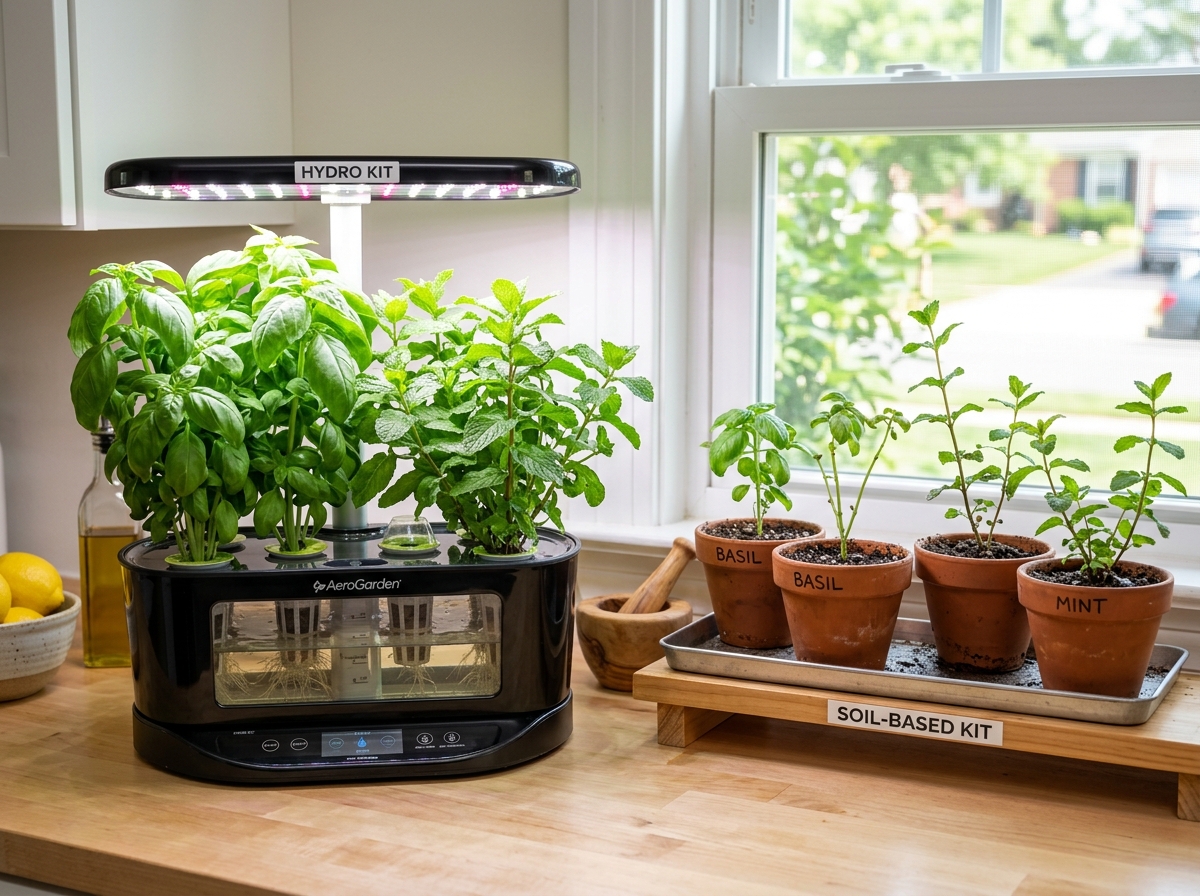
Hydroponic vs. Soil-Based: At a Glance
| Feature | Hydroponic Systems | Soil-Based Kits |
|---|---|---|
| Growth Speed | Very Fast (Basil in 3 weeks) | Moderate (Basil in 4-6 weeks) |
| Maintenance | Low (Automated lights/water) | High (Manual watering/rotating) |
| Mess Factor | Zero (No soil involved) | Moderate (Potential for dirt spills) |
| Initial Cost | Higher ($80 – $150+) | Lower ($20 – $50) |
| Learning Curve | Nearly zero | Requires some plant knowledge |
Best Plants for Your Indoor Herb and Spice Garden
Not all plants are created equal when it comes to living on a kitchen counter. Some thrive in the cozy indoors, while others might get “leggy” or sad without intense outdoor sun.
- Basil: The king of the indoor herb and spice garden. It loves the warmth of a kitchen and grows incredibly fast.
- Mint: A hardy survivor. It’s best grown in its own container because it’s an aggressive spreader that will crowd out its neighbors.
- Rosemary: This Mediterranean favorite prefers slightly drier soil and high light. It’s excellent for roasting meats and brings a wonderful fragrance to the room.
- Ginger and Turmeric: Yes, you can grow spices too! While herbs are the leaves, spices usually come from the roots (rhizomes) or seeds. Growing ginger involves planting a rhizome in a wide container and waiting about 4 to 8 months for a harvest. It’s a game of patience, but the flavor of homegrown ginger is incomparably sharp and fresh.
- Chives: Specifically, look for “Windowsill Chives” varieties. They are bred to stay compact and offer a punchy onion flavor without taking over your space.
For a full list of varieties that won’t break your heart, visit our list of the best-herbs-to-grow-indoors. If you’re specifically interested in the “spice” side of things—like harvesting your own coriander seeds or ginger—this resource on How to Grow an Indoor Spice Garden is an essential read.
Maximizing Yield in Your Indoor Herb and Spice Garden
The biggest mistake beginners make? Being too afraid to harvest. In indoor gardening, the more you snip, the more the plant grows.
- Pruning Nodes: Always cut just above a “node” (where new leaves are sprouting). This encourages the plant to branch out into two stems instead of one, making it bushier and more productive. Learn more about this technique in our guide on pruning-herbs-for-healthy-growth.
- Adjust Light Height: As your plants grow, you must move the LED lights upward. If the light is too close, it can burn the delicate leaves; too far, and the plant becomes “leggy” as it stretches toward the light.
- Root Management: In hydroponic systems, roots can grow so thick they clog the pump. Every few months, check the reservoir and gently trim back overgrown roots to keep the water circulating freely.
- Air Circulation: Plants need to breathe! If your garden is tucked in a stagnant corner, you might see mold. A small fan or simply ensuring there’s space between pots can make a world of difference.
Essential Features for High-Tech and Manual Kits
If you’re shopping for a kit in 2026, you’ll notice features that sound like they belong on a smartphone. Here is what actually matters for your indoor herb and spice garden:
- Adjustable LED Grow Lights: This is non-negotiable for high-tech kits. Different plants need different heights. High-quality LEDs provide the full spectrum of light required for photosynthesis, often allowing you to grow herbs even in a windowless basement. For more on choosing the right bulb, see grow-lights-for-indoor-herbs.
- Digital Displays and App Integration: Some models connect to your phone to tell you exactly when to add water or nutrients. For those of us who have “black thumbs,” these alerts are lifesavers.
- Vacation Mode: If you’re away for a week, this setting dims the lights and reduces water consumption, slowing the plants’ metabolism so they don’t dry out while you’re at the beach.
- Germination Guarantees: Many premium brands offer guarantees. If a pod doesn’t sprout, they’ll send you a replacement for free. This takes the risk out of the initial setup.
- Expanding Soil Discs: In manual kits, these are a marvel. They save shipping weight (which is eco-friendly!) and provide a sterile, nutrient-rich environment for heirloom seeds to take hold.
Step-by-Step Setup and Maintenance Guide
Ready to get your hands dirty (or wet)? Here is the standard workflow for a successful start.
The Assembly Process
- Unbox and Sanitize: Even new kits can have dust. Wipe down the reservoir or pots.
- Insert Pods or Soil: If using a soil kit, hydrate your soil discs first. They will expand 6-8 times their original size.
- Planting: Drop in your seeds or pods. If your kit includes “germination domes” (clear plastic caps), use them! they trap humidity and heat, acting like a mini-greenhouse.
- Watering: Use room-temperature water. Avoid softened water, as the salt content can be toxic to sensitive herbs. To avoid common pitfalls, read about indoor-herb-watering-mistakes-to-avoid.
Ongoing Maintenance Tasks
To keep your indoor herb and spice garden thriving for months (or years), follow this simple checklist:
- Weekly: Check water levels. Most smart gardens have a float or a digital alert.
- Every 2 Weeks: Add liquid nutrients if using a hydroponic system.
- Monthly: Rinse the water reservoir to prevent algae growth. If you see green gunk, a tiny bit of food-grade hydrogen peroxide can help clear it out.
- As Needed: Prune the tops to prevent flowering. Once an herb flowers (bolts), the leaves often turn bitter.
- Temperature Control: Keep your garden between 65-70°F during the day. Avoid placing it near drafty windows or hot ovens.
Pest Management
Even indoors, pests like aphids or fungus gnats can find your greens. If you notice tiny flies, it’s usually a sign the soil is staying too wet. Let the top inch of soil dry out between waterings. For hydroponics, ensure the “sponges” aren’t staying overly saturated on top, which can attract mold.
Frequently Asked Questions about Indoor Gardening
How do hydroponic systems differ from soil-based gardens?
Hydroponic systems grow plants in a water-and-nutrient solution without any soil. They are generally faster, cleaner, and more automated. Soil-based gardens use traditional potting mixes and rely more on natural sunlight and manual watering, offering a more “classic” gardening experience at a lower price point.
Which herbs are easiest for beginners to grow indoors?
Basil is the undisputed champion of ease. Mint, chives, and parsley are also very forgiving. If you are using a smart system, these herbs are almost “plug and play.” If you are starting with a manual kit, chives are particularly hardy and can handle the temperature fluctuations of a kitchen windowsill.
How much light does an indoor herb garden need daily?
Most culinary herbs require at least 6 hours of direct sunlight. If you don’t have a bright south-facing window, you will need supplemental LED grow lights. High-tech kits usually run their lights for 14 to 16 hours a day to mimic a perfect summer day, which is why they grow plants so much faster than a windowsill ever could.
Conclusion
Starting an indoor herb and spice garden is one of the most rewarding “small wins” you can add to your home. Whether you choose a high-tech hydroponic system that talks to your phone or a simple set of burlap pots for your windowsill, the result is the same: better-tasting food and a greener living space.
At FinCapitaly, we believe that sustainable gardening starts right in the heart of the home. By growing your own, you reduce plastic waste from store-bought herb packets and ensure your family is eating the freshest, nutrient-dense greens possible. Ready to start your harvest? More info about indoor gardening services can help you take the next step toward a lush, edible kitchen.
