
Why Grow Basil Hydroponically?
When we talk about the “secret” to perfect pesto, it usually starts with the growing method. Transitioning from soil to water-based cultivation offers several game-changing advantages. First and foremost is the speed of growth. In a traditional garden, you might wait months for a substantial harvest. However, with hydroponic basil seeds, the plant often reaches maturity in just 28 days. Because the roots are bathed in a nutrient-rich solution, they don’t have to “search” for food, allowing the plant to put all its energy into leaf production.
Another major benefit is pest and disease prevention. Soil is a breeding ground for fungus gnats, soil-borne pathogens, and various larvae. By planting herbs without soil, we effectively eliminate these common headaches. This is especially vital for basil, which is notoriously sensitive to root rot and damping off in damp soil.
Furthermore, hydroponics allows for year-round production. We don’t have to worry about the first frost killing our crop or the summer sun scorching the leaves. By controlling the environment, we create a “perpetual summer” inside our homes. This method is also incredibly space-efficient; you can grow a dozen basil plants on a small countertop system that would otherwise require several large, heavy pots of dirt. Finally, hydroponics is surprisingly sustainable, using up to 90% less water than traditional gardening because the water is recirculated rather than draining away into the earth.
Selecting the Best Hydroponic Basil Seeds for Your System

Not all basil is created equal, and when you are browsing for hydroponic basil seeds, you’ll find a world beyond the standard grocery store bunch. Selecting the right variety depends on your flavor preference and your system’s height constraints.
For hydroponic growers, disease resistance is a top priority. Basil is susceptible to Fusarium wilt and Downy Mildew. When selecting seeds, look for varieties specifically bred for greenhouse or hydroponic performance. These varieties are often more uniform in growth, ensuring that one plant doesn’t shade out its neighbors in a tightly packed NFT (Nutrient Film Technique) channel or DWC (Deep Water Culture) reservoir. If you are new to basil types, the basil overview on Wikipedia is a helpful external reference for understanding the plant’s background and common culinary uses.
Top Varieties of Hydroponic Basil Seeds
If you are looking for that classic, sweet Italian flavor, Genovese is the gold standard. However, some “improved” versions are even better for indoor systems:
- Newton Basil: This is a favorite for many of us because it provides that classic Genovese flavor without the strong anise (licorice) notes. It is also Fusarium-resistant and grows very uniformly.
- Italian Large Leaf: These seeds produce massive, rugose leaves that are incredibly productive. While the flavor is slightly sweeter and less “refined” than Genovese, the yield is hard to beat.
- Dark Opal and Red Rubin: If you want to add a splash of color to your kitchen, these purple varieties are stunning. Red Rubin offers a sweet-spicy profile and maintains a deep purple hue that looks beautiful in salads or as a garnish.
- Thai Basil: Known for its sturdy stems and spicy, clove-like scent, Thai basil thrives in hydroponics and is a staple for Asian cuisine.
Where to Buy Quality Hydroponic Basil Seeds
When purchasing, we recommend looking for reputable suppliers that offer Genovese – Basil Seed or Newton – Basil Seed. High-quality seeds often come with higher germination rates-meaning more of your seeds will actually turn into plants.
Look for labels such as “USDA Organic” or “Non-GMO” if those are important to your lifestyle. You can find excellent selections of hydroponic basil seeds at specialty retailers or through a wide variety of online marketplaces.
Germinating Hydroponic Basil Seeds: A Step-by-Step Guide
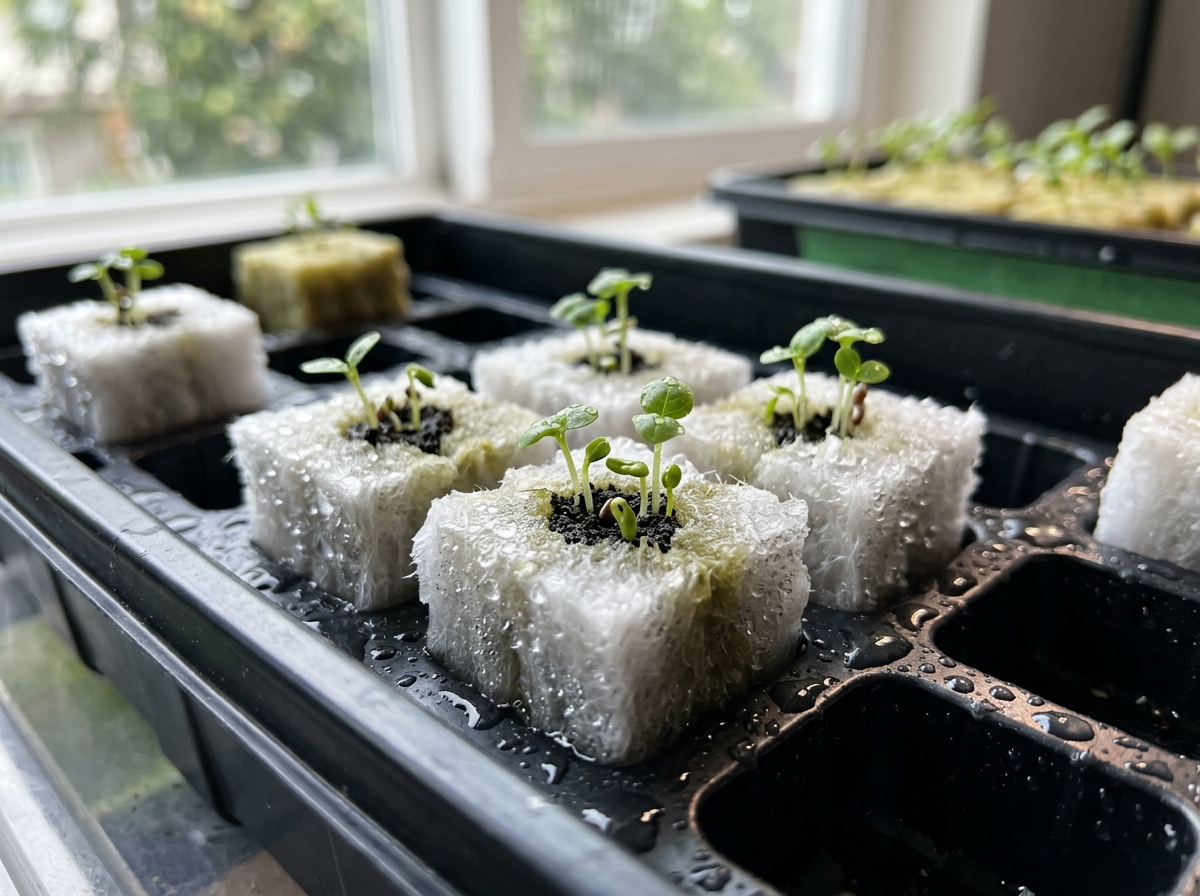
Germination is the most critical phase. Basil seeds are unique because they develop a mucilaginous (gel-like) coating when they get wet. This is perfectly normal! In a hydroponic setup, we don’t use soil, so we need a medium that holds just enough air and water.
The ideal temperature for germinating hydroponic basil seeds is 75°F (24°C). At this temperature, you can expect to see sprouts in 3 to 10 days. If your house is chilly, using a seedling heat mat can drastically improve your success rate.
Preparing Your Hydroponic Basil Seeds for Germination
To get started, we typically use “starter plugs” like rockwool cubes or rapid rooters. These are designed to fit perfectly into hydroponic net pots.
- Soak the Medium: If using rockwool, soak it in pH-adjusted water (around 5.5) for a few hours to neutralize its natural alkalinity.
- Sow the Seeds: Place 1-3 seeds into the hole of each plug. We use a few seeds just in case one doesn’t sprout, but basil has a high germination rate, so don’t overdo it.
- Provide Light and Heat: Basil needs light to germinate well. Place your tray under a grow light for 14-20 hours a day. Use a humidity dome to keep the air moist, but remove it as soon as the first green sprouts appear to prevent mold.
- Keep it Moist: Never let the plugs dry out completely. Mist them with plain water until the roots emerge from the bottom.
For more detailed tips on the early stages, check out our guide on starting herbs from seeds indoors or our list of easy herb seeds for beginners.
Moving Seedlings to the Hydroponic System
Once your seedlings have their first “true leaves” (the second set of leaves that actually look like basil) and you see white roots poking out of the starter plug, it’s time to move them to their permanent home.
Whether you are using a DWC system (where roots hang in a bubbling reservoir) or an NFT system (where water flows over the roots), the transition should be gentle. Ensure the bottom of the plug is just touching the nutrient solution. As the roots grow longer, you can slightly lower the water level to create an “air gap,” which helps the roots breathe and prevents rot. For a deeper dive into this transition, read our article on indoor-basil-growing.
Optimal Environmental Conditions for Maximum Yield
To get that “explosive” growth basil is famous for in hydroponics, you need to dial in the environment. Basil is a Mediterranean herb; it loves light, warmth, and moderate humidity.
| Parameter | Ideal Range |
|---|---|
| Temperature | 65°F – 80°F (75°F is the “sweet spot”) |
| pH Level | 5.5 – 6.8 (Aim for 6.0 for best nutrient uptake) |
| EC (Electroconductivity) | 1.0 – 1.6 mS/cm |
| Light Duration | 14 – 16 hours per day |
| Humidity | 40% – 60% |
Maintaining these levels ensures your plants stay healthy and prevents the leaves from becoming bitter or stunted. You can find more maintenance tips in our guide on how-to-care-for-basil-indoors-2.
Nutrient Solutions and pH Balance
In hydroponics, we are the “weather” and the “soil.” This means we must provide all the minerals the plant needs. Basil is a leafy green, so it craves Nitrogen for leaf growth, but it also needs plenty of Calcium and Magnesium to prevent the leaves from curling or turning yellow.
- EC Management: Keep your EC between 1.0 and 1.6. If the EC goes above 1.6, the basil may grow faster, but it often develops a strange, mint-like flavor. We want sweet basil, not minty basil!
- pH Stability: Check your pH daily. If it drifts outside the 5.5-6.8 range, the plant will experience “nutrient lockout,” where it can’t absorb the food even if it’s right there in the water.
For a breakdown of nutrient mixing, refer to how-to-care-for-basil-indoors-3.
Lighting Requirements for Indoor Basil
Basil is a sun-worshipper. If you are growing indoors, standard room light isn’t enough. You need full-spectrum LED grow lights.
The target is a Daily Light Integral (DLI) of at least 12 mol/m2/day. In simple terms, this means keeping your lights on for 14-16 hours. LEDs are preferred because they don’t emit as much heat as older bulbs; if the lights are too hot, the basil leaves will “cup” or burn. Keep your LEDs about 6-12 inches away from the top of the plants, moving them up as the basil grows.
Pruning, Harvesting, and Troubleshooting Common Issues
One of the biggest mistakes new growers make is being too “nice” to their basil. To get a massive yield, you have to be aggressive with your scissors!
Pruning for Success: When your plant is about 6 inches tall and has three sets of leaves, snip the top off just above the second leaf node. This forces the plant to split into two stems. If you keep doing this, your basil will become a bushy shrub rather than a tall, spindly stick. Always remove any flower buds immediately. Once basil flowers (bolts), the leaves become bitter and the plant stops producing new foliage.
Harvesting: You can start light harvesting after 3-4 weeks. Never take more than a third of the plant at once if you want it to keep growing. For the best flavor, harvest in the morning when the oil concentration is highest. Learn more about keeping your plants productive at how-to-care-for-basil-indoors.
Preventing Diseases and Pests
Even in a soil-free environment, issues can crop up.
- Downy Mildew: This looks like gray fuzz on the underside of leaves. It thrives in high humidity. Use a small fan to keep air circulating around your plants.
- Damping Off: This happens to seedlings if the medium is too wet and there is no airflow. The stem will shrivel at the base and the plant will tip over.
- Tip Burn: Usually caused by a lack of Calcium or the lights being too close. Ensure your nutrient solution is well-balanced and your fans are running.
Frequently Asked Questions about Hydroponic Basil Seeds
How long do hydroponic basil seeds take to sprout?
Typically, you will see life within 3 to 10 days. The “secret” to fast sprouting is warmth. If you keep your seeds at exactly 75°F, they often pop up by day 4. If they haven’t sprouted by day 12, the seeds might be old or the environment might be too cold.
Can I grow other herbs with my hydroponic basil?
Yes! Basil plays very well with others. Because it thrives in an EC range of 1.0-1.6, it is the perfect companion for lettuce, parsley, lemon balm, and peas. Just be careful with mint, as it is very aggressive and can take over your entire system.
Why is my hydroponic basil flowering so early?
This is called “bolting.” It is usually caused by stress—either the water got too hot, the lights are on for too many hours (20+), or the plant has reached the end of its natural life cycle. Regular pruning is the best way to delay flowering and keep the harvest going.
Conclusion
Starting your journey with hydroponic basil seeds is one of the most satisfying ways to bring sustainable, fresh flavors into your kitchen. By bypassing the mess of soil and controlling the environment, we can enjoy “pesto season” all year long. Whether you are a culinary enthusiast or a tech-loving gardener, the speed and vigor of hydroponic basil never fail to impress.
From selecting the right Genovese or Newton seeds to mastering the 28-day growth cycle, you now have the blueprint for success. At FinCapitaly, we believe that everyone should have access to fresh, home-grown food. Start your hydroponic journey today and experience the difference that home-grown, soil-free basil can make in your favorite dishes!
