
Fresh Herbs at Your Fingertips: Why a Vertical Herb Garden Wall Changes Everything
A vertical herb garden wall is one of the smartest ways to grow fresh basil, mint, parsley, and thyme — even if you have almost no floor space.
Quick answer: Best vertical herb garden wall systems at a glance
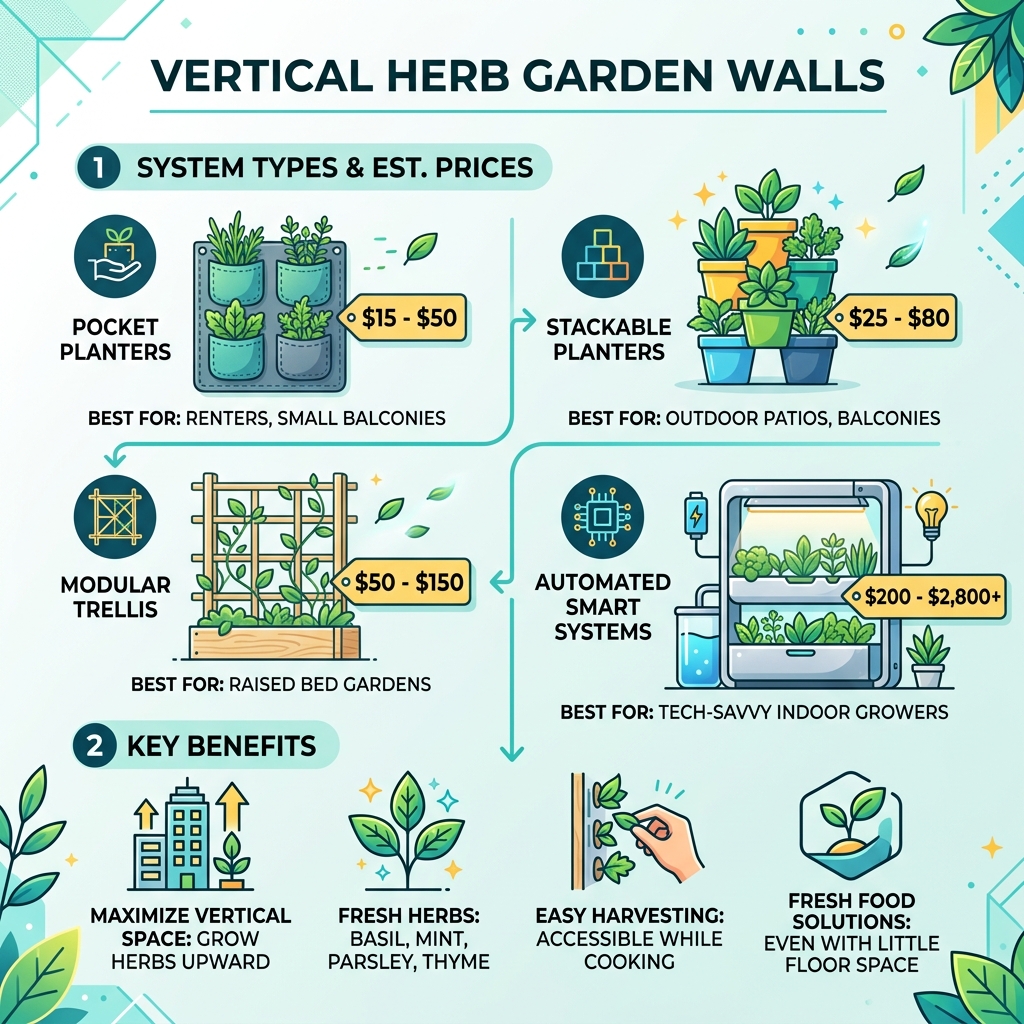
| System Type | Best For | Price Range | Example |
|---|---|---|---|
| Pocket planters | Renters, small balconies | $15 – $50 | MEIWO 7 Pocket Wall Planter |
| Stackable planters | Outdoor patios, balconies | $25 – $80 | Mr. Stacky 5 Tier Planter |
| Modular trellis | Raised bed gardens | $50 – $150 | Vego Garden Wall Trellis |
| Automated smart systems | Tech-savvy indoor growers | $200 – $2,800+ | Click & Grow Wall Farm |
If you’re a home cook who wants fresh herbs without a backyard, a vertical wall garden solves the problem fast. It turns an empty wall — in your kitchen, balcony, or living room — into a living, fragrant herb supply.
The concept is simple: instead of spreading plants across the ground, you grow upward. Pockets, stackable pots, or modular panels hold your herbs at eye level, saving floor space and making harvesting as easy as reaching out while you cook.
With over 5,000 vertical garden products available on Amazon alone — ranging from $14 felt pocket planters to $2,800 automated smart systems — there’s a solution for every budget, space, and lifestyle.
This guide breaks down the best options so you can find the right fit without the guesswork.
Why a Vertical Herb Garden Wall is the Ultimate Space-Saver

When we talk about maximizing a small home or apartment, we usually think about shelving or wall-mounted TVs. Why not apply that same logic to your food? A vertical herb garden wall is the ultimate “hack” for urban dwellers because it utilizes the one thing every home has in abundance: vertical surface area.
Maximizing Small Footprints
If you are planting herbs in small spaces, you know that every square inch of floor space is precious. Traditional pots take up room on the ground or counters, creating clutter. By moving your garden to the wall, you free up your balcony for a bistro set or your kitchen counters for actual meal prep. This is why a vertical herb garden wall is frequently cited as the top indoor herb garden for apartments.
Healthier Plants through Better Airflow
One of the hidden benefits of vertical gardening is improved air circulation. When plants are crowded together on the ground, moisture can trap against the leaves, leading to mold or pests. In a vertical arrangement, air flows freely around each plant. This natural ventilation reduces the risk of fungal diseases and often leads to an increased yield. You aren’t just saving space; you’re creating a more athletic, productive garden.
Accessibility and Biophilic Design
Let’s be honest: bending over to weed a garden bed is hard on the back. With a wall system, your herbs are at eye level. Harvesting a handful of cilantro for your tacos becomes as simple as reaching out. Beyond the physical ease, there is the mental benefit. Incorporating a “green wall” into your home is a form of biophilic design, which has been shown to reduce stress and boost productivity. If you don’t want to mount something permanently, you can even look into indoor plant stands for herbs that lean against the wall to provide that same vertical aesthetic.
Top Systems for Your Vertical Herb Garden Wall
Choosing a system depends on your aesthetic preference, your budget, and how much “work” you want to put into maintenance. Here is how the most popular materials and designs stack up:
| Feature | Pocket Systems | Stackable Planters | Wooden/DIY Walls | High-Tech Automated |
|---|---|---|---|---|
| Material | Felt or Plastic | Food-grade Plastic | Cedar or Pine | Aluminum/Recycled Plastic |
| Best Location | Balcony/Fence | Patio/Corner | Outdoor/Rustic | Kitchen/Dining Room |
| Maintenance | High (dries fast) | Medium | Medium | Very Low |
| Durability | 1-3 seasons | 5+ seasons | 5+ seasons | 10+ years |
Choosing the Right Vertical Herb Garden Wall for Your Home
Hanging Pockets: These are typically made of breathable felt or heavy-duty plastic. Systems like the Ogrmar 36 Pockets or the MEIWO 7 Pocket are incredibly popular on Amazon, with thousands of reviews. They are lightweight and easy to hang with simple hooks, making them a favorite for renters. However, felt pockets can dry out quickly, so they require more frequent watering.
Stackable Planters: If you have a corner but no wall space to drill into, stackable systems like the Mr. Stacky 5-Tier Planter are a dream. They allow water to flow from the top tier down to the bottom, ensuring efficiency. While they sit on the ground, their vertical height allows you to grow up to 20 plants in the footprint of a single pot.
Modular Trellis Systems: For those with existing outdoor raised beds, a modular trellis (like those from Vego Garden) allows you to grow climbing herbs or even small vegetables vertically. These are rustproof and sturdy, turning a flat garden bed into a 3D growing space.
DIY Options: If you’re feeling crafty, there are endless diy-indoor-herb-planter-ideas ranging from repurposed pallets to mason jars mounted on reclaimed wood. DIY projects allow you to customize the size to fit your exact wall dimensions, often for under $50 in materials.
High-Tech and Automated Vertical Herb Garden Wall Solutions
For those who want the flavor without the “green thumb” stress, the market for automated systems is exploding. These units often use “Smart Soil”—a NASA-inspired technology that regulates pH, oxygen, and moisture levels automatically.
- Click & Grow Wall Farm: This is the “Tesla” of the herb world. It can grow 51 plants simultaneously with automated lights and a passive watering system that only needs a refill once a month.
- Just Vertical Eco Living Green Wall: This system can produce the equivalent of a 50-square-foot outdoor garden in just 3 square feet of indoor space. It’s designed to be a piece of furniture that pays for itself in grocery savings.
- Hydroponics: Many high-end vertical walls use hydroponic (water-based) systems. These are vertical-herb-gardening-indoors solutions that don’t use traditional soil, meaning no mess and faster growth rates—sometimes up to 30% faster than soil-based plants.
Setup and Maintenance for Vertical Herb Success
Once you’ve picked your vertical herb garden wall, the real fun begins: planting. But don’t just shove any plant into a pocket and hope for the best. Success requires a bit of strategy.
Selecting Your Herbs
Not all herbs are created equal in a vertical environment. Here are the top performers:
- Basil: Loves the sun and grows quickly, but needs plenty of water.
- Mint: A “spreader” that usually takes over a garden. In a vertical wall, its roots are contained in its own pocket or pot, making it much easier to manage.
- Parsley and Thyme: These are hardy and can handle the slightly drier conditions often found in hanging planters.
- Rosemary: Great for the top levels where it can get the most light and doesn’t mind the soil drying out a bit between waterings.
Soil and Drainage
When container planting for herbs, weight is a factor. Use a high-quality, lightweight potting mix rather than heavy garden soil. Ensure your system has adequate drainage holes. If you are using a pocket system, the fabric usually breathes on its own, but plastic or wooden systems must have a way for excess water to escape to prevent root rot.
The Maintenance Routine
To keep your wall looking lush, follow these indoor-herb-garden-layout-tips:
- Watering: Check the top inch of soil daily. Vertical gardens, especially those outdoors, dry out faster than ground gardens.
- Pruning: Don’t be afraid to harvest! Regular snipping encourages the plant to grow bushier rather than “leggy.”
- Fertilizing: Herbs in containers exhaust their nutrients quickly. Use a balanced, water-soluble fertilizer every 4-6 weeks during the growing season.
- Light: Most herbs need at least 6 hours of direct sunlight. If your wall is in a dark kitchen, you may need to supplement with LED grow lights. Check out these indoor-herb-garden-setup-tips for more on lighting.
Frequently Asked Questions about Vertical Herb Walls
How much does a vertical herb garden wall typically cost?
The price varies wildly based on materials and tech.
- Budget ($15–$50): Felt pocket planters, plastic stackable pots, or DIY pallet projects.
- Mid-Range ($60–$200): Cedar wall-mounted planters, modular metal trellises, or small self-watering kits.
- High-End ($500–$2,800): Fully automated “Wall Farms” with integrated LED lighting, app connectivity, and hydroponic systems.
Factors affecting the price include the quality of the wood (cedar is more expensive but rot-resistant), the inclusion of UV-protected plastics, and the level of automation (pumps, timers, and sensors).
Which herbs grow best in a vertical wall arrangement?
The best herbs are those that don’t have massive root systems.
- Sun-Lovers: Basil, Oregano, and Rosemary should be placed at the top or in the sunniest spots.
- Partial Shade: Mint, Chives, and Parsley can handle the lower tiers of a vertical herb garden wall where they might get slightly less light.
- Cascading Herbs: Thyme and Trailing Rosemary look beautiful as they spill over the edges of pockets or pots. For more display ideas, see our guide on indoor-plant-stands-for-herbs-2.
What are the most common mistakes to avoid with vertical gardens?
We see the same few errors over and over:
- Overwatering: It’s tempting to soak the plants, but without proper drainage, the bottom pockets can become waterlogged and rot.
- Ignoring Light Needs: A wall that looks great might be in a “dead zone” for sunlight. Always prioritize the plant’s light needs over the wall’s aesthetic placement.
- Soil Compaction: Over time, potting mix can settle and become hard, preventing water from reaching the roots. Use a light mix and refresh it once a year.
- Forgetting to Harvest: If you don’t use your herbs, they will flower and go to seed, which stops the production of those tasty leaves. For more tips on keeping your garden healthy, check out diy-indoor-herb-planter-ideas-2.
Conclusion
A vertical herb garden wall is more than just a home decor trend; it’s a functional, sustainable way to bring fresh flavor into your kitchen every single day. Whether you choose a simple $20 pocket planter for your balcony or a high-tech automated farm for your dining room, the benefits are clear: you save space, reduce your grocery bill, and enjoy the unmatched taste of herbs harvested seconds before they hit the pan.
At FinCapitaly, we believe that smart tools make for a better home. By moving your garden to the wall, you’re choosing a path of efficiency and wellness that fits perfectly into modern living. Ready to upgrade the rest of your home setup? More info about indoor tools is just a click away. Happy planting!
