
Why a Window Sill Spice Garden Is the Smartest Move for Home Cooks
A window sill spice garden lets you grow fresh herbs like basil, thyme, mint, and parsley right on your kitchen windowsill — no yard, no outdoor space, no special skills needed.
Here’s how to start one in 5 simple steps:
- Pick your herbs — Choose compact varieties like basil, chives, parsley, or thyme
- Find a sunny spot — A south or west-facing window with 6-8 hours of light daily works best
- Choose your containers — Use pots at least 6 inches deep with drainage holes
- Use quality potting mix — A light, well-draining sterile potting mix prevents disease
- Water and harvest regularly — Check soil moisture daily and snip often to encourage bushy growth
Fresh herbs from a store look great on day one. By day four, half of them are wilting in your fridge. Sound familiar?
That’s the problem a windowsill spice garden solves. You snip only what you need, right when you need it. No waste. No last-minute grocery runs. Just fresh flavor within arm’s reach.
And the space requirement? Surprisingly small. Even a narrow kitchen windowsill can hold three or four productive herb pots — enough to supply basil for pasta, mint for drinks, and parsley for garnishes all week long.
Whether you’re a complete beginner or just tired of killing supermarket herb pots, this guide walks you through everything you need to grow a thriving indoor herb garden year-round.
Choosing the Best Plants for Your Window Sill Spice Garden
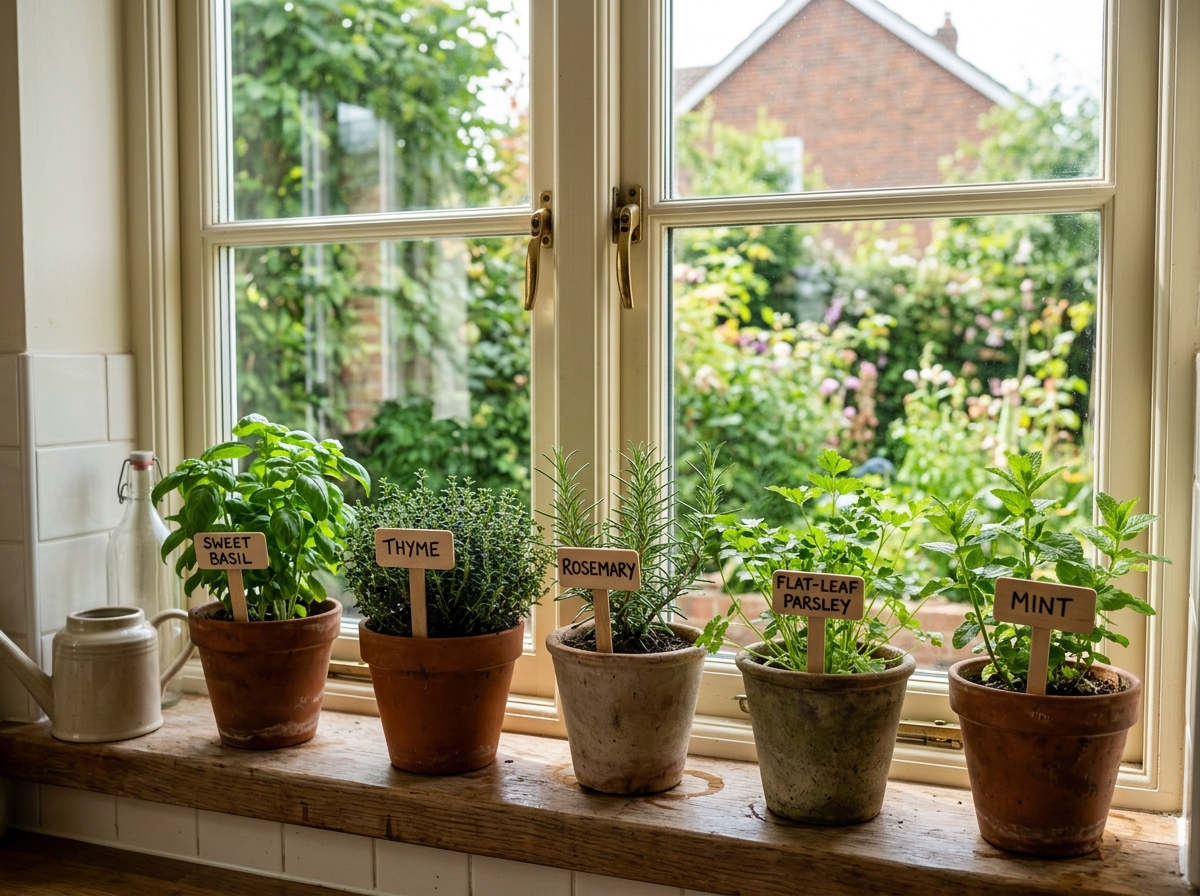
When we decide to start a window sill spice garden, the excitement of choosing plants can be overwhelming. However, not all herbs are created equal when it comes to living on a ledge. Success starts with selecting the best herbs to grow indoors that won’t outgrow their welcome or demand a professional greenhouse setup.
Culinary Staples for Beginners
For those of us just starting out, we recommend focusing on “forgiving” herbs. These are the easy herbs for beginners to grow indoors because they adapt well to the fluctuating temperatures of a kitchen.
- Chives: These are practically indestructible. They belong to the onion family and provide a mild, savory kick to eggs and potatoes.
- Basil: A classic annual. It loves the heat of a sunny window. While it only lives for about 4-6 months before trying to go to seed, it provides a massive yield in that time.
- Parsley: Slow to start but very hardy once established. It’s rich in Vitamin C and acts as a palate cleanser.
- Mint: This one is a “garden bully” because it grows so fast. We always suggest growing mint in its own separate container so it doesn’t choke out its neighbors.
- Thyme and Rosemary: These are woody perennials. They prefer slightly drier soil and can live for years on your windowsill if you don’t overwater them.
According to research from A Year Round Windowsill Herb Garden, many of these herbs can provide A Year Round Windowsill Herb Garden experience if you manage their light and water correctly.
Space-Saving Varieties
If your windowsill is more of a “sliver” than a “shelf,” you need to think about planting herbs in small spaces. Standard garden varieties can get leggy and floppy. Look for these compact options:
- Dwarf Globe Basil: This variety grows into a tight, round ball, staying small and bushy without much effort.
- Trailing Thyme: Instead of growing tall, it spills over the sides of the pot, making it perfect for narrow ledges.
- Greek Oregano: Generally stays lower and more compact than its Mexican counterpart.
By choosing these specific varieties, we ensure our window sill spice garden stays manageable and looks intentional rather than like a jungle taking over the sink.
Essential Setup: Lighting, Containers, and Soil
The “big three” of indoor gardening are light, drainage, and dirt. If we get these right, the plants do 90% of the work themselves.
| Feature | Requirement for Herbs | Why It Matters |
|---|---|---|
| Natural Light | 6-8 hours (South/West window) | Essential for photosynthesis and flavor oils. |
| Supplemental Light | 14 hours (if natural light is low) | Prevents “legginess” where plants stretch for sun. |
| Container Depth | 6-12 inches | Allows roots to flare out and support growth. |
| Soil Type | Sterile Potting Mix | Prevents soil-borne diseases and pests. |
| Drainage | Holes + Drip Tray | Prevents “wet feet” and root rot. |
When planting herbs in kitchen windows, we have to remember that the indoor environment is artificial. We are playing Mother Nature, so we need to provide the best possible foundation.
Optimizing Light for Your Window Sill Spice Garden
Light is the most common hurdle. Most herbs need at least 6 hours of sun, but 8 hours is the “sweet spot” for strong, healthy growth.
If we notice our plants leaning drastically toward the glass or developing long, thin stems with tiny leaves, they are screaming for more light. We can fix this by:
- Rotating the pots daily: This ensures even growth so one side doesn’t become weak.
- Using Supplemental LED Lights: Modern grow lights are small and energy-efficient. If you don’t have a south-facing window, keep an LED light on for about 14 hours a day.
- Mind the Windowpane: In the dead of winter, the glass can get very cold. Most herbs (except basil, which hates the cold) actually prefer being near a cool windowpane, but don’t let the leaves touch the freezing glass.
As noted in Gardening 101: Windowsill Herb Gardens, a west or east window can work, but you may need to supplement with light during the shorter days of winter.
Creative DIY Container Ideas
You don’t need to spend a fortune on fancy ceramic pots. In fact, some of the most charming window sill spice gardens use upcycled materials.
- Tin Cans: Old tomato or soup cans make excellent industrial-style planters. Just be sure to poke drainage holes in the bottom with a hammer and nail. We love painting these with 2-3 coats of spray paint to match the kitchen decor.
- Terracotta Pots: These are porous and “breathe,” which is great for herbs like rosemary and thyme that hate sitting in soggy soil.
- Mason Jars: While trendy, they don’t have drainage holes. If you use them, you must add a layer of rocks at the bottom to act as a reservoir, but be very careful not to overwater.
- Gutters: For a truly productive setup, some DIYers install a small section of vinyl gutter across the window frame to create a long, continuous planter.
According to the Gardening Project: Planting herbs for a window sill garden – Stark Insider, using 6-7 inch pots is ideal for fitting multiple varieties on a standard 28-inch wide windowsill.
Planting, Maintenance, and Harvesting Tips
How we start our garden depends on our patience. You can learn how to start an indoor herb garden from seeds, which is cheaper and gives you more variety, or you can buy “starts” from a nursery for an instant kitchen upgrade.
If you are looking for an indoor herb garden for apartments, starting with established plants is often the most rewarding way to see immediate results.
Watering and Feeding Your Window Sill Spice Garden
The number one killer of indoor herbs is overwatering. We often think “more is better,” but for a window sill spice garden, it’s a death sentence.
- The 1-Inch Rule: Stick your finger into the soil. If it feels dry an inch or two down, it’s time to water. If it’s still moist, walk away!
- Drainage is Key: Always empty the drip tray after watering. We don’t want our herbs sitting in a puddle, which leads to root rot.
- Feeding: Indoor soil loses nutrients quickly. Feed your herbs every other month with a liquid fertilizer labeled for edibles. We suggest using it at half the recommended strength to avoid “wispy” growth. Herbs actually have a more concentrated flavor when they aren’t over-fertilized.
The Growing Herbs on Your Windowsill | Chicago Botanic Garden guide suggests that herbs like rosemary and thyme can handle being a bit drier, while parsley and basil prefer consistent moisture.
Pruning for Bushy Growth
Many beginners are afraid to cut their plants. They think they are hurting them. In reality, harvesting is what keeps your garden alive!
- Pinch the Tips: When your herbs reach about 6 inches tall, start pinching off the top 2-3 inches. This forces the plant to grow two new stems from the cut point, making it bushier.
- The 1/3 Rule: Never harvest more than one-third of the plant at a time. The plant needs the remaining leaves to produce energy to grow back.
- Prevent Flowering: If you see flower buds forming (especially on basil or cilantro), pinch them off immediately. Once a herb flowers, the leaves can become bitter, and the plant stops producing new foliage.
- Air Circulation: Don’t crowd your pots too closely. Good air movement prevents mold and keeps vertical herb gardening indoors setups healthy.
Frequently Asked Questions about Windowsill Gardens
Can I regrow supermarket herbs on a windowsill?
Yes, but it requires a little “triage.” Supermarket herbs are often grown in hydroponic plugs and crammed too tightly into one pot.
- Divide them: Gently pull the plants apart. You’ll often find 10-15 tiny basil plants in one grocery store pot.
- Repot: Give them fresh, high-quality compost and a larger pot.
- Acclimate: These plants have been in a high-humidity greenhouse or a refrigerated truck. Give them a few days to adjust to your home’s humidity before you start heavy harvesting.
How do I get rid of pests like aphids indoors?
Even indoors, pests find a way. Aphids, whiteflies, and spider mites are the usual suspects.
- Rinse: Often, a strong spray of tepid water in the kitchen sink is enough to knock them off.
- Soapy Water: A few drops of mild dish soap in a spray bottle of water can suffocate soft-bodied insects.
- Neem Oil: For persistent problems, an organic neem oil spray is safe for edible plants.
- Isolation: If one plant is heavily infested, move it away from the others immediately so the “bugs” don’t spread.
Does a windowsill garden provide enough for daily cooking?
While you won’t be harvesting pounds of produce, a well-maintained window sill spice garden can easily provide enough for daily garnishes and flavoring.
- Succession Planting: Start new seeds every few weeks so you always have young, vigorous plants ready to replace the older ones.
- Multiple Pots: If you use a lot of basil, grow two or three pots of it instead of just one.
- Regular Harvesting: The more you snip (correctly), the more the plant grows.
Conclusion
Starting a window sill spice garden is one of the most rewarding steps toward sustainable living and better cooking. It transforms a simple ledge into a “flavor factory” that saves you money and reduces food waste.
At FinCapitaly, we believe that even the smallest spaces can be productive. Whether you are looking for how to turn your windowsill into a flavor factory with a culinary herb garden kit or you want to DIY your own setup from tin cans, the result is the same: fresher food and a beautiful, fragrant kitchen.
Don’t wait for the “perfect” garden weather. Start your indoor garden journey today and enjoy the luxury of fresh spices right at your fingertips. Happy planting!
