
Why Looking After Basil Plant Indoors Is Easier Than You Think
At FinCapitaly, we believe that smart resource management starts at home. Looking after basil plant indoors is a savvy, cost-effective way to bring fresh flavors to your kitchen while reducing your weekly grocery spend. It is a small investment of time that yields delicious, year-round returns.
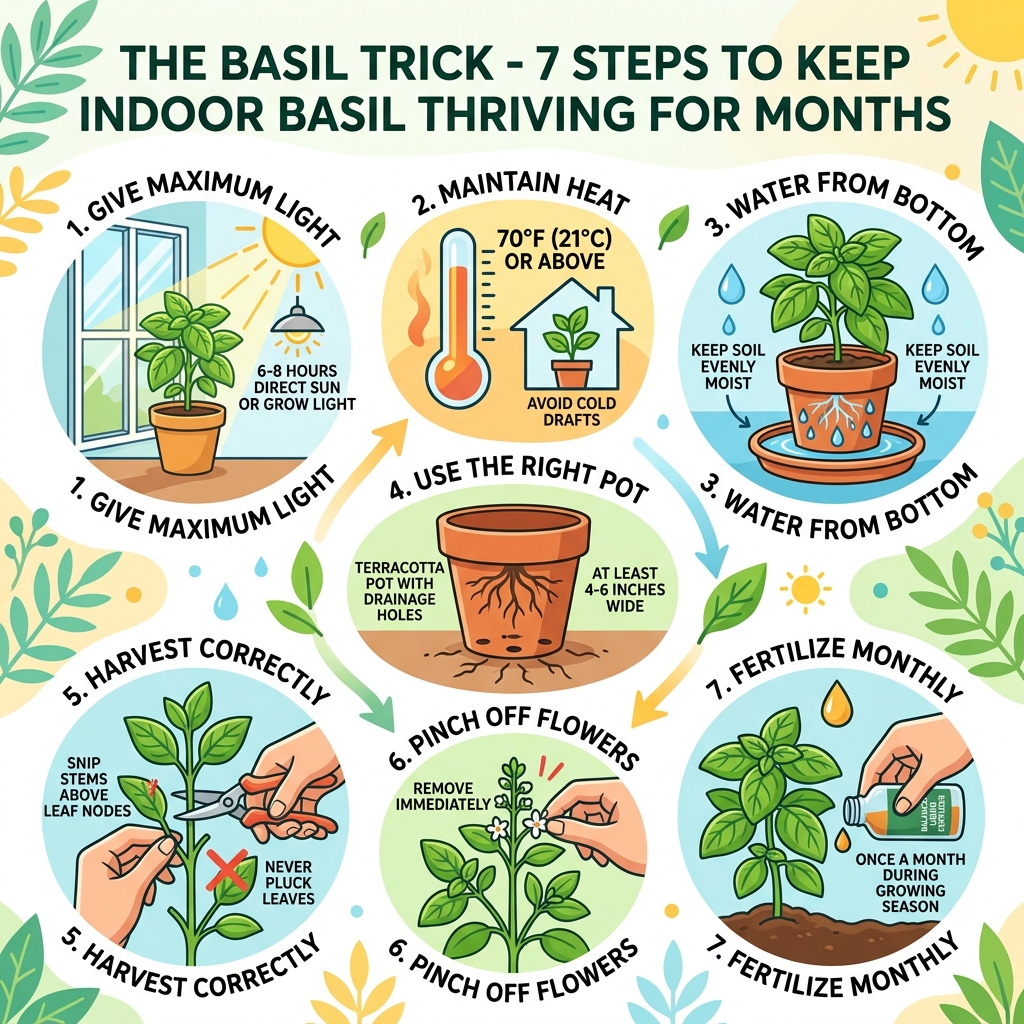
Here’s a quick summary of what it takes:
- Light: 6-8 hours of direct sun daily (south- or west-facing window), or a grow light set to 12-14 hours
- Temperature: Keep it at 70F (21C) or above — basil hates cold drafts
- Watering: Keep soil evenly moist; bottom-watering from a saucer works best
- Pot: A terracotta pot with drainage holes, at least 4-6 inches wide
- Harvesting: Snip stems just above a leaf node — never pluck individual leaves
- Flowers: Pinch them off immediately to keep the plant producing leaves
- Fertilizer: A balanced liquid fertilizer once a month during growing season
If you do those seven things consistently, a single supermarket basil plant can thrive indoors for 6-9 months — and with propagation from cuttings, you can keep fresh basil going indefinitely.
Many people buy a basil plant from the supermarket, watch it go limp within two weeks, and assume they’ve failed. Sound familiar? The truth is, most store-bought basil plants are overcrowded, root-stressed, and grown hydroponically — not exactly set up for long-term indoor success.
But with a few simple adjustments — the right pot, the right watering method, and knowing how to harvest correctly — that same humble grocery store plant can become a lush, bushy herb that supplies your kitchen all year round.
The good news: you don’t need fancy equipment or gardening experience. Just the right approach to managing your home-grown assets.
Setting the Stage: Ideal Conditions for Indoor Basil
To succeed at looking after basil plant indoors, we first need to understand where this herb comes from. Basil (Ocimum basilicum) is a tropical plant native to central Africa and Southeast Asia. It craves heat, sunshine, and consistent moisture. When we bring it inside, our goal is to mimic a Mediterranean summer right on our kitchen counter.
The most common reason indoor basil fails is a lack of light or “cold feet.” Basil is incredibly sensitive to temperature drops; even a chilly draft from an AC vent or a frosty windowpane in winter can cause the leaves to turn black and droop. According to experts at How to Grow and Care for Basil Indoors, providing the right environment from day one is the difference between a plant that survives for two weeks and one that provides pesto all winter.
Lighting and Temperature for Looking After Basil Plant Indoors
Light is the fuel that keeps basil aromatic and flavorful. Ideally, your plant needs 6 to 8 hours of direct sunlight every day. A south-facing window is the gold standard, as it receives the most intense light throughout the day. West-facing windows are a close second. If your windows face north or are shaded by buildings, don’t despair—you can still succeed by using artificial light.
For those of us without the perfect sunny windowsill, grow lights are a game-changer. High-quality LED or fluorescent grow lights should be kept on for about 12 to 14 hours a day. Position the light 2 to 4 inches above the top of the plant to prevent “legginess”—that’s when the plant grows tall and skinny as it stretches toward the light. You can find more specific tips on managing these indoor environments at how-to-care-for-basil-indoors/.
As for temperature, basil likes it warm—think 70°F (21°C) or higher. If you feel comfortable in a t-shirt, your basil is likely happy. If you find your leaves yellowing or the plant stopped growing, check for drafts. Even a slight dip below 50°F can stunt the plant permanently.
Choosing the Right Soil and Pots
The container you choose is just as important as the location. While plastic pots are common, we highly recommend terracotta. Why? Terracotta is breathable, allowing air to reach the roots and preventing the soil from becoming a soggy, anaerobic mess. Whatever material you choose, it must have drainage holes. Basil loves water, but it hates sitting in a swamp; “wet feet” lead to root rot faster than you can say “Margherita pizza.”
For soil, skip the heavy garden dirt. You need a high-quality, peat-free organic potting mix or a seed-starting mix. Look for a soil with a pH between 6.0 and 7.5. A good mix will often include perlite or rice hulls to help with drainage while retaining enough moisture to keep the plant hydrated between waterings.
The Supermarket Secret: From Grocery Store to Thriving Herb
We’ve all seen those lush, dense pots of basil in the produce section. They look amazing for the first three days, then they collapse. The “secret” is that those pots aren’t actually one plant—they are often 20 to 30 tiny seedlings crammed into a 5-inch container. They are competing for nutrients, light, and root space. To keep them alive, you have to act fast.
Selecting a Healthy Supermarket Plant
When shopping, look for plants with vibrant green leaves and sturdy, upright stems. Avoid any that have yellowing bottom leaves or white spots (which could indicate mildew or pests).
There are two main types of supermarket basil:
- Soil-grown: These come in standard 5-inch pots and can live for months if cared for properly.
- Hydroponic: These often come in small plastic “sleeves” with their roots in water or a small plug. Statistics show these typically survive no longer than 2 weeks indoors unless they are immediately transplanted into soil.
The “Basil Trick” for Watering and Longevity
The viral “Basil Trick” is the most effective way to ensure longevity. Instead of watering from the top, which can lead to fungal issues and uneven moisture, we use bottom-watering.
Here is how to do it:
- Repot immediately: Take that crowded supermarket pot and gently split the clump into 2 or 3 smaller groups.
- Use an oversized saucer: Place your new pots in a deep, large saucer or bowl.
- Fill the saucer: Instead of pouring water onto the soil, fill the saucer with about an inch of water. The terracotta pot and the soil will “wick” the water up through the drainage hole, giving the roots exactly what they need without drowning them.
- Keep it full: Check the saucer daily. If it’s dry, add more water. This ensures the soil stays consistently moist, which is vital for looking after basil plant indoors.
For more on this specific watering method, check out how-to-care-for-basil-indoors-2/.
Mastering Maintenance: Pruning and Looking After Basil Plant Indoors
If you want a bushy, “pro-level” basil plant instead of a tall, spindly one, you must be brave with your scissors. Pruning is not just about harvesting; it’s about telling the plant where to grow.
How to Harvest for Maximum Yield
The biggest mistake people make is plucking individual leaves from the bottom of the plant. This actually weakens the plant. Instead, you should always harvest from the top down.
Look for a “node”—this is the spot on the stem where two new tiny leaves are starting to grow. Use sharp scissors to snip the main stem about a quarter-inch above that node. By removing the top, you signal the plant to send its energy to those two tiny side leaves. Within a week, those two leaves will become two new branches. This is the key to pruning-herbs-for-healthy-growth/.
The 1/3 Rule: Never harvest more than one-third of the plant at a single time. The plant needs its remaining leaves to photosynthesize and recover.
Preventing Flowers and Extending Life
Once a basil plant produces flowers, its mission in life is complete. It thinks it has “gone to seed,” and it will stop producing those tender, flavorful leaves. The stems will become woody, and the leaves will turn bitter.
To prevent this, keep a close eye on the very tips of your branches. If you see a cluster of tiny, pointed leaves that look different from the rest, those are flower buds. Pinch them off immediately! By removing the flowers, you keep the plant in its “vegetative phase,” extending its productive life by several months. You can find more expert advice on preventing “bolting” at Basil Plant Care: Growing Basil Indoors and Outdoors 2025.
Troubleshooting and Propagating Your Indoor Basil
Even the best indoor gardeners face challenges. The key is to catch problems early before they spread to the whole plant.
Common Problems and Solutions
- Wilting: Usually means the plant is thirsty. However, if the soil is wet and it’s still wilting, you likely have root rot from overwatering.
- Yellow Leaves: This can be a sign of a nitrogen deficiency or poor drainage. Try a balanced liquid fertilizer (like a 5-5-5 or 10-10-10 NPK) diluted to half-strength once a month.
- Pests: Indoors, the main culprits are whiteflies and aphids. You can manage these by drying out the soil slightly and using yellow sticky traps.
- Legginess: This is a cry for more light. Move the plant to a brighter window or lower your grow lights.
Propagating New Plants from Cuttings
One of the coolest things about looking after basil plant indoors is that you can essentially create “clones” of your plant for free. If you have a stem that is 4 inches long, snip it off and remove the bottom leaves. Place the stem in a glass of clean water on your windowsill.
In about 7 to 10 days, you will see tiny white roots emerging from the stem. Once those roots are about an inch long, you can plant the cutting into a new pot of soil. This allows you to keep a “basil cycle” going indefinitely. For a step-by-step guide on this process, visit how-to-care-for-basil-indoors-3/.
Looking After Basil Plant Indoors During Vacations
Planning a trip? Don’t let your basil die while you’re away. Basil is a thirsty plant and won’t survive a week without water.
- The Wicking Method: Place a large jug of water next to your plant. Run a piece of cotton twine from the bottom of the water jug into the soil of your basil pot. The string will slowly carry moisture to the plant.
- The Bath Method: Place your terracotta pots in a sink or tray filled with 1-2 inches of water. The bottom-watering method will keep them hydrated for 3-4 days.
Frequently Asked Questions about Indoor Basil
How long does a basil plant last indoors?
With excellent care, a single basil plant can last 6 to 9 months. Eventually, the main stem will become “woody,” and the plant will lose its vigor. At this point, it’s best to start a new plant from a cutting of the old one or start fresh from seeds.
Why is my indoor basil getting leggy?
Legginess is almost always caused by insufficient light. The plant is stretching its “neck” to find the sun. To fix this, prune the tall stems back to a leaf node and move the plant to a brighter location or add a grow light.
Can I grow other herbs like parsley using these methods?
Yes! Parsley, cilantro, and mint also thrive with the bottom-watering method and similar light requirements. However, keep in mind that mint is aggressive and should always have its own pot, while parsley grows more slowly than basil and doesn’t need as much pruning.
Conclusion
At FinCapitaly, we believe that the joy of a fresh harvest shouldn’t be limited to those with a backyard. Looking after basil plant indoors is a rewarding, fragrant, and delicious way to bring a bit of nature into your home while practicing the kind of consistency and care that leads to long-term growth. Just as we help you manage your financial future, we encourage sustainable habits that add value to your daily life. By mastering the “basil trick,” providing plenty of light, and pruning with confidence, you can enjoy the taste of summer in your cooking every single day of the year.
Ready to level up your home and your lifestyle? Start your indoor herb garden today and experience the difference that fresh-picked herbs make in your favorite recipes. Happy growing!
