
Fresh Herbs at Home — What You Need to Know First
Indoor vertical herb gardens are one of the smartest ways to grow fresh herbs in a small space, year-round, without a backyard or even a sunny windowsill.
Here’s a quick comparison of the top systems to help you decide fast:
| System | Type | Plant Capacity | Best For |
|---|---|---|---|
| Click & Grow Wall Farm | Smart Soil pods | 51 plants | Large homes, set-and-forget |
| Tower Garden HOME | Aeroponic tower | 32 plants | Serious growers, high yield |
| Gardyn Home 4 | Hydroponic tower | 30 plants | Tech lovers, AI monitoring |
| AeroGarden Harvest Elite | Hydroponic countertop | 6 plants | Beginners, small kitchens |
| Mr. Stacky 5-Tier | Soil-based stackable | Varies | Budget buyers, outdoor/indoor |
The right pick depends on your space, budget, and how hands-on you want to be.
Running out of fresh basil mid-recipe is a real problem — especially in winter. Most grocery-store herbs are already days old, low on flavor, and grown with pesticides you can’t see. And if you’ve ever tried keeping a pot of herbs alive on a windowsill, you know how quickly they give up.
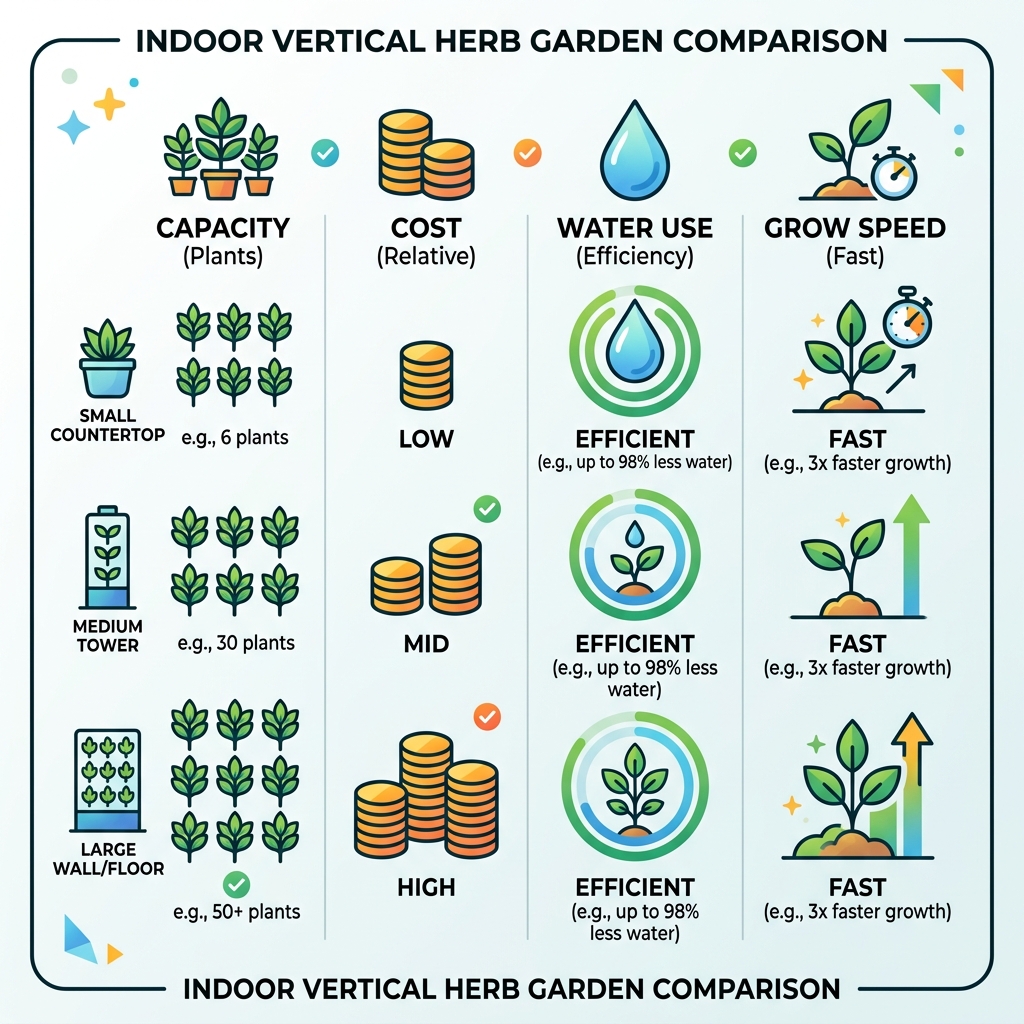
That’s where vertical indoor systems change the game. They use up to 98% less water than traditional gardening, grow plants 3x faster, and fit into spaces as small as 2 square feet. Whether you’re a busy home cook who just wants fresh basil on demand, or a gardening enthusiast ready to grow 30+ plants on a single wall — there’s a system built for you.
This guide breaks down the best indoor vertical herb garden options side by side, so you can find the one that fits your kitchen, your lifestyle, and your budget.
Why an Indoor Vertical Herb Garden is the Ultimate Urban Solution
If you live in a city, space is your most precious commodity. We’ve all been there-trying to squeeze a pot of rosemary onto a tiny balcony or a cluttered countertop. An indoor vertical herb garden solves this by utilizing the one thing we all have plenty of: vertical space. By stacking plants upward instead of outward, these systems use only about 10% of the land required for traditional farming.
But it isn’t just about saving floor space. These systems are productivity powerhouses. Research shows that vertical gardens can increase yields by an average of 30% while growing plants three times faster than traditional dirt-and-shovel gardening. Imagine harvesting fresh cilantro for your tacos just three weeks after “planting” it. That is the reality of modern indoor farming.
For those of us concerned about what goes into our bodies, these systems offer total peace of mind. When you grow your own, you are in control. Most top-tier systems use pesticide-free pods or mineral-rich water, ensuring your family eats clean, nutrient-dense greens. Plus, the educational value is huge-kids love watching a seed turn into a salad right in the living room.
To dive deeper into the basics, check out our guide on vertical-herb-gardening-indoors or learn more about planting-herbs-in-small-spaces. For a broader overview of the growing method behind many smart systems, the hydroponics overview on Wikipedia is a helpful external resource.
The Science of the Indoor Vertical Herb Garden
You might be wondering: how do these plants grow so fast without a single worm or a handful of dirt? Much of the technology we use today was inspired by NASA’s research into how to feed astronauts in space.
Take “Smart Soil” technology, for example. It’s a nanostructure material that maintains the perfect pH level and ensures the roots always have the ideal configuration of water, oxygen, and nutrients. Unlike regular soil, which can get compacted or waterlogged, this medium stays aerated. This means the plant doesn’t have to work hard to “breathe” or find food, so it puts all its energy into growing delicious leaves for your dinner.
Setting up the right environment is key. For more technical details, see our indoor-herb-garden-setup-tips.
Comparing Hydroponic, Aeroponic, and Soil-Based Systems
When choosing your indoor vertical herb garden, you’ll likely run into three main “flavors” of technology. Understanding the difference is the first step to becoming a successful indoor farmer.
- Hydroponics: This is the most common “smart” garden method. Plants grow in a soilless medium (like peat or rockwool) and their roots sit in or are regularly bathed by nutrient-rich water. It’s clean, efficient, and uses a closed-loop reservoir that recycles water.
- Aeroponics: Systems like the Tower Garden take it a step further. The roots hang in the air inside the tower, and a pump sends a “rain” of nutrient solution down over them on a timer. Because the roots are exposed to so much oxygen, plants grow incredibly fast.
- Soil-Based Vertical Planters: These are the “old school” option. Think of stackable pots like Mr. Stacky or wall-mounted planters. They are much cheaper upfront but require more manual work-you have to water them yourself, manage the mess of soil, and ensure they get enough light from a window or a separate grow light.
| Feature | Hydroponic | Aeroponic | Soil-Based |
|---|---|---|---|
| Water Usage | Very Low (Recycled) | Lowest (Recycled) | Moderate |
| Growth Speed | 2x Faster | 3x Faster | Standard |
| Mess Level | Very Low | None | Moderate (Soil/Drips) |
| Maintenance | Low (Automated) | Low (Automated) | High (Manual) |
For layout inspiration, explore our indoor-herb-garden-layout-tips.
Essential Features for High-Yield Vertical Growing
A truly great indoor vertical herb garden isn’t just a shelf; it’s an ecosystem. To get the best results, you need to look for specific features that take the guesswork out of gardening.
One of the most critical features is full-spectrum LED grow lights. Since most of us don’t live in glass houses, these lights mimic the sun’s rays, providing the exact “recipe” of light plants need to photosynthesize. Look for systems with adjustable light heights. As your basil grows from a tiny sprout to a 12-inch bush, you’ll need to move the lights up to prevent burning the leaves while still providing enough energy.
Another game-changer is app integration and AI monitoring. High-end systems like the Gardyn Home 4 come with an AI assistant (affectionately named Kelby) that uses cameras to monitor your plants 24/7. It will tell you when to add water, when to harvest, and even when to prune. This is perfect for those of us who have historically been “plant killers.”
For a full list of beginner-friendly options, check out indoor-gardening-kits-for-beginners and indoor-plant-stands-for-herbs.
Maximizing Yield in Your Indoor Vertical Herb Garden
To get a “bountiful harvest” rather than just a few sad leaves, you need to learn the art of the harvest. For example, with herbs like Genovese basil, you should never just pluck the big bottom leaves. Instead, you “top” the plant by cutting the stem just above a pair of leaves. This encourages the plant to branch out, turning one stem into two, and eventually doubling your yield.
Different herbs have different cycles:
- Leafy Greens (Lettuce, Spinach): These are the sprinters. You can often start harvesting outer leaves in just 3-4 weeks.
- Herbs (Basil, Cilantro, Mint): These are the steady performers. They usually sprout in a week and are ready for regular clipping in a month.
- Fruiting Plants (Tomatoes, Peppers): These are the marathon runners. They take longer to grow and require more light, but the payoff of a vine-ripened tomato in January is worth it.
Check out our list of the best-herbs-to-grow-indoors to plan your first crop.
Setup and Maintenance for Beginners
We know what you’re thinking: “This sounds like a lot of work.” Actually, it’s surprisingly easy. Most of these systems are designed for the “no-green-thumb” crowd.
For instance, the Click & Grow Wall Farm takes about 45 minutes for one person to assemble. Once it’s up, the monthly maintenance is about 20 minutes—mostly just refilling the water tank and occasionally wiping down the reservoir to prevent algae.
Most systems use pre-seeded pods. You literally drop the pod into the slot, add water, and plug it in. Many also come with “germination domes”—tiny plastic caps that act like mini-greenhouses to help the seeds sprout faster. Once the sprouts touch the plastic, you pop them off and let the LEDs do the rest.
If you’re ready to start, read how-to-start-an-indoor-herb-garden and our tips for easy-herbs-for-beginners-to-grow-indoors.
Maintenance, Costs, and Sustainability Advantages
Let’s talk numbers, because an indoor vertical herb garden is an investment that actually pays you back.
While the initial purchase price of a high-end system can range from $500 to $900, many users find that the system pays for itself in 6 to 12 months. Think about it: a single plastic clamshell of “fresh” organic basil at the store can cost $4.00. A high-capacity tower can grow 30+ plants at once, producing 8-10 pounds of produce every month. Over a year, those grocery savings add up to hundreds of dollars.
From a sustainability standpoint, the advantages are massive:
- Water Savings: These systems use 95% to 98% less water than traditional gardens. Because the water is in a closed loop, it doesn’t evaporate into the soil or run off into the gutter.
- Zero Food Miles: Your food travels from the living room to the kitchen. No plastic packaging, no refrigerated trucks, and no fuel wasted.
- Energy Efficiency: A system like the Wall Farm uses about 57.6 kWh per month. That’s roughly equivalent to running a desktop computer or a small fan.
Frequently Asked Questions about Vertical Herb Gardening
How long does it take to harvest herbs in a vertical system?
Most herbs will sprout within 7 to 10 days. You can usually start light harvesting (pinching off a few leaves) within 3 to 4 weeks. For a full, lush harvest, expect to wait about 5 to 8 weeks. Leafy greens like lettuce are often the fastest, while woody herbs like rosemary take a bit longer to establish.
Do indoor vertical gardens use a lot of electricity?
Not as much as you’d think! Modern LED grow lights are incredibly efficient. For example, a medium-sized tower garden uses about as much electricity as a standard tower fan. The Click & Grow Wall Farm consumes about 120W when the lights are on, which averages out to less than $10 a month in electricity for most users.
Can I grow my own seeds in pre-made pod systems?
Yes, but with a caveat. Brands like Click & Grow sell “experimental” or “seedless” pods that are just the Smart Soil medium. You can drop your own seeds in there. However, the pre-seeded pods usually have a much higher success rate because the seeds are lab-tested for germination and the nutrients are specifically balanced for that plant variety.
Conclusion
At FinCapitaly, we believe that a sustainable lifestyle shouldn’t be a chore—it should be a centerpiece of your home. An indoor vertical herb garden isn’t just a way to save money on groceries; it’s a way to bring life, color, and incredible flavor into your daily routine. Whether you choose a high-tech AI-monitored tower or a simple stackable planter, you’re taking a step toward a fresher, healthier home.
Ready to transform your kitchen? Explore the best indoor tools for your home garden and start your vertical journey today. Your future self (and your pasta sauce) will thank you.
