
Why Planting Sweet Basil in Pots Is the Smartest Move for Home Cooks
Planting sweet basil in pots is one of the easiest ways to keep fresh herbs within arm’s reach, whether you have a full backyard or just a sunny windowsill.
Here’s a quick overview of what it takes to grow basil in a container successfully:
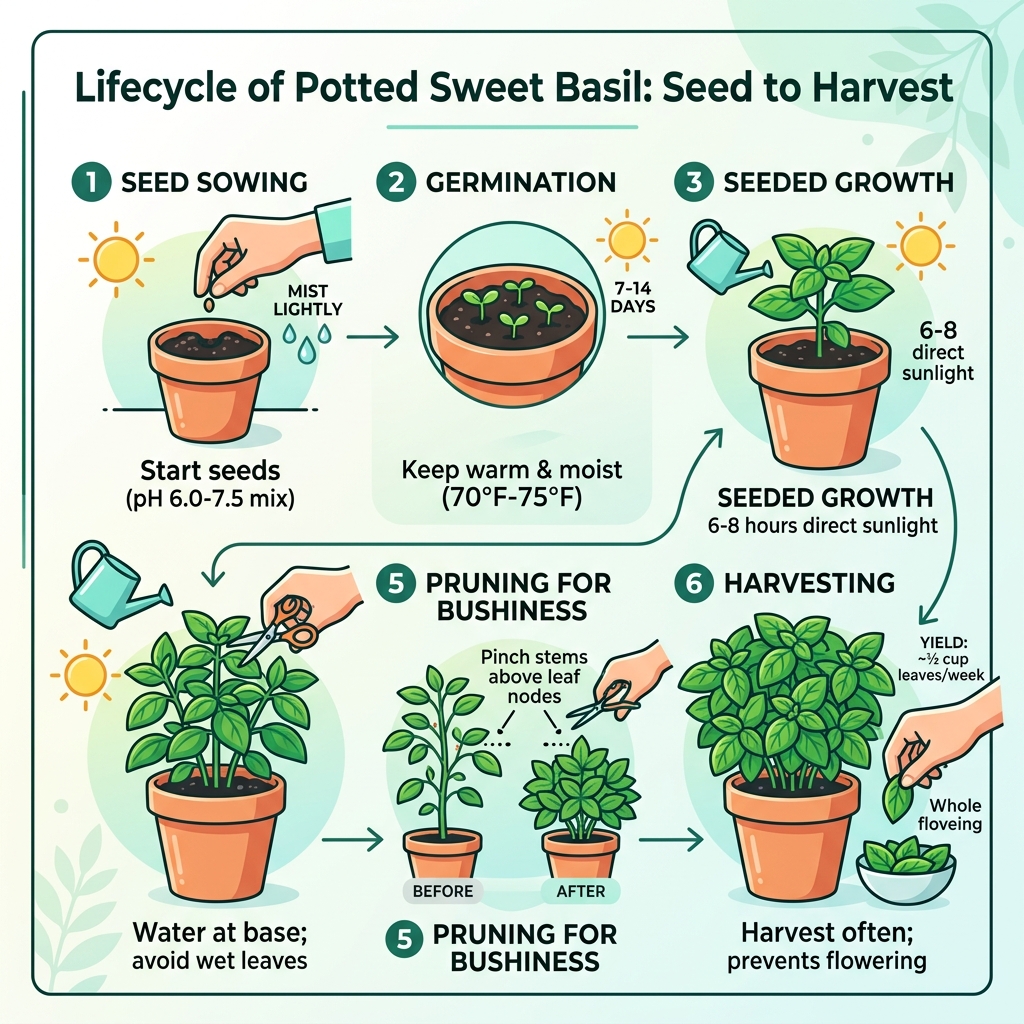
- Choose the right pot – At least 8 inches (20 cm) wide and deep, with drainage holes
- Use the right soil – Well-draining potting mix with a pH of 6.0-7.5
- Give it enough sun – 6 to 8 hours of direct sunlight daily
- Water correctly – Water at the base or use the saucer (bottom-watering) method
- Prune regularly – Pinch stems above leaf nodes to keep growth bushy
- Harvest often – One well-pruned plant can yield around half a cup of leaves every week
Basil is a warm-weather herb that’s surprisingly easy to grow in containers. It thrives with the right light, a little attention to watering, and regular trimming. Skip those steps, and you’ll get a leggy, bitter plant that bolts fast. Get them right, and you’ll have more fresh basil than you know what to do with.
Whether you’re rescuing a supermarket pot or starting from seed, this guide covers everything you need to know.
Choosing the Right Container and Soil for Planting Sweet Basil in Pots
When we talk about planting sweet basil in pots, the foundation of your success lies in the vessel and the medium. Basil is a bit like a goldilocks plant: it doesn’t want to be too cramped, and it certainly doesn’t want “wet feet” (soggy roots).
Selecting the Perfect Pot
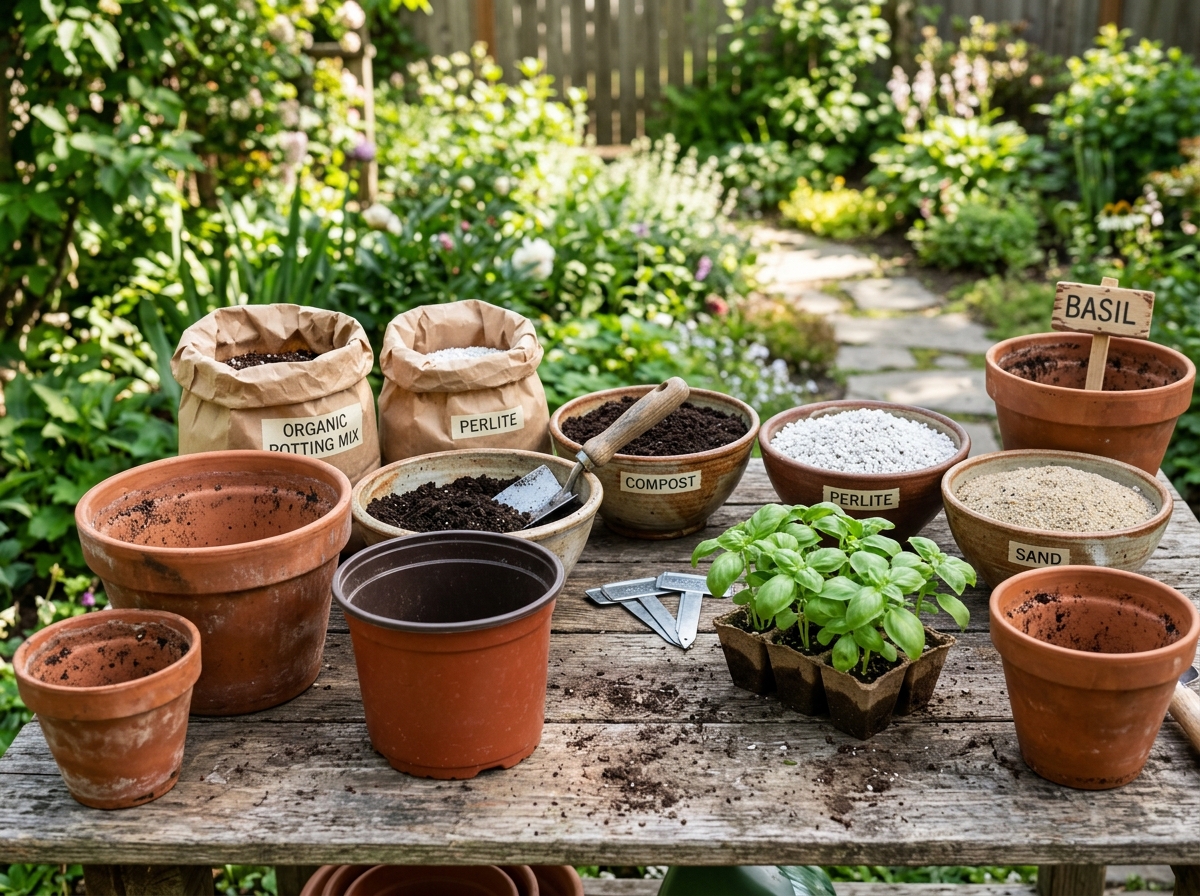
The size of your container directly dictates the size of your harvest. For a single, robust sweet basil plant, we recommend a pot that is at least 8 inches (20 cm) in diameter and depth. If you are looking to grow a “mega-basil,” moving up to a 12-inch or even a gallon-sized container provides the root volume necessary for a massive canopy.
- Drainage is Non-Negotiable: Ensure your pot has at least one large drainage hole. Basil roots will rot quickly if they sit in stagnant water.
- Terracotta vs. Plastic: Terracotta is a favorite among expert gardeners because the porous clay allows the soil to “breathe” and prevents waterlogging. However, it dries out faster, so you’ll need to be more diligent with watering. Plastic or glazed ceramic pots retain moisture longer, which can be helpful in very hot climates.
The Ideal Potting Mix
Never use standard garden soil when planting sweet basil in pots. Garden soil is too heavy, lacks proper aeration, and may contain pathogens or weed seeds. Instead, opt for a high-quality, soil-less potting mix.
According to Growing basil in home gardens | UMN Extension, basil prefers a soil pH between 6.0 and 7.5. A great DIY mix for containers includes:
- 60% Peat-free multi-purpose compost (for nutrients and structure)
- 20% Perlite or coarse sand (to ensure excellent drainage)
- 10% Organic compost or aged manure (for slow-release feeding)
- 10% Mulch or aged bark (to help retain consistent moisture levels)
Essential Care: Sunlight, Temperature, and the “Saucer Trick”
Basil is a tropical plant at heart, originating from southern Asia. It craves warmth and light. If you treat it like a sun-loving vacationer, it will reward you with lush, aromatic leaves.
Lighting and Temperature
To get the best flavor, your potted basil needs 6 to 8 hours of direct sunlight every day. If you are growing indoors, a south-facing window is ideal. However, some gardeners find that an east-facing window—which provides bright morning sun without the scorching intensity of the mid-afternoon—actually produces more tender leaves.
- The 50/70 Rule: Don’t move your pots outside until nighttime temperatures consistently stay above 50°F (10°C). For the best growth, wait until the soil temperature reaches 70°F (21°C).
- Indoor Grow Lights: If your kitchen is a bit dim, use grow lights positioned 2–4 inches above the plants for 14–16 hours a day.
The Famous “Saucer Trick” (Bottom-Watering)
One of the most effective ways to maintain potted basil—often called “The Basil Trick”—is bottom-watering. Instead of pouring water over the leaves (which can encourage fungal diseases like downy mildew), use an oversized, water-impermeable saucer or bowl.
Fill the saucer with water and let the pot sit in it. The soil will wick up exactly what the plant needs through the drainage holes. This method encourages the roots to grow deep and strong. Many successful growers keep the saucer “topped up” daily during the peak of summer to ensure the plant never wilts. For more on this method, see the Grow Big Basil in a Pot: Step-by-Step Guide.
Pruning and Harvesting for Bushy Growth
The biggest mistake new gardeners make is being “too nice” to their basil. If you don’t prune it, the plant will grow into a single, tall, leggy stalk that eventually produces flowers and dies. To get a bushy plant that yields 1/2 cup of leaves weekly, you must be bold with your scissors.
Best Practices for Planting Sweet Basil in Pots to Prevent Legginess
Pruning is the secret to longevity. When your plant is about 6 inches tall and has at least three sets of leaves, it’s time for the first “pinch.”
- Locate a Leaf Node: Look for the spot where two large leaves meet the main stem. You’ll often see tiny little leaves starting to peek out from the “armpits” of the larger leaves.
- Make the Cut: Use sharp scissors to snip the central stem just above that node.
- The Result: Instead of one main stem, the plant will now grow two new branches from that point.
- Repeat: Every time a branch grows 6 to 8 inches long, prune it back again. This exponential growth turns a spindly plant into a rounded bush.
Harvesting Techniques for Planting Sweet Basil in Pots
When it’s time to cook, don’t just pluck individual leaves from the bottom of the plant. This leaves the plant with “bare legs” and reduces its ability to photosynthesize.
- Top-Down Picking: Always harvest from the top. Snip off the top cluster of leaves, including the stem, down to the next leaf node.
- Morning Harvest: For the most flavorful and juiciest leaves, harvest in the early morning when the essential oil content is at its peak.
- Varieties Matter: Classic Genovese is the go-to for pesto, while the Sweet Dani lemon basil variety offers 75% more essential oils than standard lemon basils, making it a powerhouse for summer drinks and salads.
Managing Pests, Diseases, and Propagation
Even in the controlled environment of a pot, basil can face a few foes. However, because we are usually eating these leaves, we always stick to organic solutions.
Common Pests and Organic Solutions
| Pest | Signs | Organic Solution |
|---|---|---|
| Aphids | Tiny green/black bugs on undersides of leaves | Blast them off with a sharp stream of water or use a mild soapy water spray. |
| Downy Mildew | Yellowing leaves with gray “fuzz” underneath | Improve air circulation, avoid overhead watering, and ensure the plant gets enough sun. |
| Slugs/Snails | Large holes in leaves; slimy trails | Keep pots off the ground or use copper tape around the rim of the pot. |
| Whiteflies | Tiny white insects that fly up when disturbed | Use yellow sticky traps or briefly dry out the soil to disrupt their cycle. |
Propagation: More Plants for Free
One of the best things about planting sweet basil in pots is how easily you can multiply your garden.
- Water Propagation: Take a 4-inch cutting of a non-flowering stem. Remove the bottom leaves and place the stem in a glass of water on a sunny windowsill. In about a week, you’ll see white roots. Once the roots are an inch long, transplant it into a new pot.
- Supermarket Splitting: Those $4 pots of basil from the grocery store are actually 10–20 tiny seedlings crammed together. Gently take the plant out of the pot, tease the roots apart, and repot them into 3 or 4 separate containers. They will grow much larger when they aren’t competing for space!
Companion Planting in Containers
Basil isn’t just a culinary star; it’s a great neighbor. We love planting basil alongside tomatoes in larger containers. Not only do they taste great together on a plate, but basil’s strong scent is thought to repel pests that plague tomato plants. Additionally, keeping a pot of basil on your back porch can help deter mosquitoes during summer evenings.
Frequently Asked Questions about Growing Basil
How long does basil last in a pot?
While basil is often grown as a tender annual (meaning it dies with the first frost), it is technically a short-lived perennial. Indoors, a potted basil plant can thrive for 6 to 9 months. With exceptional care and regular pruning to prevent flowering, some indoor plants can even last 1 to 4 years!
Can I grow basil indoors year-round?
Yes, but it requires effort during the winter. Basil needs warmth and light. If your windowsill drops below 50°F at night, move the pot to a warmer spot. You will likely need a grow light during the short days of winter to prevent the plant from becoming “leggy” as it reaches for the sun.
Why are my basil leaves turning yellow?
Yellowing leaves are usually a sign of one of three things:
- Overwatering: If the soil is soggy, the roots are suffocating. Switch to the saucer-watering method.
- Lack of Nutrients: Basil is a heavy feeder. Use a balanced, organic liquid fertilizer every 2–4 weeks.
- Root Bound: If the plant has outgrown its pot, the roots can’t take up enough nutrients. It might be time to move to a larger container.
Conclusion
At FinCapitaly, we believe that sustainable living starts with small, rewarding steps-like harvesting your first bunch of home-grown herbs. Planting sweet basil in pots is more than just a gardening project; it’s a way to bring fresh, organic flavor into your kitchen while connecting with the food you eat.
By following these tips-focusing on drainage, mastering the saucer trick, and being brave with your pruning shears-you’ll ensure a continuous supply of aromatic leaves for pesto, salads, and more.
If you’re looking for more practical home and lifestyle ideas, explore FinCapitaly for additional guides and inspiration. Happy planting!
