
Why Most Indoor Basil Plants Die Within Two Weeks (And How to Fix It)
Knowing how to keep a basil plant alive indoors is the difference between a thriving basil herb on your kitchen windowsill and a sad, wilted plant in the bin by Friday.
Here’s the quick answer:
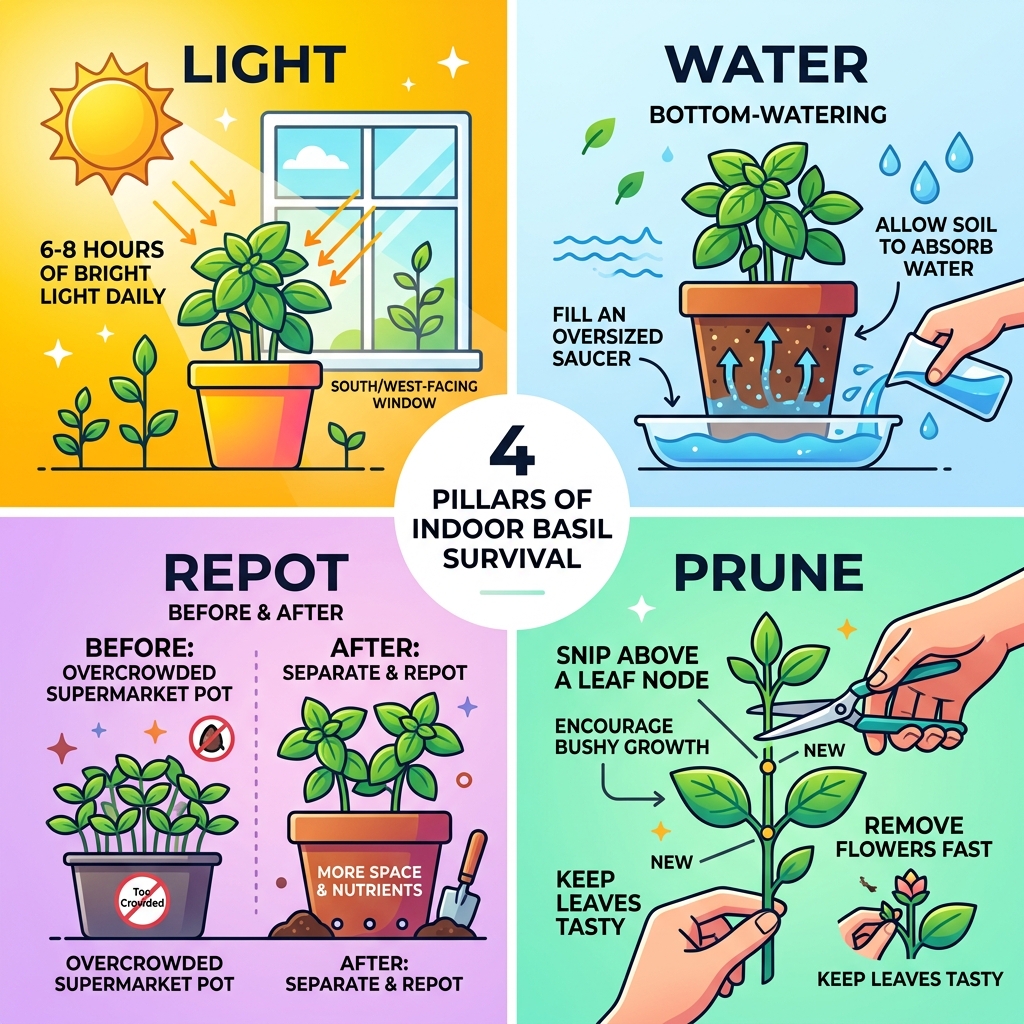
- Repot immediately – supermarket basil pots cram 3+ plants together, causing them to smother each other within days
- Bottom-water – fill an oversized saucer with water instead of watering from the top
- Give it light – at least 6-8 hours of bright light daily from a south or west-facing window
- Prune, don’t pluck – snip stems above a leaf node to encourage bushy regrowth
- Remove flowers fast – flower buds weaken the plant and make leaves bitter
- Keep it warm – maintain room temperature above 65°F (18°C) at all times
Most people pick up a basil plant at the supermarket, set it on the counter, water it a few times, and watch it slowly collapse. Sound familiar?
Here’s the thing: that’s not your fault.
Supermarket basil is designed for immediate consumption, not long-term growing. Those little pots are packed with multiple overcrowded plants, grown under artificial lights, and sold with no intention of surviving more than a week or two. The deck is stacked against you from the start.
The good news? With a few simple changes, indoor basil can thrive for 6-9 months — and you can keep a continuous supply going indefinitely through propagation. You don’t need a garden, a green thumb, or any special equipment.
You just need to know the right approach.
The Secret to How to Keep a Basil Plant Alive Indoors: The Supermarket Rescue
If we want to master how to keep a basil plant alive indoors, we have to start with the “rescue mission.” When you buy a basil plant from a grocery store, you aren’t actually buying one plant. You are usually buying 10 to 15 tiny seedlings all fighting for their lives in a tiny plastic cup.
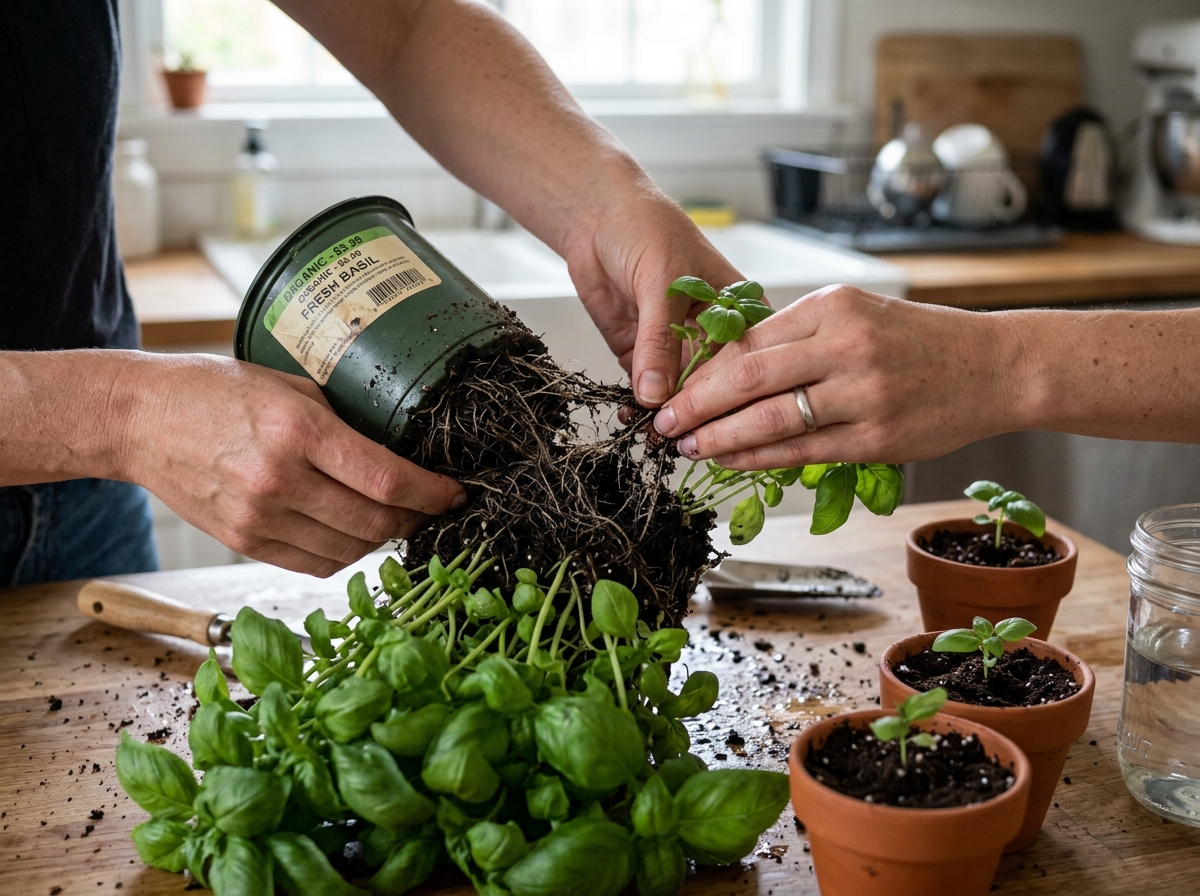
This overcrowding is the primary reason supermarket basil dies within a week. The roots suffocate, the stems compete for light, and there isn’t enough nutrition in that handful of soil to support a small army of herbs. To save them, we must perform plant surgery.
The Repotting Process:
- Gently remove the plant: Squeeze the sides of the plastic pot and slide the entire root ball out.
- Split the stems: You will see a dense mat of roots. Gently tease them apart. We recommend splitting one supermarket pot into at least three separate pots. If you’re feeling ambitious, you can even pot individual stems.
- Choose the right pot: Use a terracotta pot with a large drainage hole. Terracotta is breathable and helps regulate moisture, which is vital for how to care for basil indoors.
By giving each plant its own space, you eliminate root competition and allow for the airflow necessary to prevent mold and rot.
Choosing the Right Soil and Container
Basil is a hungry plant, but it’s also a thirsty one that hates “wet feet.” This means we need a soil that holds onto nutrients while letting excess water escape quickly.
Don’t use garden soil from your backyard; it’s too heavy and may contain pests. Instead, opt for a high-quality soil and fertilizer for indoor herbs. Look for a potting mix that contains:
- Peat moss or coconut coir: To retain moisture.
- Perlite or vermiculite: To ensure aeration and drainage.
- Organic compost: To provide the initial nitrogen boost basil loves.
We suggest a pot with a diameter of at least 4 to 6 inches for a single plant, or a larger 8-inch pot if you are grouping a few stems together. Always ensure there is a drainage hole; without one, root rot is almost a certainty.
Acclimatizing Your New Plant
Imagine being moved from a cozy, humid greenhouse to a dry, air-conditioned kitchen. That’s the “temperature shock” your basil feels. To keep the plant from wilting, we need to manage the transition.
For the first few days, keep your newly repotted basil in a spot with bright but indirect light. Avoid placing it right against a cold windowpane or directly under an AC vent. Basil is a tropical native; it loves humidity. You can group your herbs together to create a mini-microclimate or follow these humidity tips for indoor herbs to keep the air moist enough for those tender leaves.
Mastering the “Basil Trick”: Watering and Light Requirements
Once your basil is repotted, the real secret to longevity is what many call “The Basil Trick.” This method has gone viral for a reason: it works.
The Bottom-Watering Method: Instead of pouring water over the leaves and stems—which often leads to grey mold and stem rot—we water from the bottom.
- Place your terracotta pot in an oversized saucer.
- Fill the saucer with water.
- Let the soil “wick” the water up through the drainage hole.
- Keep the saucer topped up. Once the plant is established, it will drink exactly what it needs.
This keeps the roots hydrated while keeping the surface of the soil and the base of the stems dry. This is one of the most effective ways to avoid common indoor herb watering mistakes to avoid.
Light: The Fuel for Growth Basil is a sun-worshipper. To thrive indoors, it needs 6 to 8 hours of direct sunlight. A south-facing window is the “gold standard.” If your windows face north or are shaded by buildings, your basil will likely become “leggy”—growing tall and skinny with tiny leaves as it stretches for light.
If you don’t have enough natural sun, don’t give up. You can use grow lights for indoor herbs. Full-spectrum LED grow lights kept about 2-4 inches above the plant for 12 hours a day can mimic a perfect summer afternoon in Italy.
How to keep a basil plant alive indoors through proper pruning
Most people harvest basil by plucking off the biggest leaves. Stop doing this! Plucking individual leaves stresses the plant and leaves you with a bare, woody stem that eventually gives up.
To keep your plant bushy and productive, you must prune.
- Find the node: Look for where a pair of small leaves is starting to grow out from the main stem.
- Snip above the node: Use sharp scissors to cut the main stem just above those tiny new leaves.
- The result: The plant will redirect its energy into those two tiny leaves, which will grow into two new branches.
By following this “snip, don’t pluck” rule, you can turn a single stem into a bushy shrub. Remember the 1/3 rule: never harvest more than one-third of the plant at once. For more details on this technique, check out our guide on pruning herbs for healthy growth.
Also, keep an eye out for flowers. If you see a “tower” of small green buds forming at the top, snip it off immediately. Once a basil plant flowers, it thinks its life mission is over; the leaves will become bitter and the plant will start to die.
Managing Temperature and Airflow
Basil is incredibly sensitive to the cold. If the temperature drops below 50°F (10°C), the leaves will turn black and the plant will wilt. We find that keeping your home at a steady 70°F (21°C) is the sweet spot.
However, heat isn’t the only factor. Stagnant air is a breeding ground for fungus. If your basil is tucked in a corner behind a toaster, it might develop mold. Ensure there is gentle airflow around the plant, but keep it away from direct drafts. Proper spacing and airflow are the best defenses for preventing mold in indoor herb gardens.
Troubleshooting Pests and Common Growth Issues
Even with the best care, you might run into some “uninvited guests” or health issues. Indoor basil is particularly prone to a few specific problems.
Common Indoor Pests:
- Whiteflies: These look like tiny white moths on the underside of leaves. They suck the sap and weaken the plant.
- Aphids: Small, green, or black insects that cluster on new growth.
- Fungus Gnats: Tiny black flies that hover around the soil. These are usually a sign that your soil is too wet.
To treat these, we recommend using yellow sticky traps for the flies and a gentle spray of insecticidal soap or diluted neem oil for the leaves. For more help, see our indoor herb pest control tips.
Diagnostic Guide for Leaf Health:
- Yellow Leaves: This usually indicates overwatering or a lack of nitrogen. Check the roots; if they are brown and mushy, it’s root rot. If the roots are fine, it’s time for a half-strength liquid fertilizer.
- Brown/Black Spots: This is often a sign of a fungal infection or “downy mildew.” Remove the affected leaves immediately and improve airflow.
- Leggy Stems: Your plant is starving for light. Move it to a sunnier window or get a grow light.
For a deeper dive into these issues, visit our guide on indoor herb growth troubleshooting.
How to keep a basil plant alive indoors while on vacation
We’ve all been there: you go away for a long weekend, and you come back to a “basil mummy.” Because basil is so thirsty, it can’t survive long without water.
If you’re heading out, try these tricks:
- The Water Bowl: Place your pot in a large bowl filled with 2 inches of water. The terracotta will slowly wick up the moisture while you’re gone.
- Self-Watering Stakes: You can buy terracotta stakes that attach to a wine bottle or water bottle, slowly releasing moisture into the soil.
- The Sitter: If you’re gone for more than a week, you’ll need a friend to check in.
Be careful not to leave the plant in too much water for too long, as this can lead to preventing mold in indoor herb gardens 2 issues.
Propagation: Creating an Endless Supply of Basil
The coolest thing about basil is that it is essentially immortal if you know how to propagate it. You never have to buy another supermarket plant again.
How to Propagate Basil in Water:
- Take a cutting: Cut a 4-inch stem from a healthy plant. Make the cut just below a leaf node.
- Strip the lower leaves: Remove the leaves from the bottom 2 inches of the stem.
- Place in water: Put the stem in a clean glass of water. Ensure no leaves are submerged (they will rot).
- Wait and watch: Place the glass on a sunny windowsill. Within 7 to 10 days, you will see tiny white roots emerging from the stem nodes.
- Transplant: Once the roots are about an inch long, you can plant the cutting in a pot with fresh soil.
By doing this every few months, you can have a “basil factory” running in your kitchen all year round!
Frequently Asked Questions about Indoor Basil
Why is my supermarket basil wilting after three days?
The most common reason is overcrowding and thirst. Supermarket pots have too many plants in too little soil. They dry out almost instantly. If the soil is dry, water it; if the soil is wet and it’s still wilting, the roots are likely suffocating and need to be repotted and separated immediately.
Can I grow basil indoors without a sunny window?
Yes, but you will need a grow light. Basil requires high-intensity light to produce the oils that give it that signature flavor. Standard indoor light bulbs won’t cut it. Look for “full-spectrum” LED grow lights and keep them on for 12–14 hours a day to compensate for the lack of natural sun.
How often should I fertilize my indoor basil plant?
Since indoor plants have a limited amount of soil, they can run out of nutrients quickly. We recommend using a balanced, liquid organic fertilizer at half-strength once a month. If you fertilize too much, the plant will grow fast but the leaves will lose their flavor.
Conclusion
At FinCapitaly, we believe that a little bit of green can transform any indoor space. Learning how to keep a basil plant alive indoors isn’t just about having fresh pesto—it’s about the satisfaction of nurturing something that rewards you every single day.
Remember: repot those supermarket finds, water from the bottom, give them plenty of sun, and don’t be afraid to prune. With these steps, you’ll move from “plant killer” to “basil boss” in no time.
Ready to expand your indoor jungle? Start your indoor herb garden today and discover how easy it is to grow your own groceries!
