
The Quickest Way to Make a Bruschetta Recipe Balsamic at Home
A bruschetta recipe balsamic combines toasted garlic bread with fresh diced tomatoes, basil, olive oil, and a drizzle of rich balsamic vinegar or glaze. Here’s the quick version:
- Dice ripe tomatoes and drain excess juice
- Mix with minced garlic, fresh basil, olive oil, salt, and pepper
- Toast baguette slices at 400-450°F until golden and crisp
- Spoon tomato mixture onto toasts using a slotted spoon
- Drizzle with balsamic glaze or aged balsamic vinegar
- Serve immediately
Prep time: ~15 minutes | Serves: 8 | Calories: ~60-197 per serving depending on portions
There’s a reason bruschetta keeps showing up at every summer table. It’s fast, it uses ingredients you likely already have, and the flavor payoff is huge.
The balsamic version takes the classic Italian antipasti one step further. A good drizzle of syrupy balsamic adds a sweet, tangy depth that makes the whole thing taste like something from a restaurant kitchen — not your own.
The secret? It’s mostly about ingredient quality. Ripe tomatoes, fresh basil, good olive oil, and the right balsamic do the heavy lifting. The technique is simple enough for any weeknight, but impressive enough for guests.
If you grow your own basil at home, this is one of the best recipes to put it to use.
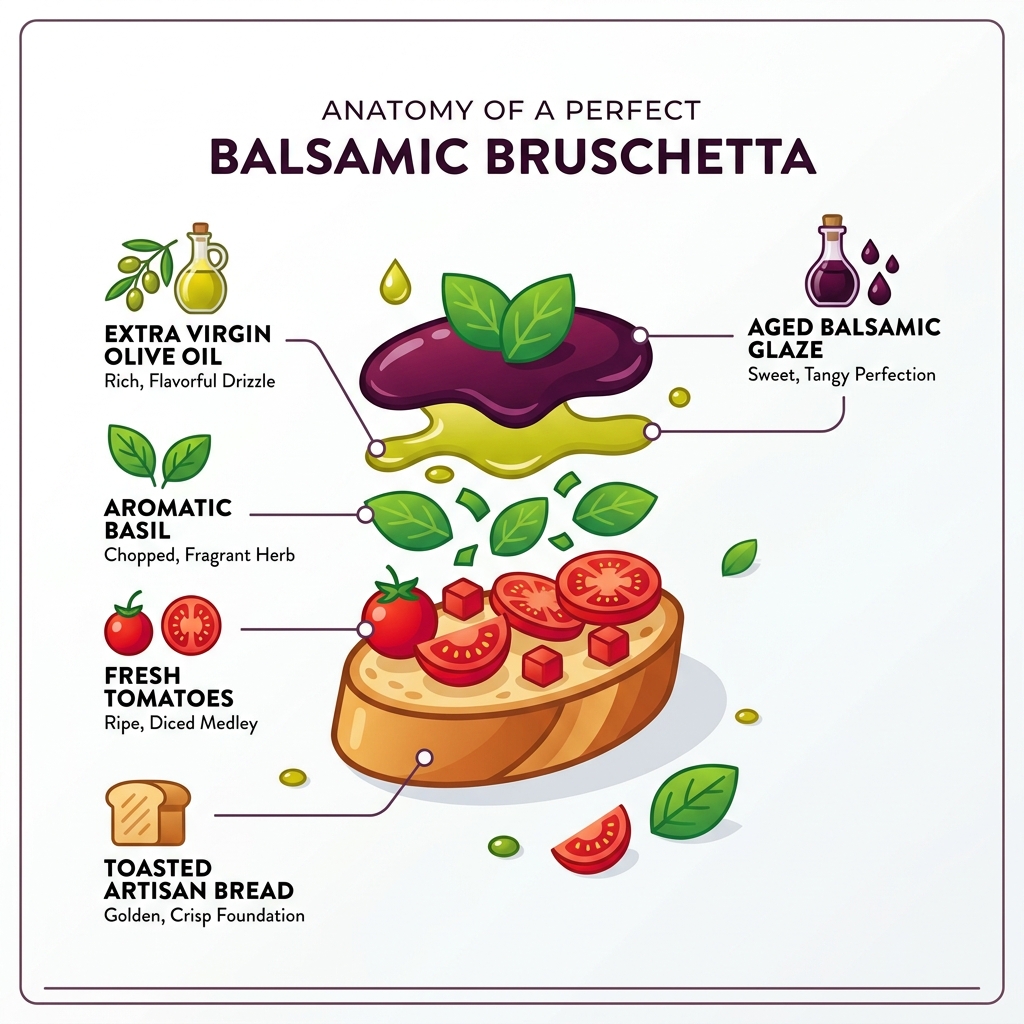
The Foundation of a Great Bruschetta Recipe Balsamic
When we talk about a world-class bruschetta recipe balsamic, we have to start with the star of the show: the tomatoes. You might think any red sphere from the produce aisle will do, but our research and kitchen experience suggest otherwise.
Tomato Selection: The “Goldilocks” Rule
For the best results, you want tomatoes that are “Goldilocks” firm-not so hard they have no flavor, but not so soft they turn into mush the moment a knife touches them.
- Heirloom and Garden Tomatoes: These are often considered superior because of their intense color and complex sweetness. If it’s peak summer and you have access to a farmer’s market, these are your best bet.
- Roma (Plum) Tomatoes: Many home cooks prefer Romas because they have a higher flesh-to-seed ratio. They are less “watery,” which helps keep your bread from turning into a sponge.
- Cherry or Grape Tomatoes: These are great year-round options. They are consistently sweet and have a nice “pop” of texture.
Preparation: The Anti-Soggy Strategy
One of the biggest mistakes we see is skipping the draining process. If you want to master the art of the perfect tomato topping, you need to handle the moisture.
We recommend dicing your tomatoes into roughly 1/2-inch pieces. Once diced, place them in a colander or a fine-mesh sieve. Sprinkle them with a pinch of salt-this process, called maceration, draws out the excess internal juices. Let them sit for at least 10 to 15 minutes. This ensures that when you finally top your bread, you’re getting concentrated tomato flavor rather than a puddle of tomato water.
If you want a quick reference on the traditional dish itself, the bruschetta overview on Wikipedia gives helpful background on how this Italian antipasto is typically served.
Choosing the Right Balsamic for Your Bruschetta Recipe Balsamic
The “balsamic” part of a bruschetta recipe balsamic can be handled in two ways: using a high-quality aged vinegar or a balsamic glaze.
Aged Balsamic Vinegar: If you can find a “Full-bodied” aged balsamic, it will have a syrupy consistency naturally. Look for terms like “Aceto Balsamico Tradizionale.” These are thicker and sweeter than the thin, acidic stuff used for basic salad dressings.
Balsamic Glaze (The “Game Changer”): Balsamic glaze is essentially balsamic vinegar that has been cooked down (sometimes with a bit of sugar or honey) until it reaches a thick, syrupy consistency. It clings to the tomatoes and bread beautifully. You can buy it pre-made, or you can make your own by simmering 1 cup of balsamic vinegar in a small saucepan over medium-low heat for about 10-15 minutes until it reduces by half.
Expert Tip: Watch your glaze carefully as it cools; it will continue to thicken. You want it to coat the back of a spoon, not turn into hard candy!
Essential Ingredients and Bread Preparation
Beyond the tomatoes and balsamic, a few key players make our bruschetta recipe balsamic stand out.
- Extra-Virgin Olive Oil (EVOO): Since this isn’t cooked at a high heat, the flavor of the oil really shines. Use the good stuff—fruity, peppery, and fresh.
- Fresh Basil: Never use dried basil for bruschetta. It simply doesn’t work. You want vibrant green leaves. If you’re new to using fresh herbs, check out a beginner’s guide to cooking with indoor basil to ensure your leaves stay bright and flavorful.
- Garlic Cloves: Fresh garlic is non-negotiable. We’ll use it in the mix and also to “season” the bread itself.
Baguette vs. Ciabatta
The bread is your structural foundation. You need something sturdy with a decent crust.
- French Baguette: The classic choice. It provides small, uniform “crostini” style bites.
- Ciabatta: A bit more rustic. Its large air pockets are perfect for catching olive oil and tomato juices.
Regardless of the bread, we always recommend slicing it on the “bias” (diagonally). This creates more surface area for the toppings, which means more room for that delicious balsamic drizzle.
Mastering the Toast for Your Bruschetta Recipe Balsamic
Toasting isn’t just about heat; it’s about creating a moisture barrier. If the bread is too soft, the tomato juice will soak right through.
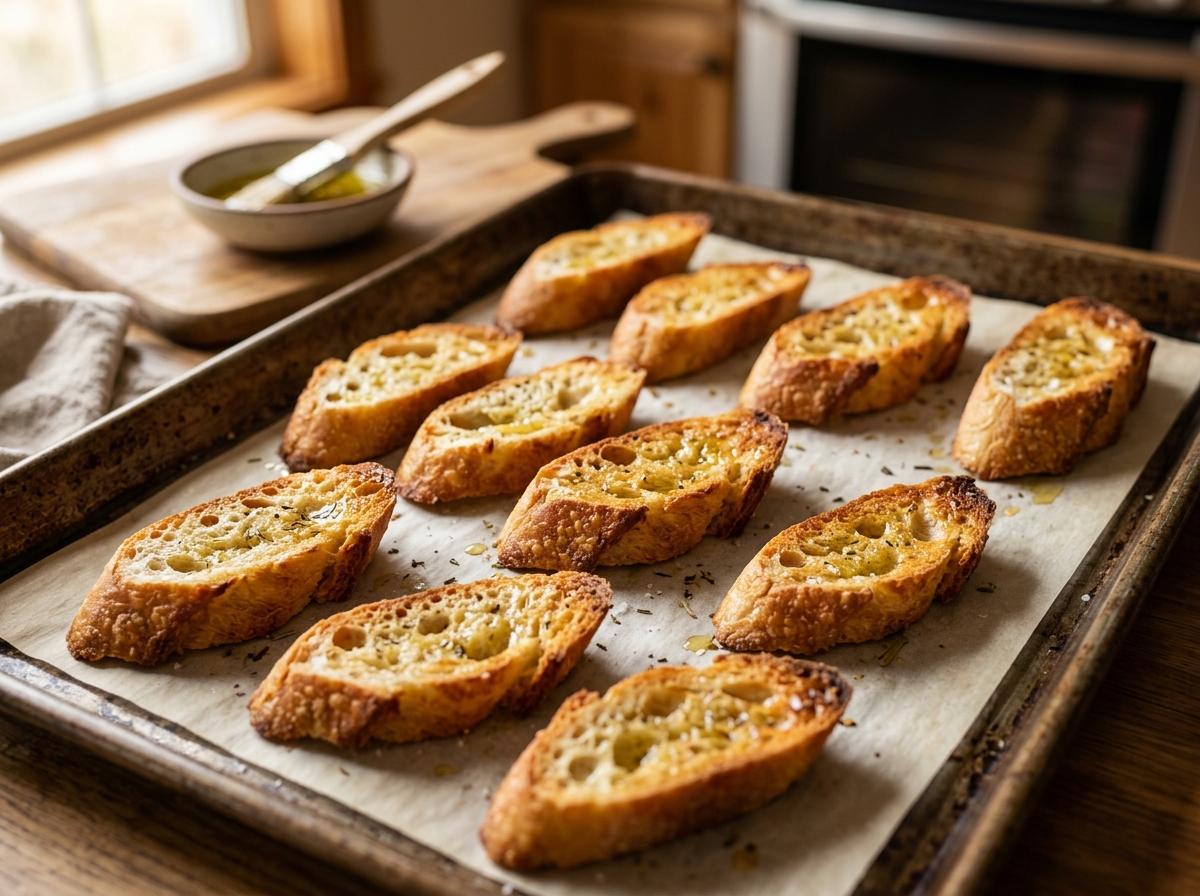
The Oven Method: Preheat your oven to 450°F. This high temperature ensures the outside gets crispy while the inside stays slightly chewy. Brush both sides of your bread slices with olive oil. This is a pro-tip: oiling both sides helps repel moisture and gives you that satisfying crunch. Bake for 6 to 9 minutes, flipping halfway through, until they are golden brown.
The Garlic Rub (The Italian Secret): Once the bread comes out of the oven and is still warm, take a peeled, halved garlic clove and rub the cut side directly onto the toasted surface. The rough texture of the bread acts like a grater, melting the garlic into the crust for a subtle, aromatic flavor that isn’t overpowering.
Step-by-Step Guide to Making Balsamic Bruschetta
Now that our components are ready, let’s put it all together. Many home cooks have made versions of this recipe with great success, and the process is remarkably straightforward.
1. The Tomato Mixture
In a medium bowl, combine your drained tomatoes, minced garlic (about 2 cloves), and a healthy glug of olive oil.
2. The Basil “Chiffonade”
To keep your basil from bruising or turning black, use the chiffonade technique. Stack the leaves, roll them up like a cigar, and slice thin ribbons. Add these to the bowl just before you are ready to serve to keep the flavor fresh and the color bright.
3. The Marination
Let the mixture sit at room temperature for at least 30 minutes. This allows the garlic to mellow and the flavors to meld.
4. Assembly
Using a slotted spoon (this is crucial!), scoop the tomato mixture onto your toasted bread. The slotted spoon ensures any remaining liquid stays in the bowl and off your crispy bread.
5. The Final Drizzle
Drizzle your balsamic glaze or aged vinegar over the top in a zig-zag pattern. This adds the final hit of acidity and sweetness that defines a bruschetta recipe balsamic.
| Step | Time | Key Tool |
|---|---|---|
| Prep Tomatoes | 10 Mins | Colander |
| Toast Bread | 8 Mins | Baking Sheet |
| Marinate | 30 Mins | Mixing Bowl |
| Total | ~50 Mins | Slotted Spoon |
Pro Tips to Prevent Sogginess and Enhance Flavor
We’ve all been to a party where the bruschetta was a sad, soggy mess. We don’t want that for you. Here is how we ensure every bite is perfect:
- Salt Early, Top Late: As mentioned, salt your tomatoes early to drain them. However, do not put the tomatoes on the bread until the very moment you are ready to eat.
- The “Bruschetta Bar”: If you are hosting, consider serving the toasts in one basket and the tomato mixture in a bowl with a slotted spoon. This allows guests to assemble their own, ensuring every piece of bread stays crunchy.
- Room Temperature is Best: Cold tomatoes lose their flavor. Never serve your bruschetta topping straight from the fridge. Let it sit out to reach room temperature.
- Basil Care: For more tips on keeping your herbs in top shape, see cooking with indoor basil: a simple guide. Adding basil too early can lead to oxidation (darkening), which makes the dish look less appetizing.
Variations and Serving Suggestions
While the classic bruschetta recipe balsamic is perfect on its own, there are plenty of ways to “jazz” it up.
Cheese Additions
- Parmesan: A sprinkle of freshly grated Parmesan adds a salty, nutty bite. Some even like to sprinkle it on the bread before toasting.
- Fresh Mozzarella: Add small cubes of “bocconcini” or torn fresh mozzarella to the tomato mix to turn it into a “Caprese” style bruschetta.
- Burrata: For a truly decadent experience, place a dollop of creamy burrata cheese on the toast before adding the tomatoes.
Vegan Adaptations
This recipe is naturally vegan if you omit the cheese! To add a similar savory depth, you can add a teaspoon of nutritional yeast or some finely diced shallots to the tomato mixture.
Perfect Pairings
Bruschetta is the ultimate “aperitivo” food. We love pairing it with:
- Wine: A crisp Rosé or a light Pinot Grigio cuts through the richness of the olive oil and the sweetness of the balsamic.
- Cocktails: A Campari Spritz or an Aperol Spritz provides a bitter contrast that wakes up the palate.
- Meals: Serve it alongside a big bowl of pasta or grilled chicken.
Looking for more inspiration? You can find more recipes on our main site.
Frequently Asked Questions about Balsamic Bruschetta
What are the best tomatoes to use for bruschetta?
Garden-fresh or heirloom tomatoes are the gold standard for flavor. However, for consistent texture and less juice, Roma tomatoes are highly recommended. If you’re shopping out of season, grape or cherry tomatoes are your best bet for sweetness.
Can I make the topping in advance?
You can dice the tomatoes and mix them with the garlic and oil up to 4–6 hours in advance. However, do not add the salt or the basil until about 30 minutes before serving. Salt will continue to draw out moisture, and basil will wilt and darken if left in the mixture too long.
How do I pronounce bruschetta correctly?
This is a common one! In Italian, the “ch” is pronounced like a “k.” So, it’s “Brew-sket-tah,” not “Brew-shet-ta.” Impress your guests with the correct pronunciation while you serve!
Conclusion
Making a restaurant-quality bruschetta recipe balsamic at home is all about respecting the ingredients. By choosing the right tomatoes, properly toasting your bread, and finishing with a high-quality balsamic drizzle, you create an appetizer that is greater than the sum of its parts.
At FinCapitaly, we believe that great food doesn’t have to be complicated—it just has to be fresh. Whether you’re hosting a summer garden party or just looking for a light lunch, this bruschetta is a guaranteed winner.
Ready to sharpen your kitchen skills further? Explore more gourmet recipes and let us help you bring a taste of Italy to your home.
