
Why Fresh Basil Lovers Are Switching to Hydroponic Kits
An organic hydro basil kit is one of the easiest ways to grow fresh, flavorful basil indoors — no garden, no soil, and no guesswork required.
Here are the top organic hydroponic basil kits worth considering:
| Kit | Best For | Price Range |
|---|---|---|
| Enviro Garden Basil Hydroponic Kit | Beginners, gifting | ~$45 |
| Hydroponic Herb Duo (Basil & Oregano) | Home cooks wanting variety | ~$38.49 |
| Hydro Herb Kit (Recycled Wine Bottle) | Eco-conscious growers | ~£25 |
| Smithsonian Basil Hydroponic Grow Kit | Style-focused indoor gardeners | Varies |
| 8 Herb Hydroponic Grow Kit | Existing hydroponic system owners | Varies |
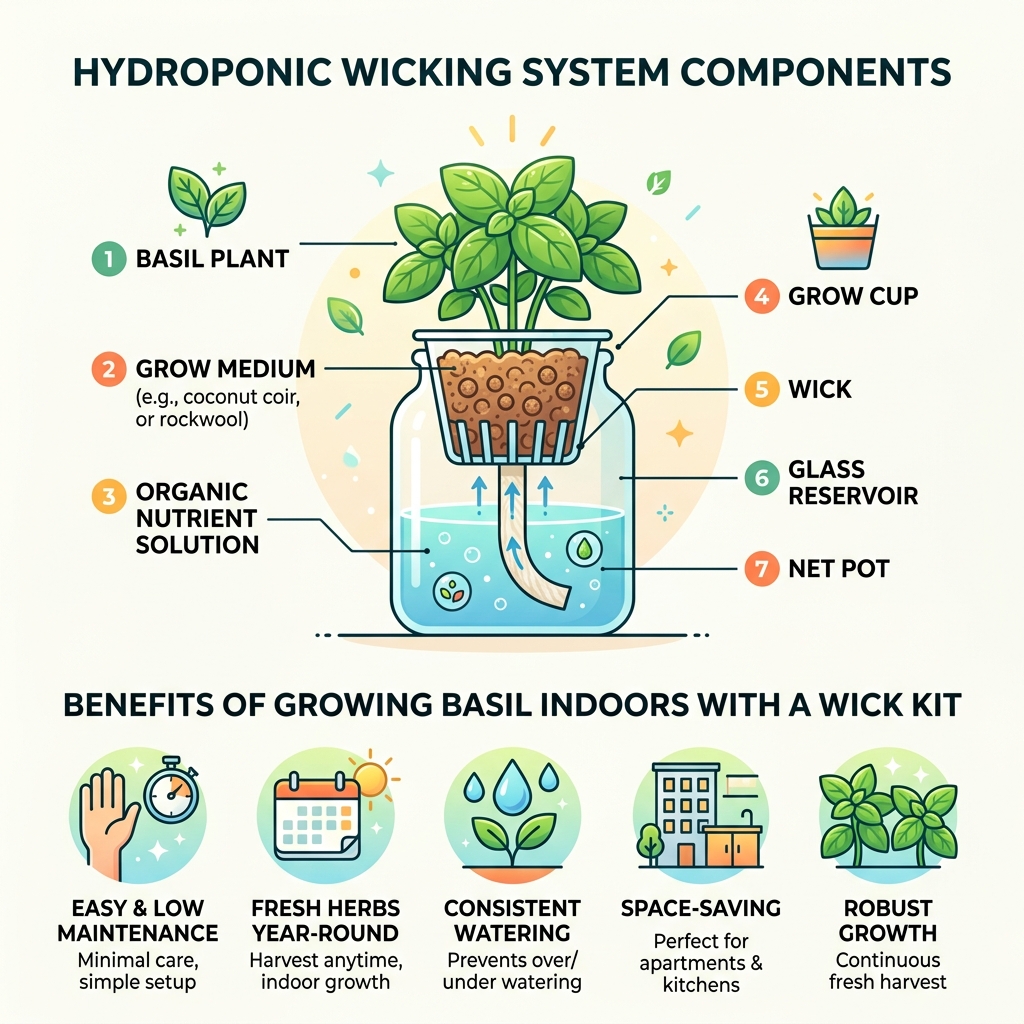
Most of these kits work the same basic way: organic seeds sit in a growing medium inside a container (often a mason jar or repurposed glass bottle). A wicking system pulls nutrient-rich water up to the roots automatically. You just top up the water every couple of weeks.
Basil typically sprouts in 7-14 days at temperatures between 70-80°F (21-27°C).
If you’ve ever killed a store-bought basil plant — overwatered, underwatered, or just neglected it — you’re not alone. These kits are designed specifically to solve that problem. They’re low-maintenance, space-saving, and produce fresh herbs year-round, even in small kitchens or apartments with limited natural light.
The sections below break down how each kit works, what’s included, and which one fits your needs best.
What is an Organic Hydroponic Basil Kit and How Does It Work?
At its core, an organic hydro basil kit is a self-contained ecosystem designed to grow plants without a single speck of dirt. If you are curious about the mechanics of this, you might want to look into planting herbs without soil.
Most consumer-grade kits use a method called passive hydroponics, specifically a wicking system. Unlike high-tech setups that require loud pumps or electricity, a wicking system relies on simple physics. A fabric or felt wick hangs from the plant’s roots down into a reservoir of water mixed with organic nutrients. Through capillary action, the wick pulls exactly the amount of moisture the plant needs.
This setup creates a perfect oxygen balance. In traditional soil, it is easy to “drown” a plant by overwatering, which pushes out the air pockets roots need to breathe. In a hydroponic kit, the roots are suspended in a porous medium (like glass beads or coconut coir), allowing them to stay hydrated while enjoying constant access to oxygen.
Many of these kits use Mason jar aesthetics or recycled glass bottles, making them as much a piece of home decor as they are a functional garden. The self-watering design means you don’t have to be a “plant parent” with a perfect memory; you simply monitor the water line and refill it every few weeks.
Key Benefits of Using an Organic Hydro Basil Kit
Why should we choose a kit over a traditional pot of soil? The benefits go far beyond just avoiding a mess on your counter.
| Feature | Soil-Based Growing | Hydroponic Kit Growing |
|---|---|---|
| Growth Speed | Standard | Up to 30-50% faster |
| Watering | Daily/Every other day | Every 2-3 weeks |
| Pests | Soil-borne gnats common | Virtually zero soil pests |
| Space | Requires drainage trays | Compact, self-contained |
| Nutrients | Depletes over time | Constant, controlled supply |
Faster Germination and Growth
Because the plant doesn’t have to “fight” through dense soil to find nutrients, it can put all its energy into growing leaves. This results in faster germination and fuller plants. If you’re looking for the best herbs to grow indoors, basil is widely considered the king of hydroponics because it loves the consistent moisture.
Year-Round Harvesting
Weather doesn’t matter when your garden is on your kitchen windowsill. An organic hydro basil kit allows us to harvest fresh leaves in the dead of winter. By following a few tips on how to care for basil indoors, you can maintain a perpetual harvest for months.
Clean and Safe
By using non-GMO seeds and organic liquid fertilizers, we ensure that the pesto or garnish we’re eating is completely chemical-free. There’s no need for pesticides because most indoor pests live in the soil—and here, there is no soil!
Essential Components of a High-Quality Hydroponic System
When you open a high-quality kit, you should see more than just a jar and some seeds. A premium organic hydro basil kit is a carefully curated set of tools.

- The Reservoir: Usually a glass jar, recycled wine bottle, or ceramic pot that holds the water.
- Net Pots or Baskets: These hold the plant in place above the water while allowing the roots to grow through the holes.
- Growing Medium: Instead of soil, kits use materials like recycled glass beads, clay pebbles, or coconut coir (pith disks). These provide structure for the roots without the mess.
- Organic Liquid Fertilizer: This is the “food.” High-quality kits, like those from Hydro-herb, often include enough organic nutrient solution to last for two years.
- Grow Sponges and Humidity Domes: These are crucial for the early stages. Grow sponges hold the easy herb seeds for beginners, while clear domes trap heat and moisture to jumpstart germination.
- The Wick: Usually made of cotton or polypropylene, this is the lifeline that connects the roots to the reservoir.
Setting Up Your Kit for Success and Optimal Growth
Setting up your kit is a fun afternoon project that even the least “green-thumbed” person can handle. If you’re new to this, check out our guide on indoor gardening kits for beginners for more context.
- Prepare the Medium: If your kit uses a coconut coir disk, you’ll likely need to soak it in a little water until it expands.
- Set the Wick: Thread the wick through the bottom of the net pot so it can reach the bottom of the jar.
- Plant the Seeds: Place your organic basil seeds into the grow sponge or medium. Don’t bury them too deep—basil seeds need a little light to wake up.
- Add the “Food”: Mix the organic nutrient solution into the water reservoir according to the instructions.
- Find the Light: Place your kit in a sunny window. Basil loves sunlight, but if your kitchen is dark, a small LED grow light can work wonders.
- Maintain the Temperature: For the best results, keep your home between 70-80°F. This is the “sweet spot” where basil feels most at home.
You can expect to see tiny green sprouts in 7-14 days. Once they appear, the maintenance is incredibly low—just check the water level every couple of weeks. For a deeper dive into the early stages, see how to start an indoor herb garden. As your plant grows, you’ll want to learn how to care for basil indoors 3 to ensure you’re pruning correctly for maximum yield.
Sustainability and Year-Round Culinary Uses
One of the most appealing aspects of the organic hydro basil kit is its environmental footprint. Brands like Hydro-herb use recycled wine bottles that are hand-ground for safety, giving a second life to glass that might otherwise end up in a landfill.
Water Conservation
Hydroponics is surprisingly eco-friendly because it uses up to 90% less water than traditional gardening. In a pot of soil, most water evaporates or drains away; in a hydroponic kit, the water stays in the reservoir until the plant actually drinks it.
From Window to Plate
Fresh basil is a staple for a reason. It is one of the best indoor herbs for cooking, essential for authentic Neapolitan pizza, fresh pesto, and vibrant salads. Because basil loses its flavor quickly once cut, having a living plant on your counter ensures you get that punchy, aromatic hit every time.
Beyond the kitchen, basil is fantastic for aromatherapy. Just brushing against the leaves releases essential oils that can help reduce stress and brighten your mood. This makes these kits excellent gifts for home cooks or anyone looking to add a touch of sustainable greenery to their space. For more on keeping your plant healthy for the long haul, see how to care for basil indoors 2.
Frequently Asked Questions about Hydroponic Herbs
Can I use an organic hydro basil kit for other herbs?
Absolutely! While these kits are often optimized for basil, the hardware (the jar, wick, and net pot) is universal. Once you’ve harvested your basil, you can clean the system and plant other easy herbs for beginners to grow indoors.
Popular pairings include:
- Cilantro: Great for salsas, though it prefers slightly cooler temperatures than basil.
- Mint: Incredibly hardy and thrives in hydroponic environments.
- Rosemary: A bit slower to grow, but the woody stems look beautiful in glass jars.
- Heirloom Varieties: Look for Thai Basil or Purple Basil to add some color to your kitchen.
How often do I need to add nutrients to my organic hydro basil kit?
Most kits come with a concentrated liquid or powder nutrient mix. Because the water is in a sealed or semi-sealed reservoir, it doesn’t evaporate quickly. You generally only need to top up the water and add a few drops of nutrients every 2 to 3 weeks. Some kits provide a 2-year supply of nutrients right out of the box, making them incredibly cost-effective. For more maintenance tips, see indoor gardening kits for beginners 2.
Are the seeds in an organic hydro basil kit guaranteed to germinate?
While no living thing is 100% guaranteed, reputable brands use non-GMO certified seeds with high germination rates (often 85% or higher). Many companies, such as Modern Sprout or Enviro Garden, offer a “Thrive Promise.” If your seeds don’t sprout within the expected 7-14 day window, they will often send you a replacement packet for free.
Troubleshooting Tip: If your seeds aren’t sprouting, check the temperature. If your windowsill is too cold (below 65°F), the seeds may stay dormant. Try moving the jar to the top of the refrigerator where it’s warmer until you see green.
Conclusion
At FinCapitaly, we believe that bringing a bit of nature into your home should be simple, sustainable, and rewarding. An organic hydro basil kit is more than just a kitchen gadget; it’s a way to ensure you always have access to the freshest ingredients while reducing your environmental impact. Whether you’re making a batch of fresh pesto, decorating your apartment, or looking for the perfect eco-friendly gift, these kits offer a “set it and forget it” solution to indoor gardening.
Ready to transform your windowsill into a culinary oasis? Start your indoor garden today and experience the difference that homegrown, organic basil can make.
