
Why More People Are Learning to Grow Herbs Indoors Without Sunlight
Grow herbs indoors without sunlight is absolutely possible — and easier than most people expect. Here’s the quick answer:
How to grow herbs indoors without sunlight:
- Choose low-light tolerant herbs — mint, chives, parsley, cilantro, or lemon balm
- Use full-spectrum LED grow lights — place them 6–12 inches above your plants
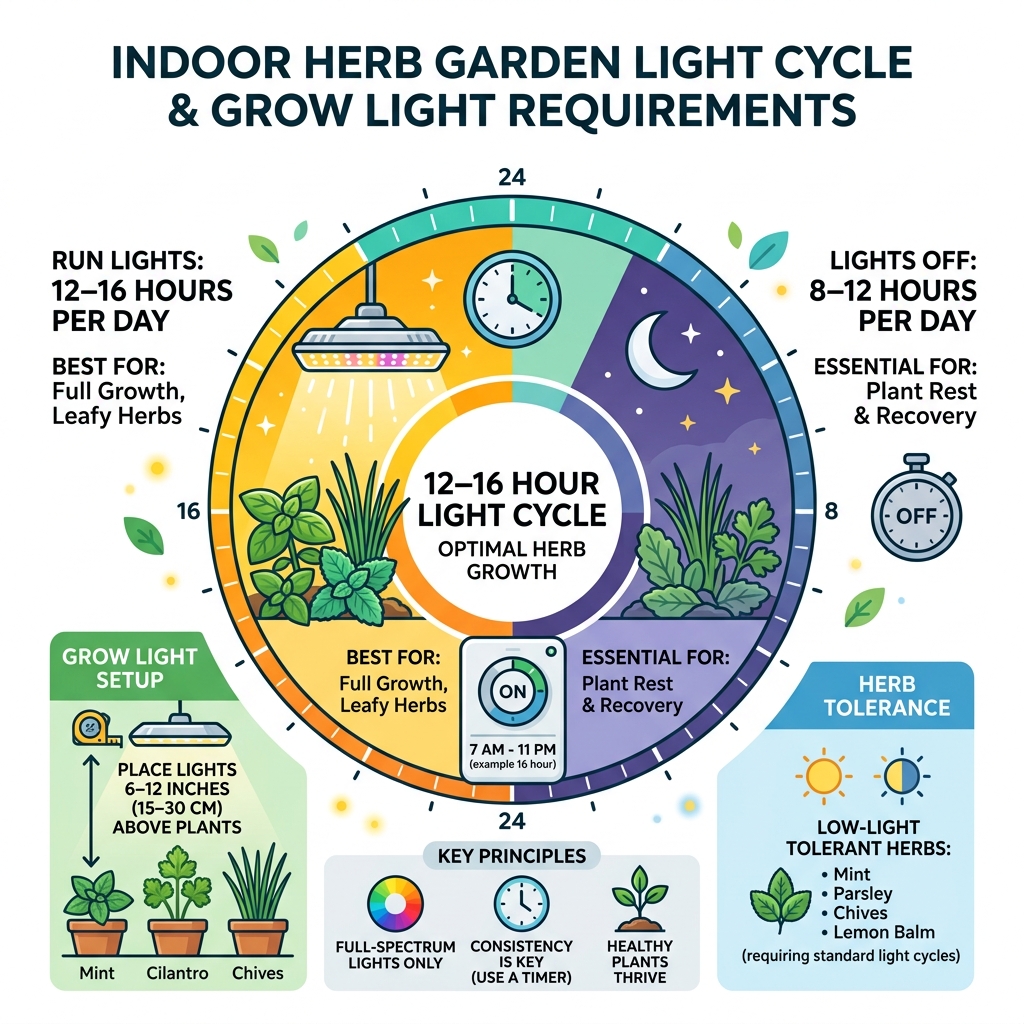
- Run lights for 12–16 hours per day — use an automatic timer for consistency
- Use a well-draining potting mix — add perlite for better drainage
- Water only when the top inch of soil feels dry — overwatering is the #1 mistake
- Fertilize lightly — diluted liquid fertilizer every 4–6 weeks is plenty
Plenty of home cooks dream about snipping fresh basil or mint right from their kitchen — but then reality hits. North-facing windows. Dark apartments. Short winter days. It feels like herbs just aren’t going to happen without a sun-drenched windowsill.
Here’s the thing: plants don’t actually need sunlight specifically. They need light energy. And artificial grow lights deliver exactly that.
As one urban gardener in Brooklyn put it, she realized she wasn’t failing at herbs — she was just growing the wrong ones for her conditions.
This guide will walk you through everything you need to set up a thriving indoor herb garden, even in a room with zero natural light.
Can You Really Grow Herbs Indoors Without Sunlight?
The short answer is a resounding yes. To understand how we can grow herbs indoors without sunlight, we have to look at the science of photosynthesis. Plants don’t actually “see” the sun; they absorb energy from specific wavelengths of light. Sunlight is simply a delivery system for this energy. If we provide that same energy through artificial means, our herbs won’t just survive—they will often thrive even better than they would in the inconsistent, filtered light of a window.
Artificial lighting allows us to provide a perfectly consistent “day” that isn’t affected by cloudy weather or the tilting of the earth during winter. In a windowless room, we are the masters of time and season. By using the right equipment, we provide Photosynthetically Active Radiation (PAR), which is the specific part of the light spectrum that plants use to grow.
The Role of Light Spectrums
When we move away from natural sun, we need to focus on two primary spectrums:
- Blue Light Spectrum (400–500 nm): This promotes healthy, lush leaf growth. It keeps plants compact and prevents them from getting too “stretchy.”
- Red Light Spectrum (600–700 nm): This is essential for root development and, eventually, flowering or seed production.
By combining these, we create a “full-spectrum” environment that mimics a bright summer day, right on our kitchen counter or in a basement corner.
Selecting Shade-Tolerant Herb Varieties
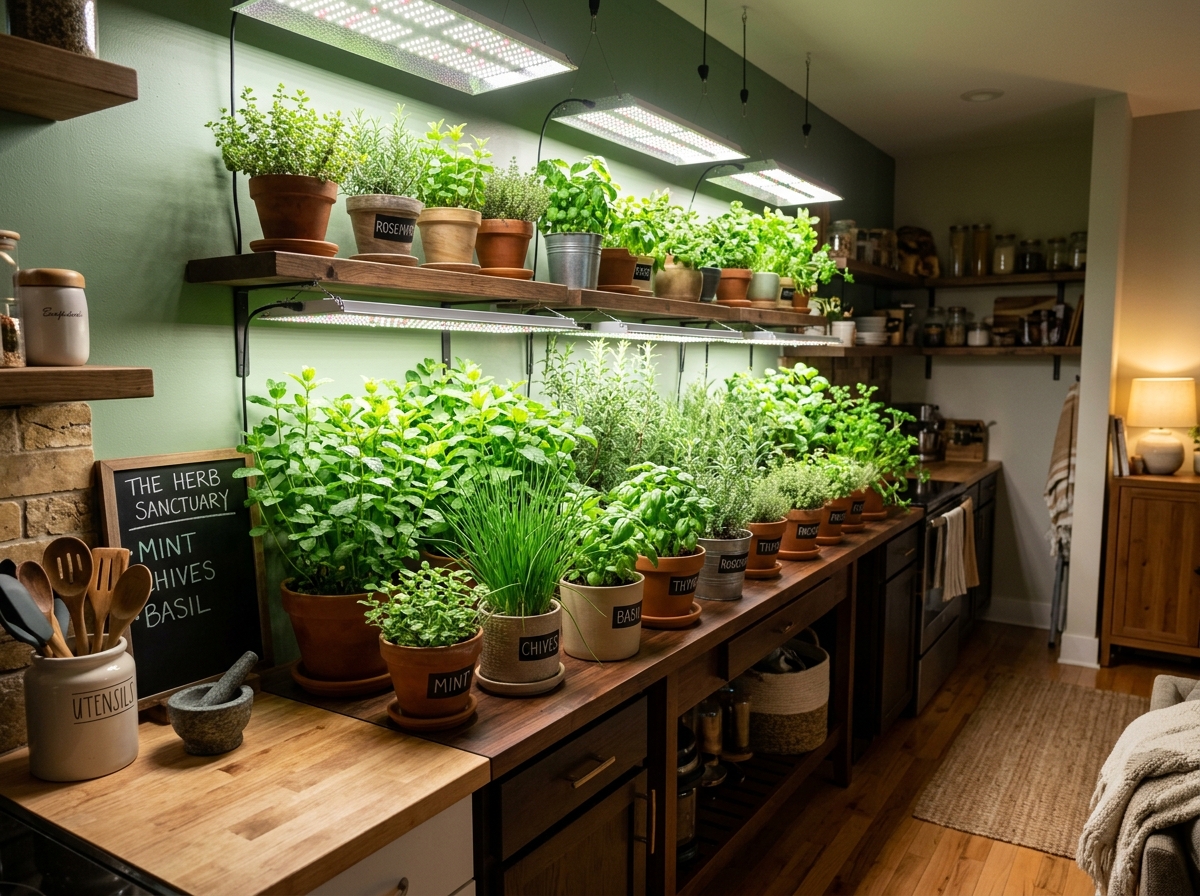
While we can grow almost anything with enough high-powered lights, some herbs are naturally more “chill” about lower light levels. If you are a beginner, we recommend starting with these Easiest Herbs to Grow Indoors with Low Light:
- Mint: This is the ultimate survivor. It thrives in indirect light and is nearly impossible to kill. Keep it in its own pot, though, as it likes to take over!
- Chives: These are incredibly resilient to temperature fluctuations and can tolerate lower light levels than most Mediterranean herbs. Plus, they are delicious on baked potatoes.
- Parsley: A biennial that is perfectly content in cooler, dimmer environments. It grows slowly but steadily indoors.
- Cilantro: Known for bolting (going to seed) quickly in hot sun, cilantro actually prefers the cooler, controlled temperatures of an indoor setup.
- Lemon Balm: A member of the mint family, it is very resilient and provides a wonderful scent to your home.
- Tarragon: This “chef’s herb” does surprisingly well without direct, scorching sun.
Setting Up Your Grow Lights to Grow Herbs Indoors Without Sunlight
If you want to grow herbs indoors without sunlight, your light setup is your most important investment. You can’t just use a standard desk lamp; those bulbs don’t emit the specific wavelengths required for photosynthesis.
Choosing the Right Bulb
There are three main types of lights we usually see in indoor setups:
- LED Grow Panels: These are the gold standard. They are energy-efficient, produce very little heat (so they won’t burn your leaves), and often come with built-in timers. You can find quality panels for around $20.
- Fluorescent T5 Tubes: These have been the favorite of indoor gardeners for decades. They provide a wide area of light and are excellent for seed starting.
- Compact Fluorescent Lamps (CFLs): These are great for single-pot setups or small spaces where a full panel won’t fit.
| Feature | LED Grow Lights | Fluorescent (T5) |
|---|---|---|
| Energy Efficiency | High (Up to 80% savings) | Moderate |
| Heat Output | Very Low | Moderate |
| Lifespan | 50,000+ hours | 10,000–20,000 hours |
| Cost | Higher upfront, lower long-term | Lower upfront |
| Best For | All stages of growth | Leafy greens and seedlings |
Distance and Duration
To effectively grow herbs indoors without sunlight, you need to keep your lights close. Because artificial light loses intensity quickly as it moves away from the source, aim to keep your LED or fluorescent lights 6–12 inches above the tops of the plants. If the plants look like they are reaching upward and becoming thin (a condition called “legginess”), move the light closer.
For more details on specific equipment, check out our guides on grow-lights-for-indoor-herbs.
Optimizing Light Intensity to Grow Herbs Indoors Without Sunlight
Most herbs require a “day” of 12 to 16 hours of light to compensate for the lower intensity of artificial bulbs compared to the sun. We strongly recommend using an automatic plug-in timer. Consistency is key; plants have a biological clock, and giving them 8 hours of “sleep” (darkness) is vital for their metabolic health.
You can further maximize your setup by using reflective surfaces. Placing your herb garden against a white wall or using Mylar sheets can bounce “lost” light back onto the plants, increasing efficiency without increasing your power bill. For more layout ideas, see our indoor-herb-garden-setup-tips.
Essential Care: Soil, Water, and Nutrients for Indoor Herbs
When we grow herbs indoors without sunlight, we are creating a micro-environment. Because there is no sun to evaporate excess moisture, our care routine must be more precise.
The Right Growing Medium
Never use “garden soil” from outside. It is too heavy, doesn’t drain well in pots, and often carries hitchhiking bugs. Instead, use a high-quality soilless potting mix. These are usually made of peat moss or coconut coir and include perlite or vermiculite (those little white “rocks”) to keep the mix airy and porous.
Watering: The Finger Test
Overwatering is the number one killer of indoor herbs. Without the sun to bake the soil, pots stay damp longer. We use the “finger test”: stick your finger about an inch into the soil. If it feels dry, it’s time to water. If it’s still cool and damp, wait another day. Ensure your pots always have drainage holes; “wet feet” lead to root rot very quickly.
Feeding Your Herbs
Indoor herbs need a little help in the nutrient department. We recommend a diluted, water-soluble organic fertilizer (like fish emulsion or kelp) every 4–6 weeks. Be careful not to over-fertilize, especially with high-nitrogen mixes, as this can actually make the herbs taste less flavorful by diluting their essential oils.
For a deeper dive into feeding schedules, read our soil-and-fertilizer-for-indoor-herbs.
Temperature and Humidity Management
Most culinary herbs are happy in the same temperatures we are: 65-75°F. However, indoor air—especially in winter—can be notoriously dry. Herbs like mint and parsley love a bit of humidity.
To keep them happy:
- Pebble Trays: Place your pots on a tray filled with pebbles and a little water. As the water evaporates, it creates a humid micro-climate around the leaves.
- Misting: A quick spritz with a spray bottle once or twice a week can help, though avoid misting rosemary, which prefers drier air.
- Air Circulation: Stagnant air is a breeding ground for mold. A small USB fan providing a gentle breeze can strengthen the plant’s “circulatory system” and prevent pests.
Learn more about managing your indoor climate at humidity-tips-for-indoor-herbs.
Troubleshooting Common Problems
Even with the best setup, you might run into a few hiccups as you grow herbs indoors without sunlight. Here is how to handle the most common issues:
- Yellow Leaves: This is usually a sign of overwatering or poor drainage. Check the bottom of your pot. If it’s soggy, let it dry out completely before watering again.
- White Fuzz on Soil: This is usually a harmless fungus caused by high moisture and low airflow. Scrape it off, reduce watering, and turn on a fan.
- Pests (Aphids and Spider Mites): Yes, even indoors! If you see tiny bugs or sticky residue, use a mild soap solution or organic neem oil to gently wipe down the leaves.
Preventing Leggy Stems When You Grow Herbs Indoors Without Sunlight
“Legginess” occurs when a plant stretches its stem as fast as it can toward a light source it can’t quite reach. The result is a weak, spindly plant that can’t support its own weight.
To prevent this:
- Lower the Light: Bring your grow light closer to the plant canopy (6-12 inches).
- Pinch Back: Don’t be afraid to give your herbs a “haircut.” Pinching off the top set of leaves encourages the plant to grow outward (bushy) rather than upward (spindly).
- Rotation: Rotate your pots every week so all sides of the plant get equal light exposure.
Advanced Methods: Hydroponics and Soil-less Systems
If you want to take your “no-sunlight” garden to the next level, consider hydroponics. These systems grow plants directly in water enriched with liquid nutrients.
Why go hydroponic?
- Faster Growth: Herbs can grow 30-50% faster in a hydroponic system because they don’t have to “work” to find nutrients in the soil.
- Less Mess: No soil means no dirt on your kitchen counters and fewer soil-borne pests like fungus gnats.
- Built-in Tech: Many countertop hydroponic systems (like AeroGarden) come with built-in LED lights and timers, making the process almost entirely “set it and forget it.”
These systems are particularly great for “thirsty” herbs like basil, mint, and cilantro. For those interested in ditching the dirt, we have a complete guide on planting-herbs-without-soil.
Frequently Asked Questions about Indoor Herb Gardening
How many hours of light do indoor herbs need daily?
Because artificial lights are less intense than the sun, aim for 12 to 16 hours of light per day. Using a timer to keep this consistent is the best way to ensure healthy growth.
Can I use regular household LED bulbs for my herbs?
While a standard “Daylight” LED bulb might keep a plant alive for a short time, it lacks the specific intensity and spectrum (PAR) needed for herbs to grow enough for a harvest. It is much better to invest in a dedicated $20 grow light.
Why is there white fuzz on my herb garden soil?
This is typically a harmless mold caused by stagnant air and damp soil. It won’t hurt your plants, but it is a sign you should increase airflow with a small fan and perhaps water a little less frequently.
Conclusion
Learning to grow herbs indoors without sunlight is a game-changer for anyone living in an urban environment or a cold climate. It transforms a dark corner of your home into a productive, living pantry. By selecting the right shade-tolerant varieties, investing in a simple LED grow light, and being mindful of your watering habits, you can enjoy the luxury of fresh, organic ingredients all year round.
At FinCapitaly, we believe in sustainable urban living and the joy of self-sufficiency. Whether you are adding fresh chives to your morning eggs or mint to a evening tea, your indoor garden is a step toward a greener, more flavorful home.
Start your indoor herb garden today and experience the convenience of a year-round harvest right at your fingertips!
