
Fresh Herbs All Year: Why a Hydroponic Kitchen Herb Garden Changes Everything
A hydroponic kitchen herb garden is a compact, soil-free growing system that sits on your countertop and delivers fresh basil, mint, parsley, and more — year-round, with almost no effort.
Quick answer: What is a hydroponic kitchen herb garden?
- A self-contained indoor garden that grows herbs in nutrient-rich water instead of soil
- Uses built-in LED grow lights on automated timers to replace sunlight
- Herbs grow 40–50% faster than in soil
- Requires just minutes of weekly maintenance — no weeding, no watering guesswork
- Fits on most kitchen counters; pods are pre-seeded or filled with your own seeds
If you’ve ever watched a bunch of store-bought basil turn yellow in your fridge before you could use half of it, you’re not alone. Most home cooks face the same frustrating cycle: buy herbs, use a sprig, throw the rest away.
Hydroponic systems break that cycle entirely.
Instead of soil delivering nutrients to roots, the water does it directly. Plants don’t waste energy searching for food — they put it all into leaf growth. The result? Faster growth, bigger yields, and herbs ready to snip whenever you’re cooking.
And the best part: modern systems automate the lights, the watering, and even the feeding reminders. You just top up the water every week or two and harvest what you need.
What is a Hydroponic Kitchen Herb Garden?
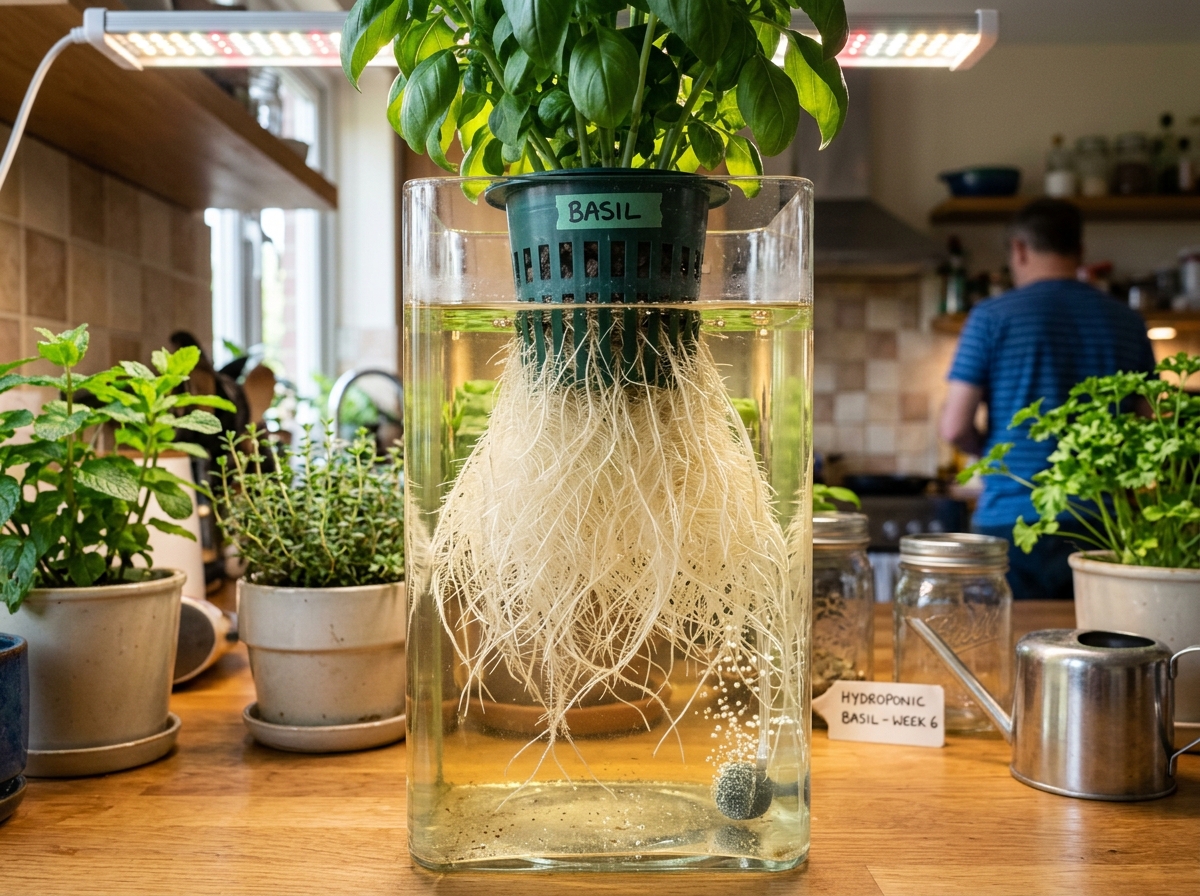
At its core, a hydroponic kitchen herb garden is a marriage of biology and technology. We often think of soil as a “must-have” for plants, but in reality, soil is just a delivery vehicle. It holds onto water, oxygen, and minerals until the roots can grab them. In a hydroponic setup, we cut out the middleman. By planting herbs without soil, we provide those essential elements directly to the root zone in a highly oxygenated, nutrient-rich water solution.
These systems are designed specifically for the indoor environment. They typically consist of a water reservoir, a specialized grow light (usually LED), and “pods” or “baskets” where the plants live. Instead of dirt, the plants sit in root sponges made of peat, coco coir, or rockwool. These sponges provide the structural support the plant needs to stand upright while allowing the roots to dangle freely into the water below.
Because these systems are “smart,” they handle the heavy lifting. Automated timers manage the light cycles, ensuring your herbs get exactly the amount of “sunlight” they need to thrive, even in a windowless kitchen. It’s essentially a high-tech “plug-and-play” garden that turns anyone into a successful gardener, regardless of whether they have a “green thumb.” If you are curious about getting started, checking out FinCapitaly Indoor Gardening Kits is a great first step toward a mess-free kitchen oasis.
How the Hydroponic Kitchen Herb Garden Works
To understand why these systems are so effective, we need to look under the hood at the different methods of nutrient delivery. While there are many industrial hydroponic methods, most kitchen-sized units use one of three simplified versions:
- Deep Water Culture (DWC): This is the most common method for countertop gardens. The roots are submerged in a reservoir of nutrient-rich water. A small pump or air stone bubbles oxygen into the water so the roots don’t “drown.”
- Wick Systems: This is a passive method where a fabric wick pulls water up from a reservoir into the root sponge. It’s silent and simple, making it great for very small kits.
- Aeroponics: In these advanced systems, the roots hang in the air and are periodically misted with nutrient water. This provides maximum oxygen to the roots, leading to even faster growth rates. Some aeroponic systems use up to 50% less water than standard hydroponics.
Regardless of the method, the goal is the same: providing a “five-star dining experience” for your plants. Instead of foraging through tough soil for nutrients, your herbs are served exactly what they need on a silver platter (or a plastic pod). For those just starting out, indoor gardening kits for beginners provide all the components—reservoir, pump, and lights—in one easy package.
Choosing the Right Size for Your Space
One of the biggest advantages of a hydroponic kitchen herb garden is its versatility. Whether you live in a sprawling farmhouse or a studio apartment, there is a system that fits your footprint.
- Small Countertop Units (3–6 Pods): These are roughly the size of a loaf of bread or a small coffee maker. They are perfect for indoor herb gardens for apartments where counter space is at a premium. They typically grow enough herbs to garnish daily meals or make an occasional batch of pesto.
- Medium Systems (7–12 Pods): These take up about as much space as a standard microwave. They offer a higher yield and allow you to grow a wider variety of herbs simultaneously—think basil, parsley, cilantro, and dill all at once.
- Vertical Herb Towers: If you have zero counter space but a spare corner on the floor, vertical towers are the answer. These systems stack plants on top of each other, allowing you to grow 30 or more plants in a footprint of just two square feet.
When choosing, consider your cooking habits. If you use a lot of fresh greens and herbs daily, a 12-pod system or a vertical tower will provide a more consistent harvest.
Benefits of Growing Herbs Hydroponically Indoors
Why make the switch from traditional pots of soil on the windowsill? The statistics tell a compelling story. Research shows that hydroponic gardens can grow plants 40 to 50 percent faster than plants growing in ground soil. This is largely because the controlled environment eliminates the “stress” of outdoor life—there are no fluctuating temperatures, no droughts, and no competition from weeds.
| Feature | Soil-Based Gardening | Hydroponic Gardening |
|---|---|---|
| Growth Speed | Standard | 40-50% Faster |
| Water Usage | High (evaporation/runoff) | 90% Less (recirculated) |
| Pests | Soil-borne bugs common | Virtually zero soil pests |
| Space | Requires large pots/plots | Highly compact & vertical |
| Seasonality | Weather dependent | Year-round production |
| Effort | Manual watering/weeding | Automated “Auto-pilot” |
Beyond the speed, there is the sustainability factor. Hydroponics uses approximately 90% less water than traditional gardening because the water is contained in a closed loop and recirculated rather than soaking into the ground. Additionally, because the roots are so efficiently fed, you can fit more plants into a smaller area, which is perfect for vertical herb gardening indoors.
Finally, let’s talk about the “yuck” factor. Soil gardening indoors often brings in fungus gnats, soil-borne diseases, and the inevitable mess of dirt on your kitchen tiles. A hydroponic kitchen herb garden is clean. There’s no mud, no mess, and no synthetic pesticides required, as most indoor pests can’t survive without a soil habitat. To explore the tools that make this possible, you can Explore FinCapitaly Indoor Tools to find the right fit for your home.
Best Herbs for Your Hydroponic Kitchen Herb Garden
Not all plants are created equal in hydroponics. While you won’t be growing potatoes or carrots (root crops don’t love being submerged in water), most leafy herbs thrive in these systems. If you’re looking for easy herb seeds for beginners, start with these high-performers:
- Genovese Basil: The undisputed king of the hydroponic garden. It germinates quickly—sometimes in just 5 to 7 days—and grows “bonkers.” You’ll likely have more basil than you know what to do with within a month.
- Thai Basil: Slightly more decorative with purple stems, it adds a wonderful licorice flavor to stir-fries and grows just as vigorously as its Genovese cousin.
- Mint: In a traditional garden, mint is an invasive bully that takes over the yard. In a hydroponic pod, it is perfectly contained and provides a steady supply for teas and mojitos.
- Parsley (Curly or Flat-Leaf): A bit slower to germinate than basil, but once it gets going, it’s a workhorse that produces for months.
- Cilantro: Known for being “fussy” in soil, cilantro loves the consistent moisture of hydroponics. However, it prefers slightly cooler air, so keep it away from the oven!
- Dill: This herb grows incredibly fast and tall. Be prepared to prune it early and often to prevent it from reaching the LED lights.
For a successful start, we recommend using FinCapitaly Hydroponic Grow Kits, which often come with a curated selection of these high-yield seeds to ensure your first harvest is a success.
Step-by-Step Setup and Maintenance Guide
Setting up your hydroponic kitchen herb garden is surprisingly simple—often taking less than 15 minutes from unboxing to planting. Here is the general workflow for most modern systems:
- Assemble the Unit: Connect the light post to the base and ensure the water pump is properly seated in the reservoir.
- Fill the Reservoir: Use clean, room-temperature tap or filtered water. Most systems have a “fill line” or a floating indicator to show when they are full.
- Add Nutrients: Most kits come with two bottles, often labeled “Nutrient Solution A” and “Nutrient Solution B.” These contain essential minerals like nitrogen, phosphorus, and potassium. Follow the instructions for the correct dosage based on your water volume.
- Insert Seed Pods: Place your pre-seeded pods into the designated holes. If you are using your own seeds, place 2–3 seeds into the center of a fresh grow sponge.
- Set the Timer: Plug the system in. Most systems default to a 16-hour-on, 8-hour-off cycle. This mimics the peak of summer growth.
- Cover with Domes: Place the clear plastic germination domes over the pods. This creates a mini-greenhouse effect to trap humidity and speed up sprouting.
Once your garden is running, maintenance is minimal. You’ll need to start an indoor herb garden by checking the water level every week. As the plants grow taller, you must use the grow lights for indoor herbs effectively by adjusting the height of the LED panel to keep it about 2–4 inches above the top of the plants.
Maintenance Milestones:
- Weekly: Check water levels and top up if needed.
- Bi-Weekly: Add liquid plant food according to the system’s alert light.
- Monthly: Perform a “rinse and refill.” Empty the reservoir, scrub it with mild soap to remove any biofilm or algae, and start with fresh water and nutrients.
- Harvesting: Once herbs reach about 2–4 inches, start pruning from the top. This encourages the plant to grow bushier rather than just taller.
If you are starting herbs from seeds indoors, patience is key for the first 10 days!
Troubleshooting Your Hydroponic Kitchen Herb Garden
Even the best “auto-pilot” systems can run into hiccups. Here are the most common issues and how to fix them:
- Algae Growth: If you see green gunk on your grow sponges, it’s usually because light is hitting the moist sponge. Use “pod covers” or even a bit of tin foil to block light from the sponge surface. Keeping the water reservoir opaque is also vital.
- Poor Germination: If a pod hasn’t sprouted after 14 days, the seeds might be duds. Try adding a few fresh seeds to the sponge. Ensure the water level is high enough that the bottom of the sponge is touching the water.
- Yellowing Leaves: This is often a sign of nutrient deficiency or a pH imbalance. Most herbs prefer a pH between 5.5 and 6.5. If your tap water is very hard, you may need to use filtered water.
- Brown Leaf Tips: This usually means “nutrient burn.” You might be adding too much plant food. Flush the system with fresh water and reduce the dosage next time.
- Vacation Mode: If you’re heading out of town, many smart systems have a “vacation mode” that reduces the light and water usage to keep plants alive without causing them to grow so fast they dry out the reservoir while you’re gone.
For more detailed help, our indoor herb garden setup tips can guide you through the trickier parts of system calibration.
Frequently Asked Questions about Indoor Herb Systems
Can I use my own seeds in a hydroponic system?
Yes! While many companies sell proprietary “pods,” you can easily use your own seeds. You simply need to buy “blank” sponges (often made of rockwool or peat) and plastic baskets that fit your specific machine. This allows for total customization—you can grow rare heirloom varieties that aren’t available in pre-seeded kits. Just ensure the seeds are fresh for the best germination rates. You can even experiment with container planting for herbs by starting seeds in your hydroponic system and later transplanting them to soil pots.
How much electricity does a kitchen herb garden use?
Surprisingly little. Most countertop systems use energy-efficient LED lights that pull between 15 and 45 watts. When running on a standard 16-hour cycle, the cost is typically just a few dollars per month—often less than the cost of a single bunch of wilted grocery store cilantro.
How often do I need to add nutrients?
Most systems will have a flashing light or an app notification to remind you. Generally, you add liquid plant food every 14 days. As the plants get larger and begin to drink more water, you might find yourself topping up the reservoir more frequently, but the nutrient schedule usually stays consistent.
Conclusion
A hydroponic kitchen herb garden is more than just a gadget; it’s a way to bring a bit of nature and incredible flavor into your daily life. It solves the “black thumb” problem through automation and ensures that you always have the perfect garnish or ingredient just inches away from your cutting board.
By eliminating the mess of soil and the unpredictability of the weather, we can enjoy a sustainable, high-yield garden right on our counters. Whether you’re a gourmet chef or a beginner cook, the ease of an auto-pilot garden is hard to beat.
Ready to transform your kitchen? Check out more info about indoor tools and start your journey toward fresh, year-round flavor today. With FinCapitaly, growing your own food has never been simpler or more rewarding. Happy growing!
