
The Secret to Growing a Thai Basil Plant Indoors Year-Round
A thai basil plant indoors gives you fresh, flavorful herbs on demand — no garden required. Here’s what you need to know to get started fast:
Quick-start guide to growing Thai basil indoors:
- Choose a bright spot — a south-facing window with 6-8 hours of direct sun, or a grow light running 14-16 hours daily
- Use the right pot — at least 6 inches wide with drainage holes, filled with a well-draining potting mix
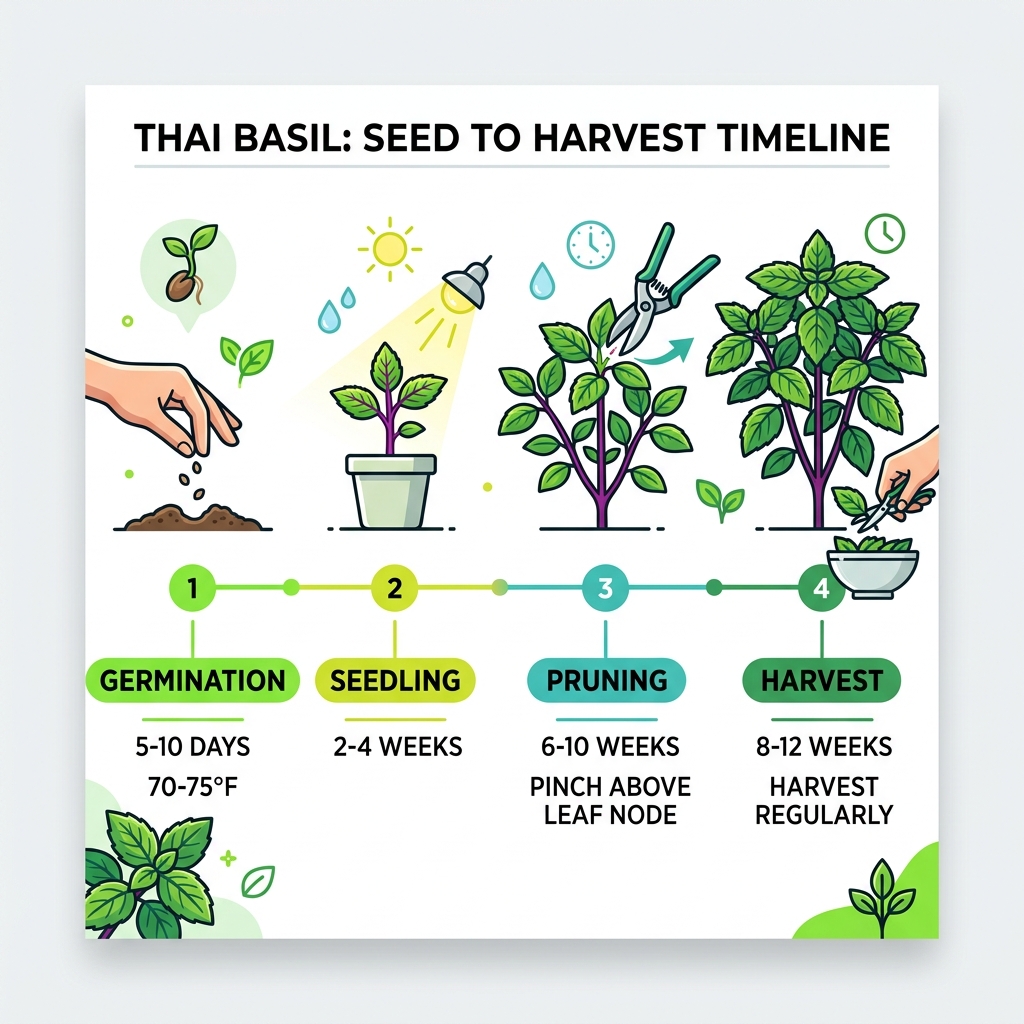
- Start from seed or cuttings — seeds germinate in 5-10 days at 70-75°F; cuttings root in 1-2 weeks in water
- Water carefully — let the top inch of soil dry out between waterings to avoid root rot
- Pinch regularly — snip just above a leaf node to keep the plant bushy and productive
- Harvest in 60-90 days from seed, or as early as 3-4 weeks from cuttings
Thai basil (Ocimum basilicum var. thyrsiflora) is not the same as the sweet basil you find on Italian pizza. It has deep purple stems, glossy serrated leaves, and a bold anise-clove aroma that holds up beautifully in hot dishes like curries, stir-fries, and pho.
The problem most home cooks face? It’s hard to find fresh Thai basil at the grocery store — and when you do, it’s expensive, often wilted, and wrapped in unnecessary plastic.
Growing it yourself solves all three problems at once.
With the right setup, Thai basil thrives indoors year-round — even in small kitchens, apartments, or homes with limited natural light. Three plants are typically enough to supply fresh leaves for your favorite Thai recipes every couple of weeks.
This guide walks you through everything: picking the right variety, setting up your growing space, starting from seed or cuttings, and keeping your plant healthy and productive for months.
Understanding the Thai Basil Plant Indoors vs. Sweet Basil
When we talk about growing a thai basil plant indoors, we aren’t just talking about a “spicy” version of Genovese basil. Botanically, Thai basil is Ocimum basilicum var. thyrsiflora. While it shares a genus and species with sweet basil, its physical and chemical makeup is quite different.
One of the most striking differences is the appearance. Thai basil features sturdy, deep purple stems and narrow, pointed leaves with serrated (saw-toothed) edges. In contrast, sweet basil has thick, succulent green stems and large, rounded, floppy leaves.
From a culinary perspective, the magic lies in the chemistry. Thai basil is rich in estragole (methyl chavicol), which gives it that signature anise, licorice, and clove-like scent. This compound is remarkably stable under heat. While the delicate oils in sweet basil (mostly linalool) vanish the moment they hit a hot pan, Thai basil retains its punch during high-heat stir-frying and long-simmering curries.
| Feature | Thai Basil (var. thyrsiflora) | Sweet Basil (O. basilicum) |
|---|---|---|
| Stem Color | Deep Purple | Bright Green |
| Leaf Shape | Narrow, pointed, serrated | Broad, rounded, smooth |
| Primary Aroma | Anise, Licorice, Clove | Sweet, Peppery, Floral |
| Heat Stability | High (Estragole-rich) | Low (Linalool-rich) |
| Growth Habit | Compact, shrub-like | Tall, sprawling |
| Flowers | Purple/Red, edible | White, usually discarded |
Beyond the kitchen, Thai basil offers incredible ornamental value. Its purple flowers and dark stems make it a beautiful addition to a windowsill, often looking more like a decorative houseplant than a kitchen herb.
Popular Varieties for Indoor Cultivation
If you are looking to start your indoor garden, selecting the right cultivar is key. Some varieties are bred specifically for their compact size or disease resistance, making them perfect for life on a kitchen counter.
- Siam Queen: An award-winning variety known for its intense aroma and beautiful purple flower heads. It is highly resistant to fusarium wilt.
- Thai Magic: This variety grows quickly and produces large, tender leaves with a milder licorice flavor.
- Queenette: A very ornamental variety with smaller leaves and dense clusters of purple flowers.
- Cardinal: Named for its large, red-purple flower heads that resemble celosia. It’s a showstopper in any indoor setup.
For those just beginning their journey into herb-based cooking, check out our beginners guide to cooking with indoor basil to see how these varieties can transform your meals.
Essential Supplies for Growing Thai Basil Plant Indoors
To grow a healthy thai basil plant indoors, you need to mimic its native Southeast Asian environment: warm, humid, and very bright. You don’t need a professional greenhouse, but a few specific supplies will make a world of difference.

- The Container: Choose a pot that is at least 6 inches in diameter for a single plant. If you want to grow three plants together, a 12-inch container works well. Most importantly, ensure it has ample drainage holes. Basil hates “wet feet,” which leads to root rot.
- Potting Mix: Never use garden soil for indoor plants. It is too heavy and may contain pests or diseases. Instead, use a high-quality, lightweight potting mix. Look for blends containing peat moss or coconut coir for moisture retention and perlite or vermiculite for aeration.
- Fertilizer: Indoor plants have limited access to nutrients. We recommend using a balanced organic liquid fertilizer (like a 5-5-5 or 10-10-10) every two weeks during the growing season. Alternatively, you can mix slow-release granules into the soil at planting time.
Learning how to care for basil indoors starts with providing a stable foundation of quality soil and a breathable container.
Ideal Lighting and Temperature Conditions
Light is the single most important factor for success. Thai basil requires 6-8 hours of direct sunlight per day. A south-facing window is usually the best spot in the house. If your home is dim, your basil will become “leggy”—stretching toward the light with weak stems and sparse leaves.
To grow a truly lush plant, we suggest using full-spectrum LED grow lights. Position the lights about 6-12 inches above the top of the plant and run them for 14-16 hours a day. This mimics the intense tropical sun and boosts the production of essential oils.
Temperature-wise, Thai basil is a heat-lover. It thrives in a range of 70-90°F (21-32°C). If your kitchen gets chilly at night (below 50°F), move the plant away from the glass window to prevent cold damage.
Finally, don’t forget humidity. Thai basil prefers levels between 50-70%. Since indoor air is often dry (especially in winter), you can use a humidity tray—a shallow dish filled with pebbles and water—placed under the pot. As the water evaporates, it creates a moist microclimate for your herb.
Step-by-Step: Starting Your Thai Basil Plant Indoors
Starting from seed is the most economical way to grow a thai basil plant indoors, and it gives you access to the widest variety of cultivars.
- Sow: Fill your pots with moistened potting mix. Place 3-4 seeds on the surface and cover them with a very thin layer of soil (about 1/4 inch). Light is helpful for germination, so don’t bury them too deep!
- Warmth: Keep the pots in a warm spot (70-75°F). Using a humidity dome or a simple piece of plastic wrap over the top can help keep the moisture in.
- Germinate: You should see sprouts in 5-10 days. Once they appear, remove the cover and move them immediately under bright light.
- Thin: When the seedlings are about 2-3 inches tall and have their first set of “true leaves,” thin them out. Use scissors to snip the smaller, weaker plants at the soil line, leaving only the strongest plant per 6-inch pot.
Propagating from Cuttings or Supermarket Plants
If you’re impatient, you can skip the seed phase entirely by propagating from cuttings. This is a great way to “recycle” fresh basil from the supermarket.
- Selection: Choose a healthy, non-flowering stem about 4-6 inches long.
- Preparation: Use clean shears to cut just below a leaf node (the bump where leaves emerge). Remove the leaves from the bottom 2 inches of the stem.
- Rooting: Place the stem in a glass of clean, non-chlorinated water. Ensure no leaves are touching the water, as they will rot.
- Wait: Change the water every day or two. In 7-14 days, you will see white roots emerging.
- Transplant: Once the roots are about an inch long, gently plant the cutting into potting soil.
Alternatively, some gardeners prefer a semi-hydroponic approach, placing the rooted cuttings into a jar of water with clay pebbles and a few drops of liquid nutrients. This “soil-less” method is clean and perfect for small kitchen windowsills.
Maintenance, Pruning, and Troubleshooting
Growing a thai basil plant indoors isn’t a “set it and forget it” project. Regular maintenance is the difference between a spindly plant and a bushy, productive one.
Pruning is your most powerful tool. When your plant is about 6 inches tall, pinch off the center stem just above a set of leaves. This forces the plant to grow two new stems from that point, making it bushier. Continue to pinch back the tips every 10-14 days. If you see purple flower buds forming, snip them off immediately! While beautiful, flowering tells the plant to stop producing leaves and start producing seeds, which can make the leaves taste bitter.
The “Lift Test” for Watering: Overwatering kills more basil than anything else. Instead of watering on a schedule, use the lift test. Pick up the pot; if it feels light, it’s time to water. You can also stick your finger an inch into the soil—if it feels dry, give it a soak until water runs out the drainage holes.
For those who love the flavor of their harvest, try making incredible infused oils with indoor basil to preserve that spicy anise aroma for weeks.
Managing Common Pests and Diseases
Even indoors, pests can find your basil. The most common culprits are:
- Aphids: Tiny green or black insects that cluster on new growth. Wash them off with a strong stream of water or use insecticidal soap.
- Spider Mites: These cause tiny yellow spots on leaves and may leave fine webbing. Increasing humidity can help prevent them.
- Fungus Gnats: These small black flies live in the soil. They usually appear if the soil is kept too wet. Let the top inch of soil dry out completely between waterings to break their life cycle.
To keep your plants safe, we recommend keeping a bottle of organic neem oil on hand. It’s a safe, natural way to handle most indoor pests. For more detailed tips on keeping your herbs healthy, our guide on how to care for basil indoors-2 offers deeper insights into disease prevention.
Frequently Asked Questions about Thai Basil
How long does it take to harvest Thai basil indoors?
If you start from seed, expect to wait 60-90 days before your first major harvest. However, you can start light pruning once the plant reaches 6 inches in height. If you start from cuttings, you can often begin harvesting in as little as 3-4 weeks. For a comparison of growth rates among different herbs, see our list of the best herbs to grow indoors.
Can I grow Thai basil hydroponically without soil?
Yes! Thai basil is an excellent candidate for hydroponics. You can use the “Kratky method” with a simple mason jar, non-chlorinated water, and a specialized nutrient solution. Some growers add a drop of liquid silica to the water to help strengthen the plant’s cell walls, mimicking the minerals found in natural soil.
Why are my Thai basil plant indoors leaves turning yellow or curling?
This is usually a sign of environmental stress.
- Yellow leaves: Often caused by overwatering or a nitrogen deficiency. Ensure your pot has drainage and you are fertilizing every two weeks.
- Curling leaves: This can be a sign of pests (like aphids) or “chilling injury” if the plant is too close to a cold window.
- Brown edges: Usually indicates low humidity or fertilizer burn from using too much “food” at once.
Conclusion
Growing a thai basil plant indoors is one of the most rewarding projects for any home cook. Not only does it provide a year-round harvest of an exotic, hard-to-find herb, but it also saves you money and reduces the plastic waste associated with store-bought bunches.
By following the steps in this guide—providing ample light, pruning regularly, and watching your watering—you can enjoy the fresh, anise-scented leaves of Thai basil whenever the craving for a homemade curry or pho strikes. At FinCapitaly, we believe that sustainable, indoor gardening is the best way to bring health and flavor into your home.
Ready to expand your collection? Start your indoor herb garden today and discover how easy it is to grow your own groceries right in your kitchen!
