
Understanding the Basics of Indoor Hydroponics
A countertop hydroponic garden is a compact, soil-less growing system that lets you raise fresh herbs, greens, and vegetables right on your kitchen counter — no outdoor space, no dirt, and no gardening experience required.
Here’s what you need to know at a glance:
- What it is: A self-contained unit that grows plants in nutrient-rich water instead of soil, using built-in LED lights
- How fast it works: Plants grow 40–50% faster than in traditional soil
- Water use: Uses up to 95% less water than outdoor gardening through recirculation
- Best for: Herbs like basil, parsley, and mint — plus leafy greens and small vegetables
- Who it suits: Beginners, apartment dwellers, and busy home cooks who want fresh ingredients year-round
- Effort required: Minimal — most systems just need occasional water top-offs and a nutrient refill when alerted
If you’ve ever watched a bunch of store-bought basil wilt in your fridge after two days, you already understand the appeal. Growing your own means you snip exactly what you need, when you need it.
The concept is simple: instead of roots searching through soil for water and nutrients, a hydroponic system delivers everything directly to the roots. That efficiency is why growth is so much faster — and why even self-described “black thumbs” tend to succeed with these systems.
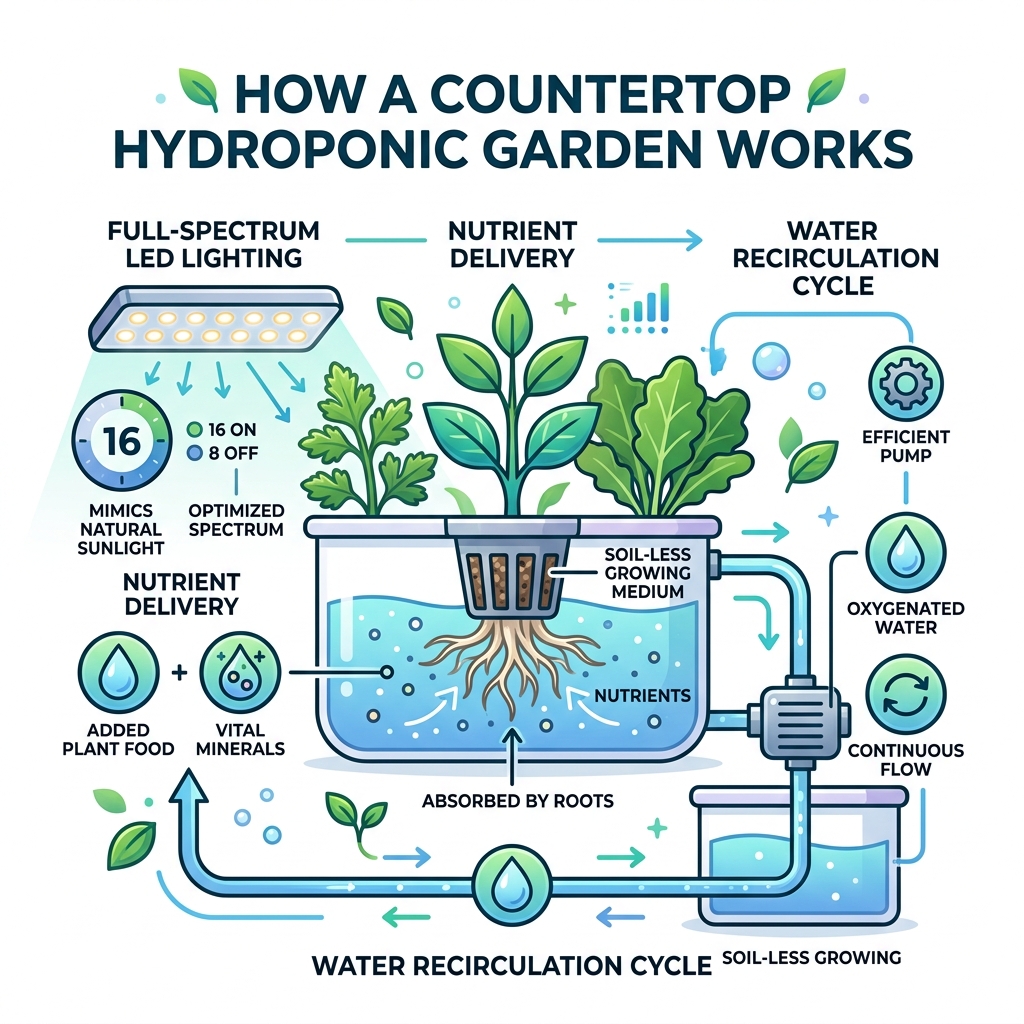
When we talk about planting herbs without soil, we are looking at a system that replaces the traditional “garden bed” with a reservoir of water and a growing medium like rockwool, peat moss, or coconut coir. These materials hold the seed in place while the roots dangle directly into a nutrient solution.
The “magic” happens with the integrated LED lighting. Because indoor environments rarely provide the 15–16 hours of intense sunlight required for rapid vegetable growth, these systems use full-spectrum LEDs that mimic the sun’s rays. Many modern units, like those from AeroGarden Indoor Gardens by Scotts Miracle-Gro, include automated timers so you don’t even have to remember to flip a switch.
The Main Benefits of Soil-Free Growing
Why are so many people ditching the dirt? For starters, a countertop hydroponic garden offers a level of control that Mother Nature simply can’t guarantee.
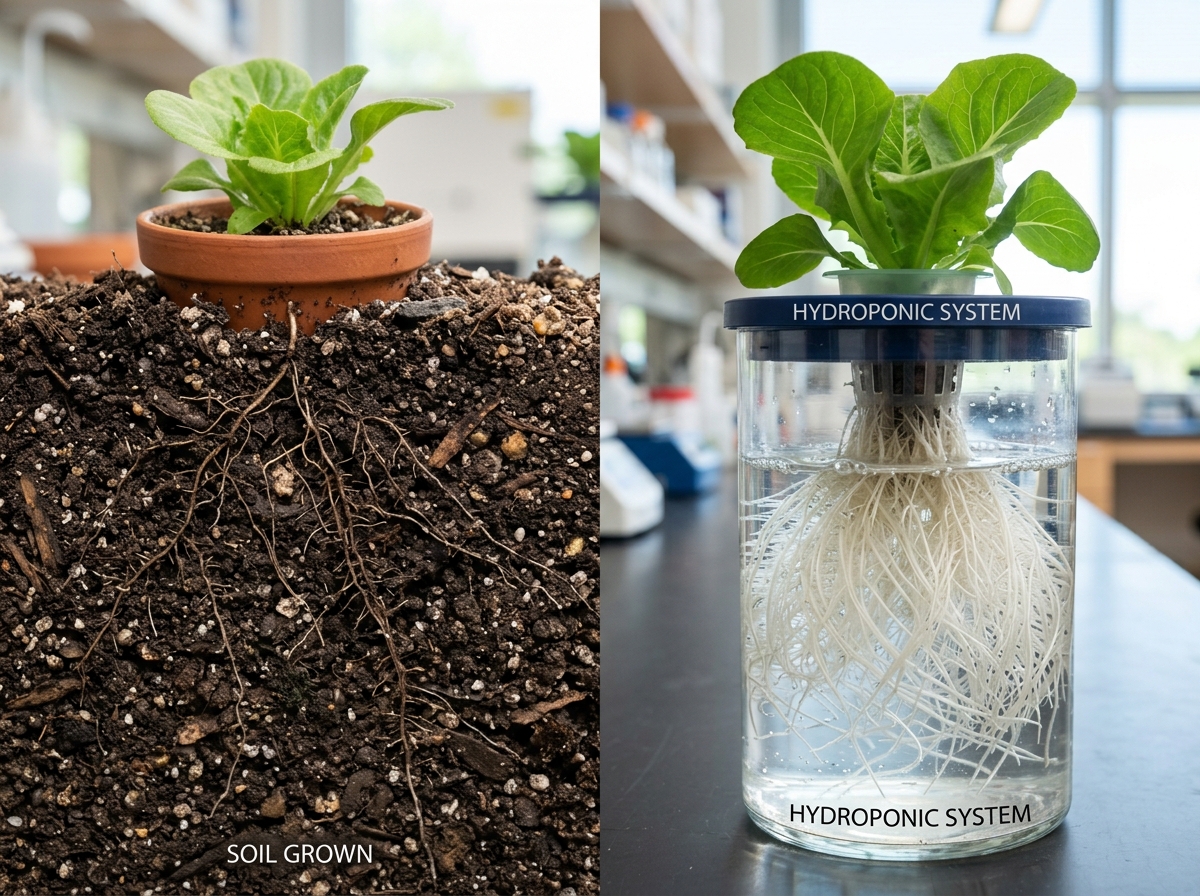
- Incredible Growth Rates: Research shows that hydroponic gardens can grow plants 40 to 50 percent faster than plants growing in ground soil. This is because the plant doesn’t have to “work” to find nutrients; they are delivered on a silver platter (or rather, a plastic tray).
- Water Efficiency: We are all looking for ways to be more sustainable. These systems recirculate water, using as little as 1/10th the water of traditional outdoor plots.
- Space-Saving Solutions: An indoor herb garden for apartments is often the only way urban dwellers can enjoy a harvest. Systems like the Gardyn Studio can grow 16 plants in just 1.4 square feet of floor or counter space.
- Year-Round Harvests: Forget about “seasonal” eating. You can grow summer basil in the dead of a Wisconsin winter or crisp lettuce during a Texas heatwave.
- Pesticide-Free and Clean: Because these systems are indoors and soil-free, you don’t have to deal with weeds or soil-borne pests. This results in ultra-local, pesticide-free produce that is often more nutrient-dense than store-bought options that have spent days in a shipping truck.
Choosing the Best Countertop Hydroponic Garden for Your Space
Selecting the right unit depends on your appetite — both for food and for technology. If you are looking for indoor-gardening-kits-for-beginners, you might want a “plug-and-play” model. If you’re a tech enthusiast, you might prefer a system with AI-driven “garden butlers.”
For those who want a high-tech experience, the Countertop Hydroponic Garden- LPH-MAX features a 4.6-inch LCD touchpad and app monitoring that tracks water levels, nutrients, and temperature in real-time.
| Model | Plant Capacity | Reservoir Size | Key Features |
|---|---|---|---|
| AeroGarden Harvest | 6 Pods | ~2.5 Liters | Simple, compact, great for beginners |
| AeroGarden Bounty | 9 Pods | ~4.2 Liters | High-resolution control panel, 50W light |
| LetPot LPH-SE | 12 Pods | ~5.5 Liters | WiFi-enabled, budget-friendly refills |
| Click & Grow Smart Garden 9 | 9 Pods | ~4.0 Liters | Zero learning curve, “Smart Soil” pods |
| Gardyn Studio | 16 Plants | ~2 Gallons | AI-powered (Kelby), vertical tower design |
| Rise Personal Garden | 8-12 Plants | ~1 Gallon | Elegant design, app-controlled |
Selecting Plants for Your Countertop Hydroponic Garden
Not every plant is a candidate for hydroponics. You’ll want to stick to crops that thrive in moist environments and don’t require deep soil for root vegetables. Here are some beginner-friendly-herb-garden-ideas:
- Herbs: Basil (the king of hydroponics), Thai basil, mint, parsley, dill, thyme, and cilantro.
- Leafy Greens: Butter lettuce, romaine, kale, arugula, and Swiss chard.
- Small Vegetables: Cherry tomatoes, jalapeños, and even strawberries (though these require manual pollination with a small brush!).
- Microgreens: These are incredibly fast, often ready in 5–9 days using systems like the Aquatree® Tower.
What to avoid: Root crops like carrots, potatoes, and beets. These need space to expand underground and can damage the internal pumps of your system.
Maximizing Yield in a Small Countertop Hydroponic Garden
To get the most out of your countertop hydroponic garden, you can’t just “set it and forget it” entirely. We recommend following these expert tips:
- Pruning is Essential: Once your herbs reach about two inches, start pruning from the top. This encourages the plant to grow outward (bushy) rather than upward (leggy), which maximizes your harvest.
- Adjust Your Lights: As your plants grow, you must raise the LED lamp. If the light is too close, it can shrivel the tips of your basil. If it’s too far, the plants will become weak as they stretch for light.
- Nutrient Scheduling: Most systems, like the AeroGarden Indoor Gardens, will flash a light when it’s time for “plant food.” Don’t ignore this! Consistent nutrients are the secret to that 50% faster growth rate.
- Harvest Rotation: Don’t wait to harvest everything at once. Snip a few leaves here and there for your salads. This “cut and come again” method keeps the plant in a growth phase for longer.
For more detailed steps, check out our guide on how-to-start-an-indoor-herb-garden.
Setup and Maintenance Tips for Beginners
Setting up your garden is usually a breeze. Most systems, like the Personal Indoor Garden | Hydroponic Smart Garden – Rise Gardens, can be assembled in under 10 minutes.
Here is our quick-start checklist based on indoor-herb-garden-setup-tips:
- Placement: Place your unit on a sturdy surface near a power outlet. Keep it away from drafty windows or heat-spewing ovens.
- Watering: Use room-temperature water. Some experts suggest using a turkey baster or a small watering can to avoid splashing the electronics.
- The “Clean Cycle”: Every few months (or between plantings), you should perform a deep clean. Running a mixture of water and citric acid through the system helps remove mineral buildup and prevents algae.
- Root Maintenance: In high-density systems like the Hydroponic Gardening Indoor Growing Systems – LetPot, roots can sometimes grow into the pump. Check your reservoir every few weeks and gently trim any “rogue” roots that look like they’re heading for the machinery.
For aesthetic advice on where to put your new green friend, see our indoor-herb-garden-layout-tips.
Frequently Asked Questions about Countertop Hydroponics
Are countertop systems worth the investment?
This is the big question. Upfront costs can range from $80 for a basic LetPot to over $800 for a multi-level Gardyn.
While you might not “save” money on groceries in the first month due to the initial investment, the value comes from convenience and quality. You’ll stop throwing away $4 plastic clamshells of wilted supermarket herbs. Plus, some systems like the LetPot LPH-SE Senior allow you to use generic, low-cost sponges and your own seeds, which brings ongoing costs down to pennies per plant.
Where is the best place to position my garden?
The kitchen is the most popular spot for a countertop hydroponic garden because it’s where you’ll actually use the herbs. However, keep these factors in mind:
- Light Pollution: These LED lights are bright. If you put the garden in a studio apartment, the 16-hour light cycle might interfere with your sleep.
- Temperature: Most plants prefer a steady 68°F to 75°F. Avoid placing the unit on top of a refrigerator, as the vibration and heat can stress the plants.
- Noise: Some pumps make a gentle trickling sound (like a pet water fountain). If you’re sensitive to noise, look for “wick” systems like the Click & Grow, which are silent.
What are the common downsides or limitations?
No system is perfect. Here are a few things to watch out for:
- Pump Noise: As water levels get low, some pumps can get a bit chatty.
- Root Rot: If the water isn’t circulated properly or if the reservoir gets too hot (which can happen in systems like the Rise Garden), roots can turn brown and slimy.
- Power Outages: Since these gardens rely on pumps and lights, a long power outage can be terminal for your plants unless you manually water them.
- Pests: While rare, you can still get aphids or whiteflies, especially if you bring in “pre-grown” seedlings from outside. We recommend starting from seeds or pods to keep your garden a “clean room.”
Conclusion
At FinCapitaly, we believe that bringing a bit of nature into your home shouldn’t be a chore. A countertop hydroponic garden is more than just a kitchen gadget; it’s a step toward a more sustainable, fresh, and healthy lifestyle. Whether you start with a simple 3-pod unit for your morning tea mint or a 30-plant tower for your daily salads, the joy of harvesting your own food is incomparable.
Ready to kit out your home with more smart solutions? Check out More info about indoor tools to see how you can transform your living space today!
