
Why a Herb Planter for Balcony Gardening Is the Smartest Move for Urban Cooks
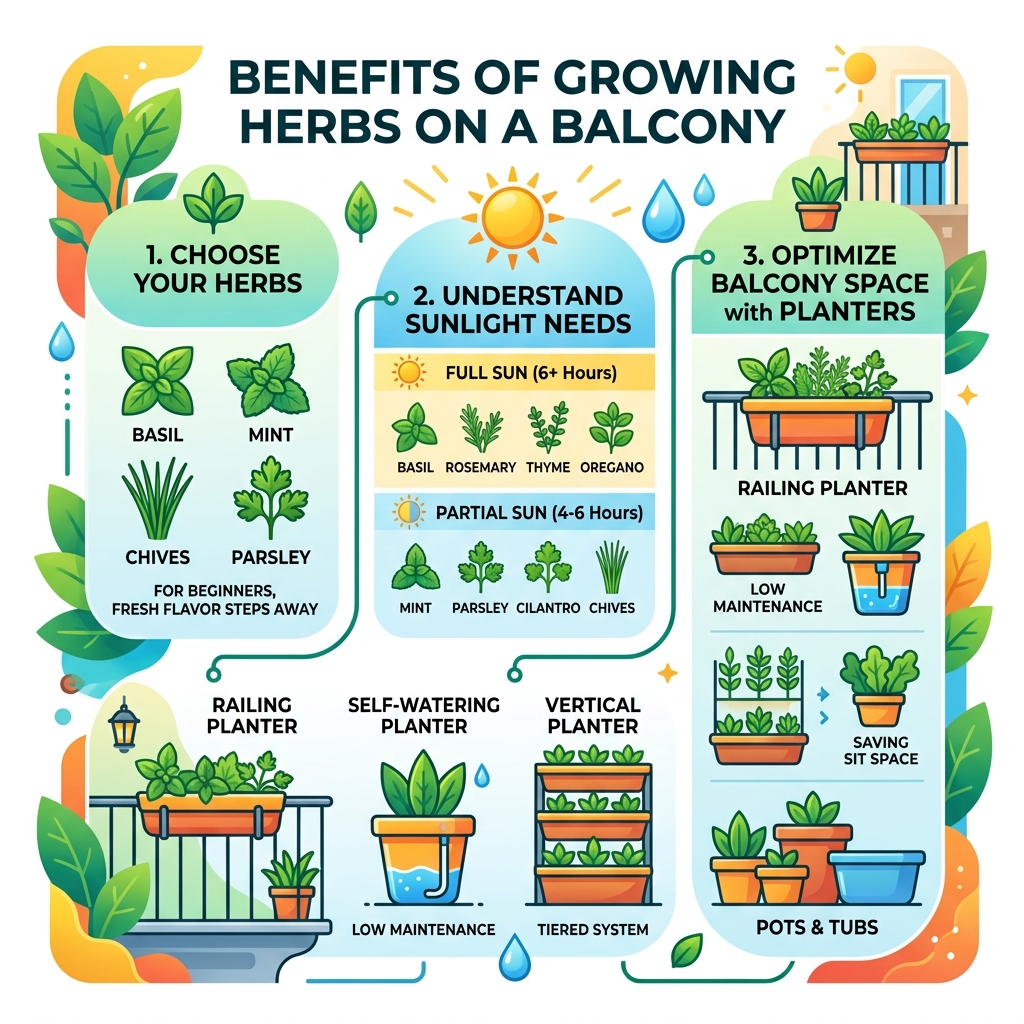
The best herb planter for balcony spaces depends on your available room, sunlight, and which herbs you want to grow. Here’s a quick guide:
| Need | Best Option |
|---|---|
| Tiny balcony | Railing planter or pocket-style planter |
| Low maintenance | Self-watering planter with wick system |
| Multiple herbs | Raised elevated bed (at least 12″ deep) |
| Budget-friendly | Terracotta pots or steel tubs under $50 |
| Vertical space | Tiered or modular planter system |
Most beginners do best starting with basil, mint, chives, or parsley in a 6-8 inch pot with drainage holes, placed in a spot that gets at least 4-6 hours of direct sunlight per day.
Fresh herbs make a real difference in everyday cooking. But if you live in an apartment, getting them isn’t always easy – grocery store bunches go limp fast, and finding them in bulk is a hassle.
Growing your own herbs on a balcony solves this. It keeps fresh flavor just steps from your kitchen. And unlike a full garden, you don’t need a yard, a lot of time, or a green thumb.
The challenge is figuring out which planter actually works for a small outdoor space. The wrong choice means dead plants, wasted money, and a cluttered balcony.
This guide covers the best balcony herb planters available today – from budget railing boxes to self-watering systems – so you can find the right fit and start harvesting fast.
Essential Features of a High-Quality Herb Planter for Balcony Use
When we look for the perfect herb planter for balcony gardening, we aren’t just looking for something pretty. On a balcony, your plants face unique challenges: higher wind speeds, reflected heat from building walls, and limited floor space. A high-quality planter acts as a protective shield for your green friends.

Material Selection and Aesthetics
The material you choose affects how often you water and how well your herbs survive the seasons.
- Terracotta: This is a classic for a reason. It’s breathable and complements almost any plant with its earthy tone. However, it’s porous, meaning soil dries out faster—great for Mediterranean herbs like rosemary, but you’ll need to keep a close eye on it during heatwaves.
- UV-Resistant Plastic and Resin: These are lightweight (perfect for balcony weight limits) and excellent at retaining moisture. Look for high-quality, UV-stabilized versions to ensure they don’t fade or become brittle after one summer in the sun.
- Metal: Metal planters offer a sleek, modern contrast, especially against colorful flowers or bright green basil. They are incredibly durable, though they can heat up quickly in direct midday sun.
- Concrete: If you’re going for a minimalist Scandinavian look, concrete is your best bet. It’s sturdy and provides great insulation for roots, though its weight means you should check your balcony’s load capacity if you plan on using large versions.
Drainage and Weather Resistance
Never buy a planter without drainage holes. Without them, water sits at the bottom, drowning the roots and causing rot—the number one killer of balcony herbs. For outdoor use, your herb planter for balcony should also be frost-resistant. Some modern planters are designed to be left outside year-round; just remember to empty the soil or cover them if temperatures drop significantly below freezing to prevent cracking.
Railing Planters
For those of us with “postage stamp” balconies, railing planters are the ultimate space-savers. These attach directly to your balustrade, keeping your floor clear for a bistro set. High-quality railing options often include adjustable brackets to fit different rail widths and safety locks to ensure they don’t tip over during a gust of wind. You can find excellent Railing Planters – The Home Depot that are specifically designed for this purpose.
Choosing the Right Size Herb Planter for Balcony Herbs
Size matters more than you might think. A pot that is too small will stunt your herb’s growth and require watering twice a day.
- Root Depth: Most culinary herbs need at least 6 inches of depth. However, if you want your plants to truly thrive, aim for 8 to 12 inches.
- Shallow-rooted Herbs: Herbs like chives, cilantro, and mint have shallower roots and can handle smaller containers.
- Taproot Requirements: Dill, parsley, and fennel grow long taproots. These need a deeper herb planter for balcony use—at least 12 inches—to prevent them from becoming root-bound and bolting (flowering and dying) too early.
- Spacing: Basil needs room for air to circulate around its leaves to prevent mildew, while rosemary needs enough soil volume to support its woody structure. If you’re tight on space, check out our guide on planting-herbs-in-small-spaces or container-planting-for-herbs for more specific dimensions.
Low-Maintenance and Self-Watering Herb Planter for Balcony Success
If you travel often or simply tend to forget your watering duties, a self-watering herb planter for balcony life is a game-changer. These systems typically use a wick system where fabric strings pull water from a bottom reservoir up into the soil.
- Water Reservoirs: These can often hold enough water to keep your herbs happy for 7 to 15 days.
- Moisture Indicators: A small float or gauge tells you exactly when the reservoir is empty, taking the guesswork out of gardening.
- Self-watering balcony box – Herb planter: Options like the Self-watering balcony box – Herb planter | SmartaSaker are perfect because they allow the plant to drink exactly what it needs, preventing both wilting and overwatering.
For apartment dwellers who struggle with dry air or inconsistent outdoor conditions, integrating these with indoor-herb-garden-for-apartments strategies can ensure a year-round harvest.
How to Set Up and Position Your Balcony Herb Garden
Success starts with “Location, Location, Location.” Before you even buy your soil, spend a day observing how the sun hits your balcony.
Sunlight Requirements
Most culinary herbs are sun-worshippers. Mediterranean varieties like rosemary, thyme, sage, and oregano need at least 6+ hours of direct sunlight to develop the essential oils that give them their flavor. A south-facing orientation is the gold standard for balcony gardening as it receives the most consistent light throughout the day. If your balcony faces north or is heavily shaded, stick to more tolerant herbs like mint, parsley, and chives.
Wind Protection
Wind is an underrated enemy. It dries out soil rapidly and can snap delicate stems. To protect your garden:
- Place more fragile plants closer to the balcony walls.
- Use heavier planters (like metal or thick resin) for the base of your setup.
- Leave an inch or two of space between the soil level and the rim of the pot to act as a mini windbreak for young seedlings.
The Perfect Soil “103” Blend
Don’t use “garden soil” from a bag meant for the ground; it’s too heavy and will compact in a pot, suffocating the roots. Instead, we recommend a well-draining potting mix. A popular “103” blend used by many successful urban gardeners consists of:
- Topsoil: Provides the base structure.
- Compost: Adds essential nutrients (mushroom compost is a great choice).
- Coarse Sand: Ensures the water doesn’t sit and helps with drainage.
- Earthworm Castings: The “secret sauce” for extra vitamins.
For a deeper dive into the initial setup, you can follow this expert guide on How to Start a Balcony Herb Garden.
Maximizing Small Spaces with Vertical and Modular Planters
When floor space is at a premium, we look up! Vertical gardening is the most efficient way to grow a massive variety of herbs in a tiny footprint.
Vertical and Tiered Planters
Tiered planters allow you to stack your herbs, with sun-loving plants on top and those that prefer a bit of shade (like parsley) on the lower levels. Modular kits are also excellent because they allow you to start small and add more “pockets” as your confidence grows.
Elevated Garden Beds
An elevated herb planter for balcony use is a lifesaver for your back. Products like the VegTrug Raised Wooden Planter Herb Garden | Yimbly or the Herb Garden – VegTrug USA (also available as Herb Garden – VegTrug UK) stand at about 80cm high. This ergonomic height makes planting and harvesting easy and keeps your herbs away from any potential pests crawling on the floor. These often come with pre-divided pockets to keep invasive roots (looking at you, mint!) from taking over the whole bed.
Modular Systems
Modular systems allow for total customization. You can attach individual pots to a trellis or use a “wall-to-wall” system. For more inspiration on going vertical, check out our articles on vertical-herb-gardening-indoors and wall-to-wall-flavor-top-vertical-herb-garden-wall-systems.
Maintenance Strategies for Healthy Balcony Herbs
A little regular care goes a long way. Once your herb planter for balcony is set up, follow these strategies to keep it thriving.
Companion Planting and Grouping
Not all herbs get along. The secret is grouping them by their “thirstiness”:
- The “Dry” Group (Mediterranean): Rosemary, Thyme, Sage, and Oregano. They love sun and well-drained soil that dries out between waterings.
- The “Moist” Group (Soft-stemmed): Basil, Parsley, Cilantro, and Chives. They prefer more frequent watering and slightly richer soil.
- The “Loners”: Mint and Fennel. Mint is invasive and will choke out other plants with its underground runners. Always give mint its own dedicated pot!
Pruning and Harvesting
Don’t be afraid to snip! Most herbs are “cut-and-come-again.” Regular harvesting actually encourages the plant to grow bushier. For basil, always pinch off the flowers as soon as they appear; if you let it bloom, the leaves will turn bitter.
Pest Management
Balconies aren’t immune to bugs. Keep an eye out for:
- Aphids: Tiny green or black insects that cluster on new growth.
- Mealybugs: Small white, cottony-looking spots. A simple spray of water mixed with a drop of organic dish soap is usually enough to handle these uninvited guests.
Winter Protection and Frost Resistance
If you live in a colder climate, your perennial herbs (like chives and thyme) can survive the winter if the herb planter for balcony use is insulated. You can wrap pots in burlap or bubble wrap to protect the roots from freezing solid. For tender annuals like basil, it’s best to harvest the last of the leaves and start fresh next spring.
Weekly Maintenance Checklist:
- Check soil moisture (stick your finger 1 inch deep).
- Inspect under leaves for pests.
- Snip any yellowing or dead leaves.
- Rotate pots 90 degrees to ensure even sunlight.
- Add a splash of liquid organic fertilizer every 2-4 weeks during the growing season.
Frequently Asked Questions about Balcony Herb Gardening
Which herbs are easiest for beginners to grow in balcony planters?
Mint is almost impossible to kill (just keep it in its own pot!). Basil is also very rewarding because it grows fast and shows you exactly when it’s thirsty by drooping its leaves. Chives and Parsley are very hardy and can handle a bit of neglect or less-than-perfect sunlight. If you’re a total beginner, we recommend buying seedlings from a local nursery rather than starting from seed—it gives you a 3-week head start and a much higher success rate.
How do you protect balcony planters from extreme weather and wind?
Beyond wall buffering, you can use protective cages or covers. For very windy balconies, choose low-profile planters or Herb Planter Boxes – Gardeners Supply that have a wide, heavy base. Another trick is to lower the soil level in the pot by an inch or two, allowing the rim of the pot to act as a shield for the plant’s base.
What are the best budget-friendly planter options for small balconies?
You don’t need to spend a fortune. Retail statistics show that major stores like IKEA and Home Depot offer many options under $50.
- IKEA: Offers a range of outdoor pots starting as low as $1.99. Their “FÖRENLIG” and “NYPON” series are highly rated and very affordable.
- Home Depot: Look for galvanized steel tubs or recycled plastic railing boxes. A 17-gallon steel tub can often be found for under $30 and makes a fantastic large-scale herb garden.
- DIY: You can upcycle wooden crates or even large food-grade tin cans (just remember to drill drainage holes!).
Conclusion
Creating a thriving herb garden on your balcony is one of the most rewarding DIY projects you can undertake. It transforms a small outdoor space into a functional, fragrant extension of your kitchen. By choosing the right herb planter for balcony use—whether it’s a space-saving railing box, an ergonomic elevated bed, or a high-tech self-watering system—you set yourself up for culinary success.
At FinCapitaly, we believe in sustainable urban living and the joy of self-sufficiency. There’s nothing quite like the feeling of stepping onto your balcony to snip fresh basil for a homemade pizza or mint for a refreshing mojito. Ready to get started? Check out our diy-indoor-herb-planter-ideas for even more ways to bring greenery into your home. Happy gardening!
