
Fresh Herbs at Home: What You Need to Know About Herb Garden Kits
Herb garden kits are all-in-one systems that let you grow fresh herbs indoors — no yard, no green thumb, and no gardening experience required.
Here’s a quick look at the most popular types:
| Kit Type | Best For | Examples | Price Range |
|---|---|---|---|
| Hydroponic (pod-based) | Beginners, speed, no mess | Premium Pod Systems | $100-$200 |
| Hydroponic (DIY seed) | Customization, more pods | Multi-Pod DIY Systems | ~$80-$100 |
| Soil-based windowsill | Low budget, traditional feel | Windowsill Starter Sets | $12-$40 |
| Outdoor patio kits | Fresh air, larger harvests | Pre-potted Patio Kits | ~$100 |
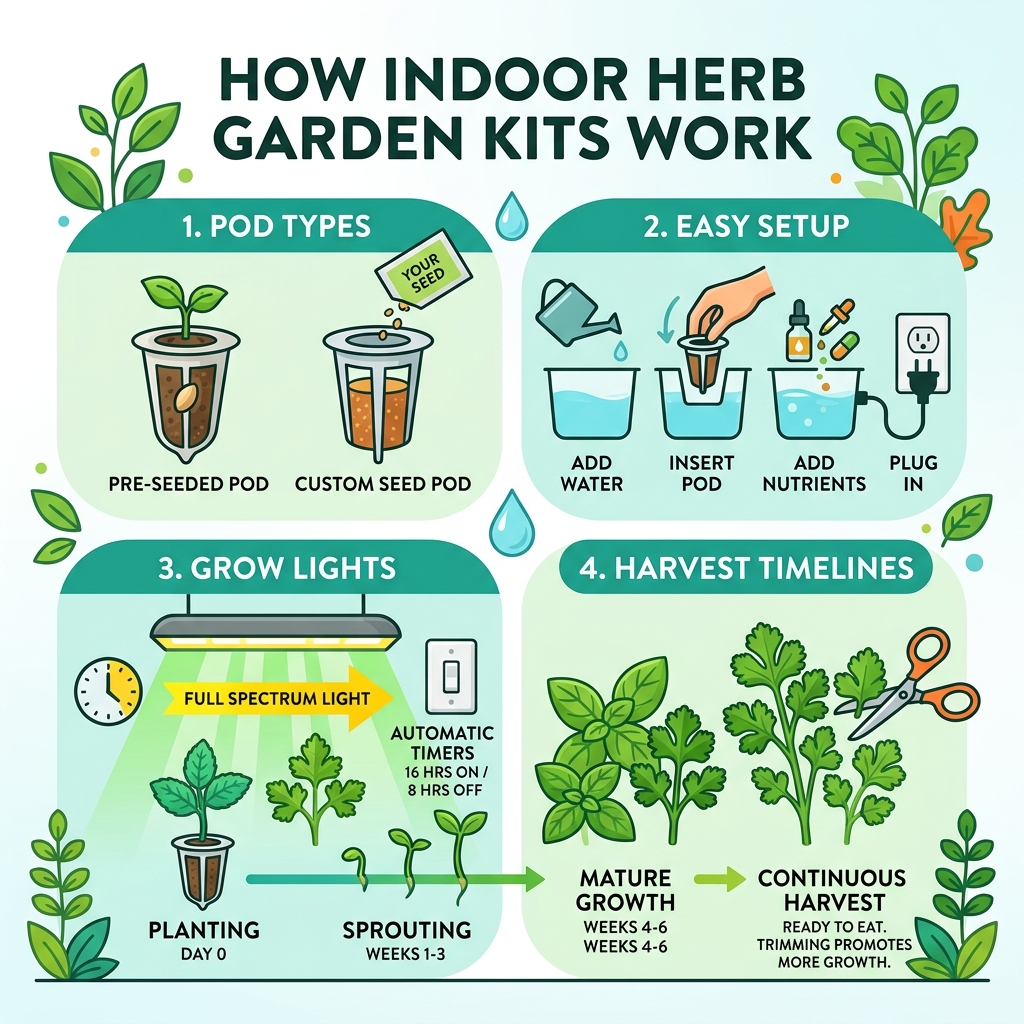
Most kits include everything you need to start: seeds or pre-seeded pods, a growing medium, nutrients, and built-in LED grow lights. You just add water, plug in, and wait.
Many home cooks struggle with the same problem: buying a big bundle of fresh basil at the store, using two sprigs, and watching the rest wilt in the fridge. A good herb garden kit solves that. You grow only what you need, right on your countertop, year-round.
The hardest part? Choosing the right kit for your space and goals. Some systems are as simple as a pod-based coffee machine — drop in a pod, add water, done. Others give you more control over which herbs you grow and how. Hydroponics technology has made this easier than ever.
This guide breaks it all down so you can make the right call.
Choosing the Right Herb Garden Kits for Your Space
When we first look at the massive variety of herb garden kits available today, it’s easy to feel overwhelmed. Do you want a high-tech hydroponic system that looks like it belongs on a space station, or a rustic wooden box for your windowsill? The answer usually depends on two things: your available square footage and how much “work” you actually want to do.
For those living in urban apartments, space is the ultimate currency. Most Indoor Gardening Kits for Beginners are designed with a small footprint in mind. A standard 6-pod system typically measures around 10.5 x 6 inches—roughly the size of a toaster. If you have a bit more room, 12-pod systems offer more variety but require a larger stretch of countertop.
Beyond physical size, consider the pod capacity. If you are a solo cook who just wants occasional basil for Caprese salad, a 3-pod system is plenty. However, if you’re planning on making batches of pesto or drying your own tea blends, you’ll want a kit that can handle 6 to 12 plants simultaneously.
Hydroponic vs. Soil-Based: At a Glance
| Feature | Hydroponic Systems | Soil-Based Kits |
|---|---|---|
| Growth Speed | 30–50% faster | Standard natural pace |
| Mess Factor | Very low (water-based) | Moderate (dirt/potting mix) |
| Maintenance | Electrical/Water refills | Manual watering/Feeding |
| Price | $80 – $200+ | $15 – $50 |
| Light Source | Built-in LED Grow Lights | Usually requires a sunny window |
Hydroponic vs. Soil-Based Systems
Understanding the mechanics behind these kits is the first step to becoming a successful indoor gardener. Hydroponics is a method of growing plants in a water-based, nutrient-rich solution rather than soil. The roots are suspended in the water or a “soilless” medium like peat or coco coir, allowing them to absorb nutrients and oxygen directly.
In a hydroponic kit, the “magic” happens through a combination of Grow Lights for Indoor Herbs and automated water circulation. These systems ensure that the plant never has to “search” for food, which is why they grow significantly faster than their soil-bound cousins. Soil-based kits, on the other hand, rely on a more traditional approach. You’ll need to be mindful of the Soil and Fertilizer for Indoor Herbs you use, as the limited space in a small pot means nutrients can be depleted quickly.
Benefits of Hydroponic Herb Garden Kits
We often recommend hydroponic herb garden kits for those who describe themselves as “plant killers.” Why? Because the system does the heavy lifting for you.
- Growth Speed: Because the roots have direct access to oxygen and nutrients, herbs like basil can be ready for a first harvest in as little as 3 to 5 weeks.
- No Mess: There is no dirt to spill on your white marble countertops. The “pods” are usually contained in neat plastic housings.
- Automation: Most premium kits come with water sensors that beep or flash when the reservoir is low. Some even include a “vacation mode” that dims the lights and reduces water consumption while you’re away.
- Setup: Following basic Indoor Herb Garden Setup Tips usually involves just clicking pieces together and adding water.
Why Beginners Love Soil-Based Herb Garden Kits
While hydroponics is flashy, soil-based kits have a timeless appeal. They are often the best choice for those who want a low-cost entry point or a “natural” aesthetic.
- Affordability: You can pick up a high-quality soil kit, like a 9-herb window garden set, for under $40.
- Simplicity: There are no pumps to fail or electricity bills to worry about. You just need a bright window and a watering can.
- Customization: Soil kits make it easier to use Easy Herb Seeds for Beginners that you might have bought at a local nursery.
- Educational: For families, Starting Herbs from Seeds Indoors using soil is a fantastic way to teach children about the biology of plant growth and the importance of drainage and root health.
Essential Features to Look For
Not all herb garden kits are created equal. If you are planning to invest $100 or more, you want to ensure the kit has features that will actually help your plants thrive.
- Adjustable Light Height: This is arguably the most important feature. As your basil or mint grows taller, you need to be able to move the LED panel upward. If the light is fixed, your tall plants will eventually touch the hot bulbs and burn, while your shorter plants will be shaded out.
- Water and Nutrient Reminders: Life gets busy. A kit that tells you exactly when to add plant food or water prevents the “oops, I forgot” moments that lead to wilted herbs.
- App Integration: High-end models allow you to control light cycles and check water levels from your phone. Some apps may be limited to specific operating systems (like iOS).
- Germination Guarantees: Many leading brands often offer a guarantee. If a pod doesn’t sprout, they will replace it for free. This provides peace of mind for beginners.
- Quality Tools: Don’t forget the accessories! Having Compact Watering Tools for Herb Gardens and Beginner-Friendly Garden Scissors makes harvesting much easier and prevents damage to the plant.
- Organization: Using Indoor Herb Markers and Labels is essential when you’re growing multiple green herbs that look similar in their early stages (like parsley and cilantro).
Best Herbs to Grow Indoors for Beginners
If you’re just starting, we suggest picking “unkillable” herbs that provide a high yield. Some herbs are simply better suited for the indoor environment than others.
- Genovese Basil: The undisputed king of herb garden kits. It germinates in about a week and grows so fast you’ll have enough for pesto in a month. It loves the intense light of LED systems.
- Mint: Warning—mint is a grower! It spreads rapidly and is perfect for teas or mojitos. Because it’s so hardy, it’s one of the Best Herbs to Grow Indoors for those who might be a little inconsistent with care.
- Cilantro: While a favorite for tacos, cilantro can be “bolty” (meaning it goes to seed quickly). Look for “slow-bolt” varieties in your Easy Herbs for Beginners to Grow Indoors lists.
- Chives: These are slow to start but very steady. Once established, you can give them a “haircut” whenever you need a baked potato topping, and they will grow right back.
Pro Tip: Avoid placing fast-growing herbs (like basil) right next to slow-growers (like rosemary). The basil will quickly grow tall and wide, potentially “shadowing” the smaller plant and stealing all its light.
Frequently Asked Questions about Indoor Gardening
How long does it take to harvest from herb garden kits?
Most users see sprouts within 7 to 14 days. For example, basil often germinates in just one week. You can usually start “light harvesting” (taking a few leaves) within 3 to 5 weeks. Some outdoor-style kits that use “fully-rooted” starter plants can be ready for harvest in as little as 10–14 days because the plants have already done their early-stage growing at a farm.
Do I need a sunny window for my herb garden?
If your kit has a built-in LED grow light, the answer is no! In fact, most hydroponic herb garden kits are designed to be placed in dark corners or on kitchen counters away from windows. These LEDs provide the full spectrum of light the plant needs. If you are using a soil-based kit without a light, you will need a south-facing window that gets at least 4–6 hours of “full sun” daily.
How do I maintain and clean my system?
Maintenance is simpler than you might think.
- Refill Water: Usually once every 1–2 weeks.
- Add Nutrients: Most kits require liquid plant food every 14 days.
- Cleaning: For hydroponic systems, you should perform a “rinse and refill” every month to prevent algae growth. Wipe down the reservoir with warm soapy water (avoid harsh chemicals) to keep the pump running smoothly.
- Pruning: Regularly trim the tops of your herbs to encourage them to grow “bushy” rather than “leggy.”
Conclusion
At FinCapitaly, we believe that anyone can enjoy the luxury of a fresh harvest, regardless of their living situation. Herb garden kits represent a shift toward sustainable, accessible living that brings the joy of the outdoors into your kitchen. Whether you choose a high-tech hydroponic system for its speed and automation or a charming soil-based kit for your windowsill, you are taking a step toward healthier, more flavorful home cooking.
Stop settling for wilted, store-bought herbs that come wrapped in unnecessary plastic. With the right kit, you can enjoy the “I grew that!” moment every time you sit down for a meal. The journey to a greener home starts with a single seed.
Start your garden today and experience the difference that truly fresh herbs can make in your life.
