
Why Most Indoor Basil Fails (And What Ventilation Has to Do With It)
Basil seeds indoor ventilation is one of the most overlooked factors when growing this herb at home — yet it can make or break your entire crop.
Quick answer: Here’s what proper ventilation does for indoor basil seeds:
- Prevents damping off — the #1 killer of basil seedlings, caused by stagnant, moist air
- Strengthens stems — gentle airflow causes stems to thicken, just like outdoor wind does
- Reduces mold and fungal disease — moving air dries surface moisture before fungi can take hold
- Supports nutrient transport — airflow aids transpiration, helping roots pull water and nutrients up
- Keeps CO2 fresh — circulating air replenishes carbon dioxide around leaves for better growth
The fix is simple: a small fan on the lowest setting, pointed near (not directly at) your seedlings, running for several hours a day.
Basil is one of the easiest herbs to grow from seed indoors. It germinates in as little as 3–10 days and can be ready to harvest in 3–4 weeks. But many home growers hit a wall — seedlings that flop over, soil that grows white fuzz, or stems so thin they can barely stand up.
The culprit is almost always the same: stale, still air.
Indoors, air doesn’t move the way it does outside. Without any breeze, humidity builds up around your seedlings. That trapped moisture creates the perfect conditions for fungal problems like damping off — a disease that causes seedlings to collapse at the base seemingly overnight.
The good news? You don’t need a complicated setup to fix it. Even a small USB clip-on fan can transform your results.
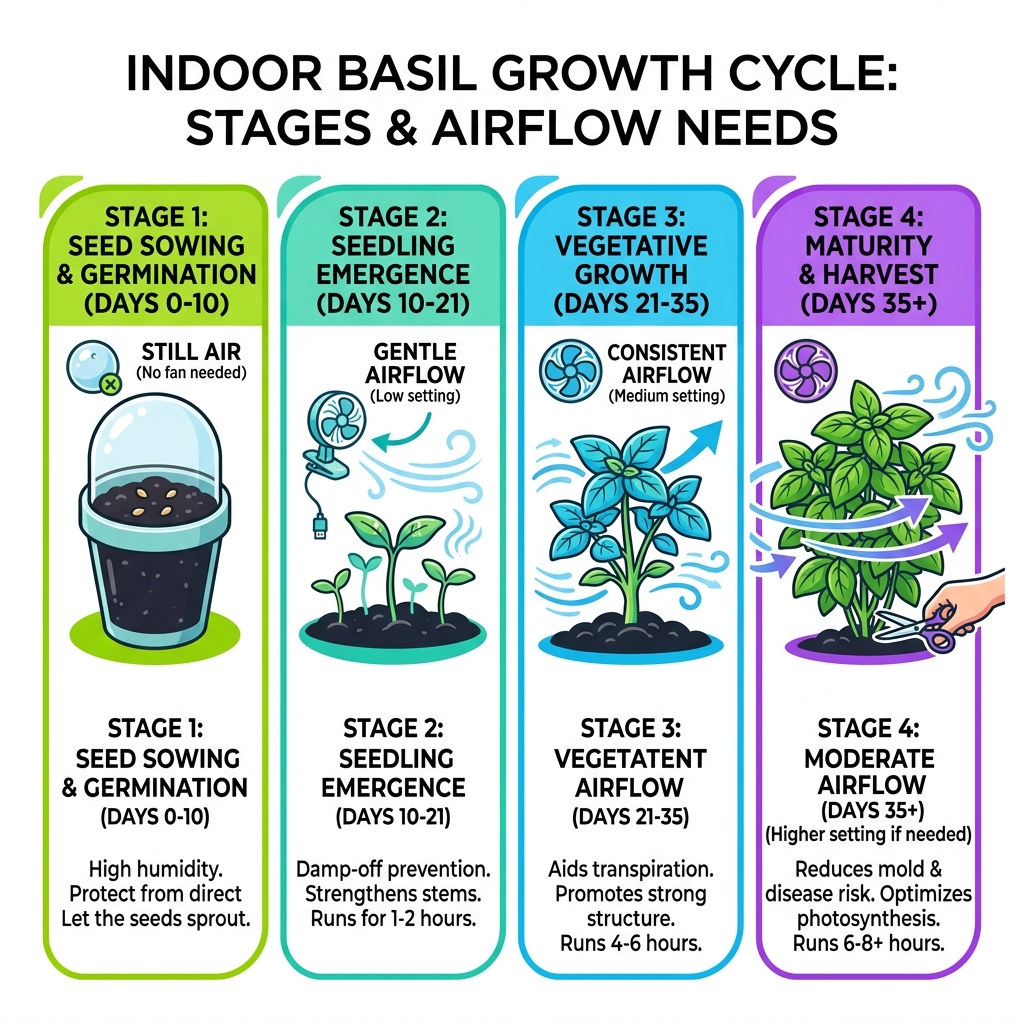
Why Basil Seeds Indoor Ventilation is Essential for Success
When we think about gardening, we usually focus on soil, water, and light. But in indoor herb cultivation, air is the “secret ingredient.” Without proper basil seeds indoor ventilation, you are essentially asking your plants to breathe in a plastic bag.
Damping Off and Fungal Prevention
The most heartbreaking sight for a gardener is waking up to find a tray of healthy green sprouts suddenly shriveled and fallen over. This is damping off, a soil-borne fungal disease that thrives in high-humidity, low-airflow environments. By moving the air, we prevent the moisture from sitting on the soil surface, effectively preventing mold in indoor herb gardens and keeping those delicate stems upright.
Nutrient Transport and Transpiration
Think of airflow as the engine that drives a plant’s internal plumbing. Plants “breathe” through tiny pores called stomata. As air moves across the leaves, water evaporates (transpiration), which creates a vacuum effect that pulls fresh water and nutrients up from the roots. If the air is stagnant, the humidity around the leaf becomes too high, transpiration slows down, and your basil stops “eating.”
Carbon Dioxide Replenishment
Plants consume CO2 during photosynthesis. In a small, enclosed indoor space, a cluster of basil seedlings can actually “use up” the CO2 in the immediate air around their leaves. Proper ventilation ensures a constant supply of fresh, CO2-rich air, which is vital for the rapid growth basil is known for.
Stem Thickness and Strength
In nature, wind is a stressor that forces plants to adapt. When a seedling feels a breeze, it produces more lignin—the stuff that makes wood woody. This results in a thicker, sturdier stem. Indoor plants that grow in perfectly still air often become “leggy” and weak because they never had to “fight” the wind.
Setting Up Your Airflow System for Basil Germination
Setting up basil seeds indoor ventilation doesn’t require an engineering degree, but it does require some strategy. You want to simulate a gentle meadow breeze, not a hurricane.

Choosing the Right Tools for Basil Seeds Indoor Ventilation
The tools you choose depend on the size of your setup.
- USB and Clip-on Fans: These are perfect for small windowsill setups or single shelves. They are low-power and easy to position.
- Oscillating Fans: These are the gold standard. By moving back and forth, they ensure that no single plant is hit with a constant, drying blast of air while ensuring indoor herb garden setup tips like “circular airflow” are met.
- Inline Fans: If you are using a grow tent, an inline fan is essential for exhausting hot, stale air and bringing in fresh air from the outside.
When setting up your lights, grow lights for indoor herbs can generate heat. Your ventilation system must work in tandem with your lights to prevent heat pockets from forming.
Ideal Fan Positioning and Speed for Seedlings
We recommend placing your fan so that it creates an indirect breeze. If you point a fan directly at a tiny sprout, you risk “windburn” or drying out the soil too quickly.
- The “Flutter” Test: Set your fan to its lowest setting. Position it so the basil leaves gently flutter. If the stems are bending over significantly, the fan is too close or too strong.
- Rotation: Every few days, rotate your seed trays. This ensures that all plants get their turn in the “airflow gradient” and prevents one side from becoming stronger than the other.
- Spacing: Keep at least 6 inches of space between your pots. Overcrowding blocks airflow and creates “micro-climates” of high humidity where mold loves to hide.
Balancing Airflow with Humidity and Temperature
One of the trickiest parts of basil seeds indoor ventilation is balancing it with humidity. Basil is a tropical plant; it loves warmth (70-85°F) and moderate humidity (40-60%). However, fans naturally lower humidity.
| Growth Stage | Ideal Humidity (RH) | Airflow Level | Purpose |
|---|---|---|---|
| Germination | 70-85% | Very Low / None | Maintain moisture for seed coat cracking |
| Seedling (Sprout) | 50-60% | Low (Gentle Flutter) | Prevent damping off; strengthen stems |
| Vegetative | 40-60% | Moderate (Oscillating) | Nutrient transport; CO2 replenishment |
| Mature Plant | 40-50% | Moderate | Prevent powdery mildew in dense foliage |
Managing Humidity During Basil Seeds Indoor Ventilation
During the initial germination phase, we often use humidity domes to keep the seeds moist. However, once you see the first green “D-shaped” leaves appear, the dome must come off. This is when indoor basil growing becomes a dance between moisture and movement.
If your fan is drying out the air too much (dropping RH below 40%), you can use humidity tips for indoor herbs like placing a tray of wet pebbles near the plants or using a small humidifier. The goal is “active dehumidification” through airflow—removing the excess moisture that causes rot while keeping enough in the air so the leaves don’t shrivel.
Troubleshooting Common Ventilation Issues
Even with the best intentions, things can go wrong. Here is how to spot and fix ventilation-related problems.
- Leggy Growth: If your basil looks like a long, thin string with two tiny leaves at the top, it needs more light and more airflow. The light should be 2-3 inches above the seedlings, and a gentle fan will encourage that stem to thicken up.
- White Fuzz on Soil: This is a clear sign of poor basil seeds indoor ventilation. It is a harmless fungus in small amounts, but it signals that the air is too stagnant. Increase fan time or move the fan closer.
- Leaf Burn (Yellow/Brown Edges): If the edges of your leaves look crispy, your fan might be too strong or the air might be too dry. This is often called “windburn.” Move the fan further away or point it at a wall so the air bounces off and reaches the plants indirectly.
- Wilting Despite Wet Soil: This is a classic sign of root rot or damping off. If the soil is wet but the plant is flopping, the roots have likely stopped functioning due to fungal attack. Check our indoor herb growth troubleshooting guide for recovery steps.
Frequently Asked Questions about Basil Ventilation
How do I know if my basil seedlings have too much wind?
If you notice the leaves curling downward or the soil drying out so fast you have to water twice a day, your airflow is likely too high. The goal of basil seeds indoor ventilation is a “gentle dance,” not a struggle for survival. You can find more details on leaf health in our guide on how to care for basil indoors.
Can I grow basil indoors without a fan?
Yes, but it is much harder. You will need to be extremely careful with watering and provide plenty of space between plants to allow for natural convection. Some growers use “hand-brushing”—gently running their hands over the tops of the seedlings once or twice a day—to simulate wind and strengthen stems. This is a great tip for those starting with easy herb seeds for beginners.
Does ventilation help prevent pests like aphids?
Absolutely. Many indoor pests, like fungus gnats and aphids, prefer still, humid air. Moving air makes it harder for flying pests to land and lay eggs on your plants. Consistent airflow is one of our top indoor herb pest control tips. It also helps with seasonal care for indoor herbs, as pests often become more of a problem in the stagnant air of winter-heated homes.
Conclusion
Mastering basil seeds indoor ventilation is the bridge between being a “plant killer” and a master indoor gardener. By simply adding a small fan and paying attention to the “flutter” of your leaves, you can prevent the most common causes of basil failure—damping off, mold, and leggy growth.
At FinCapitaly, we believe everyone should have access to fresh, aromatic herbs year-round. Whether you are starting herbs from seeds indoors for the first time or looking to optimize a professional-grade grow room, the principles of airflow remain the same: keep it fresh, keep it moving, and keep it gentle.
Ready to start your indoor garden journey? Visit FinCapitaly for more expert guides on turning your home into a green oasis. Happy growing!
