
Fresh Basil Year-Round: Why Growing It from Seed Indoors Is Easier Than You Think
How to grow basil seeds indoors is simpler than most people expect — and you can do it any time of year, even in the middle of winter.
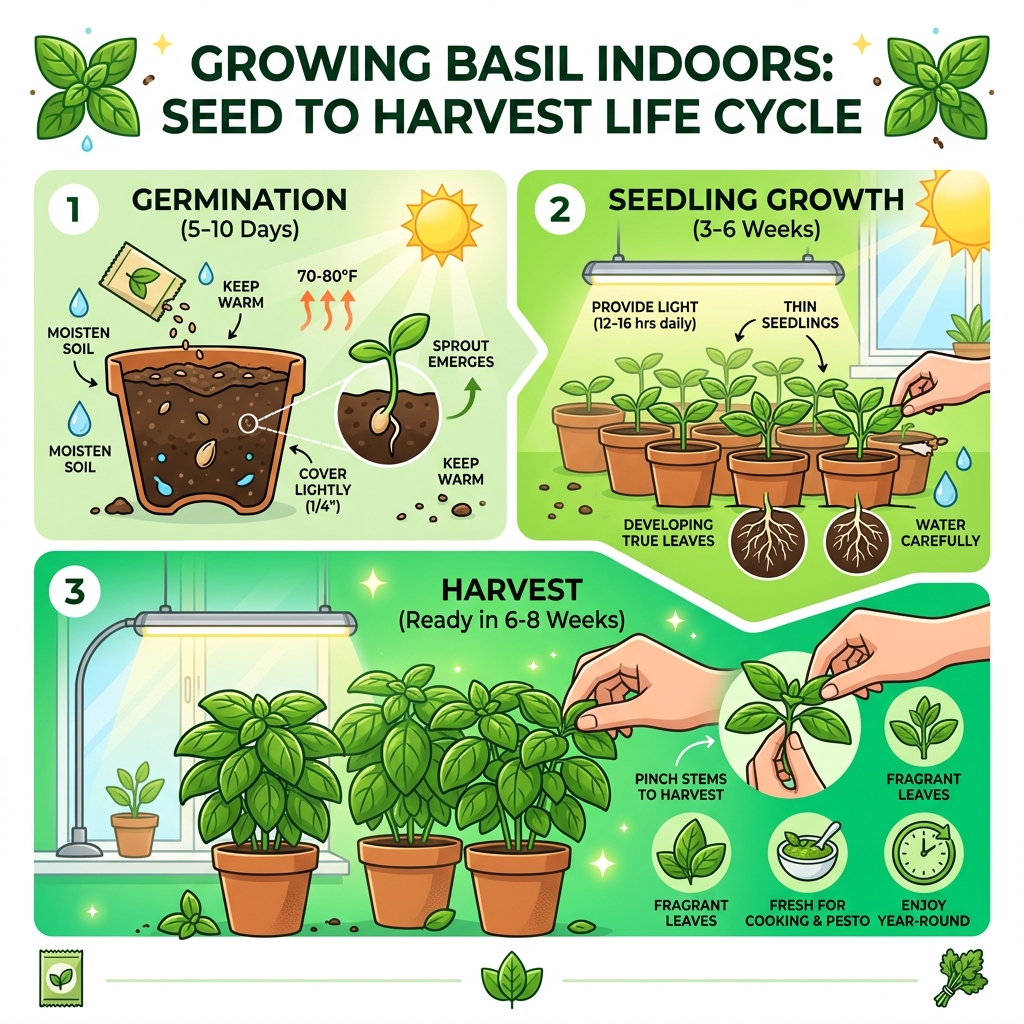
Here’s a quick overview to get you started:
- Fill small pots with moist seed-starting mix
- Sprinkle seeds on the surface and cover lightly with a thin layer of soil (about 1/4 inch deep)
- Keep warm at 70-80°F and cover with plastic wrap to hold humidity
- Remove the cover as soon as the first sprouts appear (usually 5-10 days)
- Provide 12-16 hours of light daily from a south-facing window or grow light
- Water carefully and thin crowded seedlings as they grow
That’s the short version. The sections below go deeper on each step.
There’s something almost magical about catching a whiff of fresh basil on a cold winter day. It instantly brings back warmer seasons — and the good news is you don’t have to wait for summer to enjoy it.
With a few basic supplies and the right conditions, you can grow a steady supply of fragrant, flavorful basil right on your kitchen counter or windowsill. Whether you’re making a quick caprese salad or a big batch of homemade pesto, having fresh basil on hand makes a real difference.
And starting from seed? It’s cheaper, more flexible, and opens up a much wider range of varieties than anything you’ll find at a grocery store.
Essential Supplies for Growing Basil Indoors
Before we get our hands in the dirt, we need to gather our tools. One of the biggest mistakes beginners make is using old garden soil from the backyard. While that works for some hardy outdoor plants, indoor basil seeds are a bit more pampered. They need a lightweight environment to push through the surface.
To set ourselves up for success, we recommend the following supplies:
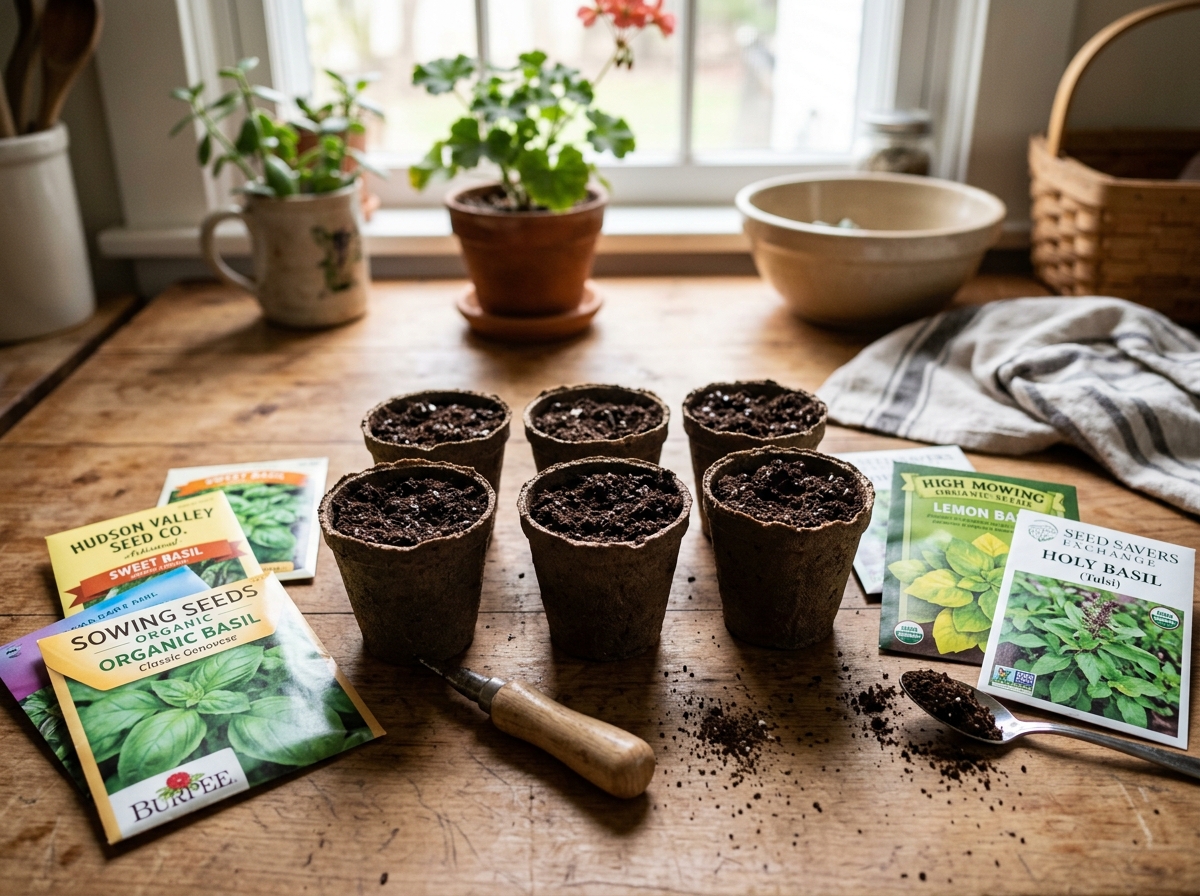
- Organic Seed-Starting Mix: This is usually a “soilless” medium made of peat moss, coconut coir, or perlite. It’s sterile, which prevents the dreaded “damping off” disease that kills young seedlings.
- Containers: You can start seeds in small flats or 4-6 inch pots. We love using self-watering containers because they keep the moisture levels consistent without us having to hover over them every hour. If you prefer eco-friendly options, cow manure pots or perforated paperboard pots are great alternatives to plastic.
- High-Quality Seeds: Don’t settle for the mystery packet at the checkout line. Look for fresh seeds from reputable sources to ensure a high germination rate.
- Grow Lights: Unless you have a massive, south-facing window that gets 8+ hours of direct sun even in December, you’re going to want supplemental lighting. Full-spectrum LED grow lights are the gold standard here.
- Labels: Trust us, you think you’ll remember which pot is Thai basil and which is Genovese, but three weeks from now, they’ll all look like “green leaves.” Label them early!
For a full list of our favorite gear, check out our guide on Indoor Tools.
Choosing the Right Basil Varieties
When you learn how to grow basil seeds indoors, you realize basil is much bigger than just the “Sweet Basil” found in plastic clamshells at the store.
- Genovese Basil: This is the classic Italian variety. It has large, curved leaves and is the absolute best for making pesto. It’s vigorous and grows well in pots.
- Thai Basil: If you love spicy, anise-like flavors, this is the one for you. It has beautiful purple stems and smaller, sturdier leaves that hold up well in stir-fries.
- Lemon or Lime Basil: These varieties add a bright, citrusy zing to fish dishes or herb teas. They tend to have a more compact growth habit, making them perfect for windowsills.
- Purple Basil: Varieties like ‘Dark Opal’ or ‘Purple Ruffles’ add stunning color to salads and vinegars.
- Disease-Resistant Strains: If you’ve struggled with plants dying suddenly in the past, look for seeds like Rutgers Devotion DMR. This variety was specifically bred to resist downy mildew, a common fungal issue that can wipe out a basil crop overnight.
Step-By-Step: How to Grow Basil Seeds Indoors
Now that we have our supplies, let’s get planting. The process of how to grow basil seeds indoors is a journey of patience and observation.
- Pre-Moisten the Soil: Put your seed-starting mix in a bucket and add water until it feels like a wrung-out sponge. If you put dry soil in the pots and then water it, the tiny seeds might wash away or drown.
- Fill Your Pots: Pack the moist soil into your 4-6 inch containers, leaving about half an inch of space at the top.
- Sow the Seeds: Sprinkle 2-3 seeds per pot (or per cell if using a tray). Since not every seed is guaranteed to sprout, having backups is a smart move.
- Cover Lightly: Basil seeds need a tiny bit of light to germinate, but they also need to stay moist. Cover them with about 1/4 inch of soil—roughly twice the diameter of the seed itself.
- Create a Greenhouse Effect: Cover the pots with a humidity dome or a simple piece of plastic wrap. This traps moisture and warmth, creating a tropical paradise for your seeds.
- Mist, Don’t Pour: Use a spray bottle to mist the surface if it looks dry. A heavy stream of water from a watering can will bury the seeds too deep.
For a more detailed breakdown, see this Basil Seed Germination: Step-by-Step Indoor Guide.
Ideal Germination Conditions
Basil is a sun-loving, heat-seeking herb. It originates from tropical regions, so it won’t be happy in a drafty, cold basement.
- Temperature: For the fastest results, keep the soil between 70-80°F (21-27°C). If your house is chilly, we highly recommend using a waterproof heat mat under your trays. Statistics show that at 70°F, basil can germinate in as little as 3-5 days, whereas at 60°F, it might take two weeks—or not happen at all.
- The Timeline: Expect to see “green elbows” popping through the soil in 5 to 10 days.
- Light-Assisted Germination: Unlike some seeds that need total darkness, basil seeds benefit from being near a light source from day one. Just ensure they don’t dry out.
Optimizing Light and Temperature for Growth
Once those little green sprouts appear, their needs change immediately. The “greenhouse” phase is over, and the “growth” phase begins.
Providing Supplemental Light for Your Indoor Basil Seeds
In the northern hemisphere, winter sun is often too weak and the days are too short for basil. If your seedlings don’t get enough light, they will become “leggy”—meaning they grow tall, thin, and pale as they stretch desperately toward the window. These spindly stems usually collapse under their own weight.
To prevent this, we use grow lights.
- Duration: Keep your grow lights on for 14-16 hours a day. Use a simple plug-in timer so you don’t have to remember to flip the switch.
- Proximity: If using fluorescent or LED shop lights, keep them close—about 2 to 6 inches above the tops of the plants. As the plants grow taller, you’ll need to raise the lights to maintain that distance.
- Window Growing: If you are using a south-facing window, rotate your pots a quarter turn every day. This ensures the plant grows straight up rather than leaning heavily to one side.
For more on lighting setups, check out this guide on How to Grow Basil from Seed Indoors.
Caring for Seedlings and Preventing Common Problems
Growing basil is usually smooth sailing, but there are a few “potholes” to avoid. The most common is damping off, a fungal disease that causes the stem to shrivel at the soil line, making the plant fall over and die.
- Air Circulation: Use a small oscillating fan near your plants. A gentle breeze prevents stagnant air where mold thrives and actually strengthens the stems by forcing them to “work” against the wind.
- Bottom Watering: Instead of pouring water over the leaves (which can encourage fungus), place your pots in a tray of water for 10-15 minutes and let the soil wick the moisture up from the bottom.
- Fertilizing: Most seed-starting mixes have enough nutrients for the first 4-6 weeks. Once your basil has its second set of “true leaves” (the ones that actually look like basil), you can start using a diluted liquid organic fertilizer (like a 20-20-20 mix at half strength) every two weeks.
For more maintenance advice, see our Planting Tips.
Watering and Thinning Your Basil Seeds Indoors
If you planted 3 seeds per pot and all 3 sprouted, you have a crowd. Basil plants need elbow room to grow large, lush leaves.
- The Scissors Method: Don’t pull the extra seedlings out by the roots; you might damage the roots of the “winner” plant. Instead, use a small pair of scissors to snip the weaker seedlings off at the soil line.
- Consistent Moisture: Basil likes to be “moist but not soggy.” If the soil feels dry an inch below the surface, it’s time to water. If you see the leaves wilting, you’ve waited too long!
Transplanting and Harvesting for Bushy Growth
When your basil reaches about 6 inches in height and has at least three sets of true leaves, it’s time to decide its future. You can either move it to a larger permanent indoor pot (at least 6-8 inches deep) or prepare it for a life outdoors.
Techniques for a Perpetual Harvest
The “secret” to a massive basil harvest is pruning. Many people are afraid to “hurt” their plant by cutting it, but for basil, pruning is like a spa day—it encourages it to grow back twice as thick.
- The First Cut: When the plant is 6 inches tall, find the top set of leaves and snip the main stem just above the next leaf node down. This forces the plant to send out two new branches from that spot.
- Removing Flowers: If you see a flower spike starting to form at the top, pinch it off immediately. Once basil flowers, the leaves can become bitter and the plant stops producing new foliage.
- The 2/3 Rule: Never harvest more than 2/3 of the plant at once. It needs some leaves left to keep photosynthesizing and growing.
- Succession Planting: To ensure you never run out, sow a new pot of seeds every 3-4 weeks. By the time you’ve harvested the first plant a few times, the next one will be ready to take over.
To learn more about the transition from seed to kitchen, read this Comprehensive Guide On How To Grow Basil From Seed.
Frequently Asked Questions about Indoor Basil
How long does it take for basil seeds to sprout indoors?
Typically, you will see sprouts in 5 to 10 days. However, if you use a heat mat to keep the soil at a steady 75-80°F, they can pop up in as little as 3 days. If your room is cold (60°F or below), it may take up to two weeks.
Do basil seeds need light to germinate?
Yes, basil seeds are “light-assisted” germinators. This means they shouldn’t be buried deep in the dark. We recommend surface-sowing them and then just barely dusting them with a fine layer of soil or vermiculite so they stay moist but can still sense the light.
Why are my indoor basil seedlings falling over?
This is usually caused by one of two things: Damping off (fungal infection from too much water/poor airflow) or extreme legginess (not enough light). If the stem looks pinched and brown at the soil line, it’s fungus. If the stem is just very long, thin, and pale, it’s a light issue.
Conclusion
At FinCapitaly, we believe that gardening is one of the most rewarding ways to live sustainably and elevate your home cooking. Learning how to grow basil seeds indoors is the perfect entry point for any aspiring indoor gardener. It’s a low-cost, high-reward project that fills your home with incredible aromas and your kitchen with fresh, organic ingredients.
From choosing the right Indoor Tools to mastering the art of the “pinch” for bushy growth, you now have the knowledge to grow a lush herb garden regardless of the weather outside. So, grab a packet of seeds, find a sunny spot, and get started. Your future pesto-making self will thank you!
