
Why the Right LED Panel Makes or Breaks Your Indoor Dill Garden
The best dill LED panels give your herbs the light they need to thrive indoors — no matter the season. Here’s a quick look at what works best:
Top picks at a glance:
| Priority | What to Look For |
|---|---|
| Light spectrum | White LED, 6000K-6500K (cool white) |
| Daily light cycle | 12-15 hours on, rest off |
| Hanging distance | 12-30 inches depending on beam angle |
| Key feature | Dimming capability |
| Bonus | Passive cooling for quiet operation |
Dill is a leafy herb, which means it doesn’t need the complex full-spectrum lighting required by fruiting plants like tomatoes. A quality white LED panel in the 6000K-6500K range is enough to keep it growing strong.
But here’s the problem most indoor gardeners run into: they either buy underpowered panels that leave dill leggy and pale, or they overspend on professional grow lights built for flowering plants.
Getting the match right doesn’t have to be complicated. The sections below break down exactly what to look for — and which panels deliver the best results for growing dill indoors.
Why LED Panels are Superior for Growing Dill
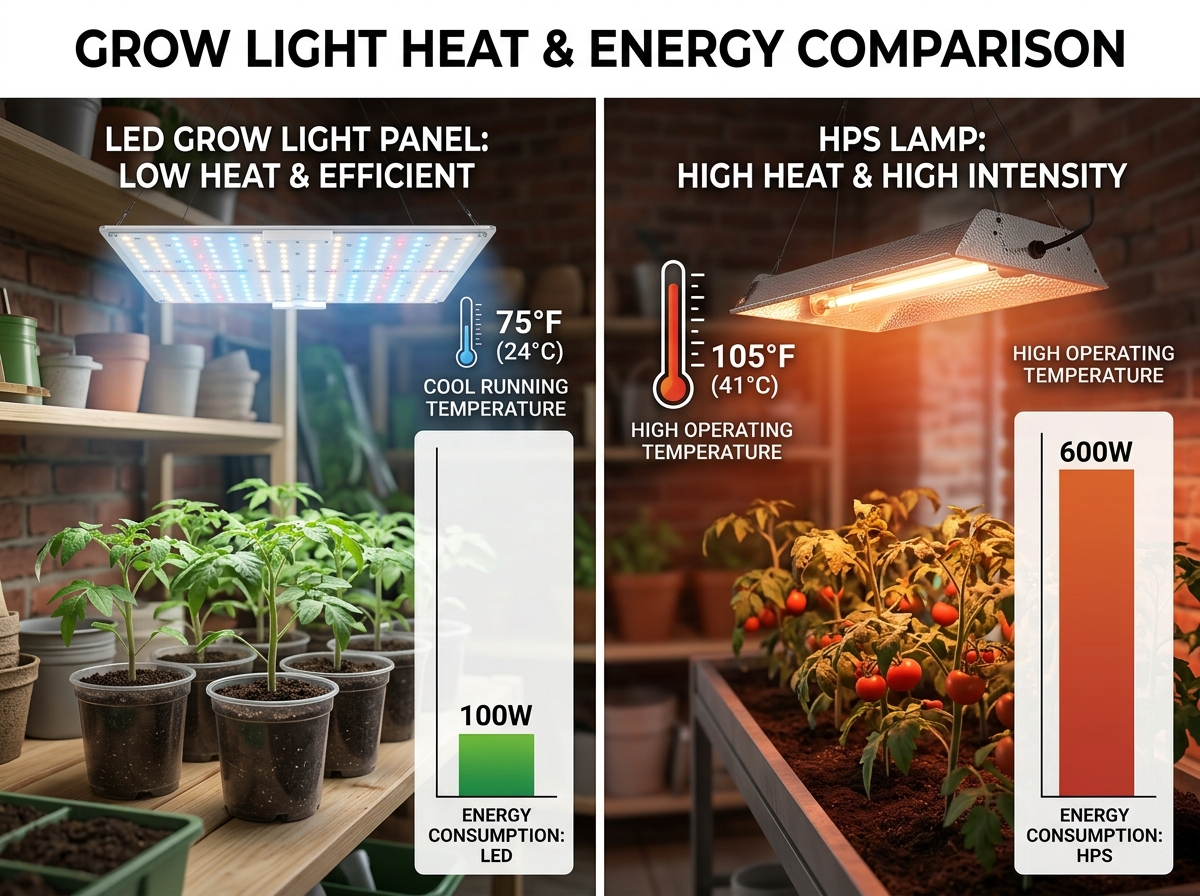
When we talk about the best dill LED panels, we aren’t just talking about brightness. We are talking about the massive leap in technology that has made indoor herb gardening accessible to everyone. Traditionally, growers relied on High-Pressure Sodium (HPS) lamps, which were notorious for turning spare rooms into saunas. LED panels have changed the game by offering incredible energy efficiency and significantly lower heat signatures.
Research indicates that switching from HPS to high-quality LED panels can reduce heat by 30 degrees or more. This is crucial for a delicate herb like dill (Anethum graveolens), which can bolt (go to seed prematurely) or wilt if the ambient temperature gets too high. By using LEDs, we can maintain a stable environment that encourages lush, feathery green growth rather than stressed stems.
Beyond temperature, the cost savings are a major draw. Modern LED motion sensors and high-efficiency panels can use as little as 5% of the energy consumed by older incandescent bulbs. This efficiency allows us to provide the 12 to 15 hours of light dill requires daily without seeing our electric bills skyrocket. Furthermore, with a lifespan often exceeding 50,000 to 100,000 hours, a single investment in a quality panel can support your indoor garden for over a decade.
Choosing the Best Dill LED Panels for Indoor Success
Selecting the right panel requires a bit of “tech-savviness,” but we can simplify it into a few core features. For dill, we want a balance between light quality and physical durability.
- Spectrum Control: While dill thrives under white light, having a panel with adjustable spectrums can help if you decide to grow other herbs later.
- Dimming Capabilities: This is perhaps the most underrated feature. Being able to drop the intensity to 20-40% for germination and crank it to 90-100% for mature plants ensures you don’t “fry” your seedlings.
- IP65 Rating: Indoor gardens are humid. A panel with an IP65 rating is protected against dust and water splashes, which is essential when you’re misting your plants or dealing with high-transpiration environments.
- Passive Cooling: Look for panels with thick aluminum heatsinks rather than loud internal fans. Passive cooling ensures your grow space remains silent while effectively dissipating heat.
Understanding the Full Spectrum for Best Dill LED Panels
There is a common misconception that you need “blurple” (blue and red) lights to grow anything. For leafy herbs like dill, a high-quality White LED panel is often superior. Specifically, we look for a color temperature in the 6000K-6500K range. This “cool white” light mimics the bright, blue-heavy light of spring and early summer, which tells the dill plant to focus all its energy on leaf production rather than flowering.
High color rendering (CRI) is also a factor. Panels like the Philips LED Panel TrueLine RC532B offer a CRI of 90-99, which not only helps the plants but allows us to see the true color of the herbs. This makes it much easier to spot early signs of nutrient deficiencies or pests that might be hidden under lower-quality light.
Optimal Intensity Settings for Best Dill LED Panels
Brightness is measured in lumens, but for plants, we care more about PAR (Photosynthetically Active Radiation). Dill needs moderate to high light intensity, but it must be introduced gradually.
- Germination: Keep the intensity low (20-40%).
- Seedling Stage: Increase to 40-60% as the first true leaves appear.
- Vegetative Growth: This is where dill shines; bump the intensity to 60-90% to encourage thick, aromatic fronds.
Using a panel with a built-in dimmer switch or a compatible Dali Dimmable driver allows you to mimic the natural progression of the sun, preventing light shock.
Top-Rated LED Panels for Your Indoor Herb Garden
When searching for the best dill LED panels, we often look toward professional-grade equipment that has been adapted for home use. High-efficiency backlit panels, such as the Pro Backlite Panel 150lm/W Series, provide excellent light uniformity. This means every corner of your herb tray receives the same amount of energy, preventing the plants on the edges from leaning toward the center.
For those with limited vertical space, edge-lit technology is a lifesaver. These slim panels provide a soft, diffused light that reduces “hot spots” which can burn delicate dill tips. If you are setting up a garden in a multi-use room, consider the UGR (Unified Glare Rating). A panel with a UGR <19, like the Philips TrueLine, ensures the light stays on the plants and doesn’t cause eye strain for you while you’re working nearby.
For professional-tier setups where color accuracy and output are non-negotiable, panels like the Nanlite D672II Daylight offer 5600K color temperature and massive output, which can be controlled via apps or DMX systems for automated gardening.
Essential Setup Tips for Healthy Dill Growth
Having the best dill LED panels is only half the battle; how you position them determines your harvest. Dill is a sun-lover, but in a confined indoor space, we have to be careful about “light burn.”
- Hanging Distance: For most high-intensity LED panels, a distance of 12 to 30 inches is ideal. If you are using a narrow-beam light (like a 36º beam), you might need to hang it as high as 42 inches to prevent intensity from becoming too concentrated. Conversely, for wide-angle panels (60º), 12 to 18 inches is the sweet spot.
- The 12-15 Hour Cycle: Dill needs a “rest” period. During the 9-12 hours of darkness, the plant processes the CO2 it absorbed during the day. Using a simple plug-in timer is the easiest way to ensure your dill gets its 15 hours of “sunshine” without you having to flip a switch every morning.
- Ventilation: Even though LEDs run cool, the drivers and the plants themselves create a microclimate. A small oscillating fan helps strengthen the dill stems and prevents the air from becoming stagnant, which reduces the risk of mold.
Maintaining the Ideal Environment Under Best Dill LED Panels
To get the most out of your LED setup, keep an eye on the ambient conditions. Dill seeds germinate best at 25°C (77°F). You can actually use the slight warmth from your LED panel to help this process by hanging the light closer (about 10-15 cm) during the first week to warm the soil.
If you are scaling up your garden, look for panels that support daisy-chaining. This allows you to connect multiple lights to a single power outlet, keeping your cable management clean. Additionally, ensure your panels use constant current drivers. As we’ve learned from technical experts, LEDs have a nonlinear relationship with voltage. A constant current driver, like those from reputable brands such as Meanwell, ensures the light output remains stable and the LEDs don’t burn out prematurely due to “thermal runaway.”
Frequently Asked Questions about Dill Lighting
What is the best light cycle for dill?
Dill performs best with 12 to 15 hours of light per day. While it can survive on less, shorter cycles often lead to “leggy” plants that can’t support their own weight. The dark period is just as important as the light period, as it allows the plant to complete the process of photosynthesis and prepare for the next day’s growth.
How far should LED panels be from dill plants?
For germination, you can place the lights as close as 10-15 cm (4-6 inches) to provide warmth. However, once the plants are established, you should move the panels back to 12-30 inches. Always monitor the top leaves; if they start to turn brown or “crispy,” your best dill LED panels are likely too close and causing light burn.
Can I use white LED panels instead of full spectrum?
Yes! In fact, for leafy herbs like dill, white LED panels (specifically those in the 6500K spectrum) are often more efficient. They provide the blue wavelengths necessary for vegetative growth without wasting energy on the deep reds and infrareds that are primarily used for flowering and fruiting in plants like tomatoes or peppers.
Conclusion
Growing dill indoors is a rewarding way to ensure you always have fresh herbs for your kitchen. By investing in the best dill LED panels, you are setting yourself up for a sustainable, year-round harvest that is both energy-efficient and highly productive. Remember to focus on cool white spectrums, maintain a consistent 15-hour light cycle, and keep your hanging distances dialed in.
Whether you are a hobbyist with a single pot on a shelf or a dedicated indoor gardener with a multi-tier rack, the right lighting makes all the difference. Ready to elevate your indoor garden and ensure your herbs are as healthy as they can be?
