
The Truth About What Herbs Can Grow Without Sunlight
What herbs can grow without sunlight is one of the most common questions from home gardeners — and the good news is, there are quite a few solid options.
Here are the top herbs that thrive in low light or shade:
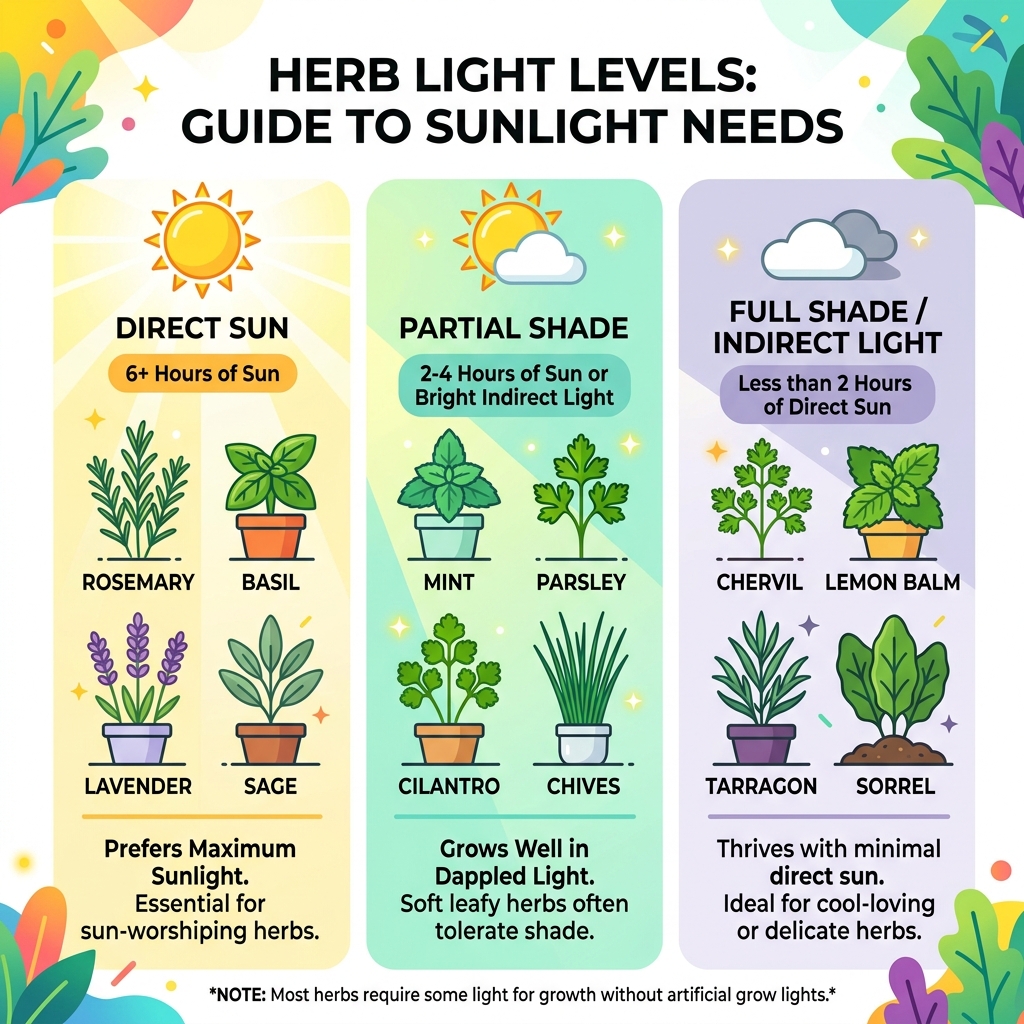
- Mint – tolerates deep shade, grows vigorously with as little as 2 hours of sun
- Parsley – does well in partial shade, happy on a dim windowsill
- Chives – one of the easiest low-light herbs, hardy and reliable
- Cilantro – actually prefers shade since heat causes it to bolt quickly
- Lemon Balm – thrives in shady spots, spreads easily
- Tarragon – a perennial that handles shade well
- Chervil – a cool-season herb that genuinely loves the shade
- Sorrel – tolerates less than 2 hours of direct sun per day
- Sweet Woodruff – a classic shade-garden herb
- Bay Laurel – a slow grower that adapts well to indirect light
Most of these herbs need some light — even just 2-3 hours of indirect sunlight or a bright windowsill. True zero-light growing isn’t realistic without artificial grow lights. But you don’t need a sunny south-facing window to grow a useful, flavorful herb garden.
Here’s a quick reality check: most herbs do prefer full sun. Rosemary, basil, lavender, and sage are classic examples. But a whole category of soft, leafy herbs — the kind you use most in everyday cooking — actually performs surprisingly well in low-light conditions.
Think about it like a forest floor. Small leafy plants evolved to thrive under a canopy with filtered, dappled light. Many culinary herbs work the same way.
What Herbs Can Grow Without Sunlight: The Top Shade-Tolerant Varieties
When we talk about what herbs can grow without sunlight, we are usually referring to herbs that thrive in “partial shade” or “bright indirect light.” In the gardening world, “shade-tolerant” typically means the plant can get by on 2 to 4 hours of sun, rather than the 6 to 8 hours required by sun-worshippers like rosemary.
To help you plan your dim-lit garden, we’ve put together a comparison of the top contenders:
| Herb | Ideal Light Conditions | Growth Rate in Shade | Best Use |
|---|---|---|---|
| Mint | Partial to Full Shade | Aggressive | Teas, Salads, Cocktails |
| Parsley | Partial Shade / Indirect | Moderate | Soups, Stews, Garnishes |
| Chives | Partial Shade / Indirect | Steady | Baked Potatoes, Omelets |
| Cilantro | Partial Shade (Cool) | Fast (prevents bolting) | Tacos, Salsas, Curries |
| Lemon Balm | Partial Shade | Vigorous | Teas, Desserts |
| Tarragon | Partial Shade | Slow to Moderate | Chicken, Fish, Sauces |
| Chervil | Full Shade (Cool) | Moderate | French Cuisine, Eggs |
| Sorrel | Partial Shade | Steady | Salads, Tangy Sauces |
| Bay Laurel | Bright Indirect Light | Very Slow | Slow-cooked Meats |
Botanical Families and Shade
Understanding the “family” of your herbs can help you predict how they will behave in the shadows. We generally see two main families dominating the shade-tolerant list:
- Apiaceae (The Carrot Family): This includes parsley, cilantro, dill, and chervil. These herbs often prefer cooler temperatures (between 35°F and 65°F). Because they are grown for their leaves rather than their flowers or fruits, they have lower energy demands. In fact, research shows that 4 to 6 of these plants can often be squeezed into just one square foot of space!
- Lamiaceae (The Mint Family): This powerhouse family includes mint, lemon balm, tarragon, oregano, and sage. While some members (like sage) love the sun, many thrive in the dappled light of a forest understory. Mint, in particular, is famous for its ability to grow almost anywhere, even under thick shrubs.
Why Mint and Parsley are the Best Herbs That Grow Without Sunlight
If we had to pick the two “MVPs” of low-light gardening, it would undoubtedly be mint and parsley.
Mint is practically invincible. In the wild, it spreads via underground stems (rhizomes), and it actually prefers partial shade to the scorching afternoon sun, which can wilt its leaves. Growing mint indoors or in a shady corner is actually a great strategy because the lower light levels help curb its invasive nature. It won’t take over your entire house, but it will provide enough sprigs for a fresh mojito or a cup of tea.
Parsley is another superstar. It is a biennial plant, meaning it lives for two years. In its first year, it focuses entirely on leafy growth, which requires much less energy than flowering. We find that parsley grown in the shade often has more succulent, tender leaves compared to the tougher, sun-bleached leaves of outdoor plants.
Pro-Tip: Always pot mint separately! Whether you are growing in a sun-drenched field or a dim apartment, mint will “run” and take over any pot it shares with other herbs.
Hardy Perennials: Chives and Tarragon as Herbs That Grow Without Sunlight
If you want herbs that return year after year without needing much fuss, look to chives and tarragon.
Chives belong to the Amaryllidaceae (Onion) family. They are incredibly resilient. You can even dig up a clump of chives from an outdoor garden in the late fall, pot them up, and bring them into a kitchen windowsill. Even with minimal winter sun, they will continue to produce those mild, onion-flavored blades. Chives are what we call a “gourmet landmine” — a tiny bit adds a massive explosion of flavor to any dish.
Tarragon, particularly the French variety, offers a sophisticated licorice flavor. It is a perennial that handles shade well, though it grows slower in low light. This isn’t necessarily a bad thing; slower growth often leads to a more concentrated flavor profile in the leaves. To keep these perennials healthy, we recommend dividing the plants every three to four years to prevent them from becoming root-bound and sluggish.
Essential Care Tips for Herbs in Low-Light Environments
Growing herbs in the shadows requires a slightly different approach than traditional gardening. Because there is less sun to evaporate moisture, your biggest enemy isn’t underwatering — it’s root rot.
Drainage and Soil
Never, ever use standard garden soil for indoor or low-light herbs. It is too heavy and can harbor pests. Instead, use a high-quality, lightweight potting mix. We recommend a “soilless” mix containing peat moss or coconut coir and perlite to ensure maximum aeration.
- Drainage Holes: Ensure every container has drainage holes. If you have a beautiful decorative pot without holes, use it as a “cachepot” — keep the herb in a plain plastic nursery pot inside the pretty one.
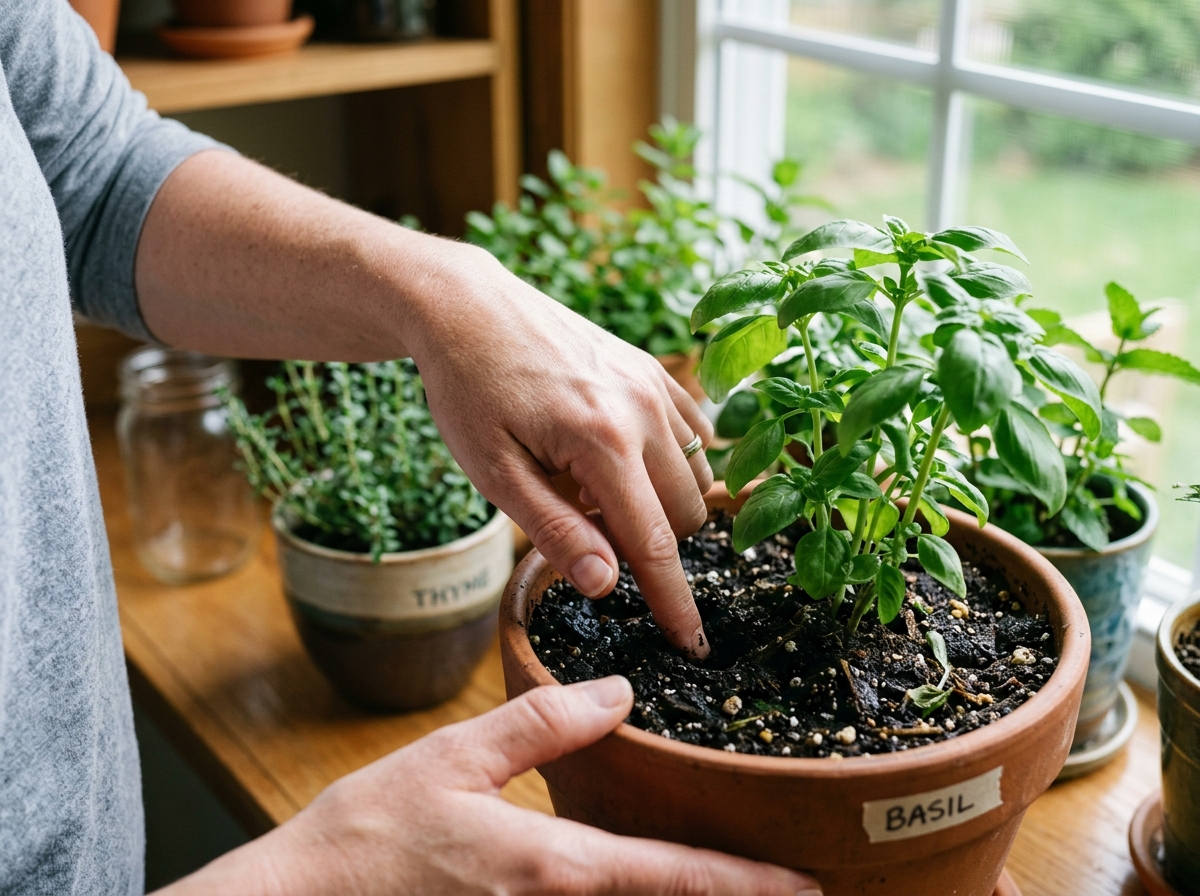
- The Finger Test: Before watering, stick your finger one inch into the soil. If it feels moist, wait. If it’s dry, it’s time for a drink.
- Airflow: Stagnant air is a breeding ground for mold and fungus gnats. We suggest using a small USB fan to provide a gentle breeze, which also helps strengthen the plant’s stems.
Feeding Your Shade Herbs
Since shade-grown herbs grow slower, they don’t need a lot of “food.” Over-fertilizing can actually lead to weak, leggy growth and diminish the essential oils that give herbs their flavor.
We recommend using a weak organic fertilizer, such as fish emulsion, once every 6 to 8 weeks during the growing season. If you are interested in alternative growing methods, you might want to explore planting herbs without soil to see how hydroponics can speed up growth by delivering nutrients directly to the roots.
Growing Herbs Indoors Without Any Natural Sunlight
What if you live in a basement apartment or a north-facing flat with zero direct sunlight? Can you still have a garden? Absolutely. The secret is that plants don’t actually need “sunlight” — they need light energy.
The Magic of Full-Spectrum LEDs
Modern LED grow lights have changed the game for indoor gardeners. They are energy-efficient, produce very little heat, and can provide the exact wavelengths plants need:
- Blue Light (400–500 nm): Essential for leafy, vegetative growth.
- Red Light (600–700 nm): Important for root development and flowering.
For a windowless herb garden, we recommend full-spectrum LED lights. Aim for a color temperature between 5000K and 6500K to mimic natural daylight.
Setting the Schedule
Because artificial light is less intense than the sun, your herbs will need longer exposure.
- Duration: Aim for 12 to 16 hours of light per day.
- Consistency: Use an automatic plug-in timer. Plants need a “rest” period of at least 8 hours to maintain their metabolic health.
- Distance: Keep the lights close! For LEDs, 6 to 12 inches above the top of the plants is the sweet spot. If the lights are too far away, your herbs will stretch toward the light, becoming “leggy” and weak.
Comparing Shade-Grown vs. Sun-Grown Herbs
You might wonder if you’re sacrificing quality by growing herbs in the shade. The answer is a bit of a “yes and no.”
Growth Rate and Yield: Sun-grown herbs are like athletes on high-energy diets; they grow fast and produce huge yields. Shade-grown herbs are more like slow-cooker meals. They take their time. You can expect a lower yield and slower regrowth after harvesting. However, for a home cook, a slower growth rate is often perfectly fine!
Flavor and Essential Oils: Sunlight triggers the production of essential oils (the stuff that makes rosemary smell like rosemary). In deep shade, these oils may be slightly less concentrated. However, for soft herbs like cilantro and parsley, the shade actually prevents the leaves from becoming bitter.
The “Bolting” Benefit: One major advantage of shade gardening is the prevention of “bolting.” Bolting is when a plant (like cilantro or dill) decides the weather is too hot and sends up a flower stalk, which makes the leaves taste soapy or bitter. By growing these herbs in the shade, you keep them cool, allowing you to harvest fresh leaves for weeks longer than a sun-exposed gardener could.
Frequently Asked Questions About Low-Light Herbs
Can herbs grow in total darkness?
No. All green plants require light for photosynthesis to create the energy they need to survive. While some organisms like truffles or morel mushrooms can grow in total darkness, they are fungi, not herbs. If you have a room with no windows, you must use artificial grow lights to keep your herbs alive.
Do shade-grown herbs taste different?
They can. Because they grow slower, the leaf texture is often more tender and “succulent.” While the intensity of essential oils might be slightly lower than sun-grown counterparts, most home cooks won’t notice a significant difference in flavor, especially in herbs like mint, chives, and parsley.
How do I stop my indoor herbs from getting leggy?
“Legginess” is the plant’s way of screaming for more light. The stems get long, thin, and pale as they stretch toward the nearest light source. To fix this:
- Move the light closer: Bring your grow lights down to 6 inches above the plant.
- Rotate your pots: If you are using a windowsill, give the pot a quarter-turn every few days so all sides get equal exposure.
- Pinch back: Regularly snip off the top inch of growth. This encourages the plant to grow “out” (bushier) rather than “up” (leggier).
Conclusion
At FinCapitaly, we believe that everyone should have access to the joy of fresh, homegrown flavors, regardless of how much sunlight hits their home. Growing what herbs can grow without sunlight isn’t just about the harvest; it’s about the mental well-being that comes from tending to a living thing and the sustainable lifestyle of reducing grocery store waste.
Whether you are tucking a pot of mint into a dark corner of your patio or setting up a high-tech LED herb station in your kitchen, you are part of a growing movement of indoor gardeners. Start small, keep an eye on your soil moisture, and don’t be afraid to experiment with different spots in your home.
Ready to turn your dim corners into a lush, edible oasis? Start your indoor herb garden today and enjoy fresh flavors all year round!
