
Why the Right Soil for Indoor Basil Makes or Breaks Your Harvest
The best soil for indoor basil is a well-draining, nutrient-rich potting mix with a pH between 6.0 and 7.5. Here’s a quick summary of what works:
| Factor | What Basil Needs |
|---|---|
| Base mix | High-quality potting soil (not garden soil) |
| Drainage | Add 20-30% perlite or vermiculite |
| Nutrients | Add 20-30% compost or aged manure |
| pH range | 6.0 to 7.5 (slightly acidic to neutral) |
| Moisture | Consistently moist, never waterlogged |
Basil is one of the most rewarding herbs to grow at home. A single, well-pruned plant can produce around half a cup of fresh leaves every week – that’s a lot of caprese salads, pasta, and homemade pesto.
But here’s the thing: most people who struggle with indoor basil aren’t failing because of light or watering. The soil is usually the problem.
Indoor basil has specific needs. It wants soil that drains fast enough to avoid root rot, but holds just enough moisture to stay hydrated. It needs organic matter for nutrients. And it needs the right pH so those nutrients are actually available to the plant.
Get the soil right, and basil almost grows itself.
Essential Characteristics of Soil for Indoor Basil
When we talk about the soil for indoor basil, we aren’t just talking about “dirt” from the backyard. In fact, using backyard dirt is one of the fastest ways to kill an indoor herb garden. Indoor basil requires a specialized environment that mimics its Mediterranean and tropical origins while accounting for the lack of natural wind and intense drainage found in the ground.
Texture and Aeration
The ideal soil texture for basil is loamy and light. If you squeeze a handful of moist soil, it should hold its shape for a second and then crumble easily when poked. This “fluffiness” is vital for aeration. Basil roots need oxygen just as much as they need water. In compacted soil, the roots suffocate, leading to stunted growth and those sad, yellowing leaves we all want to avoid.
Well-Draining Properties
Basil is a “goldilocks” plant when it comes to water. It loves moisture but hates “wet feet.” Well-draining soil ensures that after you water the plant, the excess liquid moves through the pot and out the drainage holes quickly. If water sits around the roots for too long, it invites anaerobic bacteria and fungi, leading to the dreaded root rot.
Nutrient Density and Organic Matter
Because we are growing basil for its foliage (those delicious leaves!), the soil must be nutrient-dense. High-quality soil for indoor basil should be rich in organic matter like compost or leaf mold. This provides a steady, slow-release stream of nitrogen, which is the primary fuel for leaf production.
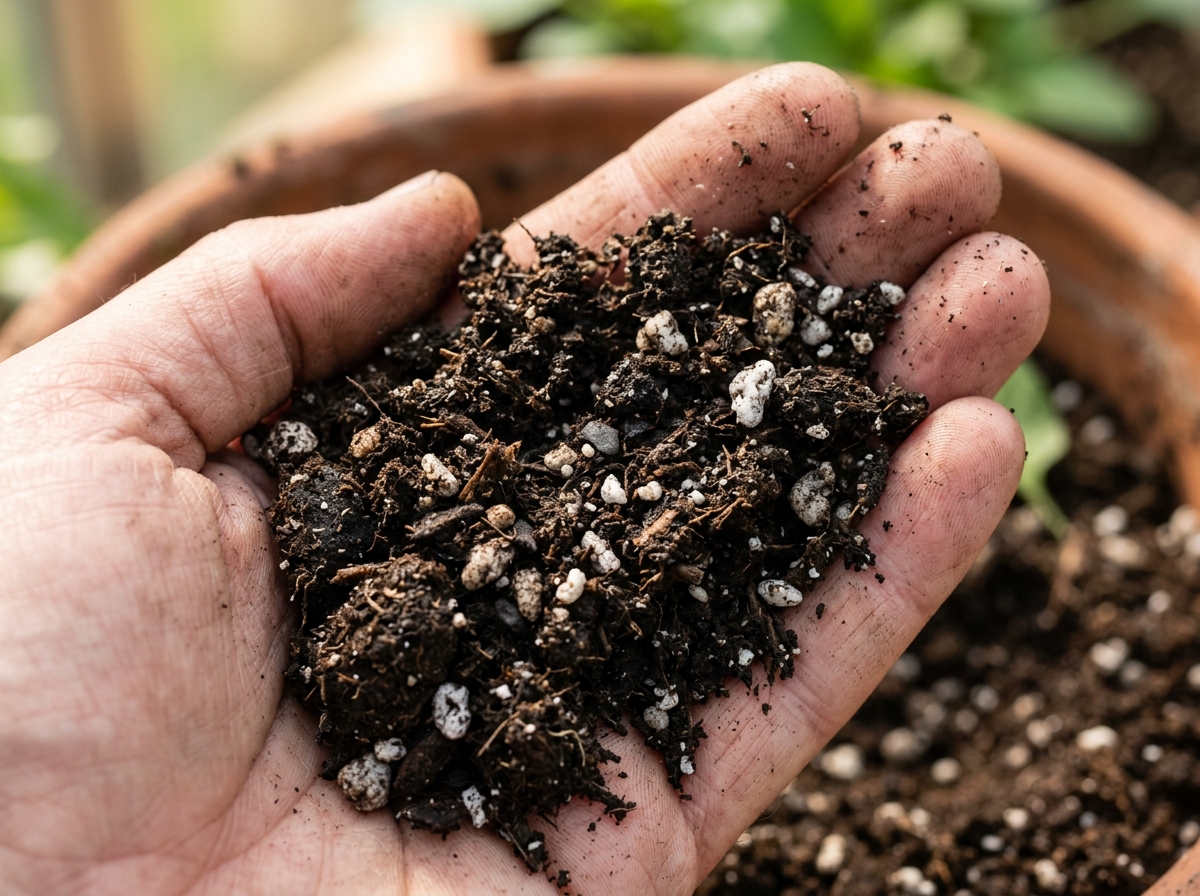
DIY Recipe: The Perfect Soil Mix for Indoor Basil
While you can buy pre-made herb mixes, creating your own ensures your basil gets exactly what it needs. A custom blend allows us to control the drainage and nutrient levels perfectly.
| Ingredient | Purpose | Ratio |
|---|---|---|
| High-Quality Potting Soil | Base structure and water retention | 50% |
| Perlite or Vermiculite | Aeration and rapid drainage | 25% |
| Compost or Worm Castings | Organic nutrients and microbial life | 25% |
The Secret Ingredients
- Peat Moss or Coconut Coir: These help the soil hold onto moisture without becoming heavy. Coconut coir is a fantastic sustainable alternative to peat moss and helps maintain a stable pH.
- Perlite: These are the little white “popcorn” looking bits. They are chemically inert and sterile, providing permanent air pockets in the soil.
- Compost: This is the “soul” of your soil. It provides the micronutrients that synthetic fertilizers often miss.
For more detailed guidance on getting your seeds started in this mix, check out our Planting Tips.
Adjusting pH Levels in Soil for Indoor Basil
Basil is a bit of a stickler for chemistry. It thrives in a pH range of 6.0 to 7.5. If the soil is too acidic – which often happens if you use a lot of peat moss – you can add a small amount of dolomitic lime to bring the pH up. Conversely, if your soil is too alkaline, mixing in a bit of elemental sulfur or extra peat moss can help lower the pH.
Preparing and Moistening Your Soil for Indoor Basil
One of the most common mistakes is pouring dry soil into a pot, planting the basil, and then watering it. Dry potting soil (especially those with peat) can actually become “hydrophobic,” meaning it repels water.
Before planting, we suggest “pre-hydrating” your soil for indoor basil:
- Place your dry soil mix in a large bucket or bowl.
- Add water slowly (about 1 cup of water for every 2 cups of soil).
- Mix it with your hands until the soil feels like a wrung-out sponge.
- For the best results, let it sit overnight so the organic matter can fully absorb the moisture.
This ensures that when you finally transplant your basil, the roots are immediately surrounded by usable moisture rather than dry pockets that can cause transplant shock.
Choosing the Right Container and Fertilizer
The container is the “house” for your soil, and it needs to be functional. We always recommend pots with ample drainage holes.
Container Types
- Terracotta: These are breathable and help prevent overwatering by allowing moisture to evaporate through the walls. However, they dry out faster, so you’ll need to check the soil more often.
- Plastic or Glazed Ceramic: These hold moisture longer, which is great for busy gardeners, but you must be extra careful about drainage.
- Size: Basil needs room to grow. A 6-inch deep pot is the minimum for a single plant, but a 10-inch pot is even better to allow for a robust root system.
For a look at the best gear to get started, browse our Indoor Tools section.
Feeding Your Basil
Basil is a “heavy feeder.” Because we are constantly harvesting leaves, the plant is constantly working to replace them.
- NPK Ratio: Look for a balanced fertilizer, such as a 10-10-10 or a liquid organic fertilizer formulated for foliage plants.
- Frequency: During the active growing season (spring and summer), we recommend a diluted liquid fertilizer every 2-3 weeks.
- Avoid Over-Fertilizing: Too much nitrogen can actually make the leaves grow fast but lose their intense flavor. If your basil tastes “bland,” back off the fertilizer.
Maintenance, Repotting, and Common Mistakes
Once your basil is settled in its perfect soil for indoor basil, maintenance is relatively straightforward, but there are a few pitfalls to watch out for.
The Watering Rule
Forget a calendar; use your finger. Stick your finger into the soil up to the first knuckle. If the top inch is dry, it’s time to water. If it’s still moist, wait. Over-watering is the #1 killer of indoor basil. Signs of over-watering include yellowing lower leaves and a “musty” smell from the soil. Under-watering usually results in dramatic wilting, but basil is quite resilient and will usually perk back up within an hour of being watered.
Repotting Steps
Basil grows fast. If you see roots poking out of the drainage holes or if the plant seems to wilt every single day (meaning the roots have replaced most of the soil), it’s time to repot.
- Choose a pot one size larger than the current one.
- Add a layer of your pre-moistened DIY soil mix to the bottom.
- Gently remove the basil, teasing the roots slightly if they are circling the pot.
- Place the plant in the new pot and fill the sides with fresh soil.
- Water thoroughly to settle the roots.
Companion Planting Indoors
Basil doesn’t have to grow alone! It shares soil requirements with several other indoor-friendly plants. Parsley and peppers both love the same nutrient-rich, well-draining mix. Planting them together can create a beautiful and functional “kitchen garden” display.
Frequently Asked Questions about Basil Soil
Can I use Tulsi potting mix for regular sweet basil?
Yes, you certainly can. Tulsi (Holy Basil) mixes are often designed with a 50/50 ratio of peat moss and perlite to ensure extreme drainage. While sweet basil can handle a bit more organic matter (compost) than Tulsi, the high-drainage Tulsi mix is excellent for preventing root rot in sweet basil. Just be sure to supplement with a liquid fertilizer, as these high-perlite mixes can be lower in natural nutrients.
How does indoor soil differ from garden soil?
Garden soil is heavy, contains clay, and is teeming with outdoor organisms (some good, some bad). When put in a pot, garden soil compacts tightly, squeezing the life out of the roots. It also doesn’t drain well in a container environment. Indoor potting mixes are “soilless” or highly amended to stay light, airy, and sterile, which prevents indoor pest outbreaks like fungus gnats.
How often should I water basil in this soil mix?
In a standard indoor environment, you will likely water every 2 to 4 days. However, this depends on the humidity of your home and the type of pot you use. In the winter, when heaters are running and air is dry, you might water more frequently. Always rely on the “top-inch dry” test rather than a set schedule.
Conclusion
At FinCapitaly, we believe that sustainable gardening starts with the basics. By focusing on the quality of your soil for indoor basil, you are setting the foundation for a kitchen full of fresh, aromatic herbs. Whether you are mixing your own blend of perlite and compost or choosing a high-quality organic potting mix, the effort you put into the soil will be returned to you tenfold in lush, green harvests.
Don’t let your culinary dreams stay in the grocery store aisle. With the right mix, the right light, and a little bit of love, you can enjoy the taste of summer all year round. Start your indoor garden today with FinCapitaly and experience the joy of growing your own food!
