
Why Most Indoor Basil Dies (And How a DIY Hydro Basil Kit Fixes That)
A diy hydro basil kit is a simple, soil-free setup that lets you grow fresh basil indoors year-round — even if you’ve killed every plant you’ve ever owned.
Here’s the quick version of how to build one:
- Get a container — a mason jar or recycled bottle works great
- Add a net cup and wick — the wick pulls nutrient water up to the roots
- Fill with growing media — coco coir or perlite holds the seed in place
- Mix in liquid nutrients — dissolved in water at pH 6.0–6.2
- Plant your basil seeds — germination takes 3–10 days at 70–77°F
- Add light — 14–16 hours of sunlight or LED grow light daily
- Harvest in about 5–6 weeks — and keep picking for months
If you’ve ever tried growing basil on a windowsill in winter, you know the struggle. It gets leggy, it bolts, it dies. You end up buying another bunch from the store and the cycle repeats.
The problem isn’t you. Soil-grown basil indoors is genuinely hard. It needs consistent warmth, good drainage, and the right nutrients — things a pot on a cold sill rarely delivers.
Hydroponics sidesteps all of that. Instead of soil, your basil roots sit in a nutrient-rich water solution. The plant gets exactly what it needs, exactly when it needs it. Growth is faster, cleaner, and far more reliable.
The best part? You don’t need a fancy system. A jar, a wick, some coco coir, and a bag of basil seeds can get you started for under $20.
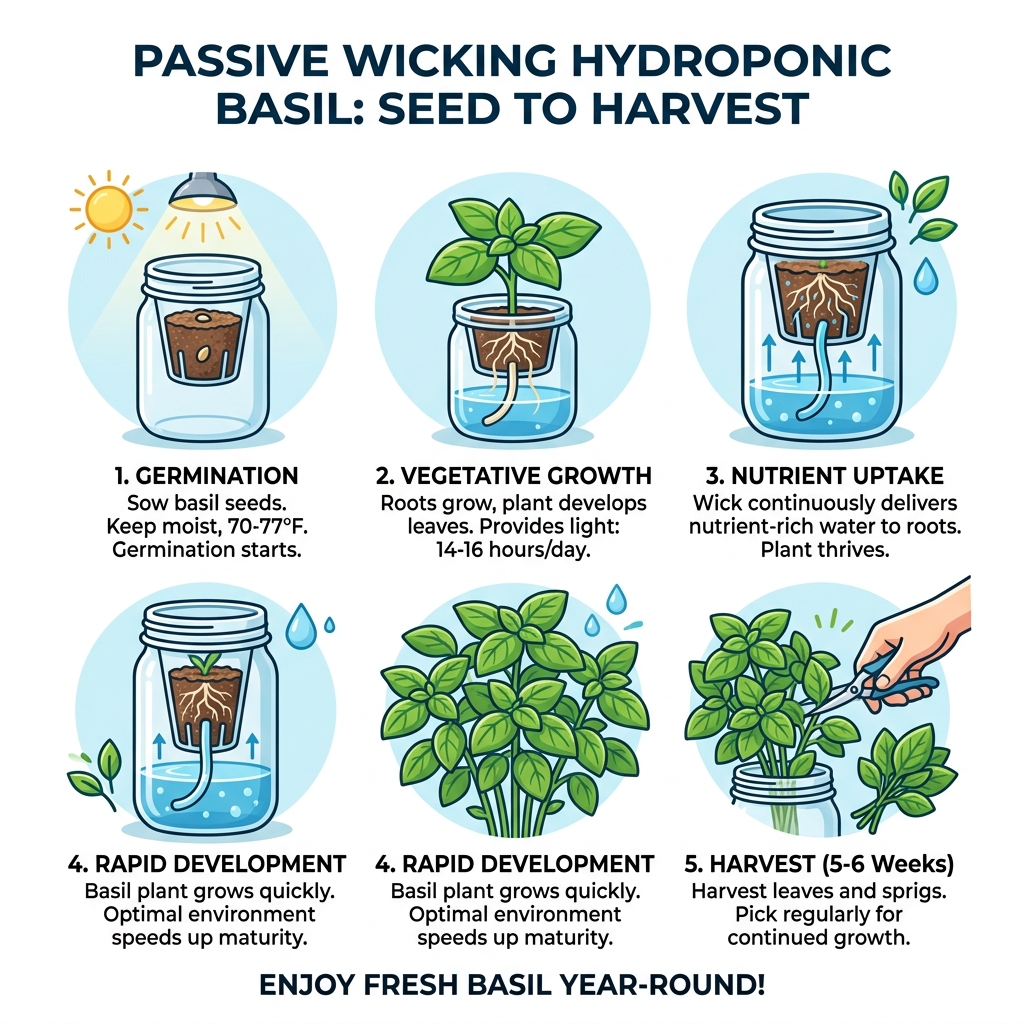
What is a DIY Hydroponic Basil Kit?
At its core, hydroponics is the science of growing plants without soil. Instead of roots searching through dirt for minerals, they are suspended in or supported above a nutrient-rich water solution. When we talk about a diy hydro basil kit, we are essentially creating a miniature ecosystem where the plant has direct access to everything it needs to thrive.
How does it work? In a traditional soil environment, plants spend a massive amount of energy growing extensive root systems to find water and nutrients. In a hydroponic setup, those nutrients are delivered directly to the roots in a highly oxygenated environment. This efficiency leads to significantly faster growth rates—often up to 30-50% faster than soil.
By planting herbs without soil, we eliminate many of the common headaches associated with indoor gardening. Soil can harbor pests like fungus gnats and diseases like root rot if overwatered. With a hydroponic kit, you have a controlled indoor environment where the pH and nutrient levels are dialed in for peak performance. Whether you are looking at indoor gardening kits for beginners or building your own, the goal is the same: providing a steady stream of “plant food” and oxygen to the root zone.
Essential Components for Your DIY Hydro Basil Kit
Building your own diy hydro basil kit is surprisingly affordable. You likely have half of these items in your recycling bin or kitchen cabinets right now.
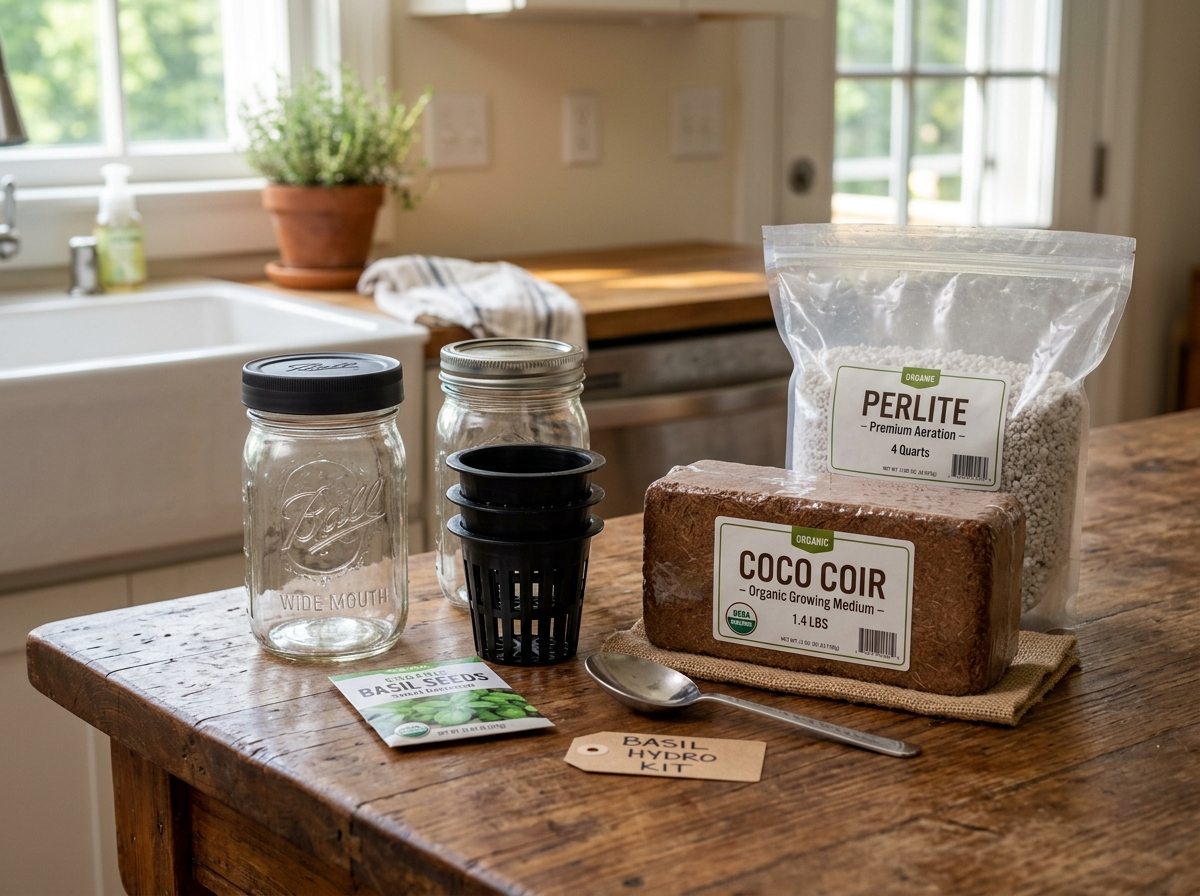
To get started, we need to gather the following “ingredients”:
- The Reservoir: A 32oz wide-mouth Mason jar is the gold standard for DIYers. However, upcycled wine bottles or even plastic soda bottles can be repurposed.
- Net Cups: These are plastic mesh baskets that hold your plant and growing media. A 3-inch net cup fits perfectly into a wide-mouth Mason jar.
- Growing Media: Since we aren’t using soil, we need something to anchor the plant. Rockwool cubes, coco coir, or perlite are excellent choices. Coco coir is particularly popular because it’s sustainable and holds moisture well.
- Liquid Nutrients: Plants need more than just tap water. You’ll need a hydroponic-specific nutrient solution (often a two-part A & B formula) rich in nitrogen, calcium, and potassium.
- The Wick: In a passive system, a microfiber wick or a strip of capillary matting pulls the water from the reservoir up into the growing media.
- Seeds: High-quality, non-GMO, or organic basil seeds are a must. Genovese, Thai, and Lemon basil all thrive in these systems. If you’re new to this, check out our guide on starting herbs from seeds indoors.
Step-by-Step: Building Your Custom System
There are two main ways to build your diy hydro basil kit: the Wick System (Passive) and Deep Water Culture (DWC). For the “lazy gardener,” the Wick System is usually the winner because it requires no electricity.
| Feature | Wick System (Passive) | Deep Water Culture (DWC) |
|---|---|---|
| Complexity | Very Low | Moderate |
| Electricity | Not Required | Required (Air Pump) |
| Growth Speed | Fast | Very Fast |
| Maintenance | Minimal | Weekly Water Changes |
Assembly Instructions:
- Prep the Reservoir: Clean your jar or bottle thoroughly.
- Install the Wick: Thread your microfiber wick through the bottom of the net cup so that several inches hang out the bottom.
- Add Media: Fill the net cup with your chosen media (like coco coir mixed with a little perlite).
- Mix Nutrients: Follow the instructions on your liquid fertilizer to mix a batch of “nutrient water.”
- Assemble: Place the net cup into the jar. Fill the jar with water until the wick is submerged and the bottom of the net cup is just barely touching the water surface.
For more creative inspiration, you can explore diy indoor herb planter ideas to make your setup look as good as it performs. If you’re just starting, our roadmap on how to start an indoor herb garden is a great companion.
Setting Up the Reservoir for Your DIY Hydro Basil Kit
The biggest enemy of a hydroponic system is algae. Algae loves the same things your basil does: light and nutrients. If your reservoir is clear (like a standard Mason jar), light will hit the water, and you’ll soon have a green, slimy mess that steals nutrients from your basil.
To prevent this, we recommend using light-blocking containers. You can paint your jars black (leaving a thin vertical strip unpainted as a “viewing window” to check water levels) or wrap them in decorative contact paper or even a thick sock. Some specialized kits use black-painted 32oz jars specifically for this reason. If you are using a recycled bottle, dark green or amber glass provides a natural advantage.
Planting and Germination in Your DIY Hydro Basil Kit
Once your system is built, it’s time to plant. Place 3-4 seeds in the center of your damp growing media. You don’t need to bury them deep—just a light press will do.
To speed things up, use a humidity dome. This can be as simple as a clear plastic cup or a piece of plastic wrap placed over the top of the net cup. Basil seeds are “heat seekers”; they germinate best at temperatures between 70-77°F (21-25°C). Under these conditions, you should see sprouts in 3 to 10 days.
Once those green heads pop up, remove the dome immediately to allow for air circulation. For a deep dive into the early stages of life, see our tips on how to care for basil indoors.
Caring for Your Hydroponic Basil
Hydroponic basil is a “speed demon,” but it still needs a little love to reach its full potential.
- Light: Basil is a sun-worshipper. It needs at least 14 to 16 hours of light daily. If you don’t have a very bright south-facing window, an LED grow light is a game-changer. Position the light about 6-12 inches above the plant.
- pH Levels: Basil prefers slightly acidic water. Aim for a pH of 6.0 to 6.2. If the pH is too high or too low, the plant won’t be able to “eat” the nutrients you’ve provided.
- Nutrient Maintenance: Every 1-2 weeks, top off the reservoir with fresh nutrient solution. Every month, it’s a good idea to completely flush the system with plain water and then add a fresh batch of nutrients to prevent salt buildup.
- Pruning: This is the secret to a massive harvest. Once your basil has three sets of leaves, pinch off the top set just above the next leaf node. This tells the plant to grow two new branches instead of one. For more maintenance hacks, check out how to care for basil indoors-2.
- Air Circulation: A small fan nearby can help prevent mold and strengthen the plant’s stems.
Troubleshooting and Maintenance
Even the best diy hydro basil kit can run into a few hiccups. Here is how to handle them:
- Algae: If you see green slime, clean the reservoir and ensure it is completely light-proof.
- Root Rot: Healthy hydroponic roots should be bright white. If they look brown or feel mushy, they aren’t getting enough oxygen. In a wick system, this usually means the water level is too high—ensure there is a small air gap between the water and the bottom of the net cup.
- White Mold: Sometimes a fuzzy white mold appears on the growing media. This is often due to high humidity and low air flow. Increase circulation and keep the surface of the media a bit drier.
- Bolting: If your basil starts growing a flower at the top, pinch it off immediately! Flowering makes the leaves taste bitter. Regular pruning prevents this.
For more setup advice, see our indoor-herb-garden-setup-tips.
Frequently Asked Questions about DIY Hydroponics
How long does it take to harvest hydroponic basil?
One of the best perks of a diy hydro basil kit is the speed. While soil-grown basil can take months to provide a significant harvest, hydroponic basil can show “decent growth” within 28 days. Most users are ready for a full harvest in 5 to 6 weeks. Because you can pick individual leaves, you can enjoy small amounts even sooner!
Is a DIY hydroponic basil kit eco-friendly?
Absolutely. Hydroponics uses up to 90% less water than traditional gardening because the water is contained rather than evaporating into the soil. By using upcycled wine bottles or Mason jars, you are reducing waste. Furthermore, choosing peat-free media like coco coir helps protect vital peat bog ecosystems.
What is the typical cost of a DIY setup?
You can build a high-performing system for $8 to $25.
- Mason Jar: $2 (or free if upcycled)
- Net Cup: $1
- Nutrients: $10 (will last for 2+ years)
- Growing Media: $5 Compared to buying $4 bunches of basil at the grocery store every week, the system pays for itself in less than a month.
Conclusion
At FinCapitaly, we believe that everyone should have access to fresh, healthy food, regardless of how much space (or “green thumb” talent) they have. Building a diy hydro basil kit is more than just a fun weekend project; it’s a step toward a more sustainable, flavorful lifestyle.
Imagine never having to buy a plastic-clamshell of wilted basil again. With a little water, some light, and a simple glass jar, you can have enough fresh pesto to feed a small army. Ready to transform your kitchen? Start your indoor garden today and join the ranks of the “lazy” (but very successful) gardeners!
