
Why Your Herbs Are Drooping (And What to Do Right Now)
Fix droopy herb stems by tackling the most likely cause first:
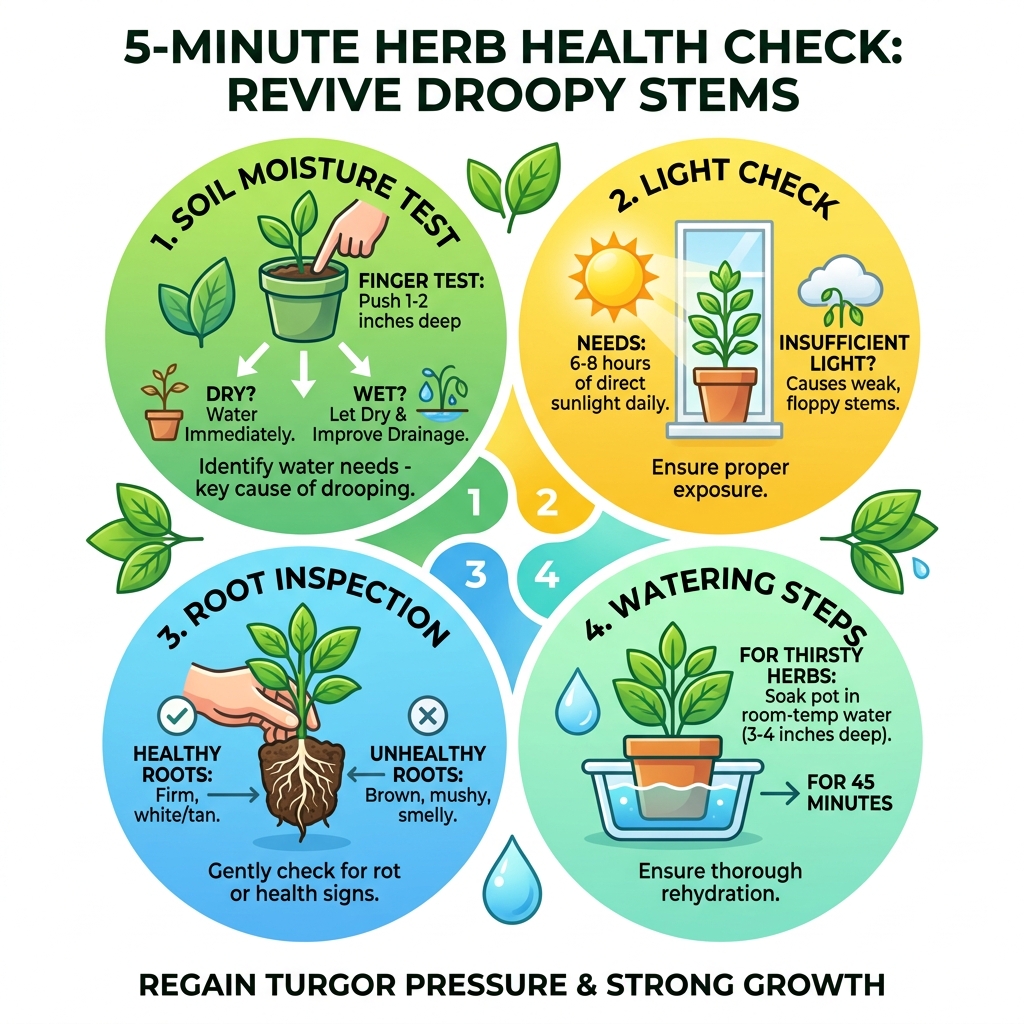
- Check the soil – Push your finger 1-2 inches in. Wet and soggy? You’re overwatering. Bone dry and pulling away from the pot edges? It needs water now.
- Water correctly – For thirsty herbs, soak the pot in 3-4 inches of room-temperature water for 45 minutes. For waterlogged herbs, let the soil dry out and improve drainage.
- Check the light – Herbs need at least 6-8 hours of sunlight daily. Less than that causes weak, floppy stems.
- Trim it back – Pinch stems just above a leaf node to encourage stronger, bushier regrowth.
- For cut herbs – Submerge them in an ice water bath for 15-60 minutes to shock them back to life.
You set up your little herb garden, you’re excited to snip fresh basil into dinner — and then one morning you walk in to find it completely limp. Sad, droopy stems. Leaves hanging like wet paper.
It happens to almost everyone.
The good news? Droopy herbs are usually not dead herbs. Most of the time, they’re just sending you a signal. They’ve lost what plant scientists call turgor pressure — the internal water pressure that keeps stems firm and upright. Once you figure out why they lost it, the fix is usually fast and simple.
The tricky part is that the most common causes — overwatering and underwatering — can look almost identical from the outside. And overwatering is actually responsible for more than 60% of limp herb cases in container gardening, meaning many gardeners make things worse by adding more water when they shouldn’t.
Below, you’ll find everything you need to diagnose the problem and bring your herbs back.
Common Causes: Why Herb Stems Droop and Lose Turgor
When we see our herbs bowing toward the floor, our first instinct is often to grab the watering can. But before you pour, we need to understand the “why” behind the wilt. Turgor pressure is essentially the water pressure inside the plant cells; when that pressure drops, the “skeleton” of the herb collapses.
Several factors can trigger this collapse:
- Underwatering: The most obvious cause. When the soil is bone dry, the plant can’t draw up moisture to keep its cells plump.
- Overwatering and Root Rot: This is the silent killer. Excess water drowns the roots, cutting off oxygen. When roots rot, they can’t absorb water, so the plant droops from “thirst” even though it’s sitting in a puddle.
- Nitrogen Excess: If we use too much high-nitrogen fertilizer, herbs grow incredibly fast. However, this growth is often “soft” and weak, leading to stems that can’t support their own weight.
- Heat Stress: On a scorching summer day, herbs (especially leafy ones like basil) might droop temporarily to protect themselves. They are transpiring water faster than they can replace it.
- Transplant Shock: Moving a plant to a new pot or from indoors to outdoors can cause a temporary “flop” as the roots struggle to adjust to new soil or light levels.
To dive deeper into identifying these specific issues, check out our indoor herb growth troubleshooting guide.
Overwatering vs. Underwatering
Distinguishing between these two is the most important skill for any herb gardener.
Underwatering Signs:
- Soil is dry, dusty, or pulling away from the sides of the pot.
- Leaves feel crispy, thin, or like parchment paper.
- The plant perks up within hours of a deep drink.
Overwatering Signs:
- Soil is consistently damp, green with algae, or smells musty.
- Leaves may turn yellow or feel soft and “mushy” rather than just limp.
- The stems remain droopy even after you water them.
If you suspect overwatering, you may need to perform a root inspection. Healthy roots are white and firm; rotted roots are brown, slimy, and smell like decay. For more help avoiding these pitfalls, see our guide on indoor herb watering mistakes to avoid.
The Supermarket Herb Syndrome
We’ve all been there: you buy a lush, beautiful pot of basil from the grocery store, and within 48 hours, it looks like a tragedy. This happens because supermarket herbs are designed for quick sale, not long-term growth.
These pots usually contain dozens of tiny seedlings crowded into a single space. They are often grown in peat-heavy soil that dries out instantly once removed from the store’s high-humidity environment. Furthermore, they are often sold in plastic sleeves that act like crutches; once the sleeve is removed, the weak, crowded stems simply fall over. To fix droopy herb stems from the supermarket, you often need to gently divide the plants into smaller clumps and give them a larger home with better soil.
How to Fix Droopy Herb Stems: Step-by-Step Revival
If your plant is still alive, there is hope. The goal of revival is to restore that turgor pressure as quickly as possible without shocking the plant further.
Using the Soak-Watering Method to Fix Droopy Herb Stems
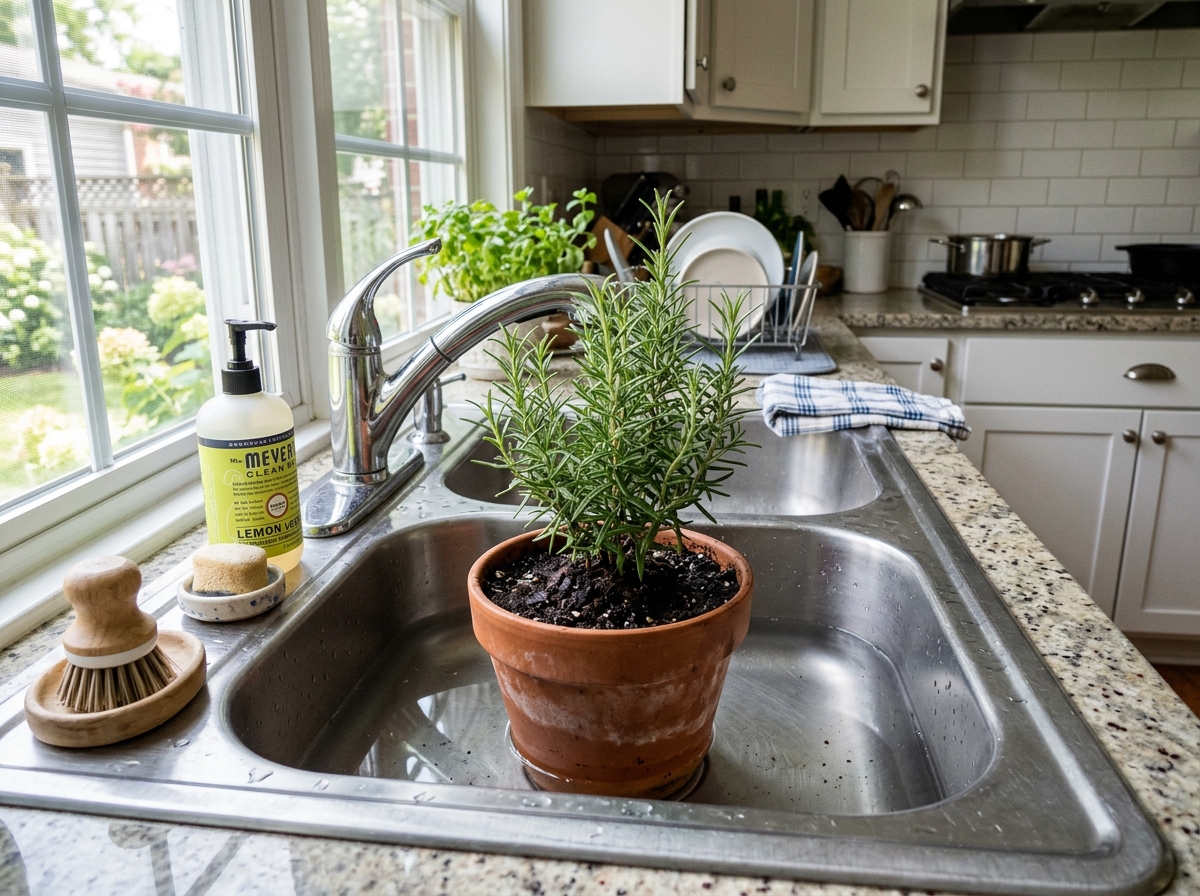
When soil becomes extremely dry, it can become “hydrophobic,” meaning it actually repels water. You might pour water on top, see it run out the bottom, and assume the plant is fed—but the root ball stays dry. The soak-watering (or bottom-watering) method is the ultimate fix.
- Prepare the Basin: Fill a sink or a large bowl with 3-4 inches of room-temperature water. Remove the saucer from your herb pot.
- The Soak: Place the pot directly into the water. The soil will act like a sponge, drawing moisture upward through the drainage holes.
- Time it: Let the plant sit for about 45 minutes. You’ll know it’s done when the top of the soil feels moist to the touch.
- Mist the Foliage: While the roots soak, lightly mist the leaves. This helps the plant rehydrate through its foliage while the roots get back to work.
- Drain: Lift the pot out and let it drain thoroughly in the sink for 15 minutes before putting it back in its spot.
Quick Ice Bath Trick to Fix Droopy Herb Stems (Cut Herbs)
If you are dealing with cut herbs from the fridge that have gone limp, don’t toss them! This trick works wonders for “soft” herbs like cilantro, parsley, mint, and basil. It does not work as well for woody herbs like rosemary or thyme.
- Trim the Ends: Cut about half an inch off the bottom of the stems at an angle.
- The Ice Bath: Submerge the entire bunch—stems and leaves—into a bowl of ice-cold water.
- Wait: Leave them for 15 to 60 minutes. The cold “shocks” the vascular system, forcing water back into the cells.
- Dry and Use: Once they look perky and bright green, spin them dry in a salad spinner or pat them with a towel. They’ll be as good as new for your recipe!
Environmental Adjustments for Stronger Stems
Sometimes the droop isn’t about water at all—it’s about the environment. If your herbs are “leggy” (long, thin stems with lots of space between leaves), they are likely suffering from etiolation. This is essentially the plant stretching desperately toward the nearest light source.
| Herb Type | Watering Frequency | Sunlight Needs | Best Pot Material |
|---|---|---|---|
| Mediterranean (Rosemary, Thyme, Lavender) | Once every 2 weeks | 6-8 hours direct | Unglazed Terracotta |
| Annual/Leafy (Basil, Cilantro, Parsley) | Every 3-7 days | 6 hours (afternoon shade) | Plastic or Glazed Ceramic |
To ensure your setup is optimized, read our grow lights for indoor herbs guide.
Light Requirements to Prevent Leggy Growth
Herbs are sun-worshippers. Most require at least 6-8 hours of direct light to build strong cell walls.
- South-Facing Windows: These provide the most consistent light in the Northern Hemisphere.
- Rotation: Rotate your pots every few days. If you don’t, the plant will lean toward the glass (phototropism), eventually becoming so top-heavy it flops over.
- Supplemental LED: If your home is dark, a full-spectrum LED grow light placed 6-12 inches above the foliage can fix droopy herb stems caused by light deficiency.
Humidity and Soil Conditions
Indoor air, especially in winter, is often far too dry for herbs like mint or basil, which prefer humidity levels around 50%.
- Pebble Trays: Place your pots on a tray filled with pebbles and water. As the water evaporates, it creates a humid microclimate around the leaves. For more on this, see our humidity tips for indoor herbs.
- Soil Mix: Don’t use garden soil in pots; it’s too heavy and will compact, crushing the roots. Use a high-quality potting mix amended with perlite or coarse sand to ensure oxygen reaches the roots. Mediterranean herbs, in particular, love a “gritty” mix (about 70% compost and 30% sand).
Pruning and Maintenance for Upright Herbs
A common mistake is being “too nice” to your herbs. If you never harvest them, they become tall, woody, and eventually collapse under their own weight.
Strategic Harvesting to Fix Droopy Herb Stems
Pruning isn’t just about getting ingredients for dinner; it’s a structural necessity. By pinching off the top of a stem, you disrupt “apical dominance”—the plant’s urge to grow straight up.
- Pinch at the Node: Always cut or pinch just above a “node” (the spot where two leaves emerge from the stem). This signals the plant to grow two new stems from that point, making it bushier and more stable.
- Prevent Flowering: Once an herb flowers, its energy shifts away from stem strength and leaf flavor. Pinch off any flower buds immediately to keep the plant focused on structural growth.
- Harvest Often: Regular harvesting (up to 1/3 of the plant at a time) keeps the stems young and flexible rather than heavy and brittle. Check out our tips on pruning for healthy growth for more details.
Soil and Fertilizer Management
While herbs need nutrients, they aren’t “heavy feeders.” Over-fertilizing is a fast track to floppy stems.
- Avoid High Nitrogen: Nitrogen creates lush green growth, but if there’s too much, the cell walls don’t have time to thicken, resulting in weak, drooping stems.
- Salt Buildup: Over time, fertilizers and tap water can leave salt deposits in the soil (look for a white crust on the pot). This can dehydrate roots. Once a season, “leach” the soil by running plain water through the pot for several minutes.
- Repotting: Herbs like mint grow roots at a terrifying speed. If your plant wilts every single day regardless of watering, it’s likely “root-bound.” It has more roots than soil, and there’s simply no place left to hold water. Move it to a pot 2 inches wider.
For a complete breakdown of what to feed your plants, see our soil and fertilizer for indoor herbs guide.
Frequently Asked Questions about Drooping Herbs
How can I tell if my herbs are overwatered or underwatered?
The “Finger Test” is your best friend. Stick your finger two inches into the soil. If it’s dry, it’s underwatered. If it’s damp but the plant is still drooping, it’s likely overwatered or suffering from root rot. Also, look at the leaves: underwatered leaves are usually dry and crispy at the edges, while overwatered leaves are often soft, yellow, or even translucent.
Why do my supermarket herbs die immediately after I bring them home?
It’s usually a combination of root crowding and environmental shock. They move from a perfect, humid greenhouse to a dry kitchen. To save them, immediately remove any plastic sleeves, check if the pot is too small (it usually is), and place them in a spot with bright, indirect light while they acclimate.
Can I save an herb plant that has developed root rot?
Yes, if you catch it early! Remove the plant from its pot and gently wash the soil off the roots. Use sterilized scissors to snip away any brown, mushy roots. Repot the herb in fresh, well-draining soil and a clean pot with plenty of drainage holes. Hold off on watering for a few days to let the remaining roots breathe.
Conclusion
At FinCapitaly, we believe that an indoor herb garden should be a source of joy, not a source of stress. While it can be disheartening to see your plants looking sad, drooping is just a conversation. Your herbs are telling you exactly what they need—be it a deep soak, a bit more sunlight, or a quick trim to help them stand tall.
By monitoring your plants daily and understanding the difference between a thirsty herb and a drowning one, you can prevent future drooping and enjoy a productive, upright garden all year round. For more tips on getting started the right way, visit our indoor herb garden setup tips page. Happy gardening!
