
Why a Compact Herb Garden Belongs in Every Small Home
A compact herb garden lets you grow fresh, flavorful herbs in a tiny space — a windowsill, balcony, countertop, or patio corner.
Here’s a quick-start snapshot for anyone ready to jump in:
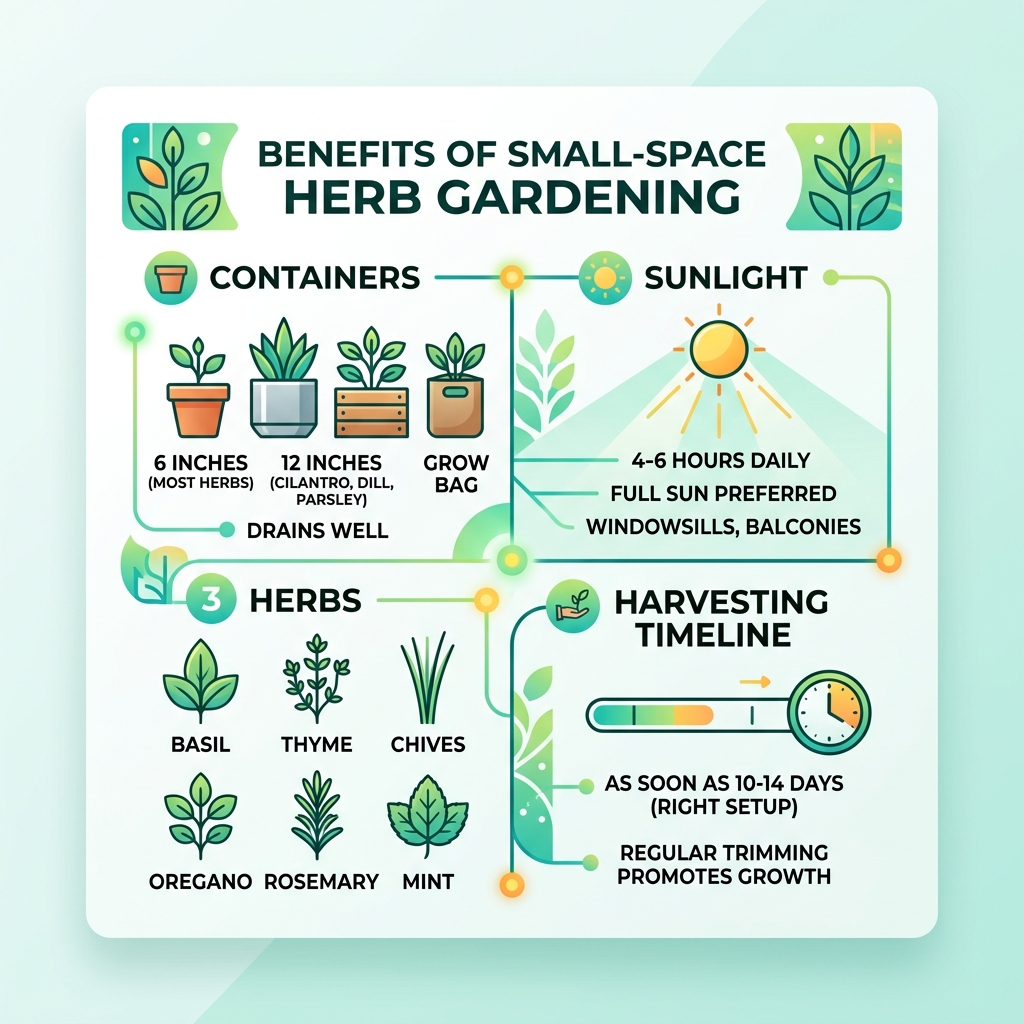
| What You Need | Key Details |
|---|---|
| Container depth | 6 inches for most herbs; 12 inches for cilantro, dill, parsley |
| Sunlight | 4-6 hours daily (full sun preferred) |
| Best starter herbs | Basil, thyme, chives, oregano, rosemary, mint |
| Watering | Check moisture daily; water when soil is dry a thumb’s depth down |
| First harvest | As soon as 10-14 days with the right setup |
| Space needed | As little as 1 square foot |
Imagine stepping away from your stove for just a moment to snip fresh basil, thyme, or chives — no grocery run, no wilted store-bought bunches. That’s the everyday reality a small herb garden can give you, even with almost no outdoor space.
The best part? You don’t need a yard, a green thumb, or hours of free time.
Most culinary herbs are naturally compact growers. Many thrive in pots as shallow as six inches. Some setups can be assembled in under an hour, with the first harvest ready in as little as two weeks.
Whether you have a sunny windowsill, a small balcony, or just a kitchen counter — there’s a setup that works for you. This guide walks you through every step.
Choosing the Best Containers for Your Compact Herb Garden
When we talk about a compact herb garden, the container is more than just a vessel; it is the entire world for your plants. Because herbs in small spaces have limited root volume, the material and design of your planter significantly impact their health.
We recommend looking for materials that balance moisture retention with breathability. Terra cotta is a classic choice because its porous nature allows roots to breathe, though it dries out faster than other materials. For those seeking a modern aesthetic, food-grade steel or cedar wood are excellent, durable options. If you are gardening on a balcony where weight is a concern, microfiber grow bags are a fantastic alternative. These bags provide superior aeration, preventing roots from circling and becoming “pot-bound.”
Regardless of the material, drainage is non-negotiable. Your container should have drainage holes every 3 to 4 inches. If you find a perfect pot that lacks holes, don’t be afraid to drill them yourself! To keep your patio or windowsill clean, you can line the bottom of the container with burlap or fine mesh to keep the soil in while letting the water out. For more detailed advice, check out our guide on container-planting-for-herbs.
Selecting the Right Size and Depth
Size matters when space is tight. We often see beginners make the mistake of choosing pots that are too small, leading to stunted growth.
- The 6-Inch Rule: Most herbs from the mint family—including basil, lavender, sage, and thyme—can thrive in pots just six inches deep.
- The 12-Inch Rule: Herbs with taproots, such as cilantro, dill, parsley, and fennel, need more “leg room.” These varieties require at least one foot of soil depth to stretch their roots downward properly.
When planting-herbs-in-small-spaces, aim for at least one gallon of soil per plant if they are in individual pots. This ensures they have enough nutrients and moisture to survive a hot afternoon.
Self-Watering and Smart Systems
For the busy urbanite, technology has made a compact herb garden easier than ever. Sub-irrigation systems use a water reservoir at the bottom of the planter. The plants “wick” the water up as needed, which prevents evaporation and reduces the frequency of watering.
If you have zero natural light, smart indoor gardens are a game-changer. These systems use automated lights and nutrient-infused pods to ensure success. These kits can be set up in five minutes, and you’ll see sprouts in just a few days. They are the ultimate indoor-gardening-kits-for-beginners who want fresh pesto without the guesswork.
Selecting the Right Herbs for Small Spaces
Not every herb is a good neighbor. When building a compact herb garden, we need to select varieties that play well with others and don’t take over the entire pot.
Best Herbs for a Compact Herb Garden
If you’re just starting, focus on these “all-stars” that are well-suited for indoor-herb-garden-for-apartments:
- Basil: A sun-loving annual. Look for ‘Perpetual Pesto’ for continuous growth or ‘Boxwood Basil’ for a tiny, shrub-like shape.
- Rosemary: A perennial that loves well-drained soil. The ‘Blue Boy’ variety is particularly slow-growing and compact.
- Thyme: Very hardy and stays low to the ground. ‘Hi-Ho Silver’ is a beautiful variegated option.
- Chives: These are nearly indestructible and grow back quickly after cutting.
- Oregano: Opt for ‘Italian Oregano’ if you want an upright habit rather than the creeping Greek variety.
- Sage: ‘Window Box Garden Sage’ is a proprietary variety designed specifically to stay under a foot tall.
Grouping Herbs by Water and Light Needs
One of the biggest secrets to a successful compact herb garden is grouping plants with similar “personalities.”
- The Mediterranean Group: Rosemary, Thyme, Sage, and Oregano prefer “dry feet.” They love sandy soil and lots of sun. Group them together and let the soil dry out slightly between waterings.
- The Moisture Lovers: Basil, Parsley, and Cilantro prefer consistent moisture. They are best grouped together in a separate container or on the “moist” side of a larger planter.
- The “Loner” (Mint): Never plant mint in a shared container. Mint spreads via aggressive underground runners that will quickly choke out your other herbs. Always give mint its own dedicated pot.
Essential Care: Soil, Sunlight, and Watering
In a small container, there is no “buffer” from the earth. This means we have to be very intentional about the environment we create.
Preparing the Perfect Soil Mix
Don’t just grab a bag of “dirt” from the backyard. For a compact herb garden, you need a porous, nutrient-dense medium. Many experts recommend a “103 mix,” which consists of:
- 1 part Topsoil
- 1 part Compost (well-aged)
- 1 part Coarse Sand (for drainage)
- A handful of Earthworm Castings (for natural fertilization)
This mix mimics the sandy, rocky Mediterranean hillsides where many herbs originated. If you’re buying pre-made mix, ensure it’s a high-quality potting soil and consider adding perlite for extra aeration. For more general background on growing culinary herbs, the herb page on Wikipedia is a useful external reference. For more DIY inspiration, explore these diy-indoor-herb-planter-ideas.
Sunlight and Watering for Your Compact Herb Garden
Most herbs are sun worshippers. They generally need 4 to 6 hours of direct sunlight daily. If you are growing indoors, a south-facing window is your best bet. If your space is shaded, you might need to supplement with grow lights-keep them about 6 inches above your plants for 16 hours a day.
Watering is the most common area where beginners struggle. In small pots, soil dries out fast. We recommend a morning moisture check: stick your thumb an inch into the soil. If it feels dry, it’s time to water. Using compact-watering-tools-for-herb-gardens with narrow spouts helps you deliver water directly to the roots without wetting the leaves, which can lead to disease.
| Requirement | Indoor Herb Garden | Outdoor Compact Garden |
|---|---|---|
| Sunlight | South-facing window or Grow Lights | 6+ hours (Full Sun) |
| Watering | 2-3 times per week | Daily (in high heat) |
| Airflow | May need a small fan | Natural breeze |
| Temperature | Consistent 65-75°F | Watch for frost or 90°F+ heat |
For more tips on maintaining your setup, read about low-maintenance-indoor-herb-planting.
Creative Layouts and Vertical Solutions
When you don’t have horizontal space, go up! Vertical gardening is the ultimate hack for the compact herb garden enthusiast.
Maximizing Vertical Space
There are several ways to stack your greenery:
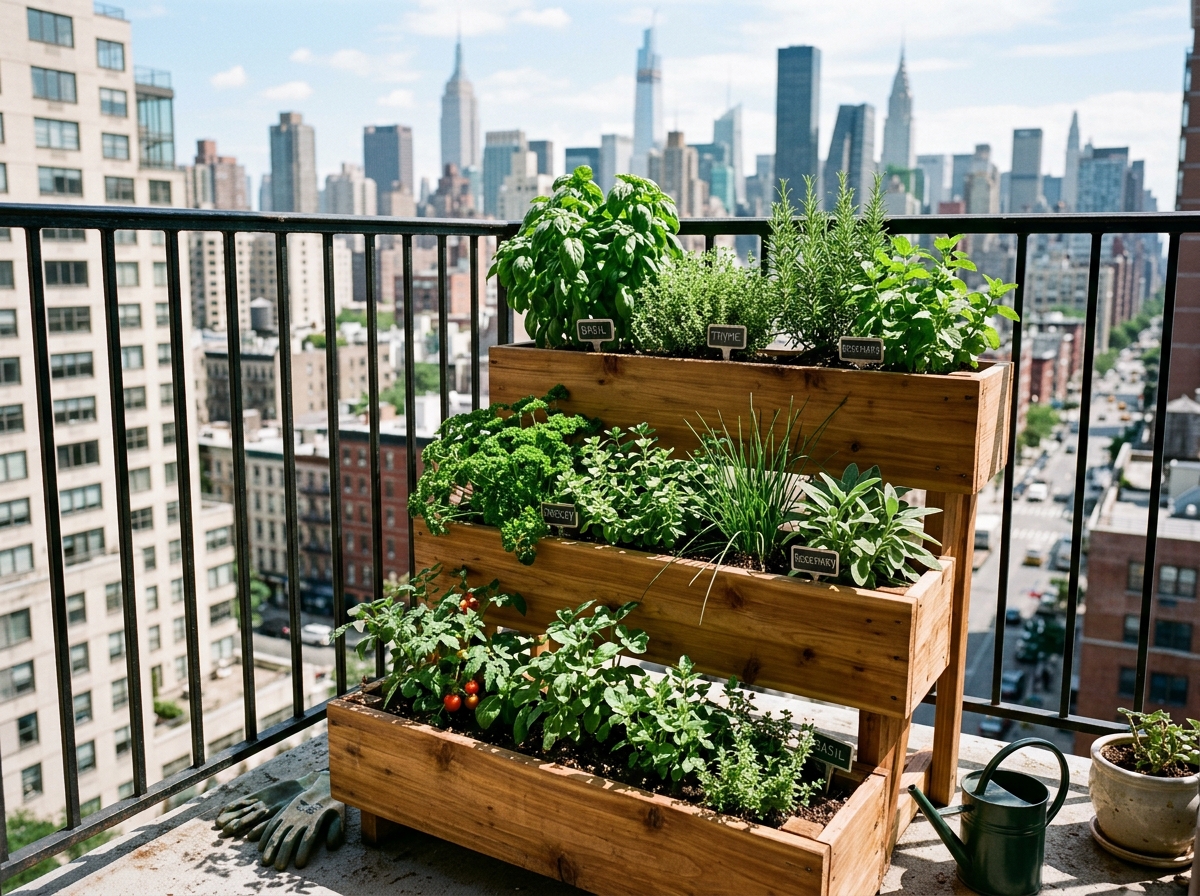
- Tiered Stands: Use indoor-plant-stands-for-herbs to create a “ladder” of flavor in a corner.
- Stackable Planters: These look like clover-shaped pots that lock together, allowing you to grow a dozen herbs in the footprint of a single pot.
- Wall-Mounted Pockets: Breathable felt pockets can be hung on a fence or wall, perfect for vertical-herb-gardening-indoors.
- Elevated Planters: Ergonomic, waist-high solutions with separate pockets for different herbs provide a comfortable gardening experience while maximizing small footprints.
DIY and Affordable Setup Ideas
You don’t need to spend a fortune to get started. Many successful gardens are built from upcycled items.
- Mason Jars: Great for windowsills, but remember they lack drainage. Add a layer of pebbles at the bottom and be very careful not to overwater.
- Wooden Crates: Line an old wine crate with landscape fabric for a rustic, portable herb box.
- Tin Cans: Large coffee or food cans make excellent individual pots—just remember to punch holes in the bottom!
Check out these diy-indoor-herb-planter-ideas-2 for more budget-friendly inspiration.
Harvesting and Maintenance for Continuous Growth
The biggest mistake you can make is being too nice to your herbs. Herbs actually thrive when you harvest them regularly.
Effective Harvesting Techniques
To keep your compact herb garden productive, follow these rules:
- Pinch Back: Don’t just pull off the big bottom leaves. Pinch off the top “growing tip” of plants like basil and mint. This forces the plant to branch out, becoming bushier rather than tall and leggy.
- Prevent Flowering: Once an herb flowers, the leaves often turn bitter. Snip off any flower buds immediately to keep the energy focused on leaf production.
- The 1/3 Rule: Never harvest more than one-third of the plant at a time. This ensures the herb has enough foliage left to photosynthesize and regrow.
For more beginner tips, visit beginner-friendly-herb-garden-ideas.
Propagation and Overwintering
You can expand your garden for free through propagation.
- Dividing: Herbs like chives and mint grow in clumps. Every spring, you can dig them up, tease the roots apart into two halves, and replant them.
- Stem Layering: For woody herbs like rosemary or sage, pin a low-growing stem to the soil. It will eventually grow its own roots, at which point you can snip it from the mother plant.
- Overwintering: If you live in a cold climate, move your perennial pots (Rosemary, Sage, Thyme) close to the house or into a sheltered corner. Container roots lack the insulation of the ground, so they may need extra protection.
Find more DIY expansion tips at diy-indoor-herb-planter-ideas-3.
Frequently Asked Questions about Compact Herb Gardens
Which herbs grow best in only six inches of soil?
Most members of the mint family are perfect for shallow containers. This includes basil, lavender, lemon balm, marjoram, oregano, rosemary, sage, and thyme. These plants have relatively shallow root systems and are very happy in a standard 6-inch deep windowsill box.
How do I prevent my herbs from becoming root-bound?
Plants become root-bound when their roots fill the container and begin to circle the edges, eventually choking the plant. To prevent this, check the roots at the start of every season. If they look like a solid mass, it’s time to root prune (snip the outer inch of roots) and repot with fresh soil. Using breathable grow bags also helps, as they “air-prune” the roots naturally.
Can I grow herbs indoors year-round without a balcony?
Absolutely! While outdoor sunlight is strongest, many people succeed with a compact herb garden entirely indoors. The key is light. If you don’t have a very bright window, an affordable LED grow light or a specialized indoor herb kit can provide everything the plants need to thrive on a kitchen counter.
Conclusion
Starting a compact herb garden is one of the most rewarding steps you can take toward a more sustainable and flavorful lifestyle. It turns a tiny, unused corner of your home into a living pantry. Whether you choose a high-tech smart garden or a simple DIY cedar box, the joy of harvesting your own ingredients is incomparable.
At FinCapitaly, we believe that everyone—regardless of their living situation—should have the opportunity to experience the “I grew that!” moment. By following these steps, you’ll be snipping fresh basil for your pasta and mint for your tea in no time.
Ready to dive deeper into urban gardening? More info about gardening services.
