
Why Your Indoor Basil Keeps Struggling (And How to Fix It Fast)
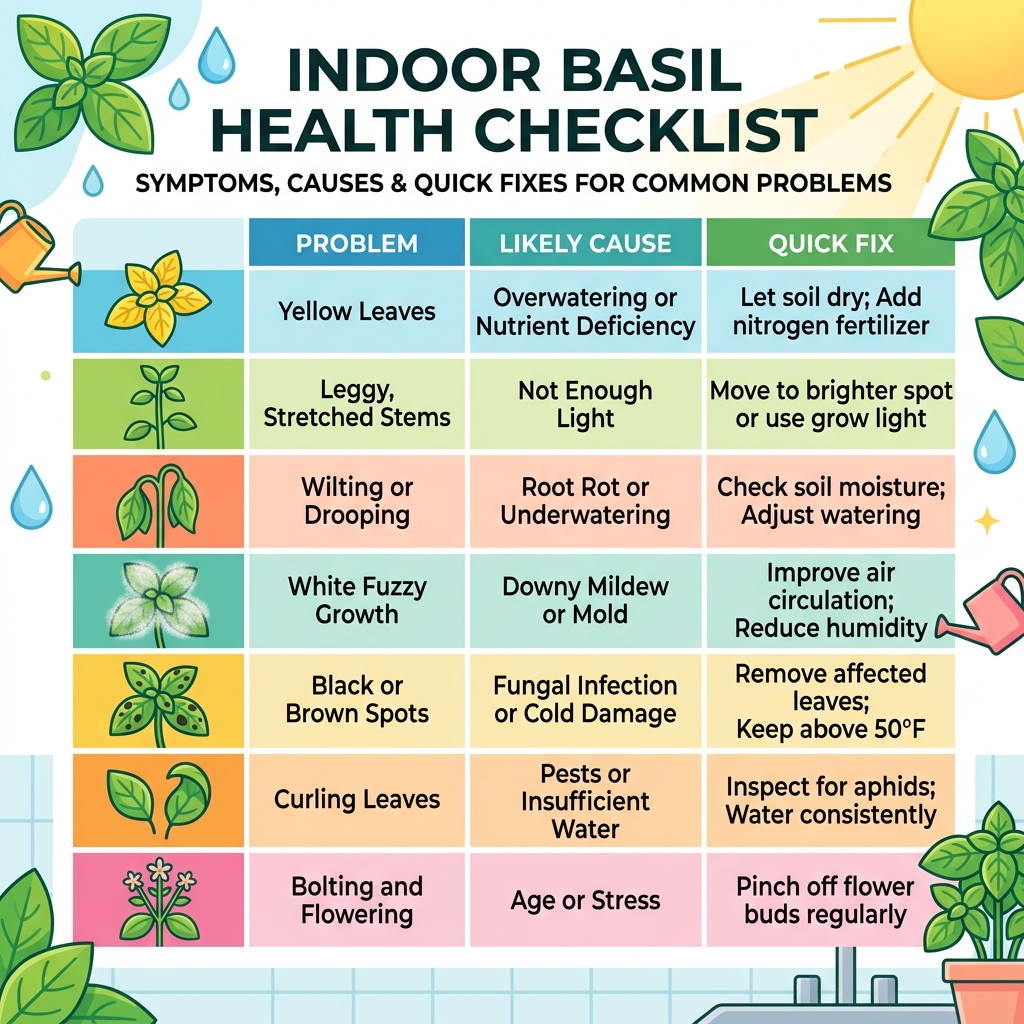
This indoor basil troubleshooting guide covers the most common problems home growers face — and exactly what to do about them:
| Problem | Likely Cause | Quick Fix |
|---|---|---|
| Yellow leaves | Overwatering or nutrient deficiency | Let soil dry out; add nitrogen fertilizer |
| Leggy, stretched stems | Not enough light | Move to brighter spot or use grow lights |
| Wilting or drooping | Root rot or underwatering | Check soil moisture; adjust watering |
| White fuzzy growth | Downy mildew or mold | Improve air circulation; reduce humidity |
| Black or brown spots | Fungal infection or cold damage | Remove affected leaves; keep above 50°F |
| Curling leaves | Pests or insufficient water | Inspect for aphids; water more consistently |
| Bolting and flowering | Age or stress | Pinch off flower buds regularly |
Fresh basil is one of the best things you can grow at home. But indoor plants face a tough set of challenges — limited light, dry heated air, inconsistent watering, and cramped pots — that outdoor plants simply don’t deal with the same way.
The frustrating part? Basil can go from lush to limp in just a few days, and the causes aren’t always obvious.
Here’s the truth: most indoor basil problems come down to a handful of fixable mistakes. Over 90% of issues trace back to watering problems, insufficient light, or temperature stress. Once you know what to look for, you can act fast — and keep your plant producing fresh leaves for months.
This guide walks through every major symptom, explains what’s causing it, and gives you clear steps to fix it.
The Ultimate Indoor Basil Troubleshooting Guide: Identifying Symptoms
When we bring a basil plant into our kitchen, we expect it to thrive, but often we are met with a slow decline. Identifying the specific visual symptoms is the first step in our indoor basil troubleshooting guide. Basil is a “vocal” plant; it tells us exactly what it needs through the color and texture of its leaves.
Yellow Leaves and Pale Growth
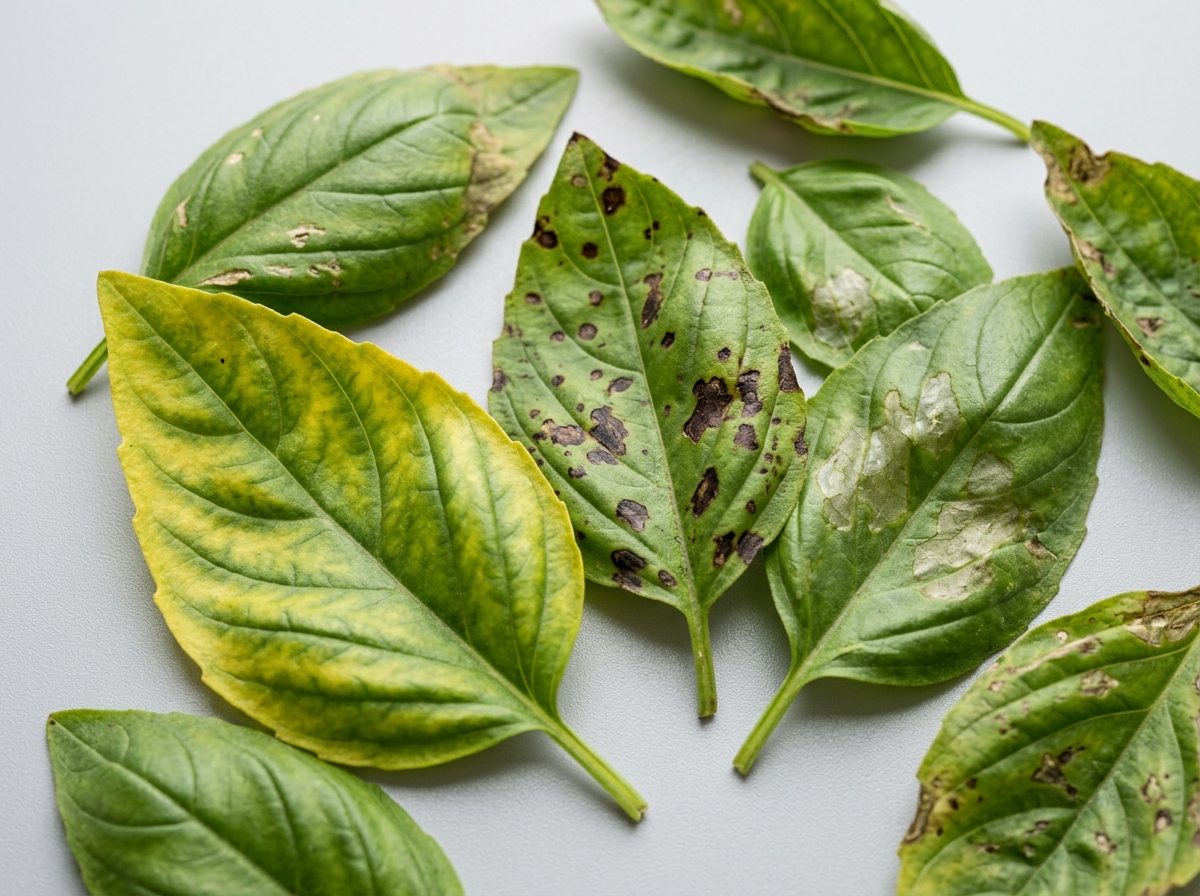
If your basil leaves are turning a sickly pale yellow, you are likely looking at one of two culprits: overwatering or a nitrogen deficiency. Basil needs nitrogen to produce that deep green chlorophyll we love. If the soil is depleted, the plant simply can’t maintain its color. On the flip side, if the soil is constantly soggy, the roots can’t “breathe” or take up nutrients, leading to a similar yellowing effect. Check out our guide on Indoor Herb Growth Troubleshooting to narrow down the cause.
Black and Brown Spots
Black or brown spots are often a sign of fungal infections like Cercospora leaf spot or Colletotrichum (anthracnose). These thrive when water sits on the leaves for too long. However, if the spots look more like “burns” or if the edges are turning black after a cold night, it’s likely temperature shock. Basil is a tropical plant; it hates the cold!
Transparent or Translucent Patches
Have you noticed “windowpane” spots where the leaf looks thin and see-through? This is rarely a disease and usually the work of pests. Sucking insects like thrips or leafminers eat the internal tissue of the leaf, leaving only the transparent outer membrane. It can also occur during extreme temperature fluctuations or severe nutrient imbalances.
Why are my basil leaves curling or wilting?
Wilting is perhaps the most dramatic symptom a basil plant can show. Physiologically, this is a loss of turgor pressure—the internal water pressure that keeps the plant upright.
- Underwatering: If the soil is bone-dry and the leaves are drooping, the fix is simple: water it! Basil lacks a waxy cuticle, meaning it loses water through transpiration very quickly.
- Overwatering and Root Rot: This is the “silent killer.” If your basil is wilting but the soil feels wet, the roots have likely rotted. When roots turn black and mushy, they can no longer transport water to the leaves, causing the plant to wilt even though it’s sitting in a puddle. For more on this, read about Indoor Herb Watering Mistakes to Avoid.
- Fusarium Wilt: This is a soil-borne fungus that blocks the plant’s vascular system. A classic sign is if one side of the plant wilts while the other looks okay, or if you see brown streaks inside the stems.
Dealing with white fuzzy growth and mold
If you see a white, flour-like substance on the leaves or a grey “fuzz” underneath, you are dealing with mold or mildew.
- Downy Mildew: This is a common and devastating basil disease. It often starts as yellowing on the top of the leaf, with a grey, fuzzy spore growth underneath.
- Powdery Mildew: This looks like someone spilled white dust on your plant.
Both are caused by high humidity and poor air circulation. Inside our homes, air can become stagnant, especially in corners or near windows. We recommend checking our Humidity Tips for Indoor Herbs and learning more about Preventing Mold in Indoor Herb Gardens to keep the air moving and the leaves dry.
Solving Growth Issues: Leggy Stems and Weak Foliage
One of the most common complaints in any indoor basil troubleshooting guide is that the plant looks “stretched out” or “leggy.” This happens when the space between the leaf nodes (where the leaves grow out of the stem) becomes very long, resulting in a weak, spindly plant.
Light Requirements: The 7-Hour Rule
Basil is a sun-worshiper. To grow thick, bushy, and flavorful leaves, it needs an average of 7 hours of direct sunshine daily. Most windowsills—even south-facing ones—only provide about 4 to 5 hours of high-quality light. When basil doesn’t get enough light, it undergoes “etiolation,” which is the plant’s way of desperately stretching toward the nearest light source.
If your home doesn’t have a spot that gets 7+ hours of sun, you need to supplement. We suggest looking into Grow Lights for Indoor Herbs. A full-spectrum LED light kept about 6-12 inches above the plant for 12-14 hours a day will transform a leggy plant into a lush one.
How to prune for bushy growth
If your basil is already leggy, don’t worry—you can fix it with a pair of scissors. Pruning is the “secret sauce” of basil care.
When we pinch off the top of a stem (the terminal bud), we signal the plant to stop growing upward and start growing outward. This activates the “dormant buds” at the leaf nodes below, which then turn into two new stems.
- The Technique: Always cut just above a pair of leaves.
- Frequency: Prune or harvest every 7-10 days.
- Benefit: Regular pruning also prevents the plant from flowering, which keeps the leaves tasting sweet rather than bitter. Check out our guide on Pruning Herbs for Healthy Growth for a step-by-step visual.
Optimizing light and temperature conditions
Temperature plays a massive role in basil health. Basil growth will slow down significantly if temperatures dip below 65°F (18°C). More importantly, basil leaves will start dying when the temperature drops below 50°F (10°C).
If your basil is on a windowsill in the winter, the “micro-climate” right next to the glass might be 10 degrees colder than the rest of your kitchen. This causes the leaves to curl and turn black. We discuss these nuances in How to Care for Basil Indoors and provide specific Seasonal Care for Indoor Herbs to help your plants survive the winter months.
Managing Water, Soil, and Container Drainage
Watering is where most indoor gardeners go wrong. It’s a delicate balance: basil loves moisture but hates “wet feet.”
| Symptom | Overwatering | Underwatering |
|---|---|---|
| Leaf Texture | Soft, limp, or mushy | Crispy, dry, or papery |
| Leaf Color | Yellowing, starting at the bottom | Usually stays green until it turns brown/crispy |
| Soil Feel | Soggy, potentially smelling like rot | Pulling away from the sides of the pot |
| Recovery | Slow; requires repotting or drying out | Fast; usually perks up within hours of watering |
Choosing the right fertilizer and soil mix
Don’t use garden soil for indoor basil! It’s too heavy and often contains pathogens. Instead, use a high-quality, sterile potting mix that includes perlite or vermiculite for drainage.
- pH Levels: Basil prefers a soil pH between 6.0 and 7.5. If the soil is too acidic, the plant may struggle to take up iron, leading to yellowing.
- Fertilizing: Use a balanced or nitrogen-rich liquid fertilizer at half-strength every 4-6 weeks. Be careful—over-fertilizing can actually reduce the essential oils in the leaves, making your basil taste less like basil! Learn more in our Indoor Herb Fertilizer Guide and see our tips for Low-Maintenance Indoor Herb Planting.
- Salt Buildup: Over time, fertilizers can leave salts in the soil that “burn” the roots. If you see a white crust on the soil surface, flush the pot with plenty of water until it runs clear out the bottom.
Preventing root rot and fungal pathogens
To prevent the dreaded root rot, we recommend the “finger test.” Stick your finger one inch into the soil; if it feels dry, it’s time to water. If it’s still moist, wait.
- Drainage: Ensure your pot has drainage holes. If you have a decorative “cachepot” with no holes, keep the basil in a plastic nursery liner inside it.
- Bottom Watering: This is a great way to keep the leaves dry (preventing mold) while ensuring the roots get what they need. Place the pot in a tray of water for 15 minutes, then discard the excess.
- Sterile Environment: Using a sterile mix is key to preventing Indoor Basil Growing disasters like Fusarium wilt. If a plant gets this, it must be discarded—there is no cure. Using the right Indoor Tools, like a moisture meter, can take the guesswork out of this process.
Eradicating Pests and Environmental Stress
Even indoors, basil can attract unwanted guests. Because we eat the leaves, we have to be very careful about how we treat these pests.
Common Pests
- Aphids: Tiny green or black insects that cluster on new growth. They suck the sap and leave behind a sticky “honeydew.”
- Spider Mites: If you see tiny webs between the leaves and yellow mottling on the surface, you have mites. They thrive in dry, indoor air.
- Fungus Gnats: These small black flies hang out near the soil. Their larvae eat the roots, especially in overwatered pots.
The Fix: For most pests, a sharp spray of water in the sink can knock them off. For persistent issues, use a diluted neem oil spray or insecticidal soap. You can find more specific strategies in our Indoor Herb Pest Control Tips.
Managing indoor humidity levels
Basil is a bit of a “Goldilocks” when it comes to humidity. It needs some moisture in the air to prevent the leaves from drying out, but basil tends to die easily if exposed to air with a humidity level of 65% or above. High humidity is a breeding ground for fungus.
If your kitchen is very humid, use a small fan to improve air circulation. If it’s too dry (like in winter with the heater on), place the pot on a tray of pebbles and water to slightly increase local humidity without making the leaves wet. See our Humidity Tips for Indoor Herbs for more advice.
Recognizing the annual lifecycle
Sometimes, your basil isn’t dying because you did something wrong—it’s just reaching the end of its life. Basil is an annual plant. Basil plants growing for more than 10 months will typically start flowering and dying.
Once the plant “bolts” (produces flowers), the leaf production slows down, and the flavor changes. You can delay this by pinching off flowers as soon as they appear, but eventually, the plant will decline. When this happens, it’s time to harvest the remaining leaves and start fresh from seed or a new nursery plant. Our guide, Looking After Basil Plants: A Guide for the Herb Obsessed, covers how to manage this lifecycle.
Frequently Asked Questions about Indoor Basil Care
Why is my indoor basil troubleshooting guide showing yellow leaves?
Yellow leaves are usually a sign of overwatering (root rot) or a lack of nutrients (specifically nitrogen). If the bottom leaves are yellowing first, try a nitrogen-rich liquid fertilizer. If the whole plant is drooping and yellow, let the soil dry out completely before watering again. For a deeper dive, see our Care section.
How do I fix a leggy indoor basil troubleshooting guide?
Leggy growth is caused by insufficient light. Move your plant to a brighter window or use a grow light. Additionally, prune the top 1/3 of the plant to encourage it to grow outward rather than upward. Check our Planting Tips for more on spacing and light.
When is it time to give up and start fresh?
If the roots are black and smelly (advanced root rot), or if the plant has lost more than 70% of its leaves to a fungal infection like Fusarium wilt, it’s best to start over. Also, if your plant is over 10 months old and has flowered repeatedly, it is naturally reaching the end of its cycle.
Conclusion
Growing basil indoors is incredibly rewarding, but it requires a bit more attention than your average houseplant. By using this indoor basil troubleshooting guide, you can catch problems early—whether it’s a light deficiency, a watering mistake, or a natural end-of-life cycle.
At FinCapitaly, we believe that anyone can have a thriving indoor garden with the right knowledge. Keep a close eye on your plants, monitor the moisture levels, and don’t be afraid to prune aggressively. With a little consistency, you’ll have fresh, fragrant basil ready for your next meal!
For more tips on keeping your indoor garden healthy, visit our Homepage.
