
The Quickest Way to Grow Herbs on Your Windowsill (And Why It’s Worth It)
Growing herbs on your windowsill is one of the easiest ways to get fresh flavor into your cooking year-round — no garden, no yard, no experience needed.
Here’s the short version of what you need to know:
- Pick the right herbs – Basil, mint, chives, parsley, and cilantro are the best starters.
- Find your brightest window – South-facing is ideal; aim for 6-8 hours of light daily.
- Use pots with drainage holes – At least 4-6 inches deep, filled with quality potting mix.
- Water only when needed – Stick your finger one inch into the soil; water only if it’s dry.
- Harvest regularly – Pinch leaves often to keep plants bushy and productive.
That’s the core of it. Everything else is just dialing in the details.
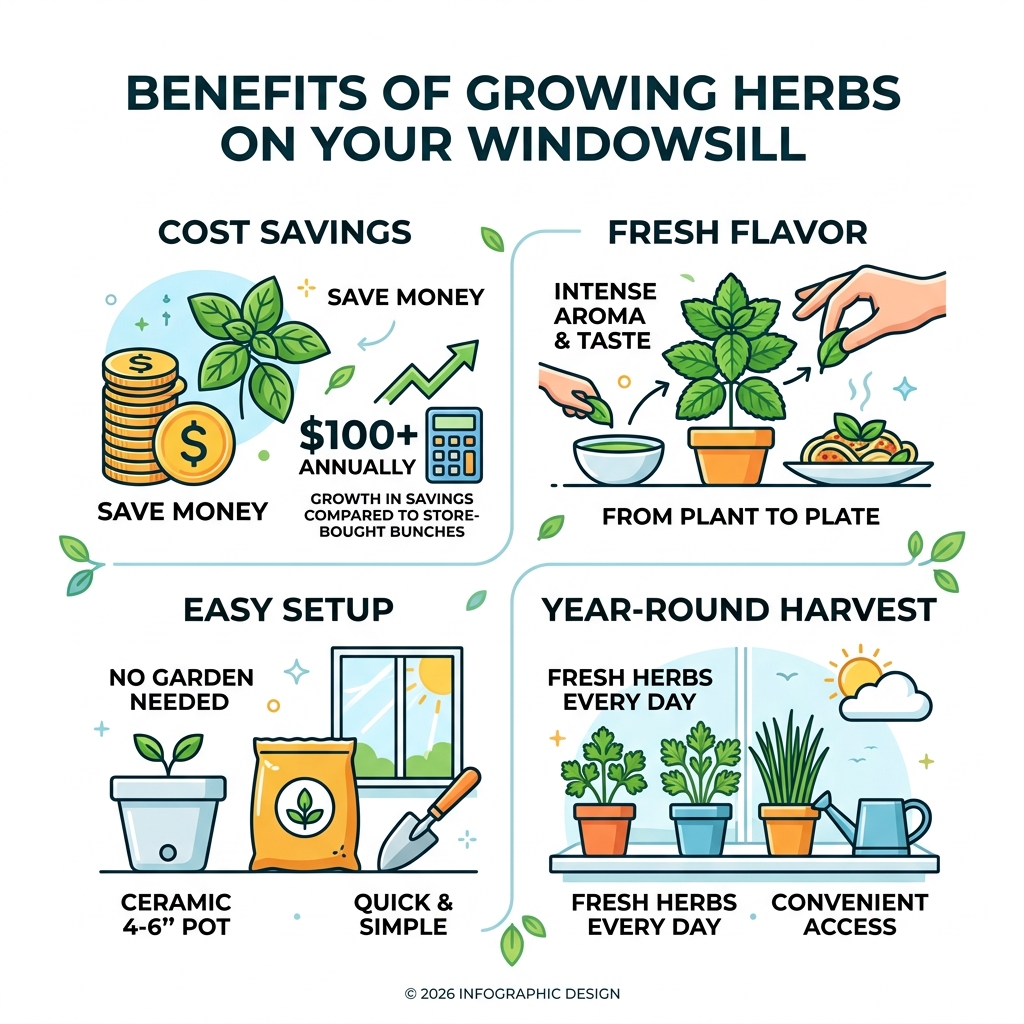
Grocery store herb bunches cost $3-5 each and wilt within days. A single potted herb on your windowsill? It can produce months of fresh harvests — and households that regularly cook with basil, mint, and parsley can save $100 or more per year by growing their own.
The barrier to entry is low. A basic windowsill herb setup costs under $25. And if you’re short on natural light, a small LED grow light runs just $15-20.
The hardest part isn’t the gardening — it’s knowing which mistakes to avoid. Overwatering, not enough light, and skipping harvests are what trip most beginners up.
This guide covers all of it, step by step.
Why You Should Grow Herbs on Your Windowsill
Beyond the obvious perk of having a garnish within arm’s reach of your cutting board, there are compelling reasons to grow herbs on windowsill ledges. First, let’s talk about the “flavor factory” effect. When we grow our own herbs, we get access to essential oil concentrations that are often higher than what you find in store-bought bunches. Freshness isn’t just a buzzword; it’s a scientific reality of plant metabolism.
From a financial perspective, the math is simple. If you buy a bunch of basil for $4 and it wilts in three days, you’ve wasted money. If you spend $4 on a starter plant, you can turn your windowsill into a flavor factory that provides leaves for the entire season. In fact, regularly growing just basil, mint, and parsley can save a household over $100 annually.
There is also the “biophilic” benefit. Research into the biophilia hypothesis shows that indoor plants can reduce stress and lower cortisol levels. Watching a tiny seed turn into a lush plant is a great way to plant herbs in kitchen windows and improve your mental well-being while enhancing your dinner.
Choosing the Right Plants and Containers
To grow herbs on windowsill spaces successfully, you can’t just use any old dirt and a cup. You need a setup that mimics the plant’s natural environment.
Containers and Drainage
The most common reason windowsill gardens fail is “wet feet”—root rot caused by poor drainage. We recommend pots that are at least 4 to 6 inches deep. While you can upcycle tin cans or yogurt containers by drilling holes in the bottom, terra cotta is the gold standard for many herbs. Terra cotta is porous, meaning it “breathes,” allowing for better air exchange and moisture wicking. This is especially helpful for Mediterranean herbs like rosemary and thyme that hate sitting in soggy soil.
The Right Soil
Never use garden soil. It’s too heavy, compacts easily in pots, and often carries pests or fungi. Instead, use a high-quality soilless potting mix. These mixes are typically made of peat moss or coconut coir, perlite, and vermiculite, which provide the light, airy texture herbs love. You can learn more about the specifics in our guide on how to start an indoor herb garden and container planting for herbs.

Sun-Loving vs. Shade-Tolerant Herbs
Not all herbs have the same light appetite. Use the table below to match your window’s light to the right plant:
| Herb | Light Requirement | Best Window Direction |
|---|---|---|
| Basil | 6-8+ hours (High) | South |
| Rosemary | 6-8+ hours (High) | South / Southwest |
| Thyme | 6-8+ hours (High) | South / West |
| Parsley | 4-6 hours (Moderate) | East / West |
| Mint | 4-6 hours (Moderate) | East / West |
| Chives | 4-6 hours (Moderate) | East / West |
Best Herbs to Grow on a Windowsill for Beginners
If you are new to this, we suggest starting with “forgiving” plants.
- Basil: The king of the windowsill. It loves the heat behind the glass.
- Mint: Almost impossible to kill. It’s a “bully” plant that grows fast, so give it its own pot.
- Chives: These are hardy and can handle the slightly cooler temperatures of a windowpane.
- Parsley: Slower to start but very resilient once established.
For more ideas, check out our lists of the best herbs to grow indoors and easy herbs for beginners to grow indoors.
Starting from Seeds vs. Starter Plants
You have three choices: seeds, starter plants (seedlings), or cuttings.
- Starter Plants: These give you a 3-week head start. If you want to harvest pesto tonight, buy a plant from a nursery.
- Seeds: Much cheaper and rewarding. Basil, parsley, and cilantro are the best candidates for starting herbs from seeds indoors. Parsley can take weeks to germinate, so don’t give up!
- Cuttings: Herbs like mint and basil can be rooted in a glass of water and then transplanted.
If you’re a beginner, we recommend easy herb seeds for beginners for basil, but buying a nursery-grown rosemary plant, as rosemary is notoriously difficult to grow from seed.
Essential Care: Light, Water, and Temperature
Once your herbs are potted, the “Big Three” of care take over: light, water, and temperature.
How to Grow Herbs on Your Windowsill with Proper Lighting
Light is the “food” for your plants. Most herbs need at least 6 to 8 hours of direct sunlight.
- South-facing windows are the “MVP” of the herb world, offering the most consistent, intense light.
- East and West windows are okay for mint or parsley, but basil might struggle.
- North windows rarely provide enough light (usually only 2-4 hours).
If your plants look “leggy” (long, weak stems with tiny leaves), they are doing “sad yoga”—stretching desperately for light. In winter, natural light can drop by 50%. This is when you should consider grow lights for indoor herbs. Full-spectrum LED lights between 5000-6500 Kelvin best mimic natural sunlight. Keep them about 12-24 inches above your plants for 12-14 hours a day. We have more tips in our guide on even more grow lights for indoor herbs.
Proper Watering Techniques
Overwatering is the number one killer of windowsill herbs. Instead of a schedule, use the finger test. Stick your finger one inch into the soil. If it feels dry, water it. If it’s still damp, wait.
When you water, do it thoroughly until water runs out of the drainage holes, then empty the saucer. Never let your herbs sit in standing water. For more help, see our list of indoor herb watering mistakes to avoid and advice on soil and fertilizer for indoor herbs.
Managing Temperature and Humidity
Most herbs prefer temperatures between 55 and 70 degrees Fahrenheit.
- The Cold Glass Problem: In winter, the air right next to the glass can be much colder than the rest of your kitchen. Keep your plants about 12 inches away from the pane if it’s freezing outside. Basil, in particular, is a “cold-sensitive drama queen” and will turn black if it gets too chilled.
- Humidity: Indoor air is often dry, especially when the heater is running. You can increase humidity by grouping pots together (they create a humid microclimate through transpiration) or using a pebble tray with water. For more tricks, check out humidity tips for indoor herbs and more humidity tips for indoor herbs.
Maintenance, Harvesting, and Troubleshooting
To keep your herbs productive, you have to be a little bit of a “tough love” gardener.
The Art of Harvesting and Pruning
The more you harvest, the more the plant grows. It sounds counterintuitive, but it’s true. When you snip the top of a plant, it sends a signal to grow two new stems from the node below.
- The 1/3 Rule: Never harvest more than one-third of the plant at a time. The plant needs its leaves to photosynthesize and stay alive.
- Pinching: For basil and mint, use your fingers to “pinch” off the top set of leaves. This prevents the plant from getting leggy and encourages a bushy, stocky shape.
- Woody Herbs: For rosemary and sage, harvest by snipping whole stems rather than just individual leaves.
Learn the techniques in our guides on pruning herbs for healthy growth and more on pruning herbs for healthy growth.
Solving Common Growth Problems
Even pros run into issues. Here is how to troubleshoot:
- Yellow Leaves: Usually a sign of overwatering or poor drainage. Let the soil dry out.
- Leggy Growth: Not enough light. Move to a brighter window or add a grow light.
- White Mold on Soil: This is often caused by low airflow and damp conditions. Scrape it off and reduce watering.
- Etiolation: This is the scientific term for plants stretching for light. It results in weak stems.
For a deeper dive, read our indoor herb growth troubleshooting and tips for preventing mold in indoor herb gardens.
Pest Control and Prevention
Yes, even indoor plants get bugs. The most common are aphids (tiny green bugs) and spider mites (which leave tiny webs).
- The Rinse: For a mild infestation, take the plant to the sink and spray the leaves with tepid water.
- The Soap Solution: Use a diluted insecticidal soap or neem oil. Avoid harsh chemicals on plants you plan to eat.
- Prevention: When bringing outdoor plants inside, some gardeners tie cheesecloth around the base of the plant to keep soil-dwelling bugs from escaping into the house.
Check out our indoor herb pest control tips for more organic solutions.
Frequently Asked Questions about Windowsill Herbs
How many hours of light do windowsill herbs need?
Most herbs require a minimum of 4 to 6 hours of direct sun daily. However, for peak health and flavor, 8 hours is the ideal target. If you are using supplemental LED lights, aim for a 14-hour light cycle to compensate for the lower intensity compared to the sun.
Can I grow rosemary and thyme on a windowsill?
Yes, but they are more challenging than basil or mint. As Mediterranean plants, they require very high light (south-facing is a must) and extremely well-draining soil. They prefer to stay a bit drier than other herbs. If you’re starting out, read our rosemary care indoors for beginners guide.
How often should I fertilize indoor herbs?
Herbs are light feeders. During the growing season (spring through early autumn), use a half-strength liquid organic fertilizer every 4 to 6 weeks. Avoid fertilizing from November to January when the plant’s growth naturally slows down; over-fertilizing in winter can lead to lush but flavorless leaves. For more details, see our indoor herb fertilizer guide.
Conclusion
At FinCapitaly, we believe that sustainable living starts at home—and there is no better starting point than your own kitchen window. When you grow herbs on windowsill ledges, you aren’t just saving money; you’re bringing fresh, chemical-free flavor into your life every single day.
Whether you start with a single pot of mint or a full-scale LED-supported herb garden, the journey from seed to sauce is incredibly rewarding. Start small, watch your light levels, and don’t be afraid to harvest often. Your taste buds (and your wallet) will thank you.
Ready to get started? Visit fincapitaly.com for more indoor gardening tips and gear recommendations!
