
Why Most Indoor Herb Gardens Fail (And What Actually Fixes It)
LED grow lights for herbs are the simplest, most effective way to grow fresh basil, mint, rosemary, and more indoors — regardless of the season or how many windows your kitchen has.
Quick answer: What to look for in an LED grow light for herbs
| Feature | What You Need |
|---|---|
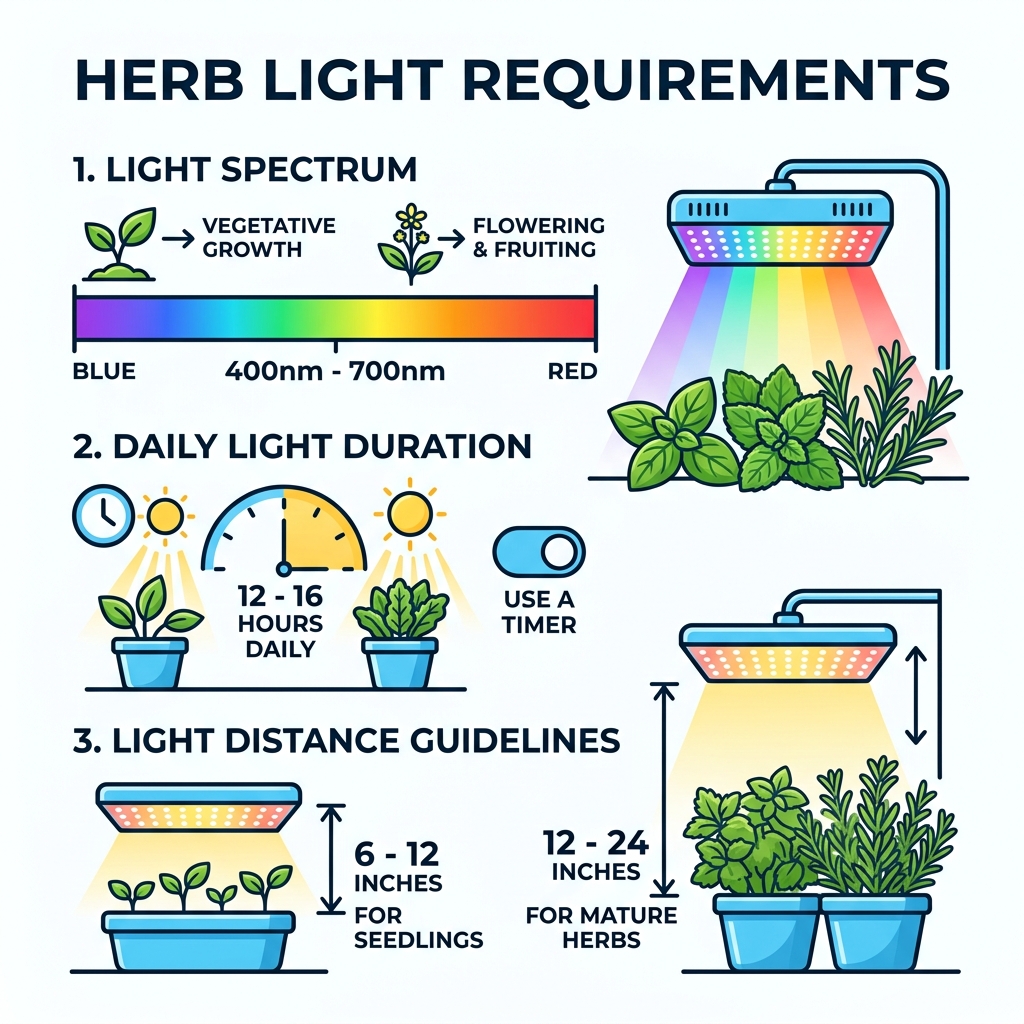
| Light spectrum | Full spectrum (blue 400-500 nm + red 600-700 nm) |
| Daily light duration | 12-16 hours (use a built-in timer) |
| Light distance | 6-12 inches for seedlings, 12-24 inches for mature herbs |
| Key features | Dimmable, height-adjustable, auto timer |
| Bulb lifespan | 25,000-50,000 hours (LED outlasts fluorescent 2-3x) |
| Best styles | Clip-on, tabletop, or panel lights depending on your space |
Here’s the problem most home cooks run into: herbs need a lot of light — far more than a windowsill usually provides. Without enough light, basil gets leggy, mint loses flavor, and your whole little garden just… fades out.
The good news? You don’t need a greenhouse or a green thumb. A decent LED grow light solves almost all of it.
LEDs run cool, use less energy than older bulb types, and can last for years without needing replacement. They deliver the exact wavelengths plants need to photosynthesize and thrive — even in a windowless kitchen.
This guide helps you cut through the noise and pick the right light for your space, your herbs, and your budget.
Why LED Grow Lights for Herbs are a Game Changer
If you’ve ever tried growing herbs on a kitchen windowsill in the middle of January, you know the struggle. The plants look sad, they stretch toward the glass like they’re begging for a vacation, and they eventually give up. This is where LED grow lights for herbs step in to save the day (and your pesto).
Energy Efficiency and Cost-Effectiveness
One of the biggest hurdles for indoor gardeners used to be the electricity bill. Older fluorescent lights or HID (High-Intensity Discharge) lamps were power hogs. Modern LEDs, however, are incredibly efficient. They convert a much higher percentage of energy into actual light that plants use, rather than wasting it as heat. When we look at the long-term costs, LEDs win every time. They use significantly less power than fluorescent bulbs, which means you can keep your herbs bathed in “sunlight” for 16 hours a day without your utility bill making you cry.
Longevity That Outlasts Your Last Relationship
Statistics show that LED grow light bulbs have a significantly longer lifespan, ranging from 25,000 to 50,000 hours or more. To put that in perspective, if you run your lights for 12 hours a day, a 50,000-hour bulb could last you over 11 years. Compare that to fluorescent bulbs, which generally last around 10,000 to 20,000 hours and often need replacing every year or two because their light quality degrades. With LEDs, you truly get a “set it and forget it” solution.
Heat Management: No More Crispy Cilantro
Herbs are delicate. If you put a hot bulb too close to a basil leaf, you’ll end up with burnt edges. LEDs run much cooler than traditional bulbs. Many high-quality units even use passive cooling (thick aluminum heat sinks) to dissipate what little heat they do produce without the need for noisy fans. This allows you to place the lights closer to your plants, promoting homogeneous growth and preventing that “leggy” look where the stem gets long and weak.
Photosynthesis Optimization and Year-Round Harvesting
The real magic of LED grow lights for herbs is the ability to optimize photosynthesis. By providing specific light recipes—the right blend of blue and red wavelengths—we can actually steer how our herbs grow. Want more aromatic oils in your rosemary? There’s a light setting for that. Want your basil to germinate faster? The right spectrum can make it happen. This level of control means you can harvest fresh, flavorful herbs 365 days a year, regardless of the blizzard happening outside your window. For a deeper dive into the science, check out this More info about indoor herb lighting.
Choosing the Right LED grow lights for herbs
Selecting a light isn’t just about brightness; it’s about how it fits into your life and your kitchen. We need to balance power with practicality.

The Comparison Table: Which Style Fits Your Space?
| Light Style | Best For | Pros | Cons |
|---|---|---|---|
| Tabletop Stand | Kitchen counters, desks | Stylish, easy to move, often includes a timer | Limited to a few small pots |
| Clip-on / Gooseneck | Small shelves, odd angles | Extremely flexible, very affordable | Can be flimsy; lower light intensity |
| Panel / High-Intensity | Dedicated grow rooms, large herb collections | Professional-grade power, huge coverage | Can be bulky; requires mounting |
| Hydroponic System | Beginners who want “all-in-one” | Includes light and water reservoir | Harder to customize; fixed size |
Space Optimization and Mounting Options
Before you hit “buy,” look at where your herbs live. If you have a dedicated shelf, a panel light like the 2025 NEW Mars Hydro SP 3000 LED Grow Light Full Spectrum 300W High Intensity for 4’x2′ Grow Room offers incredible coverage. However, if you’re just trying to keep a pot of mint alive on your workspace, a sleek tabletop unit is much more appropriate. For more specialized advice, see these More tips for herb setups.
Tabletop and Clip-on LED grow lights for herbs
For the casual indoor gardener, tabletop and clip-on lights are the bread and butter of the industry.
- Compact Design: These are designed to live where you live. They don’t look like industrial equipment; they look like modern desk lamps.
- Gooseneck Flexibility: Clip-on lights often feature flexible necks that allow you to target specific plants. If your parsley is leaning one way, you can just bend the light to meet it.
- Small-Space Gardening: These are perfect for apartment dwellers. You can turn a dark corner of a studio apartment into a vibrant herb oasis with a single Tabletop Grow Lights – SuperMoss Indoor LED Herb Garden .
Full-spectrum LED grow lights for herbs and Large Gardens
If you’ve graduated from a single pot to a full-blown indoor farm, you need more muscle. High-intensity full-spectrum options, such as the Gorilla Xi220 Smart LED Grow Light – Full Spectrum 220W , provide commercial-grade diodes (like Samsung and Osram) that penetrate deep into the foliage.
Multi-tier stands are another great option for large gardens. They allow you to stack your herbs vertically, maximizing your square footage. These systems often use “toplighting” bars that ensure every leaf from the top shelf to the bottom gets its fair share of photons.
Key Features for Optimal Herb Growth
Not all LED grow lights for herbs are created equal. To ensure your plants thrive and don’t just “survive,” look for these specific technical features.
Height Adjustability: The Secret to Success
Herbs grow fast. One week your basil is two inches tall, and the next it’s hitting the light bulb. If your light is fixed in place, you’ll either starve the young plants of light or burn the mature ones. Look for stands or hanging kits that allow for easy height adjustment. Professional setups like the Ultimate LED Grow Light for Indoor Plants | Vego Garden feature frames where the light can be slid up or down effortlessly.
Automatic Timers and Smart Integration
Plants need sleep too! A common mistake is leaving grow lights on 24/7. This stresses the plant and can actually stunt growth. A built-in timer is non-negotiable. Most modern lights offer 4, 8, or 12-hour cycles, but for herbs, a 14-16 hour “on” cycle is often the sweet spot. Some high-end models even offer smart app integration, allowing you to control the “sunrise and sunset” from your phone to prevent light shock. Learn more about timing here: More on herb light duration.
Passive Cooling and Waterproofing
Since you’ll be watering your herbs (and hopefully misting them occasionally), having an IP65 waterproof rating on your light is a major safety plus. It protects the diodes from humidity and accidental splashes. Passive cooling is also vital—thick aluminum heat sinks keep the unit silent and cool to the touch, which is much better for a home environment than a light with a whirring fan.
Understanding the Light Spectrum for Herbs
Plants don’t see light the way we do. While we see “white” light, plants are hunting for specific colors:
- Blue Light (400-500 nm): This is the “vegetative” light. It encourages strong stems and lush, green leaf growth. It’s essential for herbs where the leaves are the part we eat (like cilantro or kale).
- Red Light (600-700 nm): This triggers flowering and fruiting. While less critical for leafy herbs, it’s vital if you want your herbs to reach full maturity or if you’re growing fruiting plants like indoor peppers.
- Full Spectrum: The best LED grow lights for herbs mimic natural sunlight by combining blue, red, green, and even far-red wavelengths. This “sun-like” light is not only better for the plants but is also much more pleasant for human eyes than the old-school “blurple” (blue-purple) lights.
Managing Light Intensity and Duration
Intensity is measured by how much light actually hits the leaves. Most herbs are “high-light” plants.
- Seedling Protection: When herbs are just starting, they are sensitive. Use a dimmable setting (around 40-60% brightness) and keep the light about 6-12 inches away.
- Mature Plants: Once they are established, you can crank the intensity to 80-100% and move the light to 12-24 inches away.
- Preventing Leggy Growth: If you notice your herbs are getting tall, thin, and falling over, your light is either too dim or too far away. Lower the light or increase the brightness immediately!
Integrating Grow Lights into Your Home Decor
Gone are the days when a grow light looked like a science experiment gone wrong. Today’s LED grow lights for herbs are designed to be part of your home’s aesthetic.
Aesthetic Appeal and Hardwood Finishes
Many manufacturers are now using furniture-grade materials. You can find herb gardens housed in beautiful hardwood frames that look right at home next to your espresso machine. These units act as a decorative statement, creating a vibrant, glowing oasis in your kitchen or living room.
Sleek Aluminum and Stackable Units
If your style is more “modern industrial,” sleek aluminum designs offer a professional look. Some systems are even stackable, allowing you to create a vertical “green wall” that serves as both a source of food and a stunning piece of living art.
Ambient Lighting
One underrated benefit of LED grow lights for herbs is the ambient light they provide. A full-spectrum light produces a warm, natural glow that can brighten up a dark kitchen or hallway, making the whole room feel more alive and inviting. It’s functional decor at its finest. You can browse a wide variety of these stylish options at Grow Lights, Bulbs, Stands, & Fixtures – Gardeners Supply .
Frequently Asked Questions about Herb Lighting
How long do LED grow light bulbs typically last?
As we mentioned earlier, LEDs are the marathon runners of the lighting world. While a standard incandescent bulb might last 1,000 hours and a fluorescent bulb hits 10,000 to 20,000 hours, LED grow lights typically last between 25,000 and 50,000 hours. This means if you use them for 12 hours a day, you won’t need to think about replacements for a decade or more. Just keep the dust off the panels to ensure they stay cool!
How far should the light be from my herbs?
This is the most common question we get. For LED grow lights for herbs, the rule of thumb is:
- Seedlings: 6 to 12 inches.
- Mature Plants: 12 to 24 inches. However, always check the manufacturer’s “PPFD map” if available. If your leaves start to look bleached or have brown, crispy tips, move the light up. If the plant is stretching and looks “skinny,” move the light down.
Can I grow herbs in a room with no windows?
Absolutely! In fact, some of the best indoor gardens are in basements or windowless kitchens. Because LED grow lights for herbs provide a full spectrum of light, they act as a complete sunlight replacement. As long as you provide a consistent photoperiod (12-16 hours of light), your herbs won’t even know the sun exists. For high-output needs in larger windowless spaces, a light like the TS3000 LED Grow Light For Hydroponics|Mars Hydro is a fantastic choice.
Conclusion
At FinCapitaly, we believe that everyone should have access to fresh, sustainable food, even if you live in a high-rise apartment with zero natural light. Choosing the right LED grow lights for herbs is the first step toward that goal. By focusing on full-spectrum output, energy efficiency, and a design that fits your home, you can transform your indoor space into a thriving garden.
Fresh basil for your pizza, mint for your mojitos, and rosemary for your roasts are all within reach. Don’t let a lack of sunlight hold you back. With the right technology, your thumb is as green as anyone else’s.
Ready to start your journey? Start your indoor garden with FinCapitaly and discover how easy it is to grow your own food, one herb at a time. For even more options, you can also explore the massive selection of Grow Lights For Herbs – Amazon.com to find the perfect match for your budget. Happy growing!
