
Why Finding the Best Indoor Basil Varieties Changes Everything for Home Cooks
The best indoor basil varieties for most home growers are:
| Variety | Best For | Size |
|---|---|---|
| Genovese / Pesto Besto | Pesto, pasta, everyday cooking | 18–30 inches |
| Spicy Bush / Greek Basil | Small spaces, containers | ~8 inches |
| Dolce Fresca | Low-maintenance, slow to flower | ~14 inches |
| Thai Basil (Siam Queen) | Asian dishes, curries | 12–24 inches |
| Mrs. Burns’ Lemon | Teas, desserts, chicken dishes | 12–24 inches |
| Piccolino | Windowsills, tiny spaces | 4–20 inches |
| Purple Basil (Dark Opal) | Ornamental + culinary, salads | 12–24 inches |
Picture this: you’re walking through a farmers market and someone brushes past you holding a huge bunch of fresh basil. That scent hits you instantly — warm, sweet, unmistakably summer. Now imagine having that every single day, right in your kitchen.
That’s exactly what growing basil indoors promises. But here’s the problem most people run into: they pick the wrong variety.
Not all basil is built for life indoors. Some grow too tall and leggy. Some bolt to flower within weeks. Some just collapse under low light and dry indoor air.
With roughly 150 different basil varieties out there, choosing one that actually thrives on your windowsill — and keeps producing flavorful leaves all year — takes a little know-how.
This guide cuts through the noise. We’ll show you exactly which varieties work best indoors, and why.
Top 7 Best Indoor Basil Varieties for Year-Round Harvests
When we talk about the best indoor basil varieties, we aren’t just looking for flavor. We are looking for “roommates” that won’t take over the entire kitchen or die the moment a cloud passes by. Indoor conditions are different from a garden; the air is drier, the light is directional, and space is a premium.

For a successful indoor herb garden, we recommend focusing on varieties that balance vigor with a manageable habit. Here are our top picks:
- Pesto Besto – Sweet Italian Basil: This is a game-changer for indoor growers. Pesto Besto – Sweet Italian Basil is specifically bred for incredible resistance to downy mildew, which is the number one killer of indoor basil. It grows vigorously and produces high yields of aromatic leaves, reaching full size in just 4-6 weeks after transplanting.
- Ocimum basilicum ‘Piccolino’: If you have a tiny windowsill, this is your variety. Ocimum basilicum ‘Piccolino’ forms a dense, rounded mound of small, bright green leaves. It’s essentially a “living globe” of basil that stays tidy without constant hacking.
- Dolce Fresca: This award-winning variety is famous for being “slow to bolt.” In gardening terms, that means it doesn’t rush to produce flowers (which makes the leaves bitter). It stays compact at about 14 inches.
- Thai Siam Queen: For those who love Southeast Asian cuisine, this is non-negotiable. It has sturdy, purple stems and a spicy, licorice-like flavor that holds up better to high-heat cooking than sweet basils.
- Mrs. Burns’ Lemon Basil: An heirloom variety with a powerful citrus scent. It’s surprisingly hardy because of its origins in the arid Southwest, making it more tolerant of the dry air inside our homes.
- Spicy Bush (Greek Basil): This is the “dwarf” of the family. It grows into a perfect little ball only 8 inches high. The leaves are tiny but packed with a peppery punch.
- Dark Opal Purple Basil: Why not add some color? This variety provides a beautiful visual contrast with its deep violet leaves. It’s as much an ornamental plant as it is a culinary one.
Why Compact Size Matters for the Best Indoor Basil Varieties
We’ve all seen it: a basil plant that looks like a lonely beanpole reaching desperately for the sun. This “legginess” is the enemy of a productive indoor garden. This is why compact and dwarf varieties like Spicy Bush or Greek basil are so highly recommended.
When a plant is naturally small (topping out at around 8 inches), its energy goes into producing dense foliage rather than tall, weak stems. This makes indoor basil growing much easier for beginners. You don’t need a massive greenhouse setup to keep an 8-inch Greek basil happy; a standard 6-inch pot and a sunny windowsill will often suffice. Compact plants also have shorter “internodes” (the space between leaves), meaning you get more harvestable herb per square inch of plant.
Culinary Superstars: From Pesto to Thai Curries
Choosing the best indoor basil varieties often comes down to what you like to eat.
- Genovese and Pesto Besto: These are the gold standards for Italian cooking. If you want to master indoor basil: the star ingredient for homemade pesto, these are your go-to plants. They have that classic, sweet, clove-and-pepper aroma.
- Thai Basil: Essential for pad krapow gai or pho. Its leaves are sturdier and can be tossed into a hot stir-fry without immediately turning into a black mush.
- Mrs. Burns’ Lemon: We love using this in roasted chicken dishes, seafood, or even infused into a summer lemonade. It adds a bright, zesty layer that sweet basil lacks.
- Dolce Fresca: Because it is slow to flower, the leaf quality remains high for a longer period, making it a reliable “staple” basil for salads and sandwiches.
Sourcing the Best Indoor Basil Varieties
You have three main options for getting started: seeds, starter plants, or cuttings.
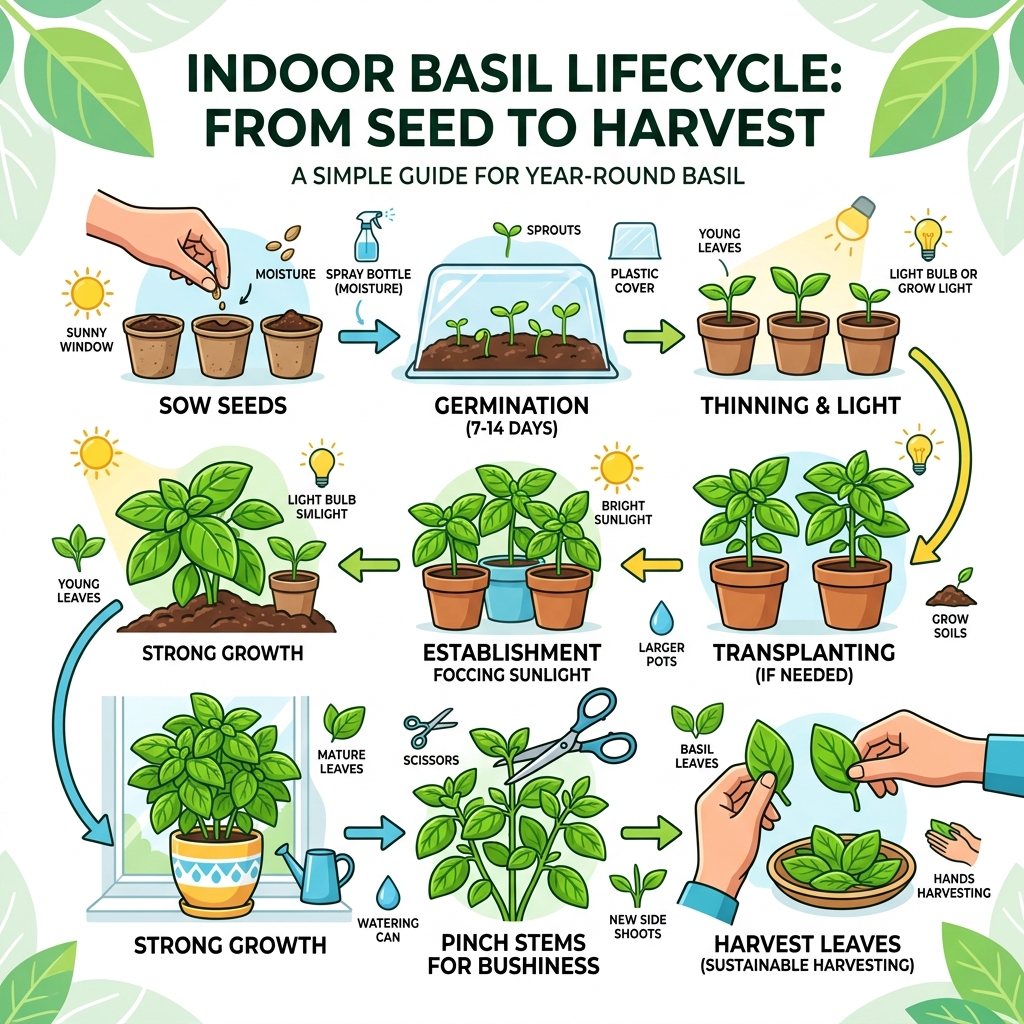
- Seeds: This is the most cost-effective way and offers the most variety. Most basil seeds sprout within 5 to 10 days. We recommend sourcing from reputable organic suppliers to ensure high germination rates.
- Starter Plants: You can find these at local nurseries. A pro tip: avoid the “big box” store herbs if possible. They are often treated with growth retardants or fungicides that aren’t ideal for home consumption. Local nurseries tend to have healthier, hardened-off plants.
- Cuttings: Basil is incredibly easy to propagate. If a friend has a variety you love, simply snip a stem, put it in a glass of water, and wait for roots to appear. According to the How to grow Basil | RHS Guide, this is one of the fastest ways to expand your collection for free.
Essential Setup: Containers, Soil, and Lighting
You can’t just stick a seed in a cup of dirt and hope for the best. To prevent “herb murder,” we need to respect the plant’s roots and light needs.
First, let’s talk about the pot. A minimum container depth of 6–8 inches is essential. For larger varieties like Genovese or Pesto Besto, we recommend pots 12–16 inches in diameter. Drainage is non-negotiable. If your pot doesn’t have holes, your basil will eventually succumb to root rot.
The soil should be an organic potting mix that is light and fluffy. Never use “garden soil” from your backyard; it’s too heavy and likely contains pests or pathogens. We want a mix that retains some moisture but allows for excellent aeration. If you’re wondering how to care for basil indoors, starting with the right “bed” is half the battle.
Optimizing Light for Indoor Success
Light is the fuel for basil. Without enough of it, your plant will become “leggy,” pale, and flavorless.
- Natural Light: A south-facing window is the holy grail. Your basil needs 6–8 hours of direct sunlight daily. Be sure to rotate the pot every few days so the plant doesn’t lean too heavily in one direction.
- Artificial Light: For many of us, especially in winter, natural light isn’t enough. Basil thrives with 12–16 hours of artificial light. LED grow lights are the gold standard here because they are energy-efficient and don’t produce excess heat that can scorch the leaves.
For optimal growth, you should position your grow lights 12–18 inches above the plants. If the lights are too far away, the plant will stretch; if they are too close, you might see “bleaching” on the top leaves.
Temperature and Humidity Requirements
Basil is a tropical plant at heart. It loves the heat. It thrives in temperatures between 70–80°F during the day and should never be exposed to temperatures below 50°F at night.
Indoor air can be notoriously dry, especially when the heater is running. Basil appreciates a bit of humidity. You can use a humidity tray (a tray of water and pebbles under the pot) or a light misting in the morning. However, be careful with misting; if the leaves stay wet overnight, you’re inviting fungal diseases. For more on maintaining this balance, check out our guide on looking after basil plants: a guide for the herb obsessed.
Maintenance Secrets: Watering, Pruning, and Winter Care
If you want a year-round harvest, you have to be an active participant in your basil’s life.
Watering: The “finger test” is your best friend. Stick your finger an inch into the soil. If it’s dry, water it. If it’s moist, leave it alone. We recommend watering in the morning so any splashes on the leaves can evaporate during the day.
Fertilizing: Because indoor basil is often grown in a limited amount of soil, it uses up nutrients quickly. We suggest an organic liquid fertilizer (like fish emulsion or seaweed extract) every 2–4 weeks. This keeps the foliage lush and the flavor intense. If you’re just starting out, our a beginner’s guide to cooking with indoor basil covers how healthy plants lead to better meals.
Pruning for Bushy Productivity
Pruning is not just about harvesting; it’s about surgery for success. If you let your basil grow unchecked, it will produce one tall stem and then flower. Once it flowers, the plant thinks its job is done, and the leaves become bitter.
To keep it bushy:
- Pinch the tips: Once your plant has 3-4 sets of leaves, pinch off the very top set.
- Cut at the nodes: Always cut just above a “node” (where two leaves are growing out of the stem). This forces the plant to grow two new branches from that spot.
- Remove flowers immediately: As soon as you see a flower spike forming, snip it off.
It is a well-documented fact that frequent harvesting actually makes the plant more productive. It’s a “use it or lose it” situation!
Adjusting Care for Winter Months
Winter is the “danger zone” for indoor basil. The days are shorter, the windows are colder, and the air is drier.
- Move it back: Don’t let the leaves touch a freezing cold windowpane.
- Supplement light: This is the time to lean heavily on those LED grow lights.
- Watch the water: Basil grows more slowly in winter, so it won’t drink as much. Overwatering in winter is a fast track to root rot.
- Avoid drafts: Keep your plants away from both icy door drafts and scorching heater vents.
For a deeper dive into surviving the cold, see our specific tips on how to care for basil indoors.
Troubleshooting Common Indoor Basil Problems
Even with the best indoor basil varieties, things can go wrong. Don’t panic; most issues are easy to fix if you catch them early.
- Yellow Leaves: This is almost always a sign of overwatering. It means the roots are drowning and can’t breathe. Let the soil dry out completely before the next watering.
- Wilting: This can be tricky because it looks like the plant needs water, but it can also be a sign of root rot (too much water). Check the soil. If it’s bone dry, water it. If it’s soggy and the plant is wilting, you may have a drainage problem.
- Dropping Leaves: This usually happens when the plant gets a cold shock or is sitting in a draft.
Healthy plants aren’t just for cooking; they are also an indoor basil: key ingredient for healthy smoothies, so keeping them in top shape is worth the effort!
Preventing Leggy Growth and Pests
“Leggy” basil is a cry for help—it means “I need more light!” If your plant is stretching, move it to a brighter spot or lower your grow lights.
Pests like aphids or fungus gnats can occasionally find their way indoors.
- Aphids: These tiny green bugs cluster on the undersides of leaves. You can usually wash them off with a sharp spray of water or use a bit of organic neem oil.
- Fungus Gnats: These look like tiny fruit flies buzzing around the soil. They thrive in damp soil, so letting the top inch of soil dry out usually solves the problem.
For more variety-specific care, like the popular ‘Magical Michael’, ensure you are providing consistent moisture and plenty of light to maintain its unique flavor profile.
Managing Disease and Downy Mildew
Downy mildew is the “boogeyman” of the basil world. It looks like gray fuzz or yellowing on the underside of leaves and can kill a plant in days. The best way to manage it is through prevention:
- Airflow: Don’t crowd your plants. Use a small fan if necessary.
- Watering: Never water the leaves; always water the soil.
- Resistant Varieties: This is where picking the right variety pays off. Amazel® Basil is a sterile variety that is highly resistant to downy mildew. Because it’s sterile, it keeps producing leaves even when it tries to flower, giving you a much higher yield.
Frequently Asked Questions about Best Indoor Basil Varieties
Which basil variety is easiest for beginners to grow indoors?
We usually recommend Spicy Bush or Greek Basil for absolute beginners. Their naturally compact shape means you don’t have to worry as much about pruning perfectly, and they fit easily into small kitchen setups. If you want a classic leaf, Pesto Besto is the easiest because of its disease resistance.
How do I stop my indoor basil from flowering?
The secret is consistent pinching. As soon as you see the central stem start to elongate and form a “pointy” tip rather than flat leaves, snip it off. Keeping the plant in a stable temperature (avoiding heat spikes) also helps prevent “bolting.”
Can I grow grocery store basil plants indoors long-term?
It’s tough. Those “living basil” pots from the grocery store are actually dozens of tiny seedlings crowded into one tiny pot. They are meant to be eaten quickly, not grown long-term. If you want to keep them, you must gently divide the plants and repot them into larger containers with fresh soil.
Conclusion
Stopping “herb murder” starts with choosing the right variety. By selecting one of the best indoor basil varieties like Pesto Besto, Piccolino, or the hardy Mrs. Burns’ Lemon, you’re already halfway to success. With a simple setup of 6-8 inches of soil, plenty of light, and a regular pruning schedule, you can enjoy that “farmers market scent” in your kitchen all year long.
There is nothing quite like the satisfaction of reaching over to your windowsill to pluck a few fresh leaves for your pasta or pizza. It’s sustainable, it’s flavorful, and it brings a bit of life into your home. Ready to expand your indoor garden? Check out more info about the best herbs to grow indoors and start your journey toward herb mastery today!
