
Fresh Basil at Home: What You Need to Know Before You Start
Indoor basil growing is one of the easiest ways to keep fresh herbs in your kitchen year-round — even if you’ve killed every plant you’ve ever owned.
Quick-start essentials for growing basil indoors:
- Light: 6-8 hours of direct sun daily, or 14 hours under a grow light
- Pot: 4-6 inch container with drainage holes (terracotta works great)
- Soil: Light, well-draining potting mix (pH 6.0-7.5)
- Water: When the top inch of soil feels dry — never let it sit in standing water
- Temperature: Above 65°F (18°C) for best results
- Harvest: Start when the plant has 6+ leaves; never take more than one-third at a time
One well-pruned plant can produce around half a cup of fresh basil every single week. That’s pesto, pasta, and caprese on demand — from a pot on your windowsill.
The biggest reason indoor basil fails? Not enough light. Get that right, and almost everything else falls into place.
This guide walks you through every step — from picking up a supermarket plant to harvesting like a pro.
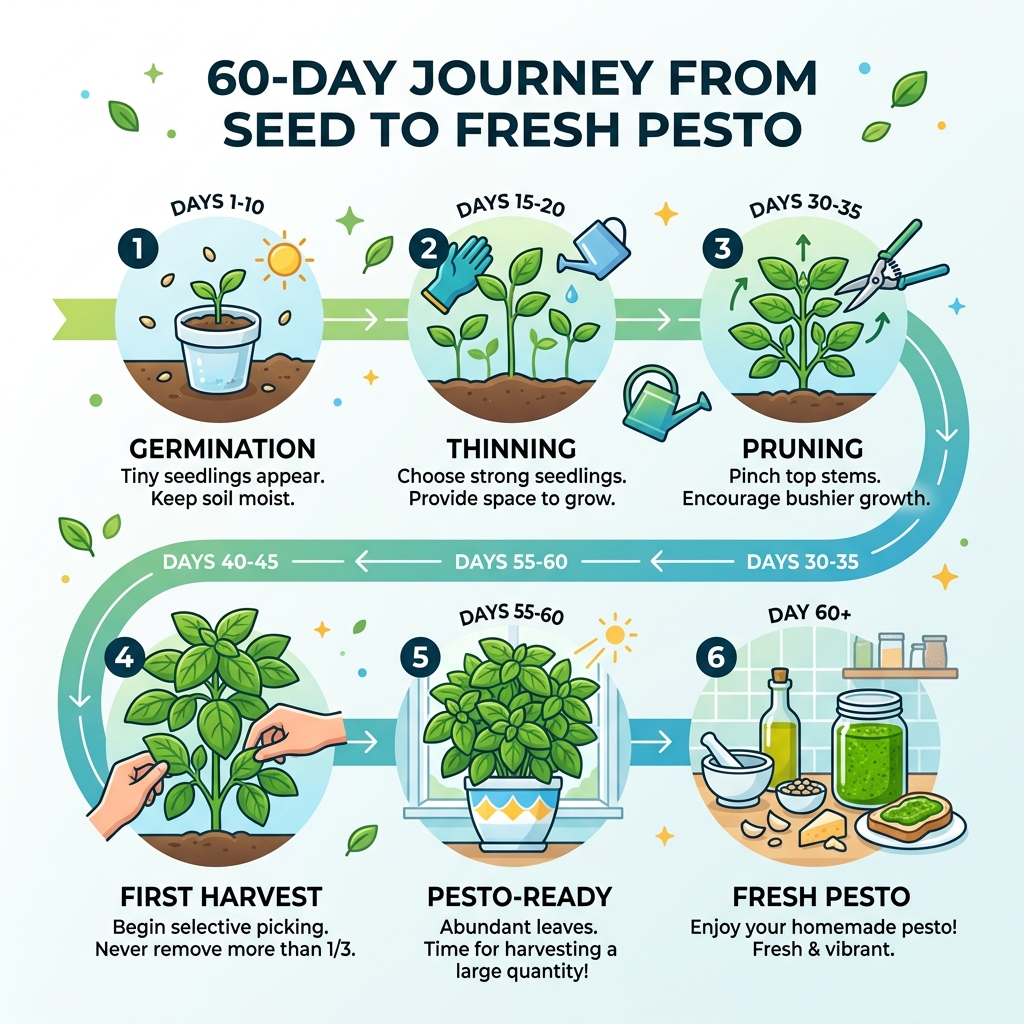
Getting Started with Indoor Basil Growing
If you have a history of “unintentional plant homicide,” don’t worry. We have all been there. The beauty of indoor basil growing is that you have three distinct ways to start, ranging from “I want to be a farmer” to “I just bought this at the grocery store.”
Essential Supplies for Success
Before we plant a single seed, we need the right gear. You don’t need a greenhouse, but you do need:
- High-quality organic potting mix: Avoid “garden soil” from the backyard; it’s too heavy and often contains pests.
- Containers with drainage: This is non-negotiable. Basil roots hate sitting in a swamp.
- Seeds or a starter plant: Genovese is the gold standard for pesto.
- A sunny spot or a grow light: We’ll dive deep into this later, but keep it in mind.
The Supermarket Plant Rescue
We’ve all seen those lush, plastic-wrapped basil plants at the supermarket. They look great for three days and then collapse. Why? Because the producers cram about 20 seedlings into one tiny pot to make it look full. To save them, we must gently tip the plant out, tease the roots apart, and repot them into 2 or 3 separate containers. This gives the roots room to breathe and grow.
Starting from Seeds and Cuttings
Starting from seed is incredibly rewarding. Basil seeds usually germinate in just 5 to 10 days if they stay warm (around 70-75°F). If you’re even more impatient, you can use stem cuttings. Simply snip a 4-inch piece of basil from a healthy plant, strip the bottom leaves, and pop it in a glass of water. Roots often form within a single week!
For those looking to dive deeper into daily maintenance, check out more info about how to care for basil indoors.
Companion Herbs and Kitchen Friends
While basil is the star of the show, it loves company. Indoors, you can grow basil alongside other sun-loving herbs like oregano or parsley. Interestingly, many gardeners believe that growing basil near tomatoes actually improves the flavor of the tomatoes—and even if that’s a myth, they certainly taste great together on a plate! Basil also pairs well with peppers in a sunny window setup.
The Holy Trinity of Basil Care: Light, Water, and Soil
To keep basil alive, we have to respect its “Holy Trinity”: Light, Water, and Soil. If one of these is off, the plant will let you know by drooping, turning yellow, or simply giving up on life.

The Ground Rules: Soil and Nutrients
Basil thrives in a slightly acidic to neutral environment, specifically a pH between 6.0 and 7.5. We recommend using a well-draining organic potting mix amended with compost or perlite. This ensures the soil stays moist but allows excess water to escape.
Since basil is a “leafy” herb, it needs nitrogen to stay green. Use a balanced, half-strength liquid fertilizer every 4 weeks. If you see the leaves turning a pale, sickly green, it might be time for a snack. However, don’t overfeed! Too much fertilizer can actually dilute the essential oils that give basil its incredible aroma.
Perfecting Light for Indoor Basil Growing
Light is the most common sticking point for indoor gardeners. Basil is a sun-worshipper. Ideally, it needs 6 to 8 hours of bright, direct sunlight every day. A south-facing window is usually the best real estate in your home.
If your apartment is more “cave-like” than “solarium,” you must use grow lights. Standard light bulbs won’t cut it; you need full-spectrum LED or fluorescent grow lights.
- Duration: Keep grow lights on for 14 hours a day.
- Distance: Keep the lights about 2 to 4 inches above the tops of the plants. As the basil grows, move the lights up.
- The “Leggy” Warning: If your basil looks like it’s desperately stretching toward the ceiling with long gaps between leaves, it is “leggy.” This is a cry for more light.
Choosing Varieties for Indoor Basil Growing
Not all basil is created equal. Some grow like bushes, while others grow like trees. Choosing the right variety can make your indoor experience much easier.
| Variety | Growth Habit | Best Use | Indoor Pro |
|---|---|---|---|
| Genovese | Tall & Prolific | Pesto & Sauces | Classic flavor, very productive |
| Spicy Globe | Compact Mounds | Garnishes | Fits perfectly on small windowsills |
| Lettuce Leaf | Large, Crinkled | Wraps & Salads | Huge leaves, slower to bolt |
| Thai Basil | Sturdy & Upright | Curries & Stir-fry | Beautiful purple stems, very hardy |
The “Basil Trick” for Bushy, Productive Plants
Most people harvest basil by plucking individual leaves from the bottom. Stop doing that! It tells the plant to grow tall and skinny, eventually leading to a “Charlie Brown” tree situation.
Pruning for Power
To get a bushy plant that yields 1/2 cup of leaves per week, we must prune from the top. When your plant is about 6 inches tall, find a “node” (the spot where two leaves branch out from the stem) and snip the main stem just above it. This forces the plant to grow two new branches from that spot. If you keep doing this, your plant will double its width every few weeks.
The Bottom-Watering Secret
One of the best “tricks” for indoor basil growing involves an oversized saucer and a terracotta pot. Because terracotta is breathable, it helps prevent the soil from becoming a soggy mess. Instead of pouring water on top of the leaves (which can cause fungus), fill a large saucer under the pot with water. The soil will “wick” up exactly what it needs. This keeps the roots hydrated without drowning the crown of the plant.
Once your harvest is overflowing, you’ll want to know more info about making indoor basil pesto to put those leaves to good use.
Troubleshooting Common Growth Issues
Even with the best intentions, things can go wrong. The trick is to read the leaves like a weather map.
Why is My Basil Yellow?
Yellow leaves are usually a sign of one of three things:
- Overwatering: If the soil is mushy and the leaves are yellowing, you have root rot. Stop watering and let it dry out.
- Nutrient Deficiency: If the soil is fine but the plant looks “faded,” it needs fertilizer.
- Downy Mildew: If you see gray fuzz on the underside of the leaves, it’s a fungus. This usually happens when there is poor air circulation and high humidity.
Solving Indoor Basil Growing Pests and Diseases
Yes, even indoors, pests can find your herbs.
- Aphids and Whiteflies: These tiny bugs suck the sap out of leaves. You can treat them with a simple spray of water and a drop of organic dish soap, or use yellow sticky traps to catch the flyers.
- Fungal Prevention: Use a small desk fan to keep air moving around your plants. This mimics a summer breeze and prevents moisture from sitting on the leaves.
- Temperature Tantrums: Basil hates the cold. Keep it away from drafty windows or air conditioning vents. It thrives in temperatures above 65°F and will literally turn black and die if it hits freezing temperatures.
Propagation and Long-Term Maintenance
An indoor basil plant typically has a lifespan of 6 to 9 months. It isn’t a mahogany tree; it’s a tender herb. However, you can keep the cycle going forever through propagation.
The Infinite Basil Loop
As your plant gets older and “woody,” take a cutting. As mentioned before, a 4-inch cutting in water will root in about 7 days. Once those roots are an inch long, transplant them into a fresh 4-6 inch pot. By the time your old plant is ready to retire, the new one will be ready to harvest.
Repotting and Room to Grow
If you see roots poking out of the drainage holes, your basil is “root-bound.” It’s time for an upgrade. Move it to a pot with an 18-24 cm diameter. This gives the root system enough space to support a large, bushy canopy.
As you master the art of the harvest, you can start experimenting with preservation. There is more info about creating infused oils with indoor basil that can make your kitchen feel like a high-end Italian bistro.
Frequently Asked Questions about Indoor Basil
How do I prevent my basil from flowering?
Flowering is the plant’s way of saying, “My work here is done; I’m going to make seeds and die.” This is called bolting. As soon as you see a little “tower” of tiny leaves forming at the top, pinch it off! This redirects the energy back into the leaves and keeps the flavor sweet. Once a plant flowers, the leaves often become bitter and tough.
Can I grow basil indoors during the winter?
Absolutely. In fact, that is the best time for indoor basil growing because it brings a scent of summer into a cold house. Just remember that winter sun is weak. You will almost certainly need a grow light for 14 hours a day to compensate for the shorter, gloomier days. Also, keep the plants away from cold glass windowsills at night.
What is the best pot size for indoor basil?
For a single plant, a 4-6 inch pot is the perfect starting point. If you are repotting a supermarket “clump,” you might want something larger, like an 8-inch (20 cm) pot. Always ensure the pot has drainage holes. Terracotta is highly recommended because it is breathable and helps regulate soil moisture.
Conclusion
At FinCapitaly, we believe that anyone can have a green thumb with the right guidance. Indoor basil growing isn’t just about the food; it’s about the joy of nurturing something that gives back to you every single week. Whether you’re starting from a tiny seed or rescuing a plant from the grocery store, the keys are simple: lots of light, steady warmth, and a little bit of pruning “tough love.”
Ready to turn your windowsill into a culinary powerhouse? Start your indoor garden today and never buy a plastic-wrapped bunch of wilted herbs again. Happy growing!
